

You want a durable, leak-free differential cover gasket that holds clamp load under axle flex and heat, so pick from these four: the red Dana 44 gasket for heavy-duty Dana 44 axles, the D044 Dana 44 gasket with full-perimeter elastomer beads and 12‑month warranty, the BEONEO F880 steel-core gasket for Ford 8.8 applications, and the lightweight Motive Gear model 5119 for general replacement. Each uses a metal core and elastomer seals for longevity—keep going to get fitment and installation tips.
| Differential Cover Gasket for Dana 44 (Red) |
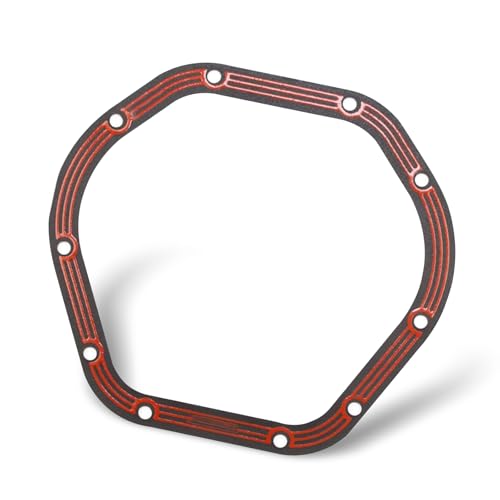
| Best for Dana 44 | Fitment/Compatibility: Fits Dana 44 axles (does not fit Dana 44A, 44HD, 44/226, Nissan Titan) | Core Construction: Steel core (rubber-coated) | Elastomer Beading / Seal Type: Elastomer bead on both sides (full-perimeter) | VIEW LATEST PRICE | Read Our Analysis |
| Dana 44 Differential Cover Gasket D044 |

| Most Durable Choice | Fitment/Compatibility: Fits Dana 44 axles (does not fit Dana 44A, 44HD, 44/226, Nissan Titan) | Core Construction: Premium steel core (rubber-coated) | Elastomer Beading / Seal Type: Full-perimeter elastomer beading on both sides | VIEW LATEST PRICE | Read Our Analysis |
| BEONEO F880 Differential Cover Gasket for Ford 8.8 |

| Best for Ford 8.8 | Fitment/Compatibility: Fits Ford 8.8″ axle (Mustang 1986–2014 and other specified applications) | Core Construction: Steel core (rubber-coated) | Elastomer Beading / Seal Type: Full-perimeter elastomer beading on both sides | VIEW LATEST PRICE | Read Our Analysis |
| Motive Gear Differential Cover Gasket (Model 5119) |
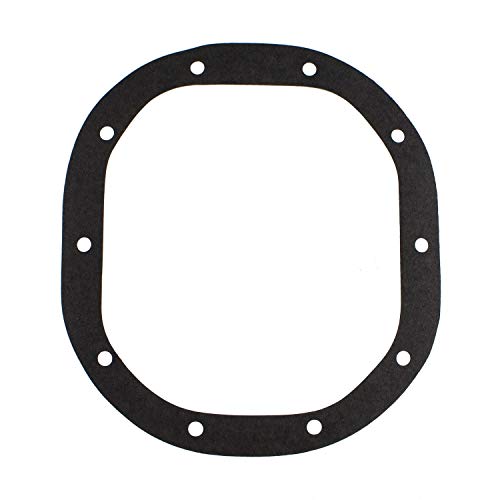
| Reliable OEM Alternative | Fitment/Compatibility: Generic differential cover gasket (part/model 5119) — intended as replacement cover gasket (verify vehicle/application) | Core Construction: Not explicitly stated, but described as differential cover gasket (implied standard construction) | Elastomer Beading / Seal Type: Implied elastomer/sealing gasket design (standard differential cover gasket) | VIEW LATEST PRICE | Read Our Analysis |
More Details on Our Top Picks
Differential Cover Gasket for Dana 44 (Red)
Should you run a Dana 44 and need a reliable, race-ready seal, this red Differential Cover Gasket (LLR-D044) is your best choice — it’s built with a rubber-coated steel core and elastomer beads on both sides to give you a dry, leak-free seal under high horsepower, axle flex, and wide temperature swings. You’ll fit it to Dana 44 axles only (not 44A, 44HD, 44/226, or Nissan Titan), clean the mating surface, align holes, and tighten bolts. The elastomer beads buffer hard contact, prevent oil loss, and maintain differential lubrication. Check specs before ordering.
- Fitment/Compatibility:Fits Dana 44 axles (does not fit Dana 44A, 44HD, 44/226, Nissan Titan)
- Core Construction:Steel core (rubber-coated)
- Elastomer Beading / Seal Type:Elastomer bead on both sides (full-perimeter)
- Installation Method / Sealant Requirement:Dry installation; align holes and tighten bolts (no sealant required)
- Durability / Performance Claims:Withstands high horsepower, axle flex, wide temperature extremes; leak-free
- Quantity / Package:1 PC (LLR-D044) gasket
- Additional Feature:Color-coded red finish
- Additional Feature:Buffers hard contact
- Additional Feature:Protects against axle flex
Dana 44 Differential Cover Gasket D044
Should you run a Dana 44-equipped vehicle and require a leak-proof, durable solution, the D044 gasket is built for you. It fits Dana 44 axles only (not 44A, 44HD, 44/226, or Nissan Titan) and uses a full-perimeter elastomer bead on both sides to deliver a dry, leak-free seal under high horsepower, axle flex, and extreme temperatures. The premium steel core with rubber coating resists corrosion, impact, and aging for long service life. You won’t need sealant; it won’t split or extrude, holds torque, releases cleanly during disassembly, and comes with 30-day refund and 12-month warranty.
- Fitment/Compatibility:Fits Dana 44 axles (does not fit Dana 44A, 44HD, 44/226, Nissan Titan)
- Core Construction:Premium steel core (rubber-coated)
- Elastomer Beading / Seal Type:Full-perimeter elastomer beading on both sides
- Installation Method / Sealant Requirement:No sealant required; dry installation; easier release during disassembly
- Durability / Performance Claims:Strength, anti-corrosion, impact and aging resistance; withstands high horsepower and flex
- Quantity / Package:Single gasket (Dana 44 D044)
- Additional Feature:No sealant required
- Additional Feature:12-month warranty
- Additional Feature:30-day refund policy
BEONEO F880 Differential Cover Gasket for Ford 8.8
Should you need a durable, reusable gasket specifically for the Ford 8.8″ axle, the BEONEO F880 is built with a steel core and rubber coating plus full-perimeter elastomer beading on both sides so it seals reliably without sealant. You’ll get one F880 gasket that fits Mustang 1986–2014 8.8″ rear axles and many other applications—verify fit for your vehicle. For installation, clean mating surfaces, align bolt holes, and tighten to manufacturer specs; no sealant’s required. The gasket offers long service life and reusability. Buy from a professional seller; returns or replacements are available should problems arise.
- Fitment/Compatibility:Fits Ford 8.8″ axle (Mustang 1986–2014 and other specified applications)
- Core Construction:Steel core (rubber-coated)
- Elastomer Beading / Seal Type:Full-perimeter elastomer beading on both sides
- Installation Method / Sealant Requirement:Dry installation; no sealant required; tighten to manufacturer specs
- Durability / Performance Claims:Reusable, long service life; designed for road/service conditions of Ford 8.8
- Quantity / Package:1 piece (F880)
- Additional Feature:Reusable long life
- Additional Feature:Fits Mustang 1986–2014
- Additional Feature:Seller-backed returns
Motive Gear Differential Cover Gasket (Model 5119)
Should you need a simple, reliable replacement gasket for differential covers, the Motive Gear Performance 5119 delivers a precise fit and easy installation for most standard housings. You’ll get a lightweight, molded gasket (0.01 ounces) sized 11 x 12 x 1.75 inches, carrying model and OEM number 5119 for clear identification. It’s sold through Motive Gear Performance and listed under ASIN B001G8RM42, initially available October 7, 2011. Customer rating averages 3.8/5 from three reviews, and it ranks #355 in Automotive Replacement Differential Cover Gaskets. Amazon offers a 30-day return guarantee; warranty details are on the product page.
- Fitment/Compatibility:Generic differential cover gasket (part/model 5119) — intended as replacement cover gasket (verify vehicle/application)
- Core Construction:Not explicitly stated, but described as differential cover gasket (implied standard construction)
- Elastomer Beading / Seal Type:Implied elastomer/sealing gasket design (standard differential cover gasket)
- Installation Method / Sealant Requirement:Standard cover gasket installation (align and bolt; Amazon page implies typical installation)
- Durability / Performance Claims:Marketed as replacement performance gasket (durability implied by product type and reviews)
- Quantity / Package:Single gasket (item model 5119)
- Additional Feature:Lightweight packaging (0.01 oz)
- Additional Feature:Specific item dimensions listed
- Additional Feature:Amazon availability/ranking
Factors to Consider When Choosing Performance Differential Cover Gaskets
Upon selecting a performance differential cover gasket, you should start through checking material and core construction to guarantee durability and proper sealing. Also consider seal design, fitment compatibility, temperature resistance, and how well the gasket holds torque under load. These factors together determine long-term reliability and leak prevention.
Material And Core
For reliable sealing under load, pick a gasket core and facing that match how you’ll use the vehicle: metal cores (usually steel) give the rigidity and extrusion resistance you need for high clamping loads and heavy-duty use, rubber-coated or elastomer-faced cores improve conformity to imperfect mating surfaces, and full-perimeter elastomer beading on both sides helps keep the seal dry during axle flex and thermal cycling. Choose thicker or reinforced cores whenever you run high horsepower or off-road duty so the gasket resists deformation and retains bolt torque. Prefer corrosion-resistant core materials or protective coatings should you operate in wet, salty, or chemically aggressive environments to extend service life. Match core and facing to your load, environment, and maintenance goals.
Seal Design
Pick a seal design that matches how you use the vehicle and the loads it sees: full-perimeter elastomer beads and rubber-coated steel cores give you a dry, resilient seal that stays leak-free under axle flex, thermal cycling, and high clamping loads. You’ll want full-perimeter beads on both sides so the continuous dry-seal prevents oil seepage as the axle moves. The rubber-coated steel core keeps bolt-load distribution rigid while the elastomer resists extrusion. Choose seals engineered to work without extra sealant; precise bead height and compression guarantee torque retention and clean disassembly. Verify the elastomer compound handles wide temperature swings, resists oil swelling, aging, and hardening. Finally, prefer controlled bead profiles to avoid squeeze-out or split failures at manufacturer torque.
Fitment Compatibility
After choosing a seal profile that handles axle flex and torque loads, confirm the gasket will actually fit your axle casting and cover. Start at identifying the exact axle model and variant—Dana 44 vs Dana 44A/44HD differences matter—then cross-reference OEM part numbers, year, and axle code so you don’t buy a near-match that won’t seal. Measure bolt hole pattern and flange dimensions: bolt count, bolt circle diameter, and flange width must align precisely. Verify axle diameter and internal geometry compatibility to avoid interference with fluid capacity or clearances (Ford 8.8″ vs other sizes). Finally, make certain the gasket’s material and construction suit your application—some designs tolerate greater movement and sealing stress for high-horsepower or off-road use.
Temperature Resistance
At any time you’re choosing a differential cover gasket, make sure it holds its seal from at least -40°C up to +150°C so cold starts, hot gear oil, and sustained high-load driving won’t cause hardening, softening, or extrusion that leads to leaks. You should prioritize gaskets with elastomer beads or rubber-coated steel cores, which resist temperature-induced deformation and maintain sealing under thermal stress. Pick materials rated for repeated thermal cycling and compatible with synthetic gear oils to avoid chemical breakdown during high-temperature exposure. High-temperature resistance also prevents gasket material degradation from friction-generated heat, preserving oil integrity. Inspect datasheets for thermal stability and compressive set resistance so the gasket keeps its shape and sealing force after many heat cycles.
Torque Retention
Because differential housings see constant load shifts and temperature swings, torque retention is critical to keep the cover clamp load steady and prevent leaks. You’ll want a gasket that resists bolt relaxation, compression, and creep as the housing cycles under load and heat. Materials combining elastomer beads with a steel core outperform soft foam or plain rubber, maintaining higher clamp force and reducing retorquing frequency. Look for full-perimeter beading, anti-extrusion lips, and protective surface coatings—those features stop gasket flow and preserve clamping force. Aim for gaskets that show single-digit percentage torque loss after initial settling and thermal cycles; designs that lose much more are likely to let oil past the seal during axle flex. Torque retention directly lowers leak risk and upkeep.
Installation Ease
Getting a cover gasket into place should be straightforward, since easier installations cut shop time and reduce the chance you’ll have to redo the seal. You should initially make sure mating surfaces are clean, flat, and free of old gasket residue; contaminants or warpage will stop proper seating and cause leaks. Choose gaskets with full-perimeter elastomer beads or pre-applied sealant so you can install dry and skip cure time. Look for construction that resists splitting or extrusion under torque and axle flex, which makes bolt tightening more forgiving and lowers rework risk. A steel core with rubber coating helps you handle and align the gasket without deforming bolt holes. Finally, favor gaskets that won’t adhere to the housing to speed future service and resealing.
Corrosion Resistance
After you’ve handled installation concerns, consider how well the gasket will resist corrosion over time. You’ll want gaskets with metal cores—stainless steel or coated steel—because they hold shape and block fluid permeation that promotes rust, unlike plain rubber or cork. Elastomer beads and rubber coatings add a moisture- and salt-resistant barrier, preventing metal-to-metal contact and reducing galvanic action at the housing interface. In salty or coastal environments, pick materials rated for corrosion resistance—stainless cores, zinc or phosphate coatings, or corrosion-resistant rubber compounds. Corrosion-resistant gaskets keep sealing geometry and torque retention, lowering leaks from pitting or adhesive failure. Finally, inspect regularly and apply anti-seize or protective coatings to fasteners and mating surfaces to extend gasket life and prevent accelerated galvanic corrosion.
Warranty Coverage
While shopping for performance differential cover gaskets, pay close attention to warranty coverage so you’re not left responsible for premature failures. Confirm the length of coverage — 12 months beats 30 days — so it aligns with expected service life and your driving intensity. Check whether the warranty covers failures from high-torque or high-temperature conditions common in performance use, not just manufacturing defects. Verify any requirements for proof of proper installation and maintenance, like cleaned mating surfaces and correct torque specs, to keep the warranty valid. Look for straightforward return, replacement, or refund procedures, plus time limits or restocking rules. Finally, review exclusions and limitations (chemical exposure, misuse, axle mods, racing) so you understand what voids coverage.
