

A dead camper battery after leaving a porch light on is fixable with the right cutoff switch. This guide lists nine top battery switches for different needs, from top-post clamps to heavy-duty rotary isolators and remote electronic cutoffs.
Each option is rated for strong cranking current and low standby draw. Read on to match the best switch to your vehicle, mounting needs, and material preferences.
| Ampper Top Post Battery Disconnect Switch (12V–48V) |

| Top-Post Essential | Voltage Range: 12–48 V DC | Mount / Connection Type: Top-post negative clamp (top-post) | Primary Function: Battery isolation / kill switch (prevent drain, maintenance, anti-theft) | VIEW LATEST PRICE | Read Our Analysis |
| Matell 12V Remote Battery Disconnect Anti-Theft Switch |

| Smart Remote | Voltage Range: 12 V DC (rated) | Mount / Connection Type: Inline remote disconnect (battery/vehicle installs) — connects to battery (clip/wires) | Primary Function: Remote battery disconnect / anti-theft / prevent drain | VIEW LATEST PRICE | Read Our Analysis |
| Top Post Battery Disconnect Switch for Cars & RVs |

| Sturdy Classic | Voltage Range: 12–48 V (suitable) | Mount / Connection Type: Top-post negative post clamp (15–17 mm) | Primary Function: Battery kill switch / prevent drain / anti-tamper | VIEW LATEST PRICE | Read Our Analysis |
| 12V 250A Remote Battery Disconnect Kill Switch |
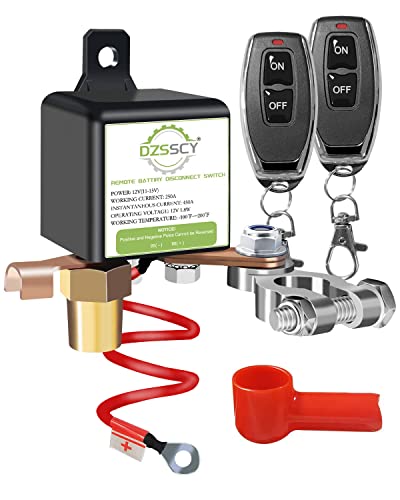
| High-Capacity Remote | Voltage Range: 12 V (designed) | Mount / Connection Type: Negative terminal clip (battery disconnect; clip to negative) | Primary Function: Remote battery disconnect / kill switch / anti-theft | VIEW LATEST PRICE | Read Our Analysis |
| 12V 240A Remote Battery Disconnect Kill Switch |

| Low-Draw Smart | Voltage Range: 12 V (designed) | Mount / Connection Type: Remote disconnect installed to battery (negative disconnect + manual option) | Primary Function: Remote battery disconnect / prevent drain / battery protection | VIEW LATEST PRICE | Read Our Analysis |
| Joinfworld Battery Disconnect Kill Switch 12V–48V |

| Reliable Standard | Voltage Range: 12–48 V DC | Mount / Connection Type: Top-post negative clamp (includes clamp and tapered post) | Primary Function: Battery disconnect / on-off isolation (kill switch) | VIEW LATEST PRICE | Read Our Analysis |
| Battery Disconnect Switch 12V–48V Quick Disconnect |

| Compact Heavy-Duty | Voltage Range: 12–48 V (maximum 48 V) | Mount / Connection Type: SAE top-post connection (top-post) | Primary Function: Battery disconnect / prevent parasitic drain / theft deterrent | VIEW LATEST PRICE | Read Our Analysis |
| Top Post 12V/300A Battery Disconnect Kill Switch |

| High-Performance | Voltage Range: 12 V nominal (compatible 12–48 V) | Mount / Connection Type: Top-post negative (SAE 15–17 mm) | Primary Function: Battery disconnect / isolation to prevent drain / start assist | VIEW LATEST PRICE | Read Our Analysis |
| 12V Remote Battery Disconnect Kill Switch (200A) |

| Remote Convenience | Voltage Range: 12 V DC | Mount / Connection Type: Battery clip to negative + wiring harness (negative-based remote disconnect) | Primary Function: Remote battery disconnect / anti-theft / prevent drain | VIEW LATEST PRICE | Read Our Analysis |
More Details on Our Top Picks
Ampper Top Post Battery Disconnect Switch (12V–48V)
Should you want a simple, reliable way to stop battery drain and make maintenance safer, the Ampper Top Post Battery Disconnect Switch is for you. You’ll install it on standard top-post batteries that use 19 mm positive taper and 17 mm negative taper. You’ll connect it to the negative post without extra cables or lugs, but check clearance initially. It works on DC 12–48 V systems and gives you ON and OFF positions with sturdy ratings: 275 A continuous, 455 A intermittent, 1250 A momentary. The ABS housing holds up in cars, RVs, and boats, and you can lock it for added security.
- Voltage Range:12–48 V DC
- Mount / Connection Type:Top-post negative clamp (top-post)
- Primary Function:Battery isolation / kill switch (prevent drain, maintenance, anti-theft)
- Continuous Current Rating (where stated):275 A continuous (at DC 12V)
- Remote / Manual Control:Manual two-position knob (ON/OFF); can be locked
- Housing / Conductor Materials:ABS plastic housing; heavy-duty (conductors unspecified)
- Additional Feature:Top-post negative only
- Additional Feature:High momentary rating
- Additional Feature:Lockable with others
Matell 12V Remote Battery Disconnect Anti-Theft Switch
Provided you want a simple, reliable way to stop battery drain and protect your vehicle from theft, the Matell 12V Remote Battery Disconnect is a great choice for drivers, boat owners, and RV users. You’ll get a compact 12V switch rated 120A with 500A cranking and a 2400A peak, so it handles starts and heavy loads. It uses pure copper conductors and upgraded isolator parts for secure installs. The remote reaches 30 to 70 m and smart voltage mode watches battery level, auto cutting off under 11.9V and blocking remote use above 13.3V while driving. Standby current is low at 0.005A.
- Voltage Range:12 V DC (rated)
- Mount / Connection Type:Inline remote disconnect (battery/vehicle installs) — connects to battery (clip/wires)
- Primary Function:Remote battery disconnect / anti-theft / prevent drain
- Continuous Current Rating (where stated):120 A rated continuous
- Remote / Manual Control:Remote-controlled (30–70 m) with smart voltage mode; auto cutoff; remote inhibited >13.3V
- Housing / Conductor Materials:Main conductor pure copper; upgraded isolator/accessories
- Additional Feature:Smart voltage monitoring
- Additional Feature:Remote 30–70 m range
- Additional Feature:Ultra-low standby current
Top Post Battery Disconnect Switch for Cars & RVs
Should you park your car, RV, or boat for days or months and worry the battery will die, this top post battery disconnect switch is a smart choice for you. You’ll stop parasitic drain and protect your battery life with a simple twist. The nylon 66 body feels solid and resists heat better than ordinary plastics. Solid brass contacts give reliable conductivity and resist corrosion, so you’ll get steady starts. You get three modes: ON, OFF, and remove-knob for theft protection. It fits negative posts 15 to 17 mm and works from 12 to 48 V. Install fast with clamp or wire lug options.
- Voltage Range:12–48 V (suitable)
- Mount / Connection Type:Top-post negative post clamp (15–17 mm)
- Primary Function:Battery kill switch / prevent drain / anti-tamper
- Continuous Current Rating (where stated):(not explicitly numeric; designed for typical 12–48 V battery currents) — fitment lists compatibility; conductive brass (no single continuous AMPs specified)
- Remote / Manual Control:Manual knob with removable knob for anti-theft (three modes: ON/OFF/remove-knob)
- Housing / Conductor Materials:Body Nylon 66; conductive components solid brass
- Additional Feature:Removable security knob
- Additional Feature:Nylon 66 housing
- Additional Feature:Adjustable mounting angle
12V 250A Remote Battery Disconnect Kill Switch
In case you want a simple, reliable way to stop battery drain and cut theft risk, the V 250A Remote Battery Disconnect Kill Switch is a strong choice for drivers and vehicle owners who park long term or store a second vehicle. You’ll get a 12V unit rated 250A with 450A peak current, built with pure copper wiring and larger receivers for better remote range. It disconnects the negative terminal while the red wire ties to positive, so you’ll avoid damage through not disconnecting the positive. It fits cars, trucks, RVs, motorcycles, and campers, and support answers questions within 24 hours.
- Voltage Range:12 V (designed)
- Mount / Connection Type:Negative terminal clip (battery disconnect; clip to negative)
- Primary Function:Remote battery disconnect / kill switch / anti-theft
- Continuous Current Rating (where stated):250 A rated
- Remote / Manual Control:Remote-controlled (with manual wiring option)
- Housing / Conductor Materials:Pure copper wiring; quality materials noted
- Additional Feature:Red wire positive lead
- Additional Feature:Larger receiver module
- Additional Feature:Simple wiring check support
12V 240A Remote Battery Disconnect Kill Switch
In case you often park your vehicle for days or weeks, the V 240A Remote Battery Disconnect Kill Switch is the right pick to keep your battery healthy and give you peace of mind. You’ll like that it cuts power to stop drain from lights left on, parasitic loads, or aging wiring. It runs on 12 V and handles 240 A continuous, so it suits most cars and light trucks. A mechanical magnetic switch keeps standby draw to 0.003 A. It auto-cuts below 11.8 V and blocks remote shutoff above 13.2 V. You can use remote or manual control, and support replies within 24 hours.
- Voltage Range:12 V (designed)
- Mount / Connection Type:Remote disconnect installed to battery (negative disconnect + manual option)
- Primary Function:Remote battery disconnect / prevent drain / battery protection
- Continuous Current Rating (where stated):240 A continuous
- Remote / Manual Control:Remote-controlled with manual control option; smart voltage protections
- Housing / Conductor Materials:Mechanical magnetic switch (internal) with upgraded materials; conductor unspecified (low standby)
- Additional Feature:Auto-cutoff 11.8V
- Additional Feature:Remote disabled >13.2V
- Additional Feature:Mechanical magnetic switch
Joinfworld Battery Disconnect Kill Switch 12V–48V
Should you own a boat, RV, truck, or multiple battery bank and need a simple, dependable way to cut power, the Joinfworld Battery Disconnect Kill Switch is a strong choice. You’ll install it on the negative post, so it isolates the whole system quickly. It works with 12 to 48 V DC systems and handles 250 A continuous and 1000 A cranking, so it suits trucks, campers, ATVs, and battery banks. The ABS housing feels sturdy, and the copper clamp and tapered post guarantee good conductivity. You can lock it with other switches, prevent drain, and manage power with one easy twist.
- Voltage Range:12–48 V DC
- Mount / Connection Type:Top-post negative clamp (includes clamp and tapered post)
- Primary Function:Battery disconnect / on-off isolation (kill switch)
- Continuous Current Rating (where stated):250 A continuous
- Remote / Manual Control:Manual on/off top-post switch
- Housing / Conductor Materials:ABS plastic housing; copper clamp and tapered post
- Additional Feature:Includes tapered post
- Additional Feature:Copper clamp included
- Additional Feature:Lockable with others
Battery Disconnect Switch 12V–48V Quick Disconnect
Should you own a boat, RV, truck, or any vehicle where you need a fast, reliable way to cut power, this quick-disconnect battery switch is a smart choice for keeping your battery healthy and your gear safe. You’ll use it on 12V to 48V systems to stop parasitic drain and deter theft. It handles 300A continuous and 900A crank, with a 48V max. The SAE top post, PA66 housing, and copper terminals mean durable conductivity and heat resistance. The removable red knob locks out unauthorized use, it’s IP66 waterproof, and installation parts come included.
- Voltage Range:12–48 V (maximum 48 V)
- Mount / Connection Type:SAE top-post connection (top-post)
- Primary Function:Battery disconnect / prevent parasitic drain / theft deterrent
- Continuous Current Rating (where stated):300 A continuous
- Remote / Manual Control:Manual quick-disconnect with removable knob (no remote)
- Housing / Conductor Materials:PA66 housing; heavy-duty copper terminals
- Additional Feature:Compact 1.5″ height
- Additional Feature:IP66 waterproof rating
- Additional Feature:Removable large knob
Top Post 12V/300A Battery Disconnect Kill Switch
You’ll appreciate this Top Post 12V/300A battery disconnect kill switch in case you want a simple, reliable way to stop battery drain and protect your vehicle’s electrical system. You’ll find it controls the negative top post with on off ease and fits SAE negative posts 15 to 17 mm. It handles 12V nominal and 300 A continuous with 1000 A starting, and it works in 12V to 48V systems for cars trucks boats and RVs. The ABS housing resists heat, and brass terminals hold up under use. Installation only needs about 4.7 inches clearance and basic tools.
- Voltage Range:12 V nominal (compatible 12–48 V)
- Mount / Connection Type:Top-post negative (SAE 15–17 mm)
- Primary Function:Battery disconnect / isolation to prevent drain / start assist
- Continuous Current Rating (where stated):300 A continuous
- Remote / Manual Control:Manual top-post on/off (removable knob implied)
- Housing / Conductor Materials:Flame-retardant ABS housing; brass cast terminals/connectors
- Additional Feature:4.7″ clearance needed
- Additional Feature:Brass cast terminals
- Additional Feature:1-year limited guarantee
12V Remote Battery Disconnect Kill Switch (200A)
Should you want a fast, hood-free way to cut power and stop theft, the V Remote Battery Disconnect Kill Switch is made for drivers who value convenience and security. You get a 12V remote switch rated 200A with silver contacts and pure copper wiring. It disconnects battery power from the cabin so thieves can’t start your vehicle and it saves battery life when parked. Installation needs no mods: red to battery positive, clip to negative, and the wiring looms are included. Wait about six seconds after reconnection before starting on some models and be ready to re-pair a stereo should required.
- Voltage Range:12 V DC
- Mount / Connection Type:Battery clip to negative + wiring harness (negative-based remote disconnect)
- Primary Function:Remote battery disconnect / anti-theft / prevent drain
- Continuous Current Rating (where stated):200 A rated
- Remote / Manual Control:Remote-controlled with wiring harness and manual reconnect behavior notes
- Housing / Conductor Materials:Contact material silver; wiring pure copper; preinstalled wiring harness
- Additional Feature:Silver contact material
- Additional Feature:Preinstalled negative wire
- Additional Feature:Hood-free remote operation
Factors to Consider When Choosing Car Battery Switches
Whenever you pick a battery switch, check that its voltage compatibility matches your vehicle and any accessories so you won’t get surprises. Also look at current capacity ratings and mounting and fitment to make sure the switch can handle the load and fits where you need it. Finally decide between remote and manual operation and watch for standby power draw, since those choices affect convenience and battery health.
Voltage Compatibility Range
Because the electrical life of your switch depends on matching voltages, pick a device whose rated voltage range meets or exceeds your system voltage so it won’t get stressed during normal use or charging. You should confirm the maximum DC voltage rating, not just a 12V label, since some switches cover 12–48 V while others are single nominal voltage. Should you employ charging systems, look for built in voltage sensing that prevents the switch from acting oddly when alternator or charger voltages rise above about 13.2 to 13.3 V. For occasional higher transients like cranking or jump starts, verify the switch’s peak voltage tolerance to avoid arcing. In multi battery setups, choose a switch rated for the highest combined system voltage to protect insulation and reliability.
Current Capacity Ratings
Pick a switch rated to carry more current than your vehicle normally pulls so you won’t worry about it overheating or failing. You should pick a continuous rating at or above the highest steady draw, common values are 120 A, 240 A, or 250 to 300 A. Also check the cranking or momentary rating, often 500 to 1250 A, so the starter peak won’t weld contacts. Compare intermittent or surge ratings, like 450 to 1000 A, whenever you expect repeated short high loads. For multi battery or higher voltage systems, make sure ratings are given for the system voltage from 12 to 48 V because thermal limits change with voltage. Finally, add a 25 to 50 percent safety margin for aging, temperature, and spikes.
Mounting And Fitment
You’ve already looked at current ratings, and now you’ll want to make sure the switch actually fits your battery and the space around it. Check your battery terminal type and size so the clamp or post mates securely without adapters. Also measure vertical clearance above the battery because top-post switches can require several centimeters of room to turn freely. Decide whether the switch mounts directly to the post or uses cable lugs or a bracket, since that affects wiring length and extra hardware. Look for adjustable or low-profile options like angled clamps, compact housings, and spacers for tight trays. Finally, confirm the mounting method keeps solid electrical contact and can be fastened tightly to resist vibration and avoid loose connections.
Remote Versus Manual
Often you’ll weigh convenience against simplicity while choosing between a remote and a manual battery switch, and the right choice depends on how you use your vehicle and how much hands-on access you want. In case you value ease and anti-theft features, a remote lets you cut power from tens of meters away, so you can stay warm or avoid opening the hood. Remote units add electronics, so they need a tiny standby current and could include voltage cutoff logic. Should you want ruggedness and the least fuss, a manual top-post switch gives simple mechanical contacts, higher continuous current capacity, and near-zero parasitic draw. Reflect on installation access, how often you’ll switch, and whether wireless convenience outweighs added electronics.
Standby Power Draw
Standby current quietly eats your battery while the vehicle sits, so you’ll want to pay close attention to the small draw a switch or its remote receiver uses while “off.” Even tiny numbers matter, because a few milliamps add up over days and weeks and can leave you with a dead battery before you know it.
Check spec sheets for quiescent current. Mechanical or magnetic switches can be nearly zero microamps, so they’re safest for long storage. Electronic and remote units often draw 0.005 to 0.05 A, and that adds up fast. For example, 0.005 A uses about 0.12 Ah per day. Look for smart voltage logic that shuts down receivers below a set voltage. Also confirm whether manufacturers include receiver, LEDs, or telemetry in their standby figures because extras usually explain higher draws.
Material And Durability
After you’ve checked how much current a switch draws while parked, the next thing to look at is what the switch is made of and how tough it really is. You want housings made from flame-retardant, impact-resistant plastics like PA66 or high-grade ABS. These resist engine heat, vibration, melting, and cracking. Inside, expect conductive parts of solid brass or pure copper so contacts stay cool, resist corrosion, and carry heavy current. Check mechanical durability ratings and temperature ranges that cover hot engine bays and cold starts. Look for sturdy sealing such as IP66 to keep out moisture, salt spray, and dust for outdoor or marine use. Finally, match rated current and duty cycle to the construction so the switch won’t overheat or deform under load.
Safety And Lockout Features
As you’re choosing a battery switch, consider safety initially because a single wrong move can spark trouble during installation or maintenance. Pick a switch that isolates the negative terminal rather than the positive, since that cuts the chance of a chassis short and dangerous sparks. Look for physical lockout options like removable knobs, keyed locks, or padlock provisions so someone can’t accidentally re-energize the system. Also check voltage and current ratings and confirm safe interrupt ratings for continuous, cranking, and peak currents to prevent arcing during faults or starts. Prefer low standby leakage and auto-shutoff thresholds so the battery won’t drain. Make sure housing and terminals resist flames and corrosion, show clear on off status, and mount securely to avoid accidental contact or vibration closure.
Installation Complexity
You’ve already covered safety and lockout, and now you’ll want to consider how the switch actually goes in and stays put. Reflect on terminal compatibility first. Measure post sizes like top-post 15 to 19 mm or M8 studs so you don’t need adapters or new cables. Next, decide whether you want a post-mounted clamp or an inline switch with lugs. Post clamps usually take less time and skip extra wiring, while inline units need more prep. Check clearance in the engine bay; compact top-post designs can sit in about 1.5 in 38 mm, but larger boxes need several inches. Also verify tool needs. Some installs require only hand tools, others call for crimping, heat shrinking, and a torque wrench. Finally, factor in remote or automatic cutoffs, which add wiring and routing needs.
