

Upgrading battery terminals is a quick, affordable way to improve electrical performance and reduce corrosion.
Good connectors offer solid conductivity, durable corrosion resistance, and straightforward installation.
Below are five top terminal options suited for heavy-amperage use, marine exposure, cramped engine bays, and DIY swaps.
Each pick highlights material quality, sealing, and ease of use so you can choose the best fit for your needs.
| TKDMR Heavy Duty 1/0 AWG Battery Ring Terminals |
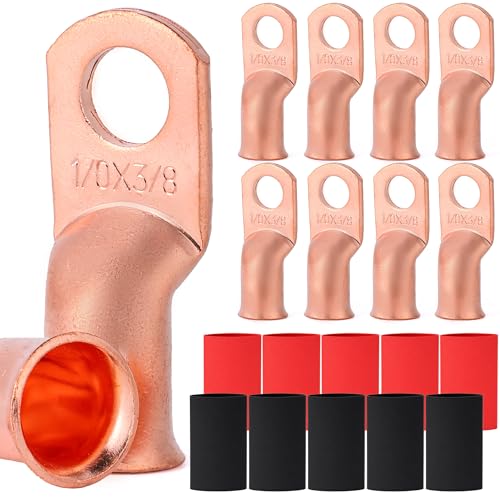
| Heavy-Duty Choice | Conductor Material: 100% annealed copper | Stud / Lug Size Compatibility: 3/8″ stud hole | Intended Applications: Automotive, marine, solar, golf carts, vehicles, DIY wiring | VIEW LATEST PRICE | Read Our Analysis |
| CARTMAN 4AWG 24″ Battery Inverter Cable Set |
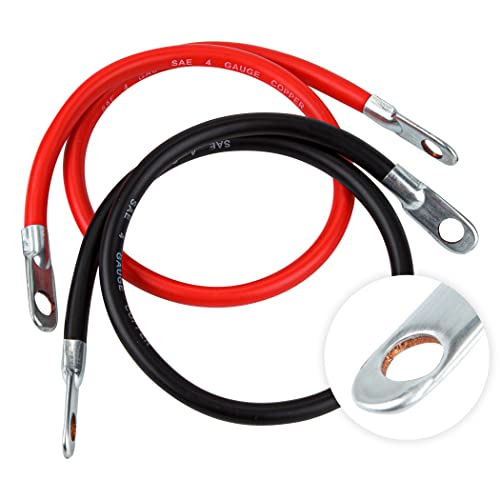
| High-Performance Cables | Conductor Material: SAE copper conductor (95% copper lugs) | Stud / Lug Size Compatibility: Fits 3/8″ stud | Intended Applications: Car, truck, RV, solar applications | VIEW LATEST PRICE | Read Our Analysis |
| TOPDC 4 AWG 24″ All-Copper Battery Cable Set |

| Pure Copper Pick | Conductor Material: Pure copper conductor | Stud / Lug Size Compatibility: 3/8″ ring terminals | Intended Applications: Car batteries, trucks, RVs, marine, ATVs, solar systems | VIEW LATEST PRICE | Read Our Analysis |
| Heavy-Duty Military Spec Car & Marine Battery Terminal Kit |

| Marine/Truck Ready | Conductor Material: Lead alloy (high conductivity) with copper lugs included | Stud / Lug Size Compatibility: 3/8″ size lugs/terminals | Intended Applications: Cars, marine, boats, RVs, trucks, campers, battery banks | VIEW LATEST PRICE | Read Our Analysis |
| SINGARO Pure Copper Car Battery Terminal Connector |

| Universal Replacement | Conductor Material: Pure copper construction | Stud / Lug Size Compatibility: Fits common battery cone/taper terminals (19 mm / 17 mm) — intended for standard terminal posts (compatible with 3/8″ lug hardware) | Intended Applications: Automobiles, cars, vans, trucks, RVs, yachts | VIEW LATEST PRICE | Read Our Analysis |
More Details on Our Top Picks
TKDMR Heavy Duty 1/0 AWG Battery Ring Terminals
Should you need rugged, reliable terminals for high-current battery work, the TKDMR Heavy Duty 1/0 AWG ring terminals are a great pick for DIYers and pros alike because they combine full annealed copper strength with a close-end design that keeps moisture and solder out of the joint. You’ll like the ten closed-end rings and pre-cut shrink tubes that speed installation. The copper conducts well and resists corrosion thanks to a special finish. You can crimp or solder, and the flared opening makes wire insertion easy. Use them on cars, boats, solar setups, or golf carts with proper cable sizing.
- Conductor Material:100% annealed copper
- Stud / Lug Size Compatibility:3/8″ stud hole
- Intended Applications:Automotive, marine, solar, golf carts, vehicles, DIY wiring
- Corrosion / Protection Features:Special surface treatment for corrosion protection; closed-end pad prevents moisture ingress
- Insulation / Heat-Shrink Included:3:1 dual-wall adhesive heat-shrink tubing (5 black, 5 red), pre-cut
- Flexibility / Cable Construction:High-conductivity heavy-duty construction; suitable for compatible copper cable (crimp or solder)
- Additional Feature:Closed-end pad design
- Additional Feature:3:1 dual-wall tubing
- Additional Feature:Pre-cut shrink pieces
CARTMAN 4AWG 24″ Battery Inverter Cable Set
Should you need a rugged, easy-to-install cable set for high-current inverter connections, the CARTMAN 4AWG 24-inch Battery Inverter Cables are a smart pick for DIYers and pros alike. You get two 24-inch 4 AWG cables, one positive and one negative, made from SAE 4 gauge copper for reliable current flow. The 3/8 inch lug fit works with common inverter posts. The lugs are 95% copper and zinc plated, so they resist corrosion and oxidation. Ultra-flexible boat cable construction and improved stamping lower resistance and handle heat to 105°C, so you’ll trust them in harsh conditions.
- Conductor Material:SAE copper conductor (95% copper lugs)
- Stud / Lug Size Compatibility:Fits 3/8″ stud
- Intended Applications:Car, truck, RV, solar applications
- Corrosion / Protection Features:Zinc-plated lugs for corrosion/oxidation resistance
- Insulation / Heat-Shrink Included:(Not explicitly listed as separate heat-shrink) Heat-resistant cable insulation (boat cable); lugs/cable designed for heat up to 105°C
- Flexibility / Cable Construction:Ultra-flexible, boat cable construction for extreme conditions
- Additional Feature:24-inch pair length
- Additional Feature:Zinc-plated lugs
- Additional Feature:Ultra-flexible boat cable
TOPDC 4 AWG 24″ All-Copper Battery Cable Set
Should you want a heavy-duty cable that makes power delivery simple and reliable, the TOPDC 4 AWG 24 inch all-copper battery cable set is a solid pick for DIYers and pros alike. You’ll like that its pure copper conductor keeps resistance low, so your starter and accessories get steady current. The 24 inch length fits tight engine bays, and the 3/8 inch ring terminals make secure connections easy. Flexible PVC insulation and sealed heat-shrink ends resist abrasion, water, and heat, so you won’t worry about failures. It works for cars, trucks, marine, ATV, and solar setups, and support is available.
- Conductor Material:Pure copper conductor
- Stud / Lug Size Compatibility:3/8″ ring terminals
- Intended Applications:Car batteries, trucks, RVs, marine, ATVs, solar systems
- Corrosion / Protection Features:Sealed heat-shrink ends; PVC jacket resists moisture/abrasion
- Insulation / Heat-Shrink Included:Heat-shrink tubing at cable ends, sealed
- Flexibility / Cable Construction:Flexible construction with PVC insulation for easier routing
- Additional Feature:Pure copper conductor
- Additional Feature:Sealed heat-shrink ends
- Additional Feature:Flame-retardant jacket
Heavy-Duty Military Spec Car & Marine Battery Terminal Kit
Provided you want a rugged, reliable terminal kit that handles heavy wiring without fuss, this military spec set is a great pick for anyone working on cars, boats, RVs, or battery banks. You’ll get two heavy-duty terminals with lead alloy bodies that carry current well and resist corrosion. Anti-corrosion washers cut down on power loss, and red and black covers keep polarity clear and protected. Four 2 gauge copper lugs and four heat-shrink tubes let you join multiple cables cleanly. Fit is broad across battery types, but check terminal polarity before you install to avoid mistakes.
- Conductor Material:Lead alloy (high conductivity) with copper lugs included
- Stud / Lug Size Compatibility:3/8″ size lugs/terminals
- Intended Applications:Cars, marine, boats, RVs, trucks, campers, battery banks
- Corrosion / Protection Features:Anti-corrosion washers; military-style covers and anti-corrosion features
- Insulation / Heat-Shrink Included:Heat-shrink tubes included (4)
- Flexibility / Cable Construction:Heavy-duty terminals accept multiple cables; built for durable connections (flexible use)
- Additional Feature:Military-style terminal covers
- Additional Feature:Anti-corrosion washers included
- Additional Feature:Accepts multiple cables
SINGARO Pure Copper Car Battery Terminal Connector
Should you want a reliable, no-fuss way to replace worn battery terminals, the SINGARO Pure Copper Car Battery Terminal Connector is made for you. You’ll like its pure copper build because it conducts well and resists corrosion, so your connections stay strong. It fits many vehicles, from cars and vans to trucks, RVs, and yachts, and it matches 19 mm positive and 17 mm negative tapering posts. You get insulation sleeves, terminal blocks, and anti-corrosion washers to finish the job cleanly. In case you run into trouble, customer support is ready to help, so you won’t feel stuck.
- Conductor Material:Pure copper construction
- Stud / Lug Size Compatibility:Fits common battery cone/taper terminals (19 mm / 17 mm) — intended for standard terminal posts (compatible with 3/8″ lug hardware)
- Intended Applications:Automobiles, cars, vans, trucks, RVs, yachts
- Corrosion / Protection Features:Corrosion-resistant pure copper; includes anti-corrosion washers
- Insulation / Heat-Shrink Included:Includes 2 insulation sleeves
- Flexibility / Cable Construction:Durable replacement terminals designed for regular vehicle wiring (universal fit)
- Additional Feature:Universal taper fit
- Additional Feature:Includes terminal blocks
- Additional Feature:Anti-corrosion washers included
Factors to Consider When Choosing Car Battery Wiring Terminals
Once you pick wiring terminals for your car battery, start checking the material and conductivity so electricity flows efficiently and reliably. Make sure the terminal size fits your posts, look for corrosion resistant coating and the connection type that matches your cables, and consider the heat and temperature rating for your climate and driving habits. These factors work together to keep your electrical system safe and dependable, so choose parts that match both your vehicle and how you drive.
Material And Conductivity
Pick terminals that let electricity flow with as little resistance as possible, and you’ll avoid hot spots, slow starts, and flaky connections. You want copper or pure copper alloys because they carry current best and cut voltage drop and heat compared with brass or steel. Tin or nickel plating helps too through stopping oxide build up, so your contact stays low resistance over time. Use annealed soft copper conductors for crimping or soldering since they make tighter joints than hard wire. Bigger contact areas and close end designs also lower resistance and keep moisture out, which preserves conductivity. Finally match terminals and lugs to your cable gauge and expected current. Undersized parts raise resistance and can overheat, so choose right and you’ll drive with confidence.
Terminal Size Fit
Because a tight fit keeps your battery reliable, you’ll want to check a few size details before you buy terminals. To start, verify the stud hole diameter, often 3/8″ or 5/16″, and pick terminals with matching ring or stud size so the connection is solid and low resistance. Next, match the terminal barrel inner diameter to your cable gauge, like 1/0 AWG, 2 AWG, or 4 AWG, so the conductor fills the barrel for proper crimping or soldering. Also confirm overall dimensions and clearance so the terminal fits the post, hold down, and nearby parts without bending or shorting. For multiple cables, use a pad or multi-screw terminal rated for the combined conductor cross section. Check post type and taper for direct replacements.
Corrosion Resistance Coating
Provided you want your battery connections to stay reliable through rain, road salt, or humid garage air, choose terminals that have a proper corrosion-resistant coating and a solid copper core. You’ll want tin, nickel, or zinc plating because these coatings cut oxidation and keep contact resistance low over time. Also check that the coating covers 100% copper terminals so you don’t lose conductivity under the protective layer. Ask about the plating method and thickness since thicker, well-bonded platings resist harsh and marine conditions better. Prefer closed-end or sealed designs with coatings to stop moisture at the conductor interface. Finally, match environmental ratings like salt spray or ASTM corrosion tests and temperature limits to the exposure you expect, and you’ll feel confident the terminals will last.
Connection Type Options
Start with reflecting about how you use your battery and what you need the connection to do for you. You want secure, low resistance links for starter and main feeds, so ring terminals that bolt down are ideal provided they are torqued correctly. For inline repairs or additions, crimped butt or spade connectors let you join wires quickly, but you must match AWG and use proper crimp tools to avoid heat and resistance. Soldered joints give great conductivity on small wires, yet they can fail under vibration, so don’t rely on them alone for heavy cables. Bolt-on terminals with clamps work well if you disconnect often, but watch clamp torque and corrosion protection. Quick-disconnects are handy for accessories, best on low-current circuits or properly rated versions.
Heat And Temperature Rating
You picked the right connector type for your starter or accessory, and now you need to ponder about heat and temperature ratings so those choices last. Check insulation temperature ratings, commonly 85 to 257°F 30 to 125°C, and select higher rated heat shrink whenever your engine bay runs hot. Inspect the metal terminal too. Copper and copper alloys hold conductivity better under heat than some plated steels, so they resist softening and oxidation that raise resistance. For parts near exhausts or alternators pick items rated for continuous elevated exposure and short bursts above that level. Look for UL or CSA markings and voltage specs on sleeves so insulation won’t fail. Reflect on thermal cycling and vibration and choose materials that won’t crack or lose their seal over time.
Insulation And Protection
When you’re picking battery terminals, consider of insulation and protection as the guard that keeps corrosion, shorts, and breakage away from your wiring. You want insulation materials that match your vehicle heat. PVC often handles 105°C, while quality heat shrink can take about 125°C. That stops melting or hardening and keeps connections reliable. Look for sealed or closed end designs and heat shrink sleeves to block moisture and cut corrosion at crimp or solder joints. Color coded covers, usually red and black, make it easy to avoid polarity mistakes when you work on the battery. Also check for mechanical strain relief like flared openings, molded boots, or collars to prevent cable flex and conductor breakage. Make certain insulation fully covers exposed metal and has UL or CSA ratings for dielectric safety.
Ease Of Installation
Getting set up should feel straightforward, not frustrating, so pick battery terminals that make the job fast and error free. You’ll want a simple clamp or bolt design and clear polarity markings so you don’t second guess connections. Choose terminals that accept your wire gauge directly, for example ring sizes for 4 AWG or 1/0 AWG, so you skip adapters and extra splicing. Look for closed end or sealed styles and pre-fit heat-shrink compatibility to cut soldering steps and keep moisture out. A high-flared opening or large wire entry makes insertion and insulation positioning easier, especially with multi-strand or tinned cable. Prefer terminals you can crimp or solder that include pre-cut shrink tubing or covers to speed a neat, professional finish.
