

A single faulty pressure switch can shut down an entire compressor system, so choosing the right one matters.
Compare setpoint accuracy, construction materials, and electrical compatibility to match your pressure range and environment.
For quick onsite swaps, pick universal 70–100 PSI or 95–120 PSI mechanical switches.
For wide voltage ranges and IP54 protection choose a G1/4″ 24–380V electronic controller; use a compact 100–450 kPa transducer with digital output for vehicle A/C; keep a four-port manifold switch with adjustable setpoints and relief protection for multi-line jobs.
| Air Compressor Pressure Switch 70–100 PSI (Universal) |

| Best for Horns | Port/thread type: 1/8″-27 NPT male | Pressure control function: Cut-in/cut-out pressure switch (70/100 PSI) | Intended media/application: Compressed air (air tanks, air horns, air-ride) | VIEW LATEST PRICE | Read Our Analysis |
| A/C Refrigerant Pressure Sensor Transducer Switch (Universal) |
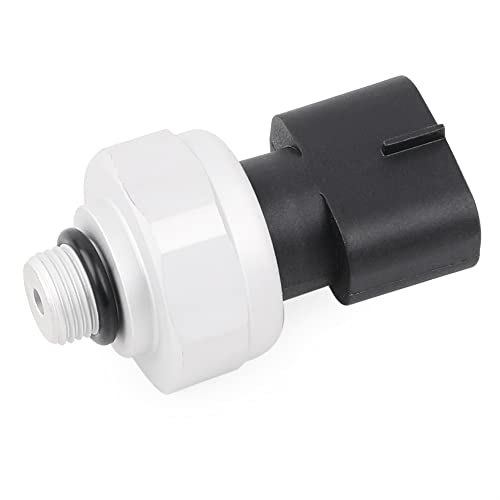
| Vehicle Compatibility Pick | Port/thread type: Plug-in electrical mounting (sensor electrical plug; pressure port — vehicle A/C threaded fitting) | Pressure control function: Pressure sensor/transducer switch for A/C refrigerant (measures 100–450 kPa) | Intended media/application: A/C refrigerant (automotive air conditioning) | VIEW LATEST PRICE | Read Our Analysis |
| 24V–380V Electronic G1/4″ Pressure Control Switch |
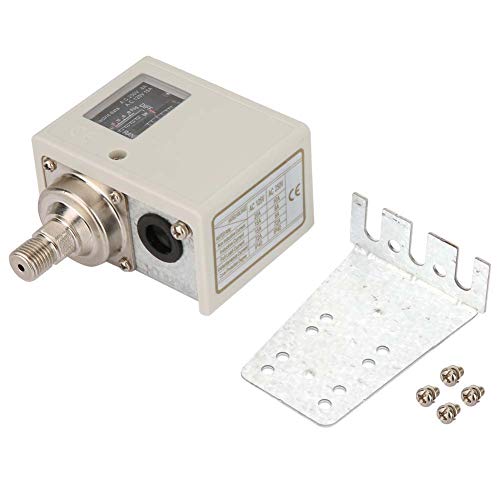
| Most Versatile Voltage | Port/thread type: G1/4″ thread | Pressure control function: ON‑OFF pressure control switch (electronic) | Intended media/application: Non-corrosive media — air, freon, liquid (refrigerant-compatible option) | VIEW LATEST PRICE | Read Our Analysis |
| Air Compressor Pressure Switch FB10-4H (95–120 PSI) |
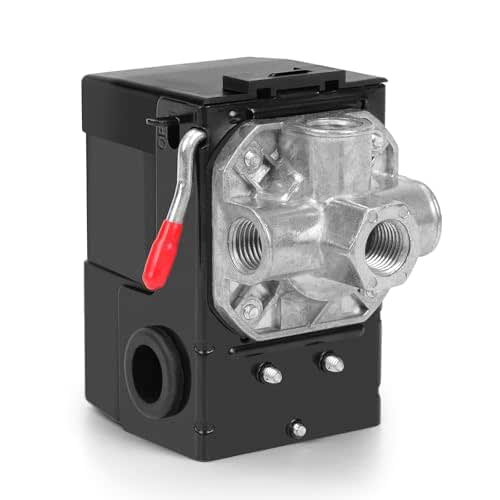
| Pro-Grade Installer | Port/thread type: 1/4″ NPT female port (4-port manifold) | Pressure control function: Mechanical pressure switch (cut-in/cut-out; 95/125 PSI factory) | Intended media/application: Air for compressors (single/dual-stage compressor systems) | VIEW LATEST PRICE | Read Our Analysis |
| Dreyoo 4-Port Air Compressor Pressure Switch with Gauge |
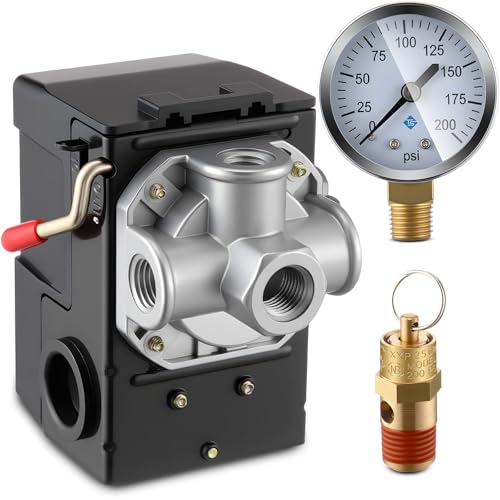
| All-in-One Monitor | Port/thread type: Four 1/4″ NPT female ports (universal 1/4″ NPT) | Pressure control function: ON‑OFF pressure control switch (cut-in/cut-out; 90/120 PSI preset, adjustable) | Intended media/application: Air/compressor systems and water pump systems (pneumatic systems) | VIEW LATEST PRICE | Read Our Analysis |
More Details on Our Top Picks
Air Compressor Pressure Switch 70–100 PSI (Universal)
Should you need a rugged, easy to install pressure controller for air horns, tanks, or ride systems, this 70 to 100 PSI compressor pressure switch is a solid choice for you. You’ll like the 1/8″-27 NPT male thread because it snaps into common fittings without fuss. It kicks in at 70 PSI and shuts off at 100 PSI, so your system stays safe and steady. Pick DC 12 or 24 V or AC 110, 120, or 240 V to match your setup. Expect about 100,000 cycles of service life and seller support via email should assistance be required.
- Port/thread type:1/8″-27 NPT male
- Pressure control function:Cut-in/cut-out pressure switch (70/100 PSI)
- Intended media/application:Compressed air (air tanks, air horns, air-ride)
- Electrical connection/type:Available DC (12/24V) and AC (110/120/240V) versions
- Durability / cycle life / protection:Service life ~100,000 cycles; long working life
- Safety / overload protection:Prevents overpressure via cut-out control
- Additional Feature:1/8″-27 NPT male
- Additional Feature:Multiple voltage options
- Additional Feature:100,000 cycle lifespan
A/C Refrigerant Pressure Sensor Transducer Switch (Universal)
Should you want a straightforward, reliable way to keep your car’s A/C running smoothly, the A/C refrigerant pressure sensor transducer switch is a great choice for DIYers and professional techs alike. You’ll plug this modern plastic sensor into the system to read refrigerant pressure between 100 and 450 kPa. It runs on 5 volts and gives a digital output that your car’s controls can trust. You’ll find broad vehicle compatibility from Lexus and Toyota to Jaguar and Subaru, plus many OEM cross references for easy replacement. It weighs 14.4 ounces and ships in a compact package.
- Port/thread type:Plug-in electrical mounting (sensor electrical plug; pressure port — vehicle A/C threaded fitting)
- Pressure control function:Pressure sensor/transducer switch for A/C refrigerant (measures 100–450 kPa)
- Intended media/application:A/C refrigerant (automotive air conditioning)
- Electrical connection/type:Digital output, 5 V supply, plug‑in electrical connector
- Durability / cycle life / protection:Automotive-grade plastic sensor; manufacturer warranty/return support noted
- Safety / overload protection:Protects A/C system by reporting/controlling refrigerant pressure (digital sensor limits)
- Additional Feature:Digital output type
- Additional Feature:5 V supply max
- Additional Feature:Wide vehicle compatibility
24V–380V Electronic G1/4″ Pressure Control Switch
Should you need a reliable, easy-to-install pressure control switch for refrigerant systems or air compressors, the 24V–380V Electronic G1/4″ Pressure Control Switch is a strong choice because it blends wide voltage compatibility with rugged refrigerant-safe materials. You’ll like that it runs from 24V to 380V and handles 15 amps and 2500 watts. It uses G1/4” threads, brass contacts, and copper bellows or stainless steel for refrigerant use. You install it with a supplied bracket and screw, wire via screw terminals, and trust IP54 protection. It’s debugged over 2000 cycles for stable ON-OFF two-way control.
- Port/thread type:G1/4″ thread
- Pressure control function:ON‑OFF pressure control switch (electronic)
- Intended media/application:Non-corrosive media — air, freon, liquid (refrigerant-compatible option)
- Electrical connection/type:Wide AC/DC operating voltage (24V–380V), screw terminal connectors
- Durability / cycle life / protection:Debugged after 2,000 actions; IP54 protection rating
- Safety / overload protection:Electronic ON/OFF control to prevent overpressure (intended for safe pressure control)
- Additional Feature:G1/4″ threaded port
- Additional Feature:24–380V wide range
- Additional Feature:15 A / 2500W rating
Air Compressor Pressure Switch FB10-4H (95–120 PSI)
Provided you want a reliable switch that fits most single or dual stage compressors and makes startup easy, the FB10-4H is a great choice. You’ll like its 1/4″ NPT female port and 6.3 mm unloader valve connection because they make hookup simple. The four port manifold gives you flexible installation and lets you add gauges, safety valves, or extra lines. You’ll use the metal toggle and side unloader to control pressure and ease starts. Built from corrosion resistant materials, it handles frequent cycling and keeps steady output. Automatic control protects against overpressure, so your tools and compressor stay safe.
- Port/thread type:1/4″ NPT female port (4-port manifold)
- Pressure control function:Mechanical pressure switch (cut-in/cut-out; 95/125 PSI factory)
- Intended media/application:Air for compressors (single/dual-stage compressor systems)
- Electrical connection/type:Mains AC 110–120V operation (contacts with toggle/unloader terminals)
- Durability / cycle life / protection:Corrosion- and wear-resistant construction, designed for frequent cycling
- Safety / overload protection:Automatic overpressure prevention; multi-port allows safety valve/gauge connections
- Additional Feature:Four-port manifold design
- Additional Feature:6.3 mm unloader connection
- Additional Feature:Metal on/off toggle
Dreyoo 4-Port Air Compressor Pressure Switch with Gauge
In case you want a reliable pressure switch that fits a range of compressors and DIY systems, the Dreyoo 4-port model is a strong choice because it gives you simple, adjustable control and built-in safety in one compact unit. You’ll appreciate the preset 90 PSI cut-in and 120 PSI cut-out while the red lever lets you fine tune those settings. It connects via four 1/4″ NPT female ports and mounts on a wall for neat installation. The brass relief valve rated 200 PSI and the 0 to 200 PSI gauge keep you informed and safe. It handles 20 A at 110–120V and feels solid.
- Port/thread type:Four 1/4″ NPT female ports (universal 1/4″ NPT)
- Pressure control function:ON‑OFF pressure control switch (cut-in/cut-out; 90/120 PSI preset, adjustable)
- Intended media/application:Air/compressor systems and water pump systems (pneumatic systems)
- Electrical connection/type:110–120V, screw terminal connections (20 A rating)
- Durability / cycle life / protection:Corrosion-resistant components, brass contacts, designed for repeated/high-frequency use
- Safety / overload protection:Built-in brass safety relief valve (200 PSI) and gauge for monitoring
- Additional Feature:Built-in 0–200 PSI gauge
- Additional Feature:Brass 200 PSI relief
- Additional Feature:Adjustable red lever
Factors to Consider When Choosing Compressor Refrigerant Pressure Switches
At the time you pick a refrigerant pressure switch, start matching the pressure range and accuracy to your compressor so it will trip reliably under real operating conditions. Also check electrical compatibility and port thread and fit so the switch installs cleanly and connects to your control wiring without surprises. Don’t forget durability and cycle life plus safety and protection features, since a rugged, well protected switch keeps you safer and saves you time and money later on.
Pressure Range Accuracy
Because pressure switches act as the safety eyes of your compressor, you want one whose range and accuracy match your system so it won’t chatter or miss a trip. Pick a switch with a measuring range that comfortably spans your operating pressures, leaving margin above cut-in and cut-out to avoid frequent cycling. Look at the stated accuracy, for example ±1 to ±3 percent of full scale, so you get stable control in tight differential systems. Also check repeatability and hysteresis so the switch responds the same way each time and avoids pressure hunting. For sensitive systems, choose finer resolution like 1 PSI. Finally, account for temperature, vibration, and refrigerant effects and pick switches with compensation or suitable ratings.
Electrical Compatibility Requirements
Should your compressor be going to run safely and reliably, you need a pressure switch that matches the electrical side of the system precisely. You’ll initially match supply voltage to avoid damage, picking from low-voltage DC 5–24 V, AC 110–120 V, 220–240 V, or industrial 24–380 V. Then confirm the contact rating so the switch can handle motor or relay loads like 15 A at up to 380 V or 20 A at 110–120 V. Check output type and wiring style so it plugs into your PLC or control relay with no fuss. Also review cycle life and duty rating to handle frequent switching and motor inrush. Finally, verify protection and isolation such as IP rating, grounding, and external surge or overcurrent devices.
Port Thread And Fit
You matched the electrical side of your system, and now you’ll want the pressure switch to fit the compressor like a glove. Start off by confirming the thread type and size, for example 1/8″-27 NPT, 1/4″ NPT, or G1/4″, so the switch mates cleanly with the port or plumbing. Match male and female orientations and know whether threads are tapered or parallel to prevent leaks and cross-threading. Check how the port seals, whether thread sealant, tape, or an O‑ring face seal, and make sure port geometry supports that method. Look at clearance and port location so wiring and gauges have room without stressing the joint. Should you use adapters, pick ones rated for system pressure and compatible with the refrigerant to avoid corrosion or failure.
Durability And Cycle Life
At the time you pick a pressure switch, consider about how often it will turn on and off and how long you want it to last, because cycle life decides whether the switch will keep working under real use. You’ll want cycle life ratings like 100,000+ cycles or manufacturer test counts so you can match the switch to your duty cycle. Look for materials and contact designs rated for frequent cycling, such as metal bellows, brass contacts, or reed switches, because they cut wear and pitting. Check electrical contact ratings for current and VA and verify mechanical endurance so the switch survives motor starts and stops. Also ask for tested performance under your temperature, pressure swings, and cycle rate, and request duty cycle data.
Safety And Protection Features
Because safety is the part of the system you don’t want to leave to chance, pick pressure switches that give clear protection and fail-safe behavior so you can trust the compressor to stop or restart safely. You should choose switches with automatic cut-out and cut-in setpoints that match your system so overpressure or low pressure won’t damage components. Also look for built-in unloaders or pressure reliefs that vent trapped pressure on shutdown to prevent hard starts and wear. Check electrical ratings, contact type, and add thermal or surge protection to avoid welding or fires. Match enclosure IP and corrosion resistant wetted parts to the environment to prevent leaks and shorts. Finally, confirm cycle testing, clear labeling, and defined fail-safe defaults for safe maintenance.
