

You’ll keep your Toyota running smooth selecting a fuel filter that fits your exact year and engine, seals tight, and has a solid body you can tighten with confidence. Start with OEM Toyota 23300-62010 for factory-correct fit. Go with BOSCH 77065WS or BOSCH 77070WS for 99% filtration and 15g dirt capacity. Choose ECOGARD XF55113 for older Toyota cross-fits, or ECOGARD XF45075 for 1995-2004 Tacoma. Keep going to learn what to check before you buy.
| Toyota Fuel Filter – 23300-62010 |

| Genuine OEM Fit | Vehicle fit: Vehicle-specific fit (Toyota) | Filtration media: Contaminant-removal filter (media not specified) | Housing material: Metal | VIEW LATEST PRICE | Read Our Analysis |
| BOSCH 77065WS Workshop Fuel Filter for Toyota |

| Best Filtration Performance | Vehicle fit: Select Toyota models (’85–’95 trucks/4Runner/Celica) | Filtration media: Multilayered media | Housing material: Aluminum/plastic/surface-treated steel | VIEW LATEST PRICE | Read Our Analysis |
| ECOGARD Premium Fuel Filter (XF55113) |
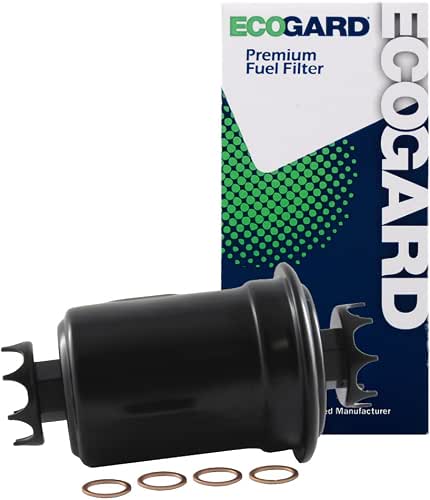
| Best Multi-Vehicle Fit | Vehicle fit: Multi-vehicle fit (various Toyota + Geo/Suzuki) | Filtration media: Multi-layered material | Housing material: Not specified | VIEW LATEST PRICE | Read Our Analysis |
| ECOGARD XF45075 Premium Fuel Filter for Toyota Tacoma |
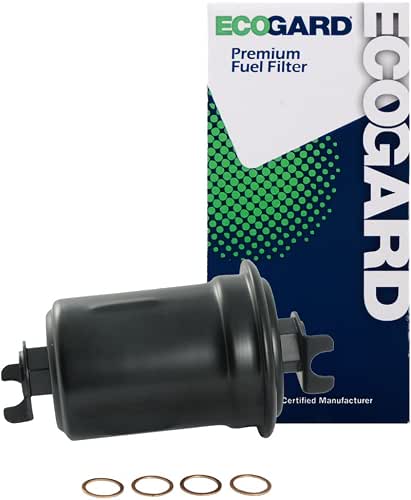
| Best for Tacoma | Vehicle fit: Toyota Tacoma/4Runner/T100 fit (specific years/engines) | Filtration media: Multi-layered material | Housing material: Not specified | VIEW LATEST PRICE | Read Our Analysis |
| BOSCH 77070WS Workshop Fuel Filter for Corolla/Prizm |

| Best for Corolla/Prizm | Vehicle fit: Corolla/Prizm fit (’93–’97) | Filtration media: Multilayered media | Housing material: Aluminum/plastic/surface-treated steel | VIEW LATEST PRICE | Read Our Analysis |
More Details on Our Top Picks
Toyota Fuel Filter – 23300-62010
In case you want your Toyota to start easily, idle smoothly, and stop feeling “a little off” on the road, the Toyota Fuel Filter 23300-62010 is a smart, no-drama choice since it’s a genuine OEM, vehicle-specific fit that goes on like it belongs there. It uses a solid metal body with a clean machined finish, so it feels tough in your hand, not flimsy. Next, it helps your engine by filtering out contaminants before they cause rough running. At 14.4 ounces and 4.5 x 4.5 x 4.1 inches, it fits neatly. Reviews average 4.4 stars, and returns stay simple.
- Vehicle fit:Vehicle-specific fit (Toyota)
- Filtration media:Contaminant-removal filter (media not specified)
- Housing material:Metal
- Replacement type:Genuine OEM replacement
- Installation fit:Direct fit
- Engine protection:Removes contaminants for engine performance
- Additional Feature:Genuine OEM part
- Additional Feature:Metal outer construction
- Additional Feature:Machined exterior finish
BOSCH 77065WS Workshop Fuel Filter for Toyota
Toyota owners who drive older workhorses and want steady, worry-free fuel delivery will feel at home with the BOSCH 77065WS Workshop Fuel Filter. It uses multilayer media that grabs 99% of particles, and it can hold 15 grams of dirt before flow suffers. So you protect injectors, avoid rough running, and keep mileage from slipping.
That protection needs a tough shell, and Bosch delivers with aluminum, plastic, or surface-treated steel that resists rust and pressure. Better yet, it fits like OE on select 1985 to 95 4Runner, Pickup, and 1985 Celica. Just confirm your engine.
- Vehicle fit:Select Toyota models (’85–’95 trucks/4Runner/Celica)
- Filtration media:Multilayered media
- Housing material:Aluminum/plastic/surface-treated steel
- Replacement type:Direct OE replacement
- Installation fit:Precision fit (original location/ports)
- Engine protection:Protects injectors/engine from wear
- Additional Feature:99% filtration efficiency
- Additional Feature:15-gram dirt capacity
- Additional Feature:Corrosion-resistant housing
ECOGARD Premium Fuel Filter (XF55113)
ECOGARD Premium Fuel Filter (XF55113) makes the most sense for you in case you drive an older Toyota and you want a dependable, no-drama replacement that keeps fuel clean before it reaches the injectors or carburetor. It fits classics like Tacoma, Previa, MR2, Pickup, Land Cruiser, T100, Cressida, Celica, and Van, plus some Geo and Suzuki models.
Because it uses multi layered filtering media, you stop grit before it causes trouble. So you can dodge hard starts, acceleration hiccups, rough idle, and weak mpg. It also crosses to FRAM G7196 and WIX 33500.
- Vehicle fit:Multi-vehicle fit (various Toyota + Geo/Suzuki)
- Filtration media:Multi-layered material
- Housing material:Not specified
- Replacement type:Aftermarket replacement (cross-references listed)
- Installation fit:Not specified
- Engine protection:Prevents particles reaching injector/carburetor
- Additional Feature:Wide multi-vehicle coverage
- Additional Feature:Replaces FRAM G7196
- Additional Feature:Helps smooth idling
ECOGARD XF45075 Premium Fuel Filter for Toyota Tacoma
Keeping your older Tacoma running smooth gets a lot easier once your fuel filter fits right and filters hard, because one small clog can turn into rough idling and stressful no-start mornings. ECOGARD’s XF45075 fits Tacoma 2.4L or 2.7L models from 1995 to 2004, and also matches some 4Runner and T100 2.7L years. It replaces Toyota 23300-75030 and other common numbers, so you can shop with confidence. Next, its multi-layer media traps grit before it hits injectors or a carb. Finally, the precise inlet and outlet connections make install drama-free.
- Vehicle fit:Toyota Tacoma/4Runner/T100 fit (specific years/engines)
- Filtration media:Multi-layered material
- Housing material:Not specified
- Replacement type:Aftermarket replacement (cross-references listed)
- Installation fit:Precise inlet/outlet connections
- Engine protection:Prevents particles reaching injector/carburetor
- Additional Feature:Fits Tacoma 1995-2004
- Additional Feature:Cross-references Toyota 23300-75030
- Additional Feature:Precise inlet/outlet connections
BOSCH 77070WS Workshop Fuel Filter for Corolla/Prizm
Built for drivers who want peace of mind every time they turn the key, the BOSCH 77070WS Workshop Fuel Filter stands out with its multilayer filter media that removes up to 99% of harmful particles before they can reach your injectors. It can hold up to 15 grams of dirt, so your Corolla or Prizm keeps running smooth.
That protection works best because the housing is tough and corrosion resistant, even under high pressure. You also get an OE style fit with correctly sized ports, so it slips into the stock spot fast. Just confirm fit for 1993 to 1997 trims and engines, then replace on schedule.
- Vehicle fit:Corolla/Prizm fit (’93–’97)
- Filtration media:Multilayered media
- Housing material:Aluminum/plastic/surface-treated steel
- Replacement type:Direct OE replacement
- Installation fit:Matches OE ports/original location
- Engine protection:Protects fuel system/engine from excessive wear
- Additional Feature:99% filtration efficiency
- Additional Feature:15-gram dirt capacity
- Additional Feature:Corolla/Prizm application focus
Factors to Consider When Choosing Fuel Filters for Toyota**
Before you buy a fuel filter for your Toyota, you’ll want to confirm the exact vehicle fitment so it snaps in right and doesn’t cause leaks or rough starts. Next, you’ll weigh OEM versus aftermarket options, then check the filtration efficiency rating and dirt holding capacity so your engine gets clean fuel for longer between changes. Finally, you’ll look at housing material durability because a tough build helps you feel confident on every drive, not stuck on the side of the road with a problem you didn’t see coming.
Vehicle Fitment Verification
How can you be sure a fuel filter will truly fit your Toyota and not leave you stuck with leaks, hard starts, or a return trip to the parts counter? Start off matching the filter’s specs to your exact make, model, and year, because “Toyota” alone is way too vague. Next, confirm your engine size and trim level, since small changes can mean different fuel lines and mounting points. Then use the correct part number and a trusted cross reference list so you’re not guessing. After that, check the inlet and outlet port sizes, since a near match can still drip or suck air. Finally, run your car through a vehicle fitment guide or online fit checker to lock it in.
OEM Vs Aftermarket
Although shopping for a fuel filter sounds simple, the OEM vs aftermarket choice can determine whether your Toyota runs smoothly or leaves you coping with a fuel smell, a stubborn hard start, or a leak you didn’t bargain for. In case you want the calm, no-surprises route, OEM filters match the factory specs, so you get the right fit, the right seals, and the right connections.
That peace of mind links directly to install time and support. With OEM, you’re less likely to fight odd threads or bent lines, and you often get clearer warranty backing. Aftermarket filters can save you money and might use different materials or designs, but quality isn’t consistent. So you’ll need to double-check part numbers, model years, and return rules before you press buy.
Filtration Efficiency Rating
Why does a tiny number on a fuel filter box matter so much for your Toyota? That filtration efficiency rating tells you what percent of harmful particles the filter stops before fuel reaches your engine. At the point you pick a high rating, like 99%, you’re giving your injectors and pump a safer life with fewer scratches, clogs, and costly surprises.
Next, look at how the filter hits that rating. A multilayered media design can trap different particle sizes at once, so dirty fuel doesn’t sneak through. As a result, your Toyota can idle smoother, respond better whenever you press the pedal, and keep fuel economy steadier. Stick with brands that prove their efficiency numbers, because that little rating helps your engine last longer and feel dependable.
Dirt Holding Capacity
In case you drive through dusty roads, face stop and go traffic, or fill up at an older gas station, your Toyota’s fuel can carry more grime than you’d expect. That’s where dirt holding capacity matters. It tells you how much gunk the filter can store before it starts choking off fuel and needs a change.
Whenever you choose a filter with higher capacity, often listed in grams, you buy yourself breathing room. You’ll swap filters less often, and you’ll keep steady fuel flow when conditions get messy. That steady flow helps prevent hesitation, rough idling, and that annoying drop in fuel economy. More significantly, strong dirt holding shields sensitive parts, especially fuel injectors, from grit that can wear them down. Consider it as a bigger trash bin for your fuel.
Housing Material Durability
During the moment your Toyota’s fuel system runs hot, wet, and under pressure, the fuel filter’s housing has to stay tough so it can keep doing its job. You’ll want corrosion resistant materials like aluminum, treated steel, or sturdy plastic, because moisture and road grime don’t play nice.
Next, consider strength. A durable metal housing handles high fuel pressure without flexing, so you’re less likely to face leaks that can ruin your day. Also, a machined exterior isn’t just for looks. It adds structure, helps protect the filter parts inside, and holds up better when debris hits.
Finally, a long lasting housing keeps a secure fit, so the filter won’t loosen over a period and fail at the moment you need it most.
Port Size Compatibility
Port size is the handshake between your Toyota’s fuel line and the new fuel filter, and it has to match perfectly. Whenever the inlet and outlet ports match the original specs, you get a snug fit that seals fast and stays sealed. That matters because the right ports help stop fuel leaks, hold steady pressure, and keep fuel flowing smoothly so your engine feels calm and strong.
Next, check fitment for your exact Toyota, since port size can change depending on model year, engine, and trim. In case the ports don’t match, you might fight the install, twist the filter into a bad angle, or rely on adapters. Adapters can loosen, leak, or weaken sealing. With precise ports, replacement feels simple, safe, and confident every time.
Service Interval Guidance
A fuel filter can have the perfect port size and still let you down in case you run it too long past its service interval. If a filter clogs, fuel flow drops, and you could feel hesitation, rough starts, or odd surging. You could also notice weaker gas mileage, which can sting at the pump.
Installation Ease Considerations
How can you make a fuel filter swap feel like a quick Saturday win rather than an all day headache? Start from choosing a direct OE replacement that matches your Toyota’s factory mounting spot, so it lines up without wrestling. Next, check that the inlet and outlet ports match your fuel line sizes, because the right fit means clamps seat cleanly and you avoid leaks.
Then, pay attention to the filter’s body. A well-machined, solid exterior feels better in your hands and helps you tighten it down with confidence. Also, confirm it fits your exact trim and engine, since “close enough” can force annoying reroutes. Finally, pick a filter you can install using standard tools, so you stay in control and skip a shop bill.
