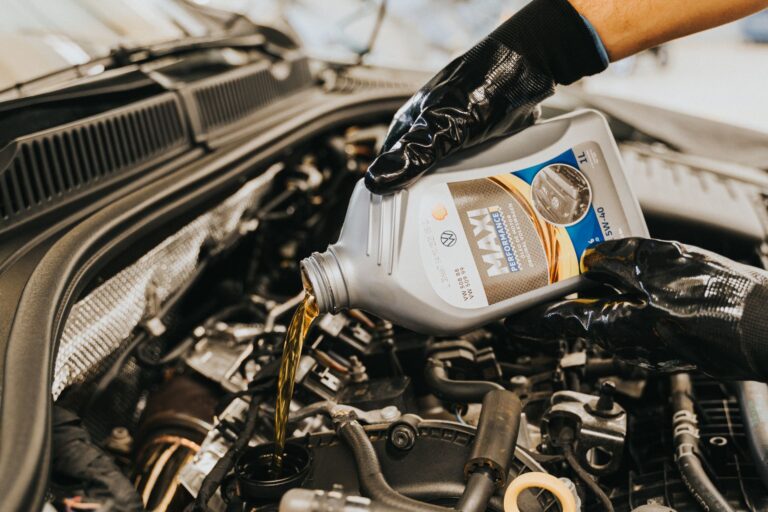
Yes, every torque-converter automatic contains multiple wet clutch packs inside the gearbox, plus a lock-up clutch hidden inside the torque converter up front. Sprag clutches and bands round out a clutch family that replaces the single friction disc you’d operate by foot in a manual car.
What follows is a complete map of every clutch and clutch-equivalent hiding inside a torque-converter automatic, a CVT, and a dual-clutch gearbox, along with the warning signs that point to each one.
The Short Answer and Why It Surprises Most Drivers
The phrase “automatic transmission” usually brings up an image of a smooth, clutch-free drivetrain. The reality runs the other way: modern automatics hide multiple wet clutches inside the gearbox and rely on a torque converter up front to take the place of the pedal-operated clutch you’d find in a manual car.
Why the Assumption Is Wrong
Most drivers only notice the pedal that’s missing. Underneath the transmission pan, though, an automatic carries at least five wet clutch packs in a typical six-speed unit, and that count climbs in eight- and ten-speed gearboxes built by ZF Friedrichshafen, Aisin, and GM. Each clutch pack handles one or two gear ratios by squeezing alternating friction discs and steel plates together with hydraulic pressure.
The Two Big Shifts From a Manual
First, the driver-controlled friction disc is gone. Second, every gear change is now commanded by the transmission’s valve body and electronic control unit, which direct automatic transmission fluid (ATF) to the right clutch pack at exactly the right moment. Removing the pedal and adding computer control together define the automatic driving experience.
How a Torque Converter Replaces the Clutch Pedal
Mounted between the flywheel and the gearbox, a fluid-filled coupling performs the clutch pedal’s job without ever touching your foot. It uses hydraulic fluid to transfer engine torque to the input shaft, so the engine can idle at a stop without stalling while the wheels stay perfectly still.
Fluid Coupling and Torque Multiplication
Inside the converter housing, a pump driven by the engine spins a turbine connected to the gearbox. ATF thrown outward by the pump strikes the turbine blades and drags the turbine around. A small component called the stator redirects returning fluid so it multiplies torque during initial acceleration, giving you that extra push off the line. Looking into how does an automatic transmission work, you’ll see the stator is what gives automatics their off-the-line advantage.
The Lock-Up Clutch at Highway Speed
At cruising speed, an internal wet clutch snaps shut to bolt the turbine directly to the input shaft. That eliminates the slippage a fluid coupling would cause at 60 mph. A worn lock-up clutch is one of the most common causes of a vibration or shudder between 30 and 45 mph, often misread as an engine mount or tire-balance issue.
That shudder comes from wear inside the clutch packs themselves, which is where the real mechanical story begins.
If your car shudders briefly between 35 and 45 mph, then drives normally above 50 mph, the torque converter lock-up clutch is the prime suspect. Ask the shop to scan for torque converter clutch codes before authorizing any major work.
Inside the Gearbox: Wet Clutch Packs and Planetary Gearsets
Beneath the transmission pan, hydraulic pressure squeezes stacked clutch packs to lock different elements of a planetary gearset, producing each gear ratio. Every shift you feel is really a different combination of clutch packs, bands, and one-way sprags activating in sequence.
How a Wet Clutch Pack Works
A clutch pack is essentially a stack of alternating friction discs (coated in a paper-based or woven material) and smooth steel plates. When hydraulic pressure pushes them together, the friction discs grab the steel plates and lock two rotating parts of the planetary gearset. Release the pressure, and ATF floods back in to separate them. Running them in fluid is what makes these wet clutches last far longer than the dry clutch in a manual car.
How Many Clutch Packs Your Transmission Uses
| Transmission Type | Typical Clutch Pack Count | Common Applications |
|---|---|---|
| 4-speed automatic | 3–4 | Older Chrysler, GM rear-wheel-drive units |
| 6-speed automatic | 5–6 | Ford 6F, GM 6T, Toyota Aisin AB |
| 8-speed automatic | 6–7 | ZF 8HP, Aisin AW TF8-SC, GM 8L |
| 10-speed automatic | 7–8 | Ford 10R, GM 10L, Chrysler ZF 10HP |
Each gear ratio engages a specific clutch-pack combination. First gear might light up clutches A and B while second gear releases A and adds C, creating a smooth handoff. Knowing the count helps you decode repair quotes, because replacing one clutch pack often means disassembling the transmission.
Where CVTs and Dual-Clutch Transmissions Fit In
Not every clutch-free driving experience uses the same technology. CVTs and DCTs approach the automatic vs manual transmission differences question from entirely different angles, and each has its own clutch story.
CVTs Use a Belt, Not Clutch Packs
A continuously variable transmission (CVT) replaces traditional gears with two variable-diameter pulleys connected by a steel belt or chain. The pulleys change their effective diameter to produce any ratio between the lowest and highest gear. CVTs typically don’t use clutch packs for ratio changes. They do, however, contain a start clutch or torque converter up front, plus a reverse gear that often uses a simple planetary set and one clutch pack. A failing CVT belt or stretched chain produces a high-RPM whine under acceleration, a very different sound from torque converter shudder.
DCTs Are Two Manual Gearboxes in One
Two parallel shafts, two dry clutch packs, and pre-selected ratios let a dual-clutch transmission shift in milliseconds without a clutch pedal. One clutch handles odd gears (1, 3, 5, 7) while the other handles even gears (2, 4, 6) and reverse. The transmission pre-selects the next gear so shifts feel nearly instantaneous. Found in BMW, Volkswagen, Ford, and many performance applications, DCTs can feel jerky at low-speed creep when the clutch packs begin to wear unevenly from stop-and-go traffic. Automatic transmission clutch replacement on a DCT often means replacing both clutch packs and the mechatronic unit, a job that can rival the cost of a full automatic rebuild.
Because DCT repairs can rival a full rebuild, recognizing the early warning signs becomes especially important.
DCT clutch wear typically shows up first as a slight shudder when launching from a stop or rolling backward. Catch it early with a scan-tool clutch-point adaptation, and you may save the gearbox.
Warning Signs That Point to a Specific Failing Component
Automatic transmission symptoms can look identical from the driver’s seat but trace back to very different components. Matching the symptom to the right part saves diagnostic labor and prevents misdiagnosis.
Symptoms by Component
- Delayed engagement in Drive or Reverse: Worn clutch pack friction material or a weak seal in the affected apply piston.
- Mileage-dependent shudder at 30–45 mph: Worn torque converter lock-up clutch or contaminated ATF preventing full lock-up.
- Burnt smell or dark brown fluid: Heat-damaged clutch discs inside one or more packs, often paired with debris on the magnet.
- Grinding or whine that rises with RPM: Bearing failure or, on CVTs, a stretched belt or chain slipping on the pulleys.
- Check-engine light with P0741, P0775, P0740, or P0843: Torque converter clutch circuit or clutch pressure sensor faults, often the earliest warning.
Always pull the codes before approving work. A P0741 (Torque Converter Clutch Circuit Performance) points squarely at the lock-up clutch. A P0775 (Clutch Pressure Control Solenoid B) points at the valve body or a specific clutch pack. Mixing them up can mean paying for a torque converter when the real fix is a $40 solenoid.
Fluid Inspection as a Free Diagnostic
A simple fluid check on a warmed-up transmission tells you a surprising amount. Fresh ATF is red and smells faintly of petroleum. Burnt fluid is dark brown or black and carries an acrid odor. Metal flakes on the dipstick indicate severe planetary gear or clutch drum wear. If your fluid looks healthy and smells normal, the symptom is more likely electrical (a sensor or solenoid) than mechanical.
Repair Realities: What Can Be Serviced and What Demands a Rebuild
Knowing what can be replaced independently, and what requires pulling the whole transmission apart, keeps you from authorizing work you don’t actually need.
Replaceable Without a Full Rebuild
- Torque converter: Often removed and replaced as a standalone unit. Many shops also send the old converter to a specialist for cleaning and lock-up clutch replacement.
- Valve body: The hydraulic control unit can be removed, cleaned, or replaced with a remanufactured unit without disturbing the clutch packs in many designs.
- Solenoid pack and sensors: External or pan-mounted, these are typically a $150–$500 fix that resolves many shift-quality complaints.
- ATF and filter: Routine service every 60,000 to 100,000 miles dramatically extends wet clutch life by keeping friction material bathed in clean fluid.
What Typically Requires a Full Overhaul
Individual clutch packs are usually replaced during a full transmission rebuild rather than as standalone repairs. The friction material wears gradually across the pack, so once one disc is worn out, the others are usually close behind. A full overhaul includes new clutch packs, new seals, a reworked valve body, and either a refurbished or new torque converter. On a ZF 8HP or GM 10-speed, that overhaul runs $3,000–$5,000 at most independent shops, more at a dealer.
Questions to Ask Before Approving Any Repair
- Name the part: Ask the shop to write “torque converter,” “clutch pack C,” or “valve body solenoid” rather than just “transmission repair.”
- Replace the converter too: Skipping the converter on a full overhaul often leads to contaminated fluid returning in weeks.
- Confirm the warranty: Reputable rebuilders offer 12-month/12,000-mile coverage; many offer 24-month/unlimited.
- Mind the fluid exchange: A simple drain leaves 40–60% of old fluid in the torque converter and cooler lines.
Arming yourself with these questions turns a confusing repair estimate into a transparent conversation about which clutch or clutch-equivalent part is actually failing.
With those questions in hand, the final picture of what clutches inside an automatic actually do comes into focus.
Bottom Line on Clutches Inside an Automatic
Automatic transmissions are packed with clutches, just not the one you’d expect. A torque converter handles the clutch-pedal job at idle and low speed, while multiple wet clutch packs buried inside the gearbox do the real work of selecting gears. Knowing which clutch is which turns a $300 torque converter service into a confident yes and a $3,000 clutch-pack overhaul into a question worth asking twice.
FAQ
Do automatic transmissions have a clutch pedal?
No. Automatic cars have no clutch pedal because the torque converter handles engine-to-wheel coupling using hydraulic fluid, and internal clutch packs handle gear selection without any driver input.
How many clutches does an automatic transmission have?
A typical six-speed automatic uses five or six clutch packs, while eight- and ten-speed units use six to eight. Each pack contains several friction discs and steel plates stacked together.
Can you replace a clutch in an automatic transmission?
Yes, but it’s almost always done as part of a full transmission overhaul rather than a standalone repair. The torque converter, valve body solenoids, and external sensors are the parts most commonly replaced independently.
What does the clutch do in an automatic transmission?
Wet clutch packs squeeze friction discs together to lock elements of the planetary gearset, producing each gear ratio. The torque converter’s lock-up clutch also engages at highway speed to eliminate fluid slippage and improve fuel economy.
Do automatic cars have a clutch?
Yes, every torque-converter automatic contains at least one torque converter clutch and multiple internal wet clutch packs. CVTs typically use a single start clutch or torque converter, while dual-clutch transmissions use two dry clutch packs.
Why don’t automatic cars have a clutch pedal?
The torque converter and computer-controlled clutch packs handle all engine-to-wheel coupling automatically. Removing the pedal is the entire point of an automatic, eliminating the need for manual clutch timing on every shift.