

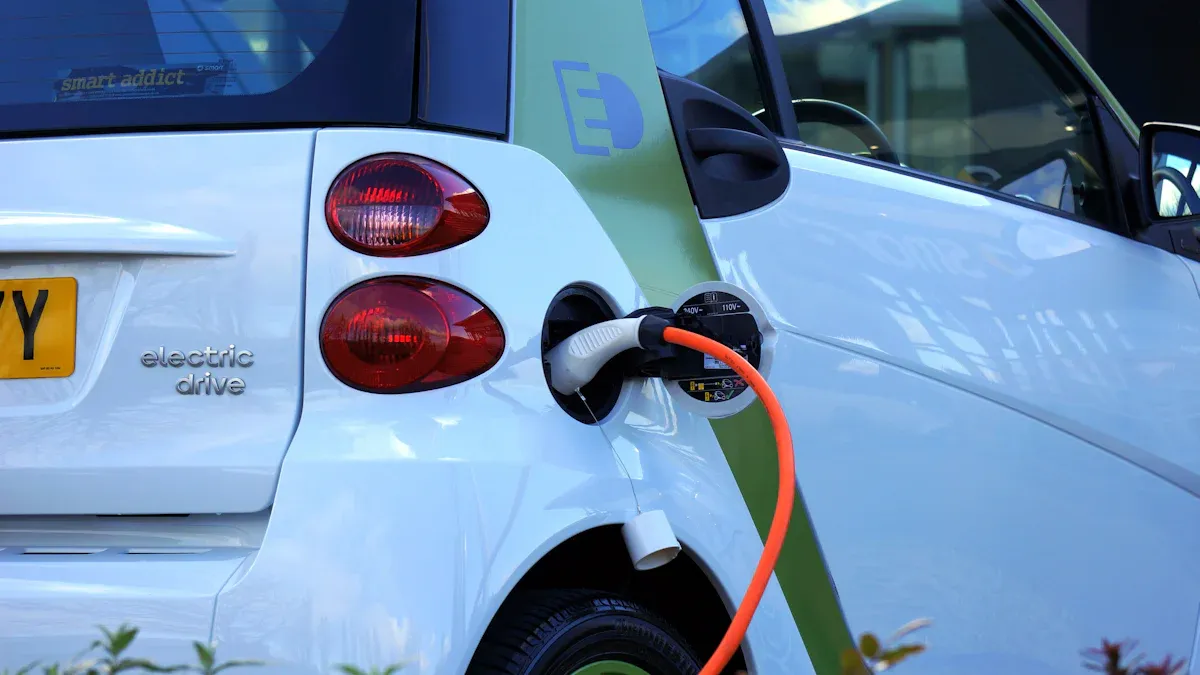
This blog unveils the most popular cars expected for 2025. The French automotive market is dynamic. Sustainability, technology, and practicality significantly influence consumer choices. Economic factors also shape purchasing decisions. The market saw a 2.2% increase in new car registrations in August 2025. This reflects growing demand for the best selling cars. These top selling cars in France will define the year. Understanding these trends helps predict future vehicle registrations. These cars represent the best options.
Key Takeaways
The Renault Clio is France’s top-selling car. It has a modern design, smart features, and good fuel economy.
The Dacia Sandero is popular because it costs less and is reliable. It also has a special engine that uses two types of fuel.
The Peugeot 208 is a favorite in cities. It has a cool look and advanced technology. You can choose from gas, diesel, or electric models.
The Citroën C3 offers a unique design and a very smooth ride. It is comfortable and practical for city driving.
New cars like the Dacia Bigster and Citroen C3 Aircross II are becoming popular. They offer good value and new features.
Renault Clio: France’s Best Selling Car
The Renault Clio consistently ranks as the best selling model. It holds a significant market share. In September 2025, its share was 6.1%. Year-to-date, it maintained a 6.4% share. The Clio also saw a 12.5% increase in sales. This strong performance highlights its enduring popularity. These strong figures contribute to overall vehicle registrations.
Metric | Value |
|---|---|
September 2025 Share | 6.1% |
Year-to-Date 2025 Share | 6.4% |
Design and Innovation
The Renault Clio features modern aesthetics and practical innovations. Its exterior boasts sculpted lines and an assertive front end. All models include 100% LED headlights with a C-Shape light signature. The larger grille and pronounced front bumper create a dynamic look. The bonnet incorporates ribs for a sculpted effect. The car’s lowered body improves aerodynamics. It also adds to its athletic stance.
Inside, the Clio offers a revolutionary design. High-end materials and meticulous finishes are evident. The ‘Smart Cockpit’ focuses on the driver. It includes a large 9.3-inch vertical multimedia screen. This is the biggest ever on a Renault model. A 10-inch TFT digital instrument binnacle is also available. Practical features enhance the driving experience:
New seat designs significantly improve rear passenger knee space.
The central console offers practical storage compartments. It also has a wireless smartphone charging area.
The boot architecture is optimized for a cubic shape. It provides 391 liters of space. This makes it the largest in its segment.
Performance and Efficiency
The Clio balances power with eco-consciousness. It offers various engine options. The E-Tech Full Hybrid variant delivers 143bhp. It achieves 65.7mpg. This makes it very fuel-efficient. A 1.0-liter three-cylinder turbo petrol engine is also available. It produces 89bhp. This engine offers a test average of 48.0mpg. These options provide drivers with choices. They can select based on their performance and efficiency needs.
Engine Variant | Max Power | Claimed Economy | Test Average |
|---|---|---|---|
E-Tech Full Hybrid | 143bhp at 5600rpm | 65.7mpg | 53.5mpg |
1.0-litre three-cylinder turbo petrol (basic) | 89bhp | N/A | 48.0mpg |
Market Appeal
French drivers consistently choose the Clio. Its blend of stylish design, innovative features, and efficient performance appeals to a broad audience. The car’s practicality, combined with its modern technology, makes it suitable for urban and longer journeys. Its strong market presence and consistent popularity confirm its status. The Clio remains a top choice for many car buyers.
Dacia Sandero: A Top Selling Car in France and Europe
Value and Reliability
The Dacia Sandero earns its reputation for value and reliability through several key features. It offers modernity, reliability, and ultra-affordability. The Sandero provides a bi-fuel ECO-G100 option. This engine runs on both petrol and LPG. This turbocharged 1-liter engine delivers an impressive combined range of 1300km. It uses a 90-liter fuel capacity. This significantly lowers running costs for drivers. The Dacia Sandero’s reliability is also strong. It ranked second only to Lexus in a recent What Car? reliability survey. This performance confirms its dependable nature.
Market Performance
The Dacia Sandero consistently performs well in the European market. In the first half of 2025, it remained the top-selling car model in Europe. It achieved this despite an 11% decrease in registrations. The Sandero recorded a sales volume of 128,842 units during this period. Its continued appeal comes from its affordability and dual-fuel flexibility. Petrol models accounted for 48% of its sales. LPG models made up 52%. This balance shows its adaptability to consumer needs.
Broad Consumer Base
The Dacia Sandero attracts a wide range of buyers. Dacia manufactures the Sandero for women. Individuals sensitive to price also choose the Dacia Sandero. It is promoted at an accessible price point. Since 2017, the Dacia Sandero has been the best-selling vehicle in the European retail market. Its position as an affordable small city car largely contributes to this success. Its practical design and cost-effectiveness make it a popular choice across various demographics in France and beyond.
Peugeot 208: Style and Urban Appeal
The Peugeot 208 stands out in the French market. It combines striking design with advanced technology. This model appeals to drivers seeking a modern urban car.
Design and Technology
The Peugeot 208 features a compact, dynamic outline. It has a short bonnet line and a sleek windscreen. A floating front grille proudly displays Peugeot lettering. Distinctive LED light signatures mark both headlamps and tail lamps. The headlamps feature an LED eyebrow. The tail lamps show three LED claws within a boomerang contour. Sculpted body panels add to its sporty look.
Inside, the i-Cockpit offers a driver-focused experience.
A small, agile steering wheel provides direct and precise driving.
A Head-Up Cluster (HUC) sits above the steering wheel. Drivers can read information instantly.
A central touchscreen is in the optimal reach-vision zone. This simplifies controls and reduces physical buttons.
The cockpit uses white light for precision. Ambient blue LED lighting complements this.
The i-Cockpit also includes a reconfigurable 12.3-inch instrument cluster. A 10-inch tablet-style touchscreen angles towards the driver. It displays vehicle information and rearview camera images. Toggle piano keys beneath the touchscreen control various functions. These include radio, HVAC, and navigation. Connectivity features include phone mirroring and a smartphone recharging pad. The 208 also offers advanced driver assistance systems (ADAS). These include active lane departure warning and adaptive cruise control. Peugeot uses sustainable materials in the 208. Recycled and natural materials make up 31% of the car.
Powertrain Options
The Peugeot 208 offers a “power of choice” philosophy. Buyers can select diesel, petrol, or all-electric powertrains.
Petrol options include:
1.2L PureTech 75 S&S with a 5-speed manual transmission.
1.2L PureTech 100 S&S with a 6-speed manual or 8-speed automatic.
1.2L PureTech 130 EAT8 S&S with an 8-speed automatic.
A diesel option is available:
1.5L BlueHDi 100 with a 6-speed manual transmission.
The electric e-208 offers strong performance.
Engine Variant | Fuel Type | Horsepower | Battery Range (miles) |
|---|---|---|---|
100kW 50kWh Auto | Electric | 136 | 224.9 (Allure) |
115kW 51kWh Auto | Electric | 156 | 268 (Allure) |
The e-208 features a 50kWh battery and a 136hp electric motor. It provides a 211-mile range (WLTP).
Target Audience
The Peugeot 208 targets urban drivers. Its stylish design and compact size make it ideal for city streets. Technology-savvy individuals appreciate its advanced i-Cockpit and connectivity. The availability of electric powertrains attracts environmentally conscious buyers. Young professionals and small families also find the 208 appealing. It offers a blend of style, efficiency, and modern features.
Citroën C3: Distinctive Comfort
Unique Design
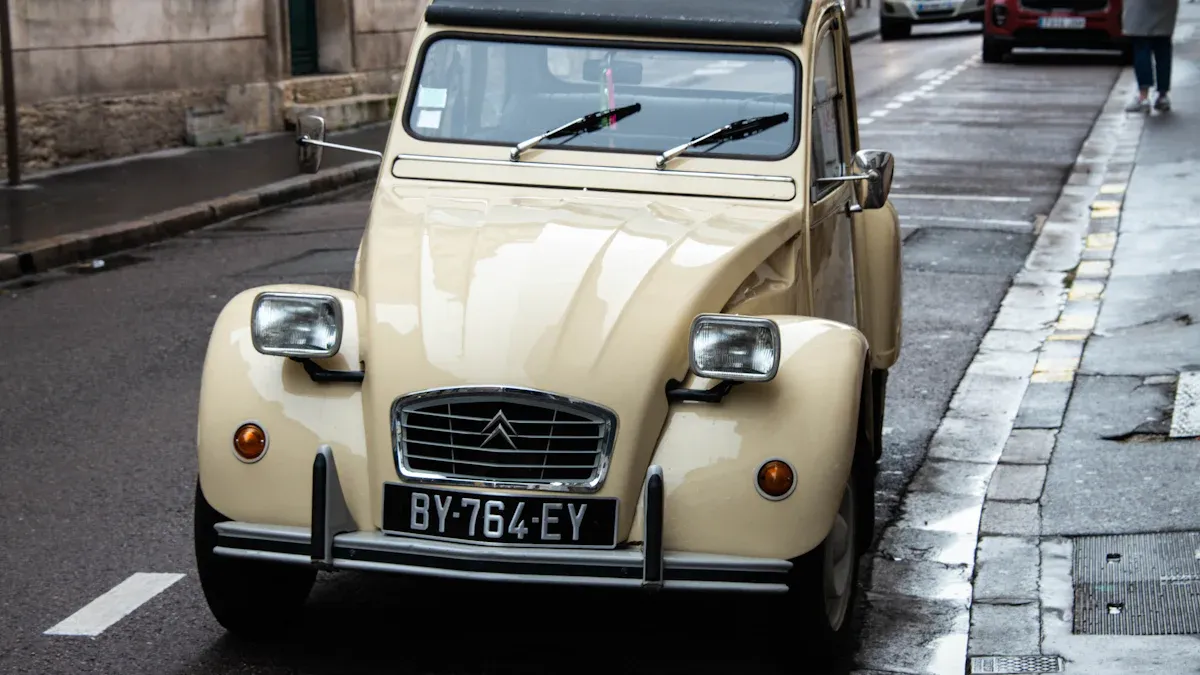
The Citroën C3 stands out with its unique styling. It offers many customization options. The design focuses on comfort. Drivers enjoy a high seating position, which gives them a commanding view. The C3 combines SUV-inspired styling with hatchback practicality. It features LED headlamps with DRLs. It also has 15-inch diamond-cut alloy wheels. Chrome garnish appears on the grille and tailgate. Buyers can choose dual-tone roof options. Roof rails with silver highlights add to its distinctive look.
Ride Quality and Practicality
The Citroën C3 offers excellent ride quality. Its soft suspension uses clever hydraulic components. This design absorbs road imperfections well. It handles lumps, potholes, and speed bumps effectively. This makes the C3 a relaxing car for city and motorway driving. Its boxy design provides a high seating position. This gives good all-round visibility. This helps with maneuvering and parking in cities. The interior is spacious. It has wide, comfortable front seats. It offers good storage options. Four six-foot adults can sit comfortably in the back. The 310-liter boot is competitive for its price. Modern features include wireless Apple CarPlay and Android Auto. A 10.3-inch touchscreen provides easy access to these.
Feature | Contribution to Ride Quality / Practicality |
|---|---|
Advanced Comfort Suspension | Absorbs road imperfections for a smooth ride. |
High Seating Position | Offers excellent visibility for easier driving. |
Boxy Design | Maximizes interior space and boot capacity. |
Wide, Comfortable Front Seats | Reduces fatigue on long journeys. |
Ample Rear Passenger Space | Comfortably fits adults in the back. |
310-liter Boot | Provides competitive luggage space. |
Wireless Apple CarPlay & Android Auto | Offers seamless smartphone integration. |
Buyer Demographics
The Citroën C3 targets specific groups. It appeals to urban and peri-urban young people. These individuals are creative, optimistic, and always moving. The C3 also aims to attract companies. This shows a dual focus for its market.
New Entrants: Most Popular Cars Making Waves
New entrants are shaking up the list of most popular cars in France. The Dacia Bigster and Citroen C3 Aircross II are newcomers. They both broke into the Top 50 best-selling models by September 2025.
Dacia Bigster’s Impact
The Dacia Bigster quickly made a significant impact. In June 2025, Dacia sold 2,386 Bigster units in France. This new model broke into the Top 10 in July. This marked its first French Top 10 finish. It surpassed competitors like the Kia Sportage and Hyundai Tucson in June. The Bigster also came very close to the Renault Austral. Only the Peugeot 3008 had higher sales in its segment that month. Since the beginning of the year, Dacia registered 5,836 Bigster units in France. This represents about half of its European sales. Dacia aims for a volume of up to 100,000 units per year for the Bigster.
The Bigster’s popularity comes from its competitive pricing. It is expected to start around $22,000. This offers exceptional value. It targets entry-level versions of competitors. The Bigster provides diverse engine options. These include hybrid and petrol-powered engines. A bi-fuel (LPG/petrol) engine option also offers low running costs. It features generous interior space with seating for five to seven passengers. Its sleek yet rugged design, raised ground clearance, and all-wheel-drive capabilities make it off-road ready. Advanced technology, like a digital dashboard and connectivity features, also appeals to buyers.
Citroen C3 Aircross II’s Rise
The 2024 Citroen C3 Aircross II is a significant newcomer. It aims to boost Citroen’s presence. This model is more affordable than its predecessor. It undercuts its previous price by R105k. The C3 Aircross II is notably larger than its rivals. This aggressive pricing and size strategy attracts attention. The vehicle offers a well-appointed cabin for its price. It includes a 10-inch infotainment system with wireless Apple CarPlay/Android Auto. A 7-inch instrument cluster is also present. Its 1.2-litre 3-cylinder turbopetrol engine is effective and efficient. The car’s ride quality handles degraded roads well. The C3 Aircross II is expected to become Citroen’s main seller. This is due to its competitive pricing, size, and engine performance.
Key Factors for France Best Selling Cars
Economic Considerations
Economic factors significantly influence car purchases in France. High inflation rates reduce people’s buying power. This affects spending on big items like cars. Interest rates directly impact borrowing costs. They also affect consumer financing options. This changes the affordability of car loans. It also impacts the overall demand for passenger cars. A higher Gross Domestic Product (GDP) shows stronger purchasing power in a country. This suggests a greater potential demand for cars. Average income and disposable income directly affect how much people can afford. This influences their ability to buy cars. These elements shape which models become the most popular cars.
Environmental Regulations
Environmental regulations greatly impact vehicle sales. Incentives for Battery-Electric Vehicles (BEVs) have changed. For BEVs ordered before December 2, 2024, previous incentives no longer apply. The maximum aid for lower-income households dropped from €7,000 to €4,000. A CO2 emission penalty, or Malus Tax, also became stricter. The tax now starts at 113g/km. It can reach a maximum of €70,000 for vehicles over 192g/km. A new tax based on vehicle weight also exists. This tax could affect plug-in hybrid registrations. BEVs are exempt from this weight tax until 2026. These rules encourage the sale of hybrid and electric vehicles.
Consumer Preferences
French consumer preferences are changing. People increasingly prefer eco-friendly and fuel-efficient vehicles. This leads to higher demand for electric and hybrid cars. There is also a growing preference for compact and SUV models. Compact cars are popular for their easy handling and fuel efficiency. They work well in cities. SUVs are desired for their spacious interiors and perceived safety. Government incentives and subsidies encourage electric and hybrid vehicle adoption. Growing environmental awareness also contributes to this shift. More charging stations support electric car adoption. Stricter emissions regulations push consumers towards sustainable options. A strong automotive industry offers many models. A stable economy allows people to invest in new cars. These factors determine the best selling cars in France.
The French automotive market in 2025 blends traditional favorites, value-driven options, and impactful new entrants. Renault Clio, Dacia Sandero, and Peugeot 208 remain among the most popular cars. New models like the Dacia Bigster and Citroen C3 Aircross II also gained traction. The future will see further electrification, with rapid growth in Battery Electric Vehicles (BEVs) and Plugin Hybrid Electric Vehicles (PHEVs). Advanced driver-assistance systems (ADAS) will become more proactive, integrating AI and machine learning. This includes L2 and L3 autonomous driving features. The landscape for best selling cars in France remains exciting and competitive.



