You may not recognize that the Mazda CX-30 and CX-5 aren’t just smaller and larger versions of the same vehicle; they’re crafted for completely different driving experiences. Should you be attempting to determine which one fits your world, you will want to comprehend how they compare against each other in ways that truly matter to your daily routine.
Vehicle Class and Size Differences
The CX-30 is a subcompact SUV designed for agile city driving and tight parking spots. The CX-5, in contrast, is a compact SUV that provides you considerably more room for passengers and gear. Consider the CX-30 as your urban companion, while the CX-5 works better should you need extra space without upgrading to a full-size SUV.
Cargo Space and Interior Volume
Here’s where the size difference becomes particularly practical. The CX-30 offers 20.2 cubic feet of cargo space behind its rear seats. That’s roughly the same as what you’d receive in a Mazda 3 hatchback, which makes sense since they’re alike in actual usability despite the CX-30’s SUV styling. The CX-5 increases to 29.1 cubic feet with the rear seats in place, and expands to 58.1 cubic feet when you fold them flat. Should you regularly transport camping gear, multiple suitcases, or sports equipment, the CX-5 provides you substantial breathing room that the CX-30 simply can’t match.
Practical Storage Features and Flexibility
Both vehicles come with one-touch folding rear seats, but the CX-5 adds extra convenience with a power liftgate on higher trims. The CX-5’s wider cargo opening and lower floor make loading groceries or awkward items simpler compared to the CX-30’s more compact design. Actual owners report that the CX-5 can comfortably manage golf bags, TV boxes, and camping trips for a week without feeling cramped. The CX-30 works adequately for typical grocery runs and smaller weekend trips, but it requires more strategic packing when you’re carrying bulkier items.
Towing Capacity
The CX-5 offers a 2,000-pound towing capacity, allowing you to transport a small trailer or boat. The CX-30 has considerably lower towing capabilities, making it more suitable for drivers who don’t need to pull trailers regularly. This distinction is important should weekend excursions involve your boat or camping trailer.
Ground Clearance and General Dimensions
The CX-5 provides more ground clearance and a taller roofline, which translates to easier entry and exit, especially for taller passengers or those with mobility concerns. The CX-30’s lower stance gives it better fuel efficiency and a sportier feel, but you will perceive the difference if you’re frequently climbing in and out or if you have passengers who struggle with height.
Fuel Efficiency and Driving Experience
You will observe better fuel economy with the CX-30 thanks to its lighter weight and smaller engine options. The CX-5 prioritizes comfort and space over efficiency, so expect to visit the gas pump more often. Should you be spending most of your time maneuvering through congested streets and parking in tight spaces, the CX-30’s efficiency advantage accumulates. For highway driving or long commutes where you value comfort over everything else, the CX-5’s spacious cabin may justify the fuel trade-off.
Vehicle Class and Size Differences
While you’re shopping for a Mazda SUV, you’re really making a choice between two different philosophies on the road.
The Mazda CX-5 is a compact SUV, giving you more space and comfort for everyday excursions. The CX-30 is a subcompact crossover, built for easy city driving and a sporty feel.
This vehicle class difference means the CX-5 stands taller and wider, while the CX-30 stays nimble and sleek. In a size comparison, the CX-5 is about 7 inches longer and 2 inches wider, making it roomier inside.
Both are easy to park and drive, but the CX-30 fits tight spots better. You’ll feel the difference in both style and space, depending on your needs.
Base Engine Performance and Power Output
How do the base engines of the Mazda CX-5 and CX-30 stack up regarding power? You’ll find that both vehicles share similar engine specifications, but they deliver different power ratings that matter for your daily driving. The CX-30 features a 186-horsepower 2.5-liter four-cylinder engine with 186 lb-ft of torque, while the CX-5 offers a slightly more powerful 187-horsepower variant with matching torque. Though the numbers look close, these power ratings create noticeably different driving experiences on the road.
| Feature | CX-30 | CX-5 |
|---|---|---|
| Horsepower | 186 hp @ 6,000 rpm | 187 hp @ 6,000 rpm |
| Torque | 186 lb-ft @ 4,000 rpm | 186 lb-ft @ 4,000 rpm |
| Engine Type | SKYACTIV-G 2.5L | SKYACTIV-G 2.5L |
You’re getting comparable engine technology in both vehicles, but the CX-5’s extra horsepower gives you slightly better acceleration at the times you need it most.
Turbocharged Engine Options and Capabilities
The Mazda CX-5 and CX-30 both offer turbocharged engine options that take their performance beyond the base models, giving you more power at times you really want it.
Should you be craving that extra kick, the CX-5’s turbo engine provides up to 256 horsepower, while the CX-30 turbo matches it at 250 horsepower on premium fuel.
Both turbocharged versions pack serious engine performance that’ll make you feel connected to the road. You’ll observe the difference immediately during acceleration or merging onto highways.
The CX-5 turbo edges ahead slightly in raw power, making it ideal in case you frequently tow or drive in demanding conditions.
Meanwhile, the CX-30 turbo compensates with its lighter weight, offering impressive acceleration that rivals larger vehicles.
Whichever you choose, you’re getting turbo capabilities that change everyday driving into something genuinely enjoyable and responsive.
Fuel Efficiency and Economy Ratings
As you’re shopping for a Mazda SUV, one of the biggest factors that’ll affect your wallet over time is how efficiently each vehicle uses fuel. Both the CX-5 and CX-30 run on regular unleaded, so you won’t stress about special fuel types. The CX-30 sips less gas, giving you more miles per tank and lower maintenance costs. The CX-5, while thirstier, still offers solid efficiency for its size. Here’s how they stack up:
| Model | City MPG | Highway MPG |
|---|---|---|
| CX-30 | 26 | 33 |
| CX-5 | 23 | 29 |
You’ll feel the difference at the pump, especially on long drives. Both are easy to live with, but the CX-30’s savings add up, making every trip a little more carefree.
Cargo Space and Interior Volume
While comparing these two Mazdas, you’ll observe that cargo space becomes a significant turning point, especially in case you’re transporting groceries, luggage, or sports equipment regularly.
The CX-5 provides you considerably more space with 30.8 cubic feet of cargo capacity compared to the CX-30’s 20.2 cubic feet, and as you fold down those rear seats, the difference expands even more: the CX-5 opens up to 59.3 cubic feet versus the CX-30’s 45.2 cubic feet.
Beyond just cargo, the interior space narrates a different tale depending on where you’re seated, since the CX-30 actually offers more legroom up front while the CX-5 provides roomier rear seats and a taller cabin in general.
Cargo Capacity Comparison
Should you be trying to decide between the Mazda CX-5 and CX-30, cargo space could be one of your biggest concerns, especially in case you regularly haul groceries, sports equipment, or luggage for family trips.
The CX-5 dominates with 30.8 cubic feet of everyday storage, expanding to 59.3 cubic feet once you fold down the rear seats. The CX-30 offers 20.2 cubic feet normally, stretching to 45.2 cubic feet with seats folded.
Should you frequently need cargo organization features and smart storage solutions comparison, the CX-5 delivers considerably more flexibility. The larger model also provides a 2,000-pound towing capacity, making it perfect for trailers or boats.
For families who value practical space and versatility, the CX-5’s generous dimensions mean you’re never cramped for room.
Passenger Room Differences
While cargo capacity is essential for hauling your stuff, the space your passengers have matters just as much for comfort on long drives. You’ll find the Mazda CX-5 gives everyone a bit more room to stretch out, especially in the back seat.
The CX-30 feels cozy up front, but the CX-5 offers more passenger space and better headroom differences, so taller folks won’t feel cramped. Both models seat five, but the CX-5’s extra inches mean less squishing on road trips.
Should you often carry friends or family, the CX-5’s roomier cabin makes rides more relaxed. The CX-30’s snug fit works well for couples or solo drivers who value a sporty feel.
Either way, you’ll enjoy Mazda’s thoughtful design that keeps everyone comfortable.
Rear Seat Fold Space
The cargo situation between these two Mazda SUVs reveals a pretty significant gap that’ll affect how you pack for trips.
Whenever you fold the rear seat down, the CX-5 gives you 59.3 cubic feet of fold space, which is plenty for big gear, road trips, or hauling stuff for friends.
The CX-30 offers 45.2 cubic feet, which is still useful but feels tighter, particularly in case you need to fit longer items or lots of luggage.
Both let you fold the rear seat flat, but the CX-5’s extra length means you can slide bulky things in more easily.
In the event that you often carry gear or need more interior volume, the CX-5’s fold space will make your life simpler.
Seating and Passenger Comfort
Should you be searching for a ride that feels roomy and comfortable for everyone, the Mazda CX-5 provides you a bit more breathing space than the CX-30.
In the front seats, you’ll find nearly identical legroom at around 41 inches, so you won’t feel cramped up front. However, the CX-5 gives your back-seat passengers about 3 extra inches of legroom, making longer drives noticeably more pleasant.
Both vehicles feature supportive seating materials and heated seat options that keep you warm during chilly weather. The CX-5’s wider frame means you’ll appreciate the additional shoulder room too.
Should you frequently carry passengers or want everyone feeling relaxed during trips, the CX-5’s extra space alters your driving experience into something genuinely comfortable for the whole crew.
Infotainment and Technology Features
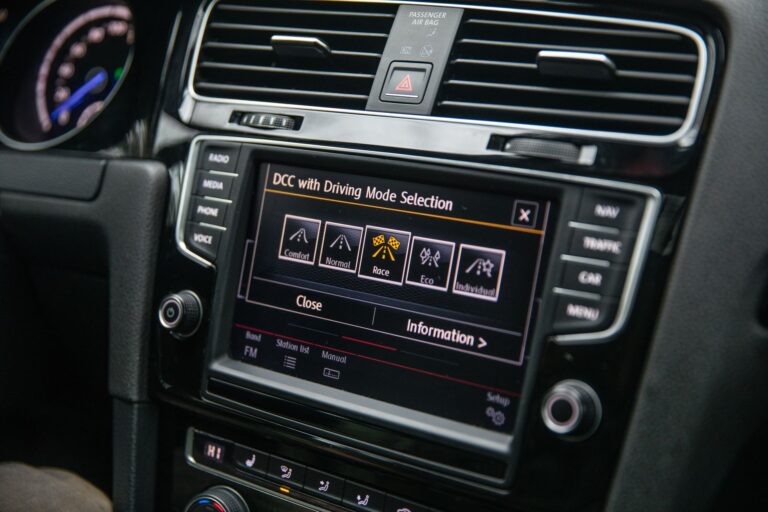
You’ll notice right away that the Mazda CX-5 gives you a bigger infotainment screen, making it easier to see your maps and music on the go.
Both models keep you connected with wireless Apple CarPlay and Android Auto, so you can leave your cables at home.
The CX-5 also stands out with a head-up display, showing your speed and directions right in your line of sight, while the CX-30 sticks to a more basic setup.
Infotainment Screen Size
One major difference between these two Mazdas comes down to what you see on your dashboard. The CX-5 gives you a bigger, clearer infotainment interface with a 10.25-inch screen, while the CX-30 sticks with an 8.8-inch display. The larger screen on the CX-5 means you get better display resolution and easier access to your favorite apps and maps. Both let you connect your phone and use voice commands, but the CX-5’s screen feels more modern and spacious.
| Model | Screen Size | Display Resolution |
|---|---|---|
| CX-5 | 10.25″ | Higher |
| CX-30 | 8.8″ | Standard |
| Both | Touchscreen | Full Color |
You’ll notice the difference every time you tap or swipe.
Wireless Connectivity Options
At the time it comes to staying connected without the hassle of cords, both the Mazda CX-5 and CX-30 make it easy to keep your devices powered and your apps running wirelessly.
The CX-5 offers wireless charging on higher trims, while the CX-30 provides this feature on select models, letting you ditch tangled cables entirely.
Both vehicles support Bluetooth connectivity, so you can stream music and take calls hands-free.
The CX-5 steps ahead with a larger 10.25-inch infotainment display that feels more spacious for guidance.
Each SUV includes Apple CarPlay and Android Auto integration, bringing your favorite apps right to the dashboard.
Whether you’re commuting or road-tripping, these wireless options keep you linked to what matters without breaking your stride.
Advanced Driver Displays
Stepping into either the Mazda CX-5 or CX-30 means you’re getting a cockpit that feels modern and easy to use.
Both models offer advanced route-finding systems and driver display customization, so you can make the dash feel just right for your style.
Here’s what sets them apart:
- The CX-5 gives you a larger 10.25-inch infotainment screen, making it easier to see maps and settings at a glance.
- Both models let you tweak your driver display, but the CX-5 adds a head-up display on higher trims, so you can keep your eyes on the road.
- The CX-30’s top trims now offer a 360-degree camera, which helps you park and maneuver tight spots with confidence.
You’ll feel connected and in control, no matter which one you choose.
Safety Features and Driver Assistance Systems
Safety features play an essential role during your selection between these two Mazda SUVs, and while they both prioritize your protection on the road, they’re built with different priorities in mind.
Both the CX-30 and CX-5 come equipped with Mazda’s i-Activsense safety technologies, including adaptive cruise control and collision warning systems that keep you connected to what’s happening around you. You’ll find that each vehicle earned the Insurance Institute for Highway Safety’s TOP SAFETY PICK+ award, so you’re getting serious protection either way.
The CX-5 offers slightly more passenger space, which means extra room for loved ones during your commute.
Both vehicles feature Rear Smart City Brake Support and Rear Cross Traffic Braking to help you steer through tight situations confidently. Whether you’re squeezing into city parking spots or handling wet roads, these safety companions work hard to protect your trip.
Pricing and Trim Level Options
While you’re shopping for a Mazda SUV, the price tag matters just as much as the features you’re getting, and you’ll find that the CX-30 and CX-5 sit at different points in the market to match different budgets. The CX-30 starts at $26,690, making it about $3,575 cheaper than the CX-5’s starting price of $30,265, which gives you a real advantage should you be working with limited funds.
As you move up through the trim levels, though, you’ll see that gap narrows—both vehicles eventually land in a similar price range when fully loaded, so the choice between them becomes less about sticker shock and more about what space and features matter most to your lifestyle.
Comprehending the Price Breakdown Across Trim Levels
The starting prices tell only part of the story while you’re comparing these two SUVs. The CX-30 offers multiple trim levels that let you customize your purchase without jumping into the stratosphere price-wise, while the CX-5’s higher entry point reflects its larger frame and more powerful engine options from the start.
As you add features like all-wheel drive, premium audio systems, leather seats, and advanced safety technology, the CX-30 can climb toward $37,000 or $38,000, while a similarly equipped CX-5 pushes past $40,000. This means you’re not getting dramatically different pricing at the top end—you’re really paying for the extra space, cargo capacity, and that roomier interior that comes with the larger vehicle.
What You’re Actually Getting for Your Money
Your investment in either vehicle comes with different returns depending on what you value most. The CX-30 gives you agility, better fuel economy at up to 33 highway mpg, and a price that won’t strain your wallet, making it perfect should you prioritize city driving and lower gas costs.
The CX-5, meanwhile, delivers 59.3 cubic feet of cargo space compared to the CX-30’s 45.2 cubic feet, plus features like genuine leather seating, wood trim accents, and ambient lighting that create a more premium feel inside.
Should you be someone who frequently hauls gear, takes long road trips, or wants that luxury-car experience, the CX-5’s higher price reflects tangible upgrades—but should you be single, couple-focused, or mainly handle daily errands, the CX-30’s value proposition becomes incredibly attractive.
Starting Price Comparison
Your wallet plays a big role at the time you’re deciding between these two Mazda SUVs, and the price difference is one of the initial things you’ll observe.
The Mazda CX30 usually starts lower, making it a friendly choice should you want to save some cash. The Mazda CX5, while a bit pricier, brings more space and features for the extra dollars.
Here’s what you’ll see:
- Mazda CX30 starting price: around $25,000 to $27,500
- Mazda CX5 starting price: about $28,500 to $30,300
- Both offer trim levels that let you pick what fits your budget and needs
No matter which you choose, you’re joining a group that values style and smart spending.
Trim Level Differences
Both the CX-30 and CX-5 come with multiple trim levels that affect what you pay and what features you get, so grasping these options helps you find the right fit for your lifestyle and budget.
The CX-30 offers eight trim level options ranging from the base 2.5 S to the 2.5 Turbo Premium, each adding convenience features like heated seats, wireless charging, and premium audio systems.
The CX-5 similarly provides eight trims, starting with the S and climbing to the Turbo Signature.
Your trim level choice determines engine type, interior comfort, and technology access. Lower trims give you essential safety and entertainment features, while higher trim level options reveal luxurious additions and turbocharged performance.
This progression means you’re investing in exactly what matters most to you.
Value Over Time
As you compare these two Mazda SUVs, grasping how their prices stack up and what each trim level brings to the table can make a real difference in your decision.
The CX-30 starts at $26,690, while the CX-5 begins at $30,265, giving you flexibility based on your budget.
Here’s what matters when pondering long-term value:
- The CX-30 typically experiences better depreciation rates due to its smaller size and lower initial cost, meaning you’ll retain more value should you sell later.
- As you move up trim levels on both models, the price gap narrows considerably, sometimes making a loaded CX-30 comparable to a base CX-5.
- The CX-5’s resale value holds steady because buyers appreciate its larger cargo space and towing capacity for family excursions.
Your choice between these models really depends on whether you prioritize affordability now or spaciousness for your future needs.
Ground Clearance and Suspension
While you’re shopping for a Mazda SUV, ground clearance and suspension matter more than you might realize, particularly in case you’re managing snow, rough roads, or just maneuvering everyday obstacles.
The Mazda CX-30 has an edge with 8.0 inches of ground clearance, giving you a bit more height to clear uneven surfaces and light off-road conditions. The CX-5 sits slightly lower at 7.6 inches, but it balances this with a heavier build and more powerful turbo engine, which can help stabilize your drive on slick roads.
Both vehicles use suspension tuning designed to smooth out bumps, though the CX-5’s setup leans toward a firmer feel for better control, while the CX-30 feels more nimble and responsive around town.
Your choice depends on where you want that ground clearance advantage or suspension style to fit your daily drives.
Towing Capacity and Maximum Payload
Should you ever need to haul a trailer, boat, or even a small camper, the Mazda CX-5 is your go-to choice. The CX-5 delivers real towing capabilities that the CX-30 simply can’t match.
Here’s what sets them apart:
- The CX-5 handles up to 2,000 pounds of towing capacity, making it perfect for weekend excursions.
- The CX-30 isn’t rated for towing at all, limiting your hauling options considerably.
- The CX-5’s payload limits give you flexibility that the smaller model doesn’t offer.
If you’re someone who occasionally needs to transport gear or equipment, this difference matters.
The CX-5’s engineering supports those heavier loads you may wish to pull behind you. The CX-30 shines in other areas, but as towing enters the conversation, the CX-5 wins decisively.
Your lifestyle and hauling needs should guide which SUV fits your situation best.
Fuel Tank Capacity and Driving Range
As you’re preparing for a road trip or simply wish to evade frequent fill-ups at the gas station, fuel tank capacity becomes more essential than you realize.
The Mazda CX-30 holds 12.7 gallons, while the CX-5 offers a larger 15.3-gallon tank. This means the CX-5 can go longer between stops, giving you more freedom on longer drives.
Whenever you compare driving range, the CX-5 covers about 352 miles in the city and 444 miles on the highway, while the CX-30 manages 305 miles in the city and 394 miles on the highway.
Both models use regular unleaded fuel, so you won’t need to worry about specialty gas.
Should you value fewer stops and more miles, the CX-5’s fuel tank specifications and driving range comparison make it a solid choice for your excursions.