

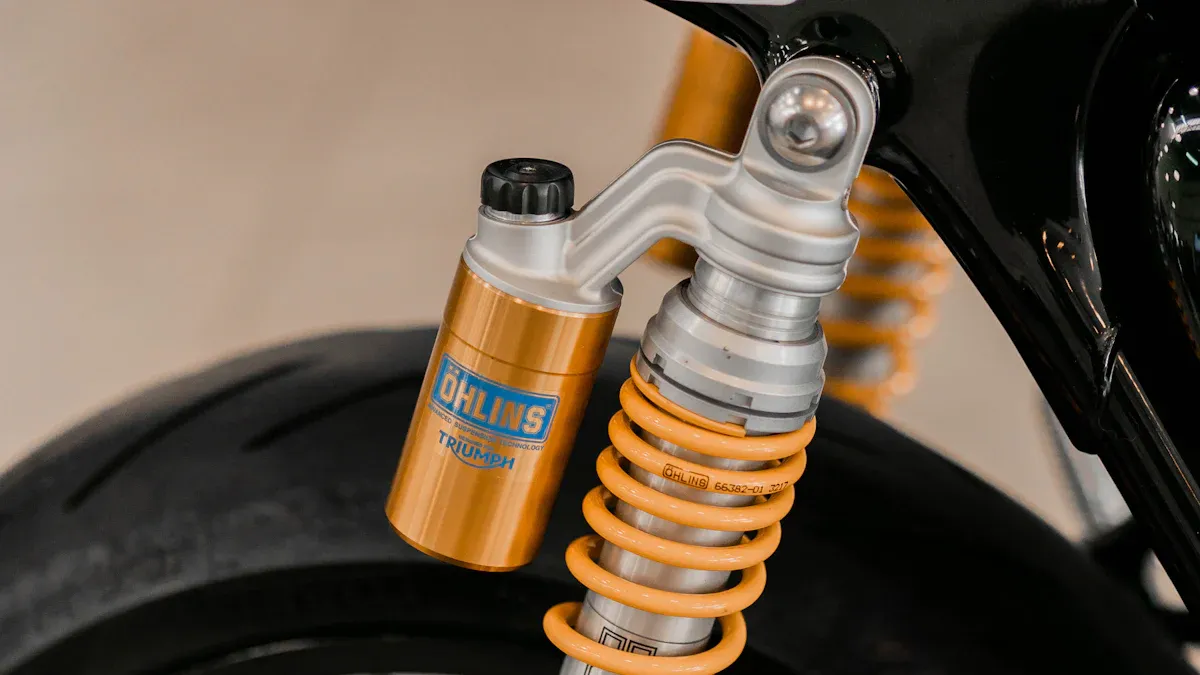
The key difference between coilovers and shocks centers on their structure and function. Coilovers combine a coil spring with a shock absorber in one unit, while shocks work as separate parts that only dampen movement. This distinction affects your car suspension in several ways. You get more adjustability with coilovers, which lets you fine-tune ride height and handling. Shocks usually offer a smoother ride and suit daily driving. The table below shows how coilovers vs shocks compare in ride quality and adjustment:
Feature | Coilovers | Shock Absorbers |
|---|---|---|
Adjustment Capabilities | Highly adjustable | Limited adjustability |
Ride Quality | Balances performance and comfort | Smoother ride |
Performance | Best for handling and tuning | Great for everyday driving |
You will learn the difference between coilovers and shocks in simple terms, making it easier to choose the right suspension for your needs.
Key Takeaways
Coilovers combine a spring and shock absorber, allowing for adjustable ride height and damping. This feature is great for performance tuning.
Shocks provide a smoother ride and are ideal for daily driving. They focus on comfort and stability without the need for adjustments.
Consider your vehicle type and driving style when choosing between coilovers and shocks. Sports cars benefit from coilovers, while everyday vehicles suit shocks.
Budget is important. Coilovers are more expensive but offer better adjustability. Shocks are budget-friendly and easier to install.
Regularly check your suspension for signs of wear, like bouncing or uneven tire wear. This ensures safety and optimal performance.
Coilovers vs Shocks Overview
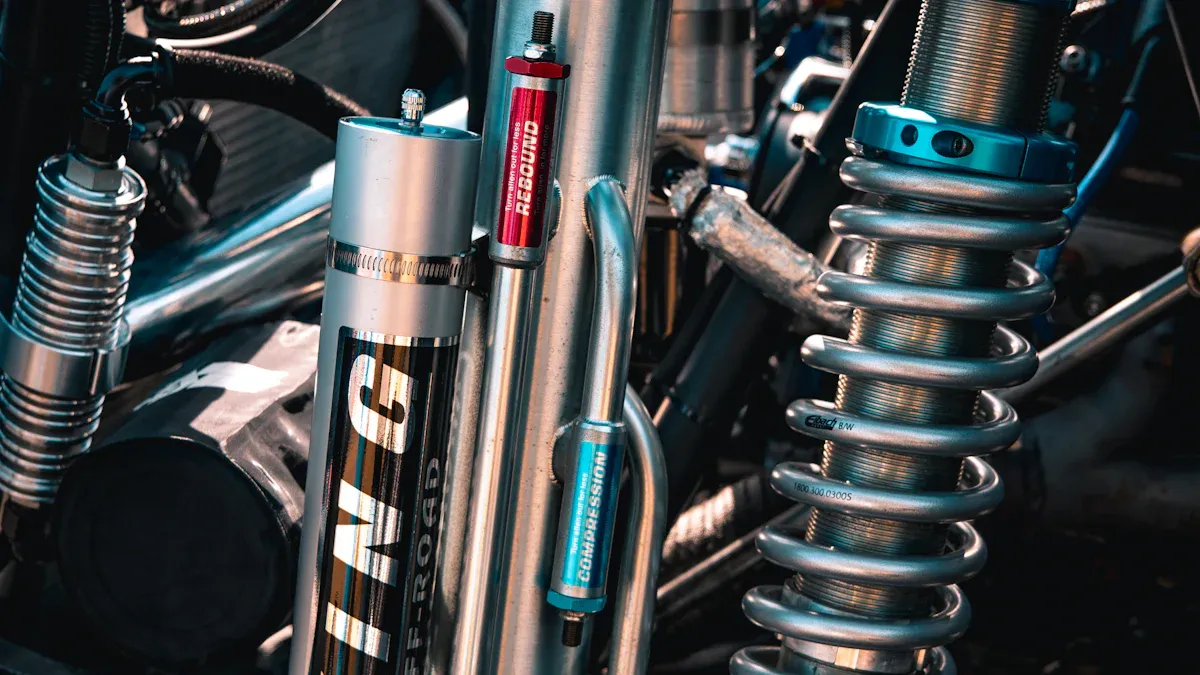
Coilovers Explained
You may wonder what coilovers are and how they work in your suspension. Coilovers combine a coil spring and a shock absorber into one unit. This design lets you adjust ride height and damping. You can use a set of coilovers to fine-tune your car for street or track use. Coilover suspension is popular with enthusiasts who want better handling and more control. Many aftermarket coil-overs offer features like adjustable spring rates and damping settings. You can swap springs to change how your car feels on the road. Some coilovers allow you to adjust camber and caster for even more precise handling.
Tip: Coilovers are not just for racing. You can use them for daily driving if you want a custom ride height or improved cornering.
Shocks Explained
Shocks, also called shock absorbers, are separate components in your suspension. They control how your car moves over bumps and keep your tires on the road. Shocks do not support the weight of your car. Struts, on the other hand, provide structural support and damping. Many people confuse coilovers vs struts, but they serve different roles. Shocks are great for everyday driving because they offer a smoother ride. You can find aftermarket shocks that improve comfort and stability compared to original equipment. Brands like Bilstein and Fox make shocks that balance performance and comfort.
Coilover Shocks Structure
Coilover shocks have a unique structure. You get a shock absorber wrapped with a coil spring. This setup lets you adjust ride height using threaded collars or spring perches. You can also change damping settings for rebound and compression. Some coilover shocks offer single, double, or even four-way adjustability. This means you can tune your suspension for street, track, or off-road use. The table below shows the main differences between coilovers and shocks:
Feature | Coilovers | Shocks |
|---|---|---|
Design | Combines shock absorber and coil spring in one unit | Separate components |
Adjustability | High adjustability for ride height and damping | Limited adjustability |
Ride Quality | Balances performance and comfort | Generally smoother ride |
Performance | Fine-tunes handling for performance vehicles | Suitable for everyday driving |
You should know that coilovers vs shocks have different use cases. Coilovers work best for performance tuning and motorsports. Shocks are ideal for daily driving and comfort. Some motorsports events restrict coilovers, so check the rules before you upgrade.
Key Differences
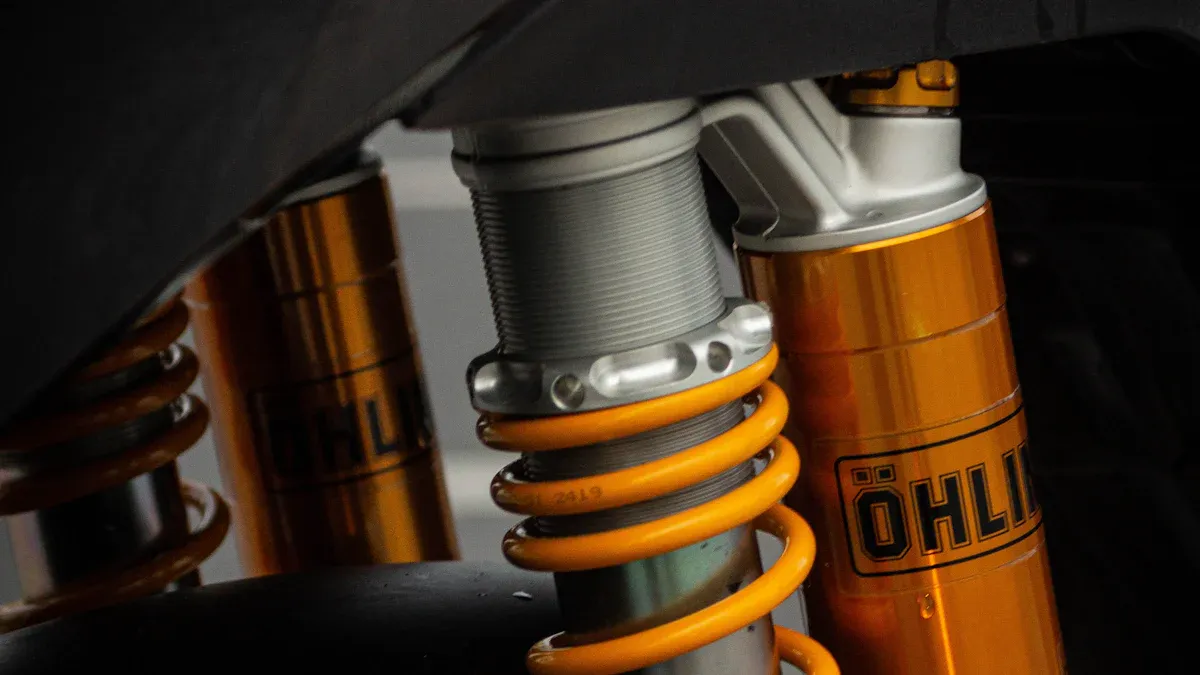
Adjustability
When you compare coilovers vs shocks, you notice that coilovers offer much more adjustability. You can change the preload on the spring, which lets you make the suspension stiffer or softer. You also get the ability to fine-tune ride height, so you can raise or lower your car for different looks or driving needs. Damping rates can be adjusted for street, racing, or track use. You can balance the front and rear axles for better handling. Coilovers replace shocks and struts in many performance setups because they allow you to control compression and rebound independently. This means you can set up your car for daily driving, racing, or off-road adventures.
You can adjust spring preload for stiffness.
You can fine-tune ride height for style or function.
You can set damping rates for comfort or performance.
You can balance weight between front and rear axles.
You can choose single, double, or four-way adjustability for advanced tuning.
Coilovers provide improved responsiveness, stiffer springs for less weight transfer, and enhanced control during high-speed cornering. These features make coilovers ideal for racing or track use, where adjustability and performance matter most.
Feature | Coilovers | Traditional Shocks |
|---|---|---|
Height Adjustability | Easily adjustable via threaded body or perch | Fixed height |
Corner Balancing | Allows fine-tuning of weight distribution | Limited adjustability |
Ride Quality
Ride quality and performance depend on the type of suspension you choose. Coilovers balance comfort and control, but you can make them firmer or softer with adjustments. Shocks usually provide a smoother ride, which is better for daily driving. Brands like Bilstein focus on sporty handling, while Fox shocks offer comfort and bump compliance. Rancho shocks let you adjust compression for a mix of comfort and control. KYB shocks target commuter comfort, with some models built for heavy-duty needs. Coilover shocks combine springs and dampers to give you a responsive and balanced driving experience. You can customize spring rates and damping for different driving conditions.
Coilovers enhance handling and ride quality by letting you control the motion of your vehicle. Adjustable damping rates allow you to set up your suspension for performance or comfort. If you set your suspension too stiff, you get a harsh ride and poor bump absorption. If you set it too soft, you get excessive body roll and uneven tire wear, which can affect safety.
Failed shocks cause your car to bounce after a stop. This makes it harder to control and can lead to uneven tire wear. Driving on rough roads wears out suspension parts faster, so you need to check your shocks and struts regularly.
Installation & Maintenance
Installing coilovers takes more time and effort than installing shocks or struts. You need to set the preload, install springs, and make sure everything is tight. You should inspect coilovers when you get them, install springs correctly, and check for tightness after installation. Maintenance means keeping parts clean and checking for loose bolts. Shocks vs struts have simpler installation steps. You usually just bolt them in and go. You do not need to adjust as many settings. Professional mechanics report that coilovers can have fitment issues, bushing compatibility problems, and mounting bracket alignment challenges. You should use proper tools and replace bushings and bearings for best results.
Component | Installation Time (per corner) | Typical Cost (per corner) | Additional Notes |
|---|---|---|---|
Coilovers | 30-90 minutes | $30-150 | Requires spring compressor, more complex installation |
Shocks | 30 minutes | $30-150 | Simpler installation, single unit |
The lifespan of coilovers and shocks depends on the type, driving style, and maintenance. Coilovers replace struts and shocks in many setups, but aggressive driving or rough roads can shorten their life. You can expect at least 4 to 5 years, and up to 10 years on smooth roads.
Cost
The cost of coilovers vs shocks varies by make, model, and performance needs. Shocks cost between $30 and $600 each. Coilovers range from $300 to $3,000 for a full set. Cheap coilovers cost $300 to $1,500, while expensive coilovers can reach $3,000. Upgrading to premium shocks or coilovers for better performance increases the price. The type of vehicle also affects the cost. Racing setups need advanced coilovers, which cost more than basic shocks or struts.
Item | Price Range |
|---|---|
Shocks | $30 to $600 each |
Coilovers | $300 to $3,000 |
Cheap Coilovers | $300 to $1,500 |
Expensive Coilovers | $1,500 to $3,000 |
Make and model affect the price.
Performance upgrades cost more.
Racing or track use needs advanced coilovers.
Tip: You should consider installation costs and long-term maintenance when choosing between coilovers and shocks. Coilovers offer more adjustability and performance, but they cost more and take longer to install.
Choosing Coilovers or Shocks
Vehicle Type
You need to match your suspension choice to your vehicle type. If you drive a sports car or a tuner, coilovers give you the best ride height adjustment and performance tuning. Coilovers replace struts and shocks in many setups, especially for racing or track use. Trucks and SUVs often use heavy-duty shocks and struts for comfort and load capacity. Off-road vehicles need suspension upgrades that handle extra weight from gear and accessories.
A key factor for off-road vehicles is added load capacity. When you add more gear, springs and shocks compress, which limits travel and comfort over rough terrain.
Independent suspension systems improve handling and traction, but they may not carry heavy loads as well as leaf springs. You should check your vehicle’s suspension design before choosing coilovers or shocks.
Driving Style
Your driving style affects your choice between coilovers vs shocks. If you want a smoother ride for daily driving, shocks and struts work well. Coilovers offer more adjustability for ride quality and performance. You can set coilover shocks to softer settings for comfort or stiffer settings for racing.
Here’s a quick comparison:
Feature | Coilovers | Traditional Shocks |
|---|---|---|
Adjustability | Yes (damping and ride height) | No |
Comfort for Daily Driving | Softer settings available | Generally smoother ride |
Performance Tuning | Stiffer settings for track/racing | Limited customization |
If you enjoy spirited driving or racing, coilovers let you fine-tune handling and corner balance. For daily commutes, shocks provide reliable comfort.
Budget
Budget plays a big role in your decision. Coilovers cost more than shocks, but they offer better adjustability and performance parts for tuning.
Consider these points when budgeting for suspension upgrades:
Assess the quality of materials and construction for durability.
Check adjustability options for height and damping to match driving needs.
Verify compatibility with your specific car to avoid installation issues.
Consider the brand’s reputation and customer reviews for overall satisfaction.
High-end coilovers are designed for serious use, offering better engineering, larger pistons, and a wider damping range.
Expensive coilovers are recommended for competitive use, as they can improve lap times significantly.
Cheaper coilovers may be inferior in quality and performance but can still provide value if set up correctly.
Professional installation protects your safety and resale value. High-quality suspension modifications can increase your vehicle’s market appeal, while poor installation may lower its value.
You should choose coilovers if you want maximum adjustability and performance for racing or track use. Shocks and struts suit daily driving and budget-friendly upgrades. Coilovers replace shocks and struts in many performance setups, but you must balance cost, ride quality and performance, and your driving needs.
When you compare coilovers vs shocks, you see clear differences in structure and function. Coilovers give you more adjustability for ride height and damping, which helps with performance tuning. Shocks focus on comfort and simple installation. For everyday drivers, consider these points:
Coilovers allow precise tuning, but you may not need this for daily use.
Racing coilovers feel stiffer, while street coilovers offer more comfort.
Shocks work well for general handling and durability.
Think about your vehicle, driving habits, and budget before choosing the best suspension for your needs.
FAQ
What is the main purpose of coilovers?
Coilovers let you adjust your car’s ride height and handling. You use them to improve performance or change how your car looks. Many drivers choose coilovers for racing or custom setups.
What makes shocks different from coilovers?
Shocks only control movement and absorb bumps. Coilovers combine a spring and a shock in one unit. You get more adjustability with coilovers, while shocks focus on comfort and stability.
What should you check before buying coilovers or shocks?
You need to check your vehicle’s compatibility, your driving style, and your budget. Look at product reviews and make sure the parts fit your car. Quality and adjustability matter for long-term use.
What signs show you need new shocks or coilovers?
You notice bouncing after stops, uneven tire wear, or poor handling. Your car may feel rough over bumps. These signs mean you should inspect your suspension and consider replacing worn parts.



