

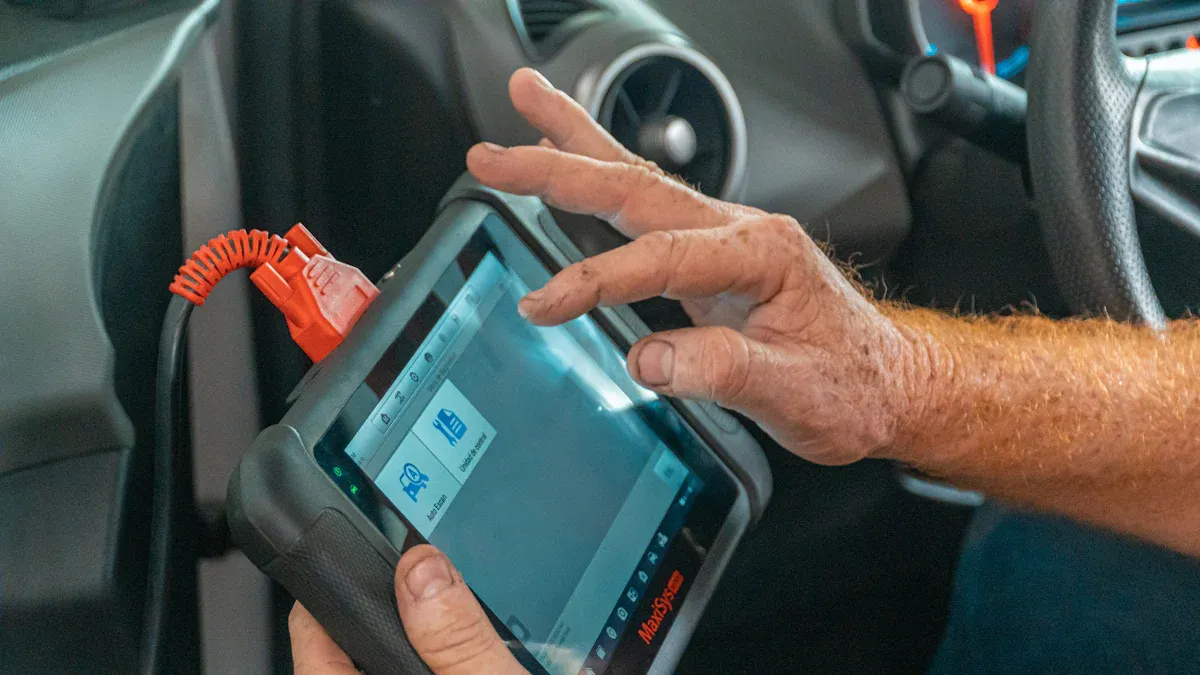
Receiving a “failed emissions test” result can feel frustrating. You might worry about the hassle and cost. However, this result signals your vehicle needs attention. A failed test also prevents you from renewing your vehicle registration. Many issues cause failures, like a check engine light being on, a dirty air filter, or even old motor oil. This guide offers 12 smart ways to help you pass emissions test on your next attempt. We will save you time, money, and stress with practical solutions for your emissions problems.
Key Takeaways
Review your emissions report to understand why your car failed.
Fix any issues that cause your check engine light to turn on.
Drive your car for a specific distance after repairs to reset its computer.
Keep your car well-maintained with clean oil and proper tire pressure.
Get help from a certified mechanic for accurate repairs.
First Steps After a Failed Emissions Test
Review Your Emissions Report
You just received a failed emissions test result. Your first step is to carefully review the emissions report. This document provides crucial information about why your vehicle failed. It often lists specific Diagnostic Trouble Codes (DTCs). The report might also include the date of repair, the repair facility’s phone number, and the total cost for emissions-related repairs. You will also see the signature of the repair technician. Understanding these details helps you pinpoint the exact problems.
Address the Check Engine Light
An illuminated check engine light (CEL) almost certainly causes a vehicle to fail a smog test. This light indicates a problem with your engine or emissions system. The On-Board Diagnostics (OBD) system detects an issue that affects your car’s emissions. This makes it a major red flag for tests ensuring compliance with pollution standards. Even if your car seems to run normally, the CEL points to a problem directly linked to the emissions system. For models manufactured in 1996 or later, the OBD test specifically verifies the proper function of the CEL. If the CEL is on during emission testing, your vehicle automatically fails the inspection.
Clear Diagnostic Trouble Codes
Your emissions report likely lists Diagnostic Trouble Codes (DTCs). These codes tell you what specific issues your car has. Common DTCs associated with emissions failures include P0420, which indicates a catalytic converter problem. P0455 or P0440 point to issues with the evaporative emission system. P0401 suggests insufficient exhaust gas recirculation flow. P0141 signals an oxygen sensor heater circuit malfunction. P0128 means your engine coolant temperature is too low. Clearing these codes or resetting your car’s computer also resets readiness monitors. These monitors must complete their checks before emissions testing. If they are not ready, your vehicle will likely face a failed test.
Vehicle Prep for a Successful Retest
You can take several steps to prepare your vehicle for a successful retest. These actions improve your car’s performance. They also help your car pass the emissions test.
Perform a Driving Cycle
After clearing trouble codes or making repairs, your car’s computer needs to reset its readiness monitors. These monitors check various systems, including your emissions controls. A “driving cycle” helps these monitors complete their checks. You need to perform a specific sequence of driving to set them.
Here is a general driving cycle procedure:
Start your car cold. The coolant temperature must be below 50°C (122°F). It should also be within 11 degrees of the air temperature. Letting your car sit overnight usually achieves this.
Do not turn the ignition key to the ON position before starting. This ensures the heated oxygen sensor diagnostic runs correctly.
Start the engine. Idle in drive for two and a half minutes. Turn on the A/C and rear defroster if you have them.
Turn off the A/C and rear defroster. Accelerate to 90 km/h (55 mph) using moderate, constant acceleration. Maintain this steady speed for three minutes.
Decelerate to 30 km/h (20 mph) without using the brakes. If you drive a manual transmission, avoid depressing the clutch.
Accelerate back to 90-100 km/h (55-60 mph) using 3/4 throttle. Maintain this steady speed for five minutes.
Slow down to a complete stop without using the brakes.
The purpose of an OBD2 drive cycle is to allow your car’s on-board diagnostics to operate. It lets readiness monitors detect emission system malfunctions. A generic drive cycle offers a guideline. However, the correct drive cycle can vary greatly by car model and manufacturer. Your owner’s manual often includes these details. A few days of normal city and highway driving are often enough for monitors to become ready.
You need to drive a certain number of miles to set all emissions monitors. This completes a full drive cycle. Typically, you should drive 30 to 100 miles. This range accounts for differences in your vehicle’s make and model. It also depends on the specific repair you performed. Driving conditions also play a role. Newer vehicles with advanced emissions control technology may need more testing.
Factor | Category | Mileage Requirement (miles) |
|---|---|---|
Vehicle Make | Ford | 50 to 100 |
Toyota | 30 to 60 | |
Honda | 40 to 80 | |
Chevrolet | 60 to 120 | |
BMW | 70 to 140 | |
Type of Repair | Oxygen Sensor Replacement | 30 to 60 |
Catalytic Converter Repair | 80 to 120 | |
Ignition System Repair | 50 to 90 | |
EGR System Fix | 40 to 70 | |
Fuel System Adjustment | 60 to 100 | |
Driving Conditions | Mostly Highway Driving | 30 to 50 |
Balanced Highway and City Mix | 50 to 80 | |
Mostly City Driving | 80 to 100 | |
Stop-and-Go Traffic | 90 to 120 |
For example, a Toyota might need 30-60 miles. A BMW could require 70-140 miles. An oxygen sensor replacement might need 30-60 miles. A catalytic converter repair could need 80-120 miles. Highway driving might only need 30-50 miles. Stop-and-go traffic could require 90-120 miles.
Check Tire Pressure and Fluids
Proper tire pressure is important for fuel efficiency. It also affects your car’s emissions. Underinflated tires increase your tire’s contact area with the road. This creates higher rolling resistance. Your engine must work harder and use more fuel. This directly leads to more carbon dioxide emissions.
Consider these facts:
A 1% decrease in tire pressure reduces fuel economy by 0.3%.
Properly inflated tires can improve gas mileage by about 3.3% per gallon.
Every gallon of gasoline burned releases about 20 pounds of CO2.
For every 1 PSI drop in pressure across all four tires, gas mileage decreases by 0.2%.
A 10 PSI underinflation can cause a 2% loss in gas mileage.
The Environmental Protection Agency (EPA) states that American cars drive 12,000 miles a year on average. This releases over five tons of CO2 into the atmosphere annually from one vehicle. Maintaining optimal tire pressure ensures efficient fuel use. It also reduces CO2 output. You should also check all your fluid levels. Make sure your engine oil, coolant, and transmission fluid are at the correct levels.
Ensure Full Fuel Tank
You should have a full fuel tank before an emissions test. This helps the evaporative emission (EVAP) system. The EVAP system captures fuel vapors. It prevents them from escaping into the atmosphere. A full tank helps the system operate correctly. It also allows the system to be fully tested.
Use a Quality Fuel Additive
Fuel additives can sometimes help reduce emissions. They work by cleaning your fuel system. They also promote more complete fuel combustion.
Some effective fuel additives include:
PRI Chemistry: This additive prevents dense, high-carbon material from forming during combustion. It reduces unburned carbon and smoke.
Biobor JF: This is an EPA-approved biocide. It targets microorganisms in fuel and water. It prevents sludge and acid formation.
Fuel Ox with Combustion Catalyst: This proprietary treatment promotes more complete combustion. It modifies the burn rate and improves thermal efficiency. It reduces emissions like unburned hydrocarbons and carbon particles.
High-quality fuel system cleaners can reduce hydrocarbon emissions by 20-40%. You must use them properly. Apply them at least 200 miles before an emissions test. However, these additives do not fix severe problems. They will not help with failed oxygen sensors, catalyst damage, or EVAP system leaks. Their effectiveness is best when you combine them with proper maintenance of all emission control components.
Common Issues That Cause Emissions Failure

You need to understand common mechanical problems that lead to a failed emissions test. Addressing these issues directly helps you pass your retest.
Inspect for Vacuum Leaks
Vacuum leaks introduce unmetered air into your engine. This disrupts the air-to-fuel ratio. Your engine then struggles to maintain proper combustion. This directly impacts your vehicle’s emissions.
You might notice several signs of a vacuum leak:
Poor gas mileage: An incorrect air-to-fuel ratio or inefficient combustion increases your fuel consumption.
Black or white smoke: Incomplete fuel combustion, caused by an incorrect air-to-fuel ratio, often results in visible colored exhaust.
Illumination of the check engine light: The oxygen sensor detects a different amount of oxygen in the exhaust than what the mass air-flow sensor measured. This indicates a lean fuel mixture due to a vacuum leak.
Rough idling: A severe vacuum leak makes it difficult for the throttle body to maintain a steady idle speed.
Stalling at idle: Your engine may stall when your vehicle is stationary. This happens due to an improper air/fuel mixture from unregulated air entering the system.
Delayed or jerky acceleration: Hesitation or rough acceleration occurs because excess air from a vacuum leak disrupts the ideal air-to-fuel ratio. This effectively ‘starves’ your engine of fuel.
High-pitched noise: You can hear a squealing sound as your engine attempts to draw air through a leaky hose.
Replace a Dirty Air Filter
A dirty air filter restricts airflow to your engine. This creates a rich air/fuel mixture. This leads to incomplete combustion and engine misfires. These issues significantly increase your vehicle’s emissions. A rich fuel mixture can also foul spark plugs, contributing to misfires.
A clogged air filter restricts airflow. This leads to an improper air-to-fuel mixture. This imbalance can cause increased carbon deposits and unburned fuel to exit your exhaust as black smoke. This increases vehicle emissions and can cause an emissions test failure.
You should change your engine air filter every 12,000 to 15,000 miles (20,000-24,000 kilometers). You can also change it once a year, whichever comes first. You need more frequent changes if you drive in dusty areas or near beaches. Always consult your owner’s manual and the manufacturer’s recommendation for specific vehicle intervals. A clogged air filter forces your engine to work harder and burn more fuel due to restricted airflow. This leads to increased emissions. Other issues include reduced acceleration, decreased fuel economy, carbon deposits on spark plugs, and accelerated engine wear.
Change Your Engine Oil
Old or dirty engine oil contributes to increased exhaust emissions. When your engine burns excessive oil, a complex hydrocarbon, it can overwhelm your catalytic converter. This causes unburned hydrocarbons to release into the atmosphere. Burning oil significantly increases emissions, as catalytic converters do not process large volumes of motor oil. Motor oil contamination can render catalytic converters ineffective.
Contaminants accumulate in engine oil when you neglect oil changes. These contaminants increase friction, forcing your engine to work harder. A struggling engine overwhelms your vehicle’s emissions system. This leads to the release of more harmful gases.
Clean oil promotes efficient fuel combustion. This reduces harmful emissions like carbon monoxide, nitrogen oxides, and unburned hydrocarbons. When oil is contaminated and engine efficiency drops, modern emission control systems must work harder to meet standards. Vehicles with overdue oil changes may fail emission tests due to increased emissions. Poor oil maintenance can cause deposits on critical emission control components like oxygen sensors and and catalytic converters. This leads to their premature failure and increased emissions.
Evaluate Your Catalytic Converter
Your catalytic converter is a crucial emissions control device. It reduces or oxidizes 90% of the oxides of nitrogen, unspent fuel, and carbon monoxide present in untreated tailpipe emissions. Catalytic converters reduce carbon monoxide (CO) to carbon dioxide (CO2). They oxidize unburnt hydrocarbons to CO2 and water. Beginning in 1981, a third component was added to reduce nitrogen oxides to nitrogen and oxygen. Catalytic converters significantly decrease the amount of nitrogen oxides, hydrocarbons, and carbon monoxide released into the atmosphere. According to the EPA, in 2021, automobiles emitted approximately 99 percent less CO, hydrocarbons, and nitrogen oxides compared to 1970 models. Catalytic converters treat exhaust gases including carbon monoxide, hydrocarbons, volatile organic compounds, nitric oxide, and nitrogen dioxide.
A catalytic converter that isn’t functioning properly causes your vehicle to fail an emissions test. A malfunctioning unit leads to higher levels of pollutants being released into the atmosphere.
Common failure modes for catalytic converters include:
Physical damage from collisions or debris: Impacts from speed bumps, potholes, or road debris can cause cracks, dents, or holes. This disrupts exhaust flow and prevents the converter from neutralizing pollutants.
Contamination from leaking oil or coolant: Leaks can coat the converter’s internal surfaces. This leads to clogging and inefficiency.
Incorrect fuel mixture: An imbalanced air-to-fuel ratio (rich or lean) can cause excessive heat or toxic buildup. This damages internal components.
Engine misfires: Unburnt fuel entering the exhaust system ignites inside the converter. This creates extreme temperatures that break down its honeycomb structure. This leads to reduced efficiency or blockage.
A common reason for failing an emissions test is a failed oxygen sensor. This sensor regulates the air/fuel mixture. A faulty O2 sensor can degrade engine performance. It causes sputtering, power loss, surging, erratic engine behavior, rough idling, and decreased power due to incorrect fuel mixture and inefficient combustion. Faulty oxygen sensors inaccurately measure exhaust gas oxygen levels. This skews the fuel mixture and leads to an emissions imbalance. This increases harmful gases, risks failing emissions tests, and can damage your catalytic converter.
You might notice these signs of a failing oxygen sensor:
High Emissions Levels: A faulty oxygen (O2) sensor can raise vehicle emissions to the point of failing a smog check.
Performance Issues: A dying O2 sensor can cause engine stuttering or surging due to an imbalanced air-fuel mixture in the combustion chamber.
Fuel Economy Loss: Your engine runs inefficiently. This leads to increased fuel consumption and more frequent trips to the gas station.
Burning Sulfur Odors: High emissions can clog your catalytic converter. This produces rotten egg-like smells.
Black Exhaust Smoke: A faulty oxygen sensor creates a rich fuel condition. This results in black exhaust smoke from your tailpipe.
Check Engine Warning: Once the O2 sensor fails, it sends a diagnostic code to your engine control unit. This illuminates your check engine light.
Poor Gas Mileage (Plus Bad Smells & Black Smoke): A bad oxygen sensor can cause your car to inject more fuel. This leads to wasted fuel, poor fuel economy, rotten egg smells, and black smoke from your tailpipe. This can also cause your vehicle to fail emission tests.
Poor Engine Performance: A bad O2 sensor can cause rough idle, loss of engine power, poor acceleration, engine misfires, and stalling. It disrupts essential engine functions like timing, combustion intervals, and air-fuel ratio.
Addressing these common issues helps you pass your emissions test. Repairing these problems can cost money. For example, replacing an oxygen sensor averages $243. A catalytic converter replacement averages $1,356. However, these repairs are necessary for your vehicle’s health and to meet environmental standards.
Expert Help and Retest Strategies to Pass Emissions Test
Consult a Certified Mechanic
You should seek help from a certified mechanic after a failed emissions test. These professionals have specific training. Technicians must complete certain requirements to become certified emissions technicians. They can achieve certification through testing or by meeting specific educational and training standards. For example, the Undercar Specialist Exhaust Systems (X1) certification is very relevant for emissions system repairs. The Emission Technician Education Program (ETEP) sets standards for Emission Repair Technicians (ERTs). Repair facilities must employ at least one certified ERT.
Choosing an ASE-certified mechanic offers many benefits. These technicians constantly update their knowledge. They learn about new vehicle technologies and advanced diagnostic tools. Their expertise leads to precise repairs. This helps you avoid unnecessary part replacements and eliminates guesswork. ASE-certified technicians have proven skills. They understand the latest automotive technology and repair methods. The ‘A8: Engine Performance’ certification specifically covers fuel, ignition, emission, and computer control systems. This ensures they can fix your car’s drivability issues.
Choose the Right Retest Facility
You can improve your chances of passing by choosing the right retest facility. Think of your retest as a second chance to show your car’s improvements. Studies show that people often improve their performance on tests with multiple attempts. This is especially true when they learn from their first try. You should apply all the corrections your mechanic made.
Effective corrective instruction is key. Your mechanic provides this by fixing the specific issues that caused your car to fail. After these corrections, you should get a second assessment. This helps confirm the repairs worked. Do not expect your car to fix itself. Do not skip necessary repairs. Make sure all corrective work is complete before your retest. This approach helps you pass your emissions test successfully.
A failed emissions test is not the end. You can pass your retest with the right preparation and knowledge. Understand your initial failed emissions test. Prepare your vehicle. Address common issues. Seek professional help. Apply these 12 smart ways confidently. You will pass emissions test on your next attempt. Proactive vehicle maintenance benefits your car and the environment. It also helps with overall emissions.
FAQ
What is an emissions test?
An emissions test checks your car’s exhaust. It measures harmful pollutants. This ensures your vehicle meets environmental standards. Passing this test is often required for vehicle registration.
Why did my car fail the emissions test?
Many things cause a failed test. A check engine light is a common reason. Other causes include a dirty air filter or old engine oil. Problems with your catalytic converter or oxygen sensor also lead to failure.
How long do I have to retest my car?
The retest timeframe varies by state. You usually have a specific number of days. Check your local Department of Motor Vehicles (DMV) rules. This ensures you meet all deadlines.
What are readiness monitors?
Readiness monitors are checks your car’s computer performs. They confirm your emissions systems work correctly. You need to drive your car for a while after repairs. This allows the monitors to complete their checks.
