A rain sensor is a smart device in your car. It automatically turns on your windshield wipers. This automatic system offers great convenience and enhances your safety. It helps you focus on the road. Automatic wipers adjust their speed to the rain. This provides consistent wiping and lets you concentrate on driving. You might wonder how a rain sensor detects rain. It uses infrared light. This is the core working principle of the system. This technology makes the automatic rain sensing wiper a key safety feature.
Infrared Light Detection: The Rain Sensor’s Core
You will typically find your rain sensor mounted on the car’s windshield. It often sits near the rearview mirror, sometimes behind its bracket. You might see a small, clear or dark box or lens there. This is your rain sensor module. This system exclusively uses infrared light for the detection of rain. It does not use sound or general humidity (moisture) in the air.
Fact 1: Infrared Emitter
The rain sensor starts its work with an infrared emitter. This component sends out a beam of infrared light. Think of it as a tiny flashlight you cannot see. Automotive rain sensors typically use specific wavelengths for this light. For example, they often use infrared LEDs with a peak emission wavelength of 870 nm or 945 nm. These emitters are crucial. They act as the sensing light source. Common types include OSRAM TOPLED™ SFH 4243B, which has a wavelength of 940 nm, and OSRAM TOPLED™ SFH 4253B, with a wavelength of 850 nm. OSRAM Power TOPLED™ SFH 4250B also uses an 850 nm wavelength. These emitters create the light beam that helps detect rain.
Fact 2: Photodetector Receiver
After the infrared emitter sends out light, a photodetector receiver waits to catch it. This receiver is a vital part of the rain sensor. It converts light signals into electrical signals. Here is how it works:
An optical transmitter, which is the infrared emitter, sends out a light beam.
When no rain is present, the windshield reflects or scatters this light in a predictable way. The receiver detects this light.
When raindrops appear on the windshield, they scatter and absorb the light. This changes the light’s brightness that reaches the receiver.
The receiver, often using photodiodes or phototransistors, converts this changed light into an electrical signal.
A signal processing circuit then analyzes this electrical signal. It uses this analysis to figure out the rain conditions, including how heavy the rain is.
Photodiodes are semiconductor devices. They have a p-n junction. Light absorption creates an electron-hole pair. This pair then separates into charge carriers, which generates an electrical current. Phototransistors are similar to bipolar junction transistors. They can amplify the photoactive layer’s signal. This makes them very sensitive to low-intensity light. However, they can be slower than photodiodes. Both types of photoreceivers are essential for converting the infrared light into a signal your car’s computer can understand.
Windshield Interaction and Light Dynamics
Your car’s windshield is not just a clear barrier. It plays a critical role in how your automatic wipers work. The rain sensor relies on the precise way light interacts with this glass surface. You can think of the windshield as a key component in the sensor’s optical system.
Fact 3: Windshield as a Prism
You might think of a prism as a triangular piece of glass that splits white light into colors. Your car’s windshield acts in a similar way, but with infrared light. It directs the light in a specific path. The windshield’s material and its angled position are important. They cause the infrared light beam to bend and change direction as it passes through the glass. This controlled bending of light is essential for the sensor to work correctly. The sensor sends light into the glass at a specific angle. This angle ensures the light travels through the windshield in a predictable way.
Fact 4: Light Reflection and Refraction
When the infrared light from the emitter hits the inside surface of your windshield, two main things can happen: reflection or refraction.
Reflection means the light bounces back.
Refraction means the light bends as it passes through a different material.
The rain sensor system uses a special type of reflection called total internal reflection. When your windshield is dry, the infrared light beam travels through the glass. It then hits the outer surface of the windshield at a specific angle. Because the angle is just right, most of the light does not pass out into the air. Instead, it bounces back into the glass and returns to the photodetector.
For dry glass, the critical angle for total internal reflection of infrared light is approximately 42°. This means if the light hits the surface at an angle greater than 42°, it will reflect back inside. Using a refractive index of 1 for air and 1.53 for glass, the critical angle for glass/air is calculated to be 40.81°. The rain sensor is designed to send its infrared light at an angle greater than this critical angle. This ensures the light reflects perfectly back to the receiver when the windshield is dry. This constant return of light tells the system that no rain is present.
Rain’s Impact on Light Signals

Fact 5: Rain’s Effect on Light
You now understand how your windshield reflects infrared light when it is dry. But what happens when rain starts to fall? This is where the magic of the rain sensor truly comes into play. When water droplets land on your windshield, they change how the infrared light behaves.
Imagine the infrared light beam traveling through the glass. When it hits a dry outer surface, it mostly reflects back to the sensor. However, water droplets on the windshield act like tiny lenses. They cause the emitted infrared light to scatter. This means the light does not reflect neatly back to the photodetector. Instead, the water droplets spread the light in many different directions. This scattering and refraction significantly reduce the amount of light reflected back to the sensor.
Think of it this way: a dry windshield is like a smooth mirror, sending all the light back. A wet windshield with moisture on it is like a broken mirror, scattering the light everywhere. Less light returns to the sensor because the water droplets absorb some of it and redirect the rest.
The size of these raindrops also plays a role in how much light scatters. Scientists use something called Mie theory to explain this. This theory shows that the scattering behavior of water droplets depends on their size and the light’s wavelength. For example, larger raindrops can scatter light differently than very small ones. The sensor detects this change in the returned light signal. It interprets a decrease in the reflected infrared light as the presence of moisture on your windshield. This is how your car knows it is raining.
Signal Processing and Interpretation
You have learned how water droplets scatter the infrared light. This scattering means less light returns to the photodetector. Now, your car’s brain, the Electronic Control Unit (ECU), takes over. The ECU is a sophisticated computer. It receives the electrical signals from the photodetector. This signal tells the ECU exactly how much light returned.
Fact 6: ECU Signal Interpretation
The Electronic Control Unit (ECU) acts as the central processing unit for your automatic wipers. It constantly monitors the electrical signal coming from the photodetector. When your windshield is dry, the photodetector sends a strong signal. This indicates a high amount of reflected infrared light. The ECU stores this as a baseline. When rain starts, water droplets scatter the light. This causes the photodetector to receive less light. Consequently, the electrical signal it sends to the ECU becomes weaker.
The ECU does not just notice a weaker signal. It interprets this reduced amount of returned light as the presence of rain. It compares the current signal strength to the baseline. A specialized processing circuit inside the ECU analyzes this difference. This circuit uses complex algorithms. These algorithms help determine the intensity of the rainfall. For example, a slight reduction in light might mean light drizzle. A significant drop in light indicates heavy rain.
This interpretation is crucial. The ECU’s internal circuit processes these changes very quickly. It translates the optical information into a digital command. This command then tells the wiper system what to do. The entire control circuit relies on this precise interpretation. Without it, the wipers would not know when or how fast to operate. Every part of this circuit works together to ensure accurate rain detection. The ECU’s decision-making circuit is the heart of this rain sensor system. It ensures your car responds effectively to changing weather conditions.
Automatic Wiper Activation and Control
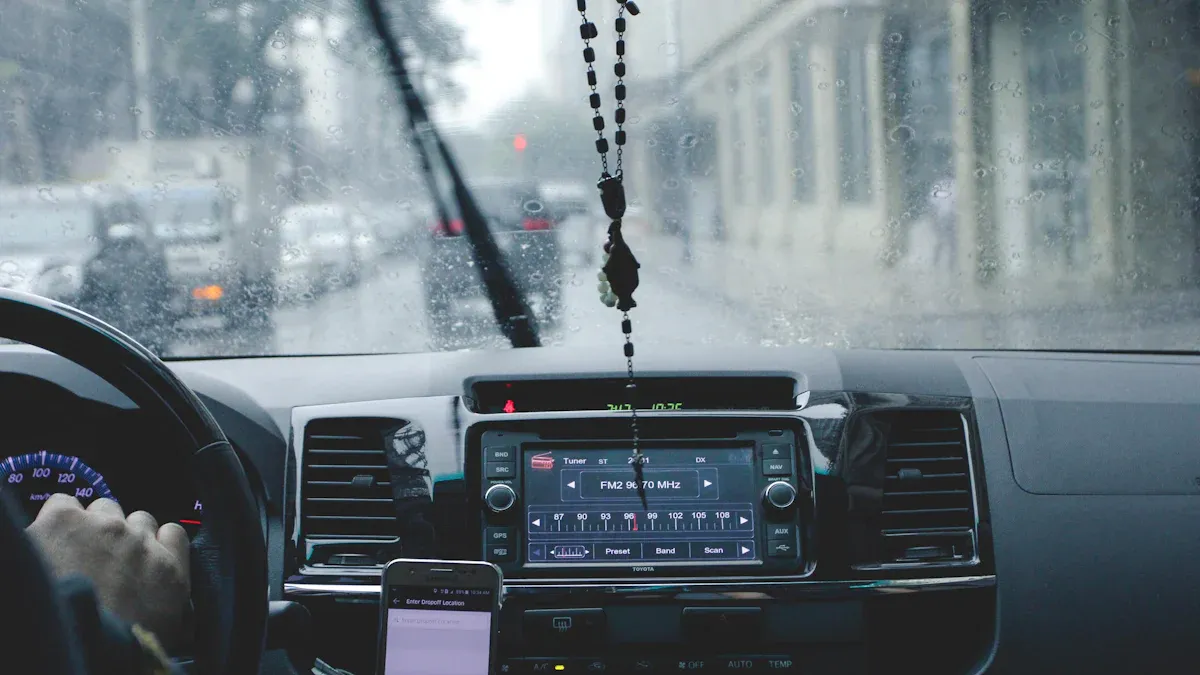
Once your car’s computer detects raindrops, the windshield wiper system automatically begins operating. The sensor is strategically positioned within the wiper’s path. This ensures it accurately measures the rain hitting the area the wipers clear. This smart system takes the guesswork out of managing your wipers.
Fact 7: Wiper Speed Adjustment
Your car’s automatic wipers do not just turn on; they adjust their speed dynamically. The system constantly monitors the amount of light returning to the sensor. This allows it to determine the rain’s intensity. Here is how the system communicates with the wiper motor to adjust speed:
Detection: The rain sensor emits infrared light. Raindrops on your windshield scatter this light. This reduces the amount reflected back to the receiver.
Signal Processing: A control unit receives and analyzes the scattered infrared signal data. This determines the presence and intensity of moisture.
Decision Making: Based on predefined thresholds, the system decides whether to activate the wipers or adjust their speed. For instance, light rain triggers slow wiping. Heavy rain prompts faster movement.
Activation: Commands are sent from the control unit to the wiper motor. This initiates or adjusts its movement. The system continuously monitors sensor data. This dynamically adjusts wiper speed.
Feedback Loop: As rain intensity changes, the sensor relays updated data. This allows the system to modulate wiper activity in real-time. You get continuous clear visibility.
This dynamic adjustment means you always have the right wiper speed for the conditions. You will find typical wiper speed settings available in automatic wiper systems:
Low Speed: This provides continuous operation for light to moderate rain.
High Speed: This offers continuous operation for heavy downpours.
Intermittent Setting: Wipers momentarily stop between each wipe.
Some systems offer a single intermittent speed.
Others provide multiple discrete settings, sometimes up to 10.
Some even have a sliding scale for adjustable time intervals.
Fact 8: Sensitivity Settings
You can personalize how responsive your automatic rain sensing wiper system is. This is done through sensitivity settings. These settings modify the ECU’s threshold for activating wipers or changing their speed. A higher sensitivity means your wipers will activate or speed up with less moisture on the windshield. This allows you to fine-tune the system to your preference.
Here are some common settings you might find in your vehicle’s wiper control system:
Setting | Description |
|---|---|
Wiper Mode | Configures the wiper system’s operational behavior. Options include: |
Intermittent Delay | Sets the pause duration between wipes when in |
Speed Sensitive Wiping | Enables or disables the feature where wiper speed automatically adjusts based on vehicle speed. When enabled, wipers may operate faster at higher speeds to maintain visibility. |
Rain Sensor Sensitivity | Adjusts how responsive the wipers are to rain. Higher sensitivity means wipers activate or speed up with less moisture. |
Wipe Count (after wash) | Determines how many wipes occur after the washer fluid is sprayed, ensuring the windshield is clear. |
Mist Wipe | A single wipe function, typically activated by a brief pull of the stalk, for clearing light mist or a single splash. |
Manual Override | Allows you to manually control wiper speed and function, overriding automatic mode settings. |
The windshield optical sensor is rain sensitive. It reliably works with a soldered low-power module. Wipers can be both car velocity sensitive and rain intensity sensitive. You might observe that wiper speed varies with vehicle speed. For example, wipers might wipe faster at 40 mph than at 10 mph, even in the first knob position. This suggests an automatic adjustment based on vehicle speed. The intermittent feature functions based on the amount of rain falling on the windshield. While it might seem speed-sensitive due to increased water accumulation at higher speeds, it is primarily based on the amount of water hitting the sensor. The time between wipes can vary depending on how fast rain accumulates. Both rain intensity and vehicle speed influence this.
System Integration and Benefits
Fact 9: Vehicle System Integration
Your car’s rain sensing system does not work alone. It connects with many other vehicle systems. This creates a smarter, safer driving experience for you. The rain sensor’s circuit sends signals to various parts of your car. This ensures everything works together smoothly.
One key integration involves your vehicle’s lighting system. The automatic wiper system often works with auto-on/off headlight operation. This means when the rain sensor detects heavy rain, it can also signal your headlights to turn on. This improves your visibility to other drivers. Many cars use a combined rain-light sensor. This single unit handles both rain detection and ambient light sensing. It includes sunlight detectors and other light and dark detectors. This allows your car to manage both wipers and headlights automatically. This integrated circuit makes your driving easier and safer.
Modern vehicles also integrate rain sensors into advanced driver-assistance systems (ADAS). This creates a holistic safety net for you. For example, the rain sensor’s circuit can share information with systems like automated emergency braking and lane departure warnings. This helps these systems react better to changing weather. If heavy rain reduces visibility, the ADAS can adjust its sensitivity. This promotes a smoother driving experience for you.
This deep integration offers many benefits:
Enhanced Focus: Automated wipers allow you to fully concentrate on the road. You do not need to fiddle with wiper controls. This leads to a more enjoyable and less stressful driving experience. This is especially true during sudden rain.
Improved Visibility: The system provides real-time wiper response to rain. This ensures a clearer view of the road. It reduces accident risks from impaired visibility. The control circuit constantly adjusts to keep your view clear.
Reduced Distraction: Rain sensors improve safety by minimizing manual distractions. You can concentrate on challenging road conditions. This is a crucial safety feature.
Automated Visibility: Rain sensors automatically activate wipers. They ensure clear visibility in bad weather without manual intervention.
Enhanced Driving Experience: High-end vehicles integrate rain sensors with other features. These include heated wiper blades and adaptive wiper speeds. This provides a more comfortable drive. The complex circuitry makes these advanced features possible.
Integrated Systems: In high-end vehicles, rain sensors, Head-Up Displays (HUDs), and ADAS work together. They provide a seamless and intuitive driving experience. This enhances both luxury and innovation.
Your car’s rain sensor and automatic wipers offer great efficiency and safety. The nine facts show you how this driver assistance system works seamlessly. These automatic systems give you a hands-free experience. You can focus on the road instead of adjusting wipers. This makes driving safer and more convenient. Future advancements will bring even smarter systems. Expect more artificial intelligence for weather analysis and better sensor accuracy. These automatic wipers will also integrate with autonomous driving systems. This will improve your car’s ability to understand its surroundings.