


You invest in advanced engine protection when you choose synthetic oil. This premium lubricant offers superior performance and longer drain intervals. Your engine needs a high-quality oil filter, specifically designed to match its capabilities. A standard filter cannot keep up with the demands of synthetic oil. You need the best car oil filters available. These specialized filters ensure maximum engine health. This guide helps you discover top choices and understand why they stand out.
Key Takeaways
Synthetic oil needs a special filter. This filter handles its unique properties and longer use times.
Good synthetic oil filters have strong parts. They use advanced materials to catch more dirt.
These special filters keep your engine cleaner. They protect it better than regular filters.
Always check your car’s manual. Pick a filter that fits your car and meets its needs.
Why Synthetic Oil Needs a Better Filter
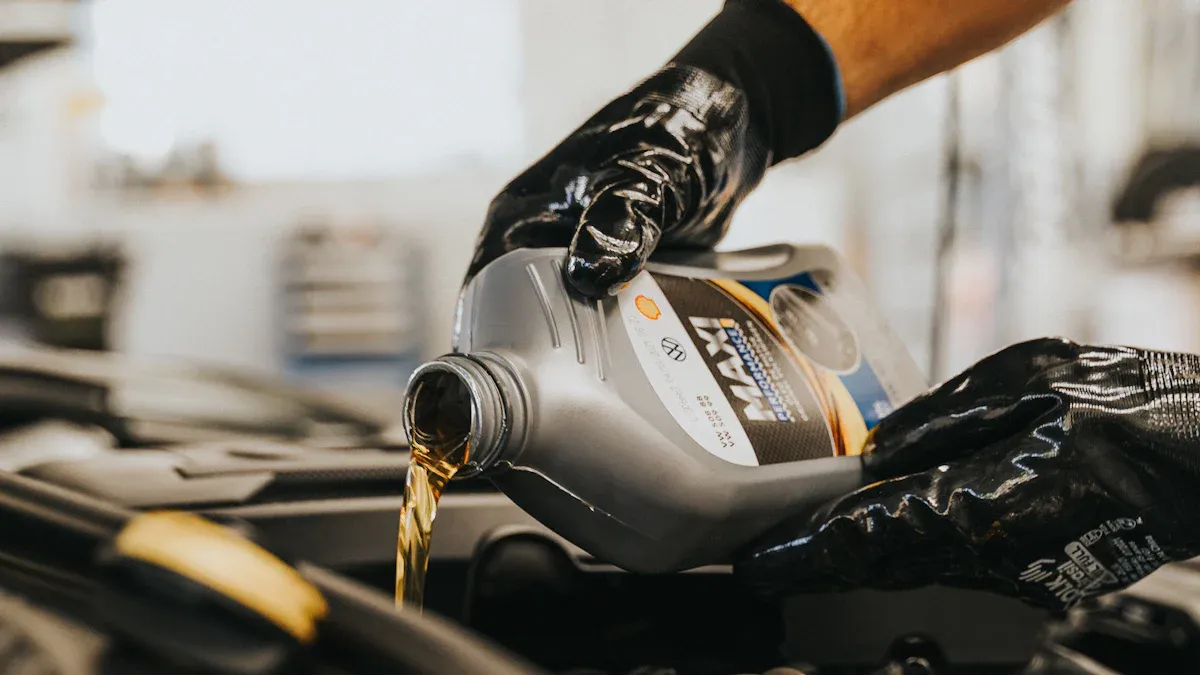
You might wonder why synthetic oil demands a special filter. Synthetic oil has unique properties. These properties place higher demands on your engine’s filtration system.
Synthetic Oil Properties
Synthetic oil is different from conventional oil. Manufacturers create synthetic base oils through organic synthesis. This process allows for a specific molecular composition. You get a uniform structure. This fine-tuned control gives synthetic oil greater stability. It performs better than refined petroleum oils. Conventional oils have a diverse and less stable molecular structure.
Property | Synthetic Oil | Conventional Oil |
|---|---|---|
Molecular Structure | Optimized, uniform, tailored molecular bonds, low volatility | Diverse molecular composition, basic formulation, natural impurities |
Viscosity Retention | Maintains viscosity across a broader temperature range, less susceptible to breakdown | Less stable viscosity, prone to thinning at high temps and thickening at cold |
Manufacturing Process | Intricate synthesis, chemically engineered | Refining crude oil, less complex process |
Synthetic oil also contains specific chemicals and additives. These ensure structural consistency. This leads to superior lubrication. It also means less degradation and oxidation. Synthetic oil has fewer contaminants. It is smoother. This reduces deposit formation inside your engine. It better retains its viscosity across extreme temperatures. It stays consistent in hot and cold conditions. Conventional oil thins when hot and thickens when cold. Synthetic oil’s consistent viscosity helps it reach engine parts faster during cold starts. This prevents friction and wear.
Longer Drain Intervals
Synthetic oil lasts longer. This means you perform an oil change less often. Conventional oil typically needs an oil change every 3,000 to 5,000 miles. Synthetic oil can go much further. You can expect 7,500 to 15,000 miles between changes. This extended interval means your oil filter must work harder. It needs to capture contaminants for a longer time.
Enhanced Filtration Needs
Synthetic oils use detergents and dispersants. These additives fight engine sludge and varnish. Detergents neutralize acids that cause sludge. They keep oil passages clean. Dispersants suspend contaminants in the oil. This stops them from clumping together. High concentrations of these additives are crucial. They control oxidation and sludge. This leads to cleaner engines. Your oil filter must handle these suspended contaminants. It needs to capture combustion byproducts, metal wear particles, and dirt. It also needs to capture water content. Water, with other contaminants, forms sludge. This sludge can coat filter fibers. A high-quality oil filter ensures your full synthetic oil performs its best.
Key Features of Elite Synthetic Oil Filters
Advanced Filter Media
Elite synthetic oil filters use special materials for better performance. You find high synthetic content platforms. They offer great durability and dust holding. Premium full synthetic platforms provide high performance in hot oil. Many standard cellulose filter media now include synthetic fibers. This blend holds more dirt and strengthens the media. This allows longer service times. Multi-layer designs lead to higher filtration and resistance. They maintain quality. This design extends service life. It catches solid particles deeper, lowering resistance. Some filter materials have oleophobic properties. This helps against oily aerosols. It stops oily liquid from spreading fast. This extends filter life. These filters offer high dust holding capacity, high airflow (low pressure drop), and a long lifespan.
Robust Construction
A strong oil filter is crucial. These oil filters are built tough for harsh conditions. They hold at least 18 grams of dirt. This supports 15,000-mile oil changes. They withstand 450 psi of pressure. This handles heat stress. Layered cellulose and glass fiber blends capture particles smaller than 20 microns. High-quality synthetic fibers mix with cellulose and polyester resins. This resists breakdown from oil additives. Premium filters use borosilicate glass microfibers for heat-stable media. HNBR gaskets keep seals tight above 300°F. Roll-formed steel end caps prevent failure. This ensures reliable work at 220–250°F. Advanced multi-layer synthetic media captures 99.6% of particles at 10 microns. It does this without slowing oil flow. This design increases dirt-holding capacity by 62%. Reinforced construction prevents structural failure. It maintains high efficiency over long use. These filters handle higher pressure spikes. This is important for turbocharged engines.
High Efficiency & Capacity
High-performance oil filters catch more contaminants. They also hold more dirt. Traditional media filters are only 40% to 80% efficient. They capture contaminants 20 microns and larger. AMSOIL Oil Filters use full-synthetic media. They have smaller, controlled fibers. This gives them greater efficiency and capacity. They offer up to two times greater capacity than other brands. Synthetic media has tightly woven fibers. It achieves higher efficiency at smaller micron sizes. It does this without greatly reducing oil flow. Cellulose media allows for more flow. However, it is less efficient at catching fine particles. You get a cleaner engine with these advanced filters.
Top 12 Best Car Oil Filters for Synthetic Oil
You want the best protection for your engine. Pairing your synthetic oil with a top-tier filter is essential. These are the best car oil filters designed to handle the demands of modern engines and advanced lubricants.
Mobil 1 Extended Performance
Mobil 1 Extended Performance filters are built for long-lasting protection. They capture 99% of contaminants. This ensures your engine stays clean. You get superior filtration for up to 20,000 miles. These filters feature a synthetic blend media. This media traps more dirt and particles. It maintains excellent oil flow. You can trust this filter to protect your engine between extended oil changes.
K&N Performance Gold
K&N Performance Gold filters offer outstanding filtration and durability. They are designed for high-performance engines. These filters capture contaminants as small as 10 microns. This ensures engine cleanliness. You get a filter that can handle the demands of synthetic oil. Its heavy-duty construction prevents leaks. The high-flow design ensures your engine receives a steady supply of clean oil.
Royal Purple Extended Life
Royal Purple Extended Life filters provide premium filtration for synthetic oils. They use 100% screen-backed synthetic micro-glass media. This advanced material offers superior particle removal. It maintains excellent flow characteristics. You get extended filter life and enhanced engine protection. This filter helps your engine perform at its best.
Bosch Premium FILTECH
Bosch Premium FILTECH filters deliver reliable performance. They feature a unique blend of natural and synthetic materials. This media provides greater filtering capacity. It captures harmful contaminants effectively. You get a filter that protects your engine from wear. It ensures clean oil circulates throughout your engine.
FRAM Ultra Synthetic
FRAM Ultra Synthetic filters are engineered for extreme performance. They offer protection for up to 20,000 miles. This filter uses a dual-layer synthetic media. This media traps 99% of dirt and particles. You get superior engine protection for extended drain intervals. Its robust construction ensures durability.
Wix XP
Wix XP filters are known for their heavy-duty construction. They feature a synthetic-blend media. This media provides excellent dirt-holding capacity. You get superior filtration for synthetic oils. Wix XP oil filters are equipped with a silicone anti-drainback valve. This component is crucial for preventing dry starts. It ensures immediate lubrication upon engine ignition.
ACDelco Gold (Professional)
ACDelco Gold (Professional) filters offer quality and reliability. They are designed to meet or exceed OEM specifications. These filters use a cellulose and synthetic blend media. This media provides efficient particle removal. You get consistent performance and engine protection. They are a great choice for everyday driving with synthetic oil.
PurolatorONE Advanced Filtration
PurolatorONE Advanced Filtration filters provide excellent protection. They feature a multi-fiber media. This media captures more dirt and contaminants. You get a filter that maintains clean oil flow. It is ideal for use with synthetic and high-mileage oils. This filter helps extend engine life.
Mann-Filter Spin-on
Mann-Filter Spin-on filters are a top choice for European vehicles. They are known for their precision engineering. These filters use high-quality filter media. This media ensures efficient particle separation. You get reliable performance and long-lasting protection. They are designed to meet strict OEM standards.
Baldwin Filters Premium Lube
Baldwin Filters Premium Lube filters offer robust construction. They provide excellent filtration efficiency. These filters feature metal and nitrile valves. They achieve 85.44% efficiency. This ensures your engine receives clean oil. You get a durable filter that stands up to tough conditions.
AMSOIL Ea
AMSOIL Ea filters are designed for maximum performance and longevity. They use advanced synthetic media. This media provides exceptional filtration. AMSOIL EaO Absolute Efficiency Full Flow Oil Filter offers 20 microns absolute efficiency. You get superior protection for your engine. These filters are built to last for extended drain intervals.
STP Extended Life
STP Extended Life filters are a popular choice for synthetic oil users. They have a reputation for quality and performance. These filters feature a synthetic blend media. This media provides enhanced dirt-holding capacity. You get reliable filtration for longer oil change intervals. They help keep your engine clean and protected.
Choosing the Right Oil Filter
You need to select the correct oil filter for your vehicle. This ensures optimal engine protection. Consider several factors when making your choice.
Compatibility & OEM Specs
Always check your vehicle’s manual first. It lists the specific oil filter type and size your car needs. Using a filter that does not fit can cause leaks or damage. Ensure the filter meets or exceeds Original Equipment Manufacturer (OEM) specifications. This guarantees proper fit and function.
Micron Rating & Efficiency
The micron rating tells you the size of particles the filter can capture. A lower micron rating means finer filtration. Efficiency measures how well the filter captures particles at a given micron size. High efficiency means the filter removes more contaminants. You want a filter with high efficiency for synthetic oil.
Filter Media Type
The filter media is the material that traps contaminants. You find two main types: cellulose and synthetic.
Feature | Cellulose Filter | Synthetic Filter |
|---|---|---|
Particle Capture (micron) | ~40% of 8-10 micron particles | ~50% of 20-40 micron particles (superior filtration) |
Dirt Holding Capacity | Lower | Greater |
Lifespan/Service Interval | 3,000-5,000 miles | 15,000-20,000 miles (extended periods) |
Upfront Cost | Lower | Higher |
Performance Under Pressure | Less equipped to handle constant pressure | Better equipped to handle constant pressure |
Environmental Impact | More readily recyclable | Less readily recyclable (fewer end up in landfills) |
Suitability | Budget-friendly, standard oil change intervals | High-mileage drivers, extended oil change intervals |
Synthetic media uses engineered fibers. These fibers create a uniform structure. Particles distribute more evenly. This slows restriction build-up. It maintains consistent oil flow. Synthetic media is less affected by moisture. It works well in demanding environments. It is suitable for longer service applications.
Anti-Drain Back Valve
An anti-drain back valve is a critical component. It stops oil from flowing back into the oil pan when your engine turns off. This ensures a quick oil supply upon startup. It minimizes friction and wear. Your engine gets immediate lubrication when it restarts.
Bypass Valve
An oil filter also has a bypass valve. This valve opens when oil pressure gets too high. This happens when:
The filter is clogged. This occurs from a long time between replacements.
The engine runs at a low temperature. Cold, dense oil increases pressure.
The engine is cold.
You drive at very high RPMs.
The filter is partially or completely plugged.
You use an oil weight too heavy for the filter flow.
Thick oil increases differential pressure across the bypass valve. This happens during engine warm-up.
The oil cooler becomes plugged. This causes system pressure to rise.
Excessive pressure builds in the oil filter due to blockage.
The bypass valve ensures oil still reaches your engine. It prevents oil starvation.
Brand Reputation
Choose a reputable brand. Established brands invest in research and development. They produce high-quality oil filters. You get consistent performance and reliability.
You must pair synthetic oil with a high-performance oil filter. This maximizes engine protection and longevity. The best car oil filters offer superior filtration and durability. You learned about key selection factors for these elite filters. Always check your vehicle’s manual. Choose an oil filter that meets or exceeds OEM specifications. This gives you peace of mind. Regular maintenance, including a timely oil change, is crucial. Make sure you change your filter too.
FAQ
Can I use a regular oil filter with synthetic oil?
You should not use a regular oil filter with synthetic oil. Regular filters cannot handle synthetic oil’s advanced properties. They clog faster. They also break down from synthetic oil’s additives. You need a filter designed for longer intervals and better filtration.
How often should I change my synthetic oil filter?
You should follow your vehicle’s manual. Most synthetic oil filters last 7,500 to 15,000 miles. Some elite filters protect for up to 20,000 miles. Always check the filter’s specific rating.
What happens if I use a cheap filter with synthetic oil?
Using a cheap filter can harm your engine. It may not capture contaminants effectively. It can also break down. This leads to dirty oil circulating. Dirty oil causes engine wear. You risk engine damage.
Are synthetic oil filters more expensive?
Yes, they typically cost more upfront. However, they last longer. They also provide better protection. This can save you money on repairs in the long run. Consider it an investment.
Do all cars need a special filter for synthetic oil?
Not all cars need a special filter. However, using one is always better. It maximizes the benefits of synthetic oil. It also provides superior engine protection. You get cleaner oil for longer.
