

Choosing the right polishing compound can make the difference between a dull finish and a mirror-like shine, but not every product suits every paint or defect.
You should compare cut, clarity, ease of use, and the surface you are working on before you choose one.
From light finishing creams to heavy duty compounds, the best options for 2026 deliver very different results, and the right match may surprise you.




More Details on Our Top Picks
Malco Buff Lite II Finishing Crème Compound (114132)
Malco Buff Lite II Finishing Crème Compound (114132) is a smart pick whenever you want a true one-step compound that cuts, polishes, and finishes in a single pass. You can use it to remove 1500 grit and finer sand scratches, moderate oxidation, and environmental damage while leaving no swirl marks. Apply a 2″ dab to a 2′ x 2′ area, then work it with a cutting pad at 1400 to 1800 rpm. Use a yellow wool pad for more cut or a yellow foam pad for more gloss. Wipe clean, then protect the finish with glaze or wax.
- Form:Cream compound
- Volume:32 oz
- Surface Type:Automotive paint
- Defect Level:Light scratches
- Abrasive Grade:1500 grit
- Machine Use:Rotary
- Additional Feature:No waxes or silicones
- Additional Feature:Yellow wool pad option
- Additional Feature:Yellow foam pad option
Malco Epic Heavy-Duty Car Polishing Compound (109016)
If you are dealing with severe scratches and stubborn P1500 sand marks, Malco Epic Heavy-Duty Car Polishing Compound (109016) is a strong choice for 2026. This 16 oz compound cuts aggressively, then polishes without fillers, waxes, or silicones. That means the finish stays true, instead of simply hiding flaws. Its water-based, body shop safe formula helps you work cleanly and reduce dust and swirl marks. Use it with the EPIC Purple Wool Heavy Duty Pad or the EPIC Gray Foam Heavy Duty Pad, and you can restore paint quickly on cars, trucks, and SUVs with a mirror-like shine.
- Form:Polishing compound
- Volume:16 oz
- Surface Type:Automotive paint
- Defect Level:Severe scratches
- Abrasive Grade:P1500
- Machine Use:Rotary/DA
- Additional Feature:Dust-free application
- Additional Feature:100% body shop safe
- Additional Feature:Mirror-like shine
303 Products Compound for Paint Defects & Clarity
303 Products Compound for Paint Defects & Clarity is a strong choice when you need a step-1 compound that cuts through severe paint defects while restoring a clear, glossy finish. Its advanced abrasives remove oxidation, swirls, deep scrapes, and even 1500-grit scratches on painted surfaces. It works on single-stage and base clear systems, and you can apply it with a rotary, DA polisher, or by hand. The 12 oz bottle provides enough product for focused correction work, and 303 backs it with a 100% satisfaction guarantee.
- Form:Compound
- Volume:12 fl oz
- Surface Type:Painted surfaces
- Defect Level:Deep defects
- Abrasive Grade:1500 grit
- Machine Use:Rotary/hand/DA
- Additional Feature:Satisfaction guarantee
- Additional Feature:Rotary hand DA use
- Additional Feature:Aluminum oxide formula
Mothers Mag & Aluminum Polish (05101)
Mothers Mag & Aluminum Polish (05101) is a smart choice if you want a reliable, no-fuss way to restore shine to uncoated metals. Apply it with a clean cloth, then buff away oxidation, stains, and discoloration for a mirror-like finish. It works especially well on aluminum wheels, stainless steel trim, exhaust tips, and brass. Because it is mild yet effective, you can use it regularly without damaging the surface. If you want a trusted formula that restores neglected metal quickly, this 10-ounce polish delivers straightforward results.
- Form:Metal polish
- Volume:10 oz
- Surface Type:Metal surfaces
- Defect Level:Oxidation
- Abrasive Grade:Mild polish
- Machine Use:Hand use
- Additional Feature:Mirror-like shine
- Additional Feature:Wipe-on method
- Additional Feature:Safe for regular use
Wizards Shine Master Polish and Breathable Sealant
Wizards Shine Master Polish and Breathable Sealant is a strong choice if you want one product that cleans, polishes, and seals in a single step without leaving a greasy film. It comes in a 16-ounce formula that works as a cleaner, polish, and paint sealant, so you can restore faded paint, remove fine scratches, and boost gloss quickly. You can use it by hand or with a machine, then buff it to reduce swirls and leave a high-shine finish. Its polymer blend allows the surface to breathe, provides solid protection, and lets you layer coats for longer lasting results on cars, boats, motorcycles, and vinyl.
- Form:Polish/sealant
- Volume:16 oz
- Surface Type:Paint, vinyl
- Defect Level:Fine scratches
- Abrasive Grade:Fine polish
- Machine Use:Hand/machine
- Additional Feature:Breathable sealant
- Additional Feature:Multiple coat protection
- Additional Feature:Non-slip surface use
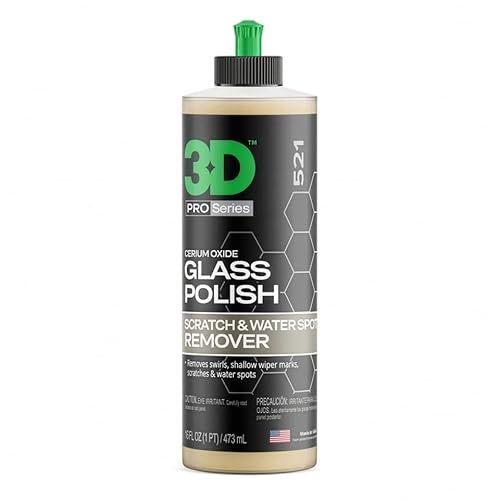
3D Glass Polish Cerium-Oxide Scratch Remover for Windows
3D Glass Polish is a smart choice if you want a cerium oxide window polish that handles wiper marks, etched water spots, fine scratches, and swirl marks without making the job harder than necessary. It uses a non gritty formula that restores dull or foggy glass and helps improve visibility. Its smooth wipe off makes cleanup simple, while its extended work time suits rotary polishers for professional level correction. Use it to prep glass before ceramic or hydrophobic coatings, and you can improve bonding and durability on cars, trucks, and RVs.
- Form:Glass polish
- Volume:16 oz
- Surface Type:Automotive glass
- Defect Level:Etched marks
- Abrasive Grade:Cerium oxide
- Machine Use:Rotary polisher
- Additional Feature:Cerium oxide formula
- Additional Feature:Pre-coating glass prep
- Additional Feature:Automotive glass compatible
Griot’s Garage BOSS Correcting Cream for Cars
Griot’s Garage BOSS Correcting Cream is a smart choice if you want a medium-cut polish that removes light scratches and swirl marks without turning cleanup into a chore. Its high-lubricity formula keeps working longer, so you can correct paint without it drying out or dusting. Pair it with BOSS pads to increase cutting power or refine the finish. It restores depth and clarity, then leaves a wax-ready surface. With smooth application and easy wipe-off, you can spend less time cleaning and more time enjoying better-looking paint.
- Form:Correcting cream
- Volume:16 oz
- Surface Type:Automotive paint
- Defect Level:Moderate defects
- Abrasive Grade:120 grit
- Machine Use:DA/rotary
- Additional Feature:High-lubricity formula
- Additional Feature:Dust-free removal
- Additional Feature:Guaranteed satisfaction
Chemical Guys Gap_V36_04 V36 Optical Grade Cutting Polish (4 oz)
Chemical Guys V36 Optical Grade Cutting Polish is a smart choice if you want a compound that can remove moderate to heavy defects while still delivering a swirl-free, high-clarity finish. You can use it on ceramic finishes and conventional clear coats, and it removes 2000 to 2500 grit sanding scratches, swirls, and holograms. Its micro abrasives work efficiently without oils, silicone, or fillers, so you get lasting results. Because it is powder-free, dust-free, water-based, and body shop safe, you get longer work time and cleaner polishing with rotary or DA machines.
- Form:Cutting polish
- Volume:4 oz
- Surface Type:Clear coat
- Defect Level:Moderate-heavy defects
- Abrasive Grade:2000-2500 grit
- Machine Use:Rotary/DA
- Additional Feature:Optical grade clarity
- Additional Feature:VOC compliant
- Additional Feature:Body shop safe
Perfect-It 3M EX Ultrafine Machine Polish 39062 1 pt(16 fl oz/473 mL
Perfect-It 3M EX Ultrafine Machine Polish, 39062, is a smart choice when you need a finishing polish that targets ultrafine swirl marks, especially on dark paint where defects show more easily. You can use this 3M formula to refine automotive or marine surfaces with very fine 1500 grit abrasives and aluminum oxide. Its longer wet time helps you use less product, and the improved pad adhesion reduces sling and cleanup. Keep in mind that it is for industrial use only, but it can help you achieve a showroom grade finish when you want the final step to look flawless.
- Form:Machine polish
- Volume:16 fl oz
- Surface Type:Automotive paint
- Defect Level:Swirl marks
- Abrasive Grade:Very fine
- Machine Use:Machine polish
- Additional Feature:Ultrafine swirl removal
- Additional Feature:Longer wet time
- Additional Feature:Industrial use only
Chemical Guys Gap_V32_04 V32 Optical Grade Extreme Compound (4 oz)
Should you be tackling severe paint defects on modern finishes, Chemical Guys Gap_V32_04 V32 Optical Grade Extreme Compound is a strong choice. This water based, silicone free, filler free formula can cut through 1200 to 1500 grit sanding scratches and other deep flaws. Its optical grade micro abrasives work with DA and rotary polishers, delivering extended work time and fewer passes. You can expect clear, vibrant results on conventional, scratch resistant, and ceramic clear coats. At 4 ounces, it is a compact fine grit compound built for serious correction without sacrificing finish quality.
- Form:Extreme compound
- Volume:4 oz
- Surface Type:Clear coat
- Defect Level:Severe defects
- Abrasive Grade:1200-1500 grit
- Machine Use:DA/rotary
- Additional Feature:Scratch-resistant clear coats
- Additional Feature:Water-based formula
- Additional Feature:Optical grade micro abrasives
Factors to Consider When Choosing a Car Polishing Compound
Whenever you choose a car polishing compound, match the defect removal level to the swirls, scratches, or oxidation you need to fix. Check paint compatibility, and pair the compound with the right pad and tool for safe, effective correction. Finally, look for a formula that delivers a strong finish and clarity while keeping dust and cleanup to a minimum.
Defect Removal Level
Defect removal level should guide your choice of polishing compound because not every product cuts the same. You will want a heavy cut compound when chasing deep scratches, oxidation, or severe swirl marks, and a finer product when you only need to erase light haze or tiny imperfections. Check the grit rating. Lower grit formulas, around 1200 to 1500, bite harder and remove tougher defects faster, while higher grit compounds, around 2000 to 2500, suit finishing work and refinement. Some modern blends use micro abrasives to enhance cutting power and leave a cleaner surface. Others shift from cutting to polishing in one step, which can save time and help you reach a high gloss finish with less effort and fewer passes.
Paint Type Compatibility
Paint type compatibility matters because the compound you choose has to match your vehicle’s finish, whether it’s single-stage paint, a base and clear coat system, or a ceramic clear coat. You’ll get the best results when the formula suits the finish, because some compounds are tuned for older single-stage paints while others work better on modern clear coats. If your car has a ceramic clear coat, choose a product designed for that harder surface so you can remove defects effectively without risking haze. Water-based compounds are often safer and work across more finishes, while solvent-based options might not suit every paint type. Check the label for grit-cut guidance, then follow the manufacturer’s recommendation for your exact vehicle.
Pad And Tool Match
Once you have matched the compound to your paint type, you also need to pair it with the right pad and tool. You will get the best results when you match pad aggression to the compound’s job. For heavy defect removal, use a more aggressive pad, such as wool, with a cutting compound designed for stronger correction. If you are refining lighter defects, choose a foam pad with a finer compound to improve control and reduce risk. Also, make sure the pad density fits the compound’s grit level. That helps you remove material efficiently without adding fresh scratches. Then choose a rotary or dual action polisher that suits the pad and compound. The right combination lets you spread the product evenly, work more smoothly, and achieve consistent correction.
Finish And Clarity
Clarity is where a polishing compound really proves its worth. You want a formula that cuts deep enough to remove scratches and haze, then leaves the paint looking sharp and reflective. Optical-grade compounds use micro abrasives to wipe out swirl marks and reveal a clean, glossy surface. Pay attention to grit. Fine and ultrafine options usually deliver a smoother finish and hide flaws better than coarser blends. Your technique matters too. The right pad and machine speed help avoid reintroducing marks and let the compound level evenly. If you are comparing products, look for ones that claim a dust-free, easy-clean formula, since that keeps your workflow efficient and helps preserve the crisp finish you have worked for.
Dust And Cleanup
Dust can make or break the polishing process, so choosing a compound that stays low-dust pays off in both time and results. You will save cleanup time and keep your detailing session moving as you pick formulas made to stay clean. Water-based compounds often create less dust than solvent-based ones, and that can make a noticeable difference as you work. Look for products with longer work times, since they help the compound stay usable longer and reduce dry powder buildup. Match your pad to the compound too, because good compatibility cuts dusting and makes wiping easier. Once you are done, use a microfiber cloth to lift residue and dust without marring the finish. This keeps cleanup quick and your paint looking sharp.
Wax-Free Formula
If you want a true read on your paint, choose a wax-free polishing compound. You will see the finish as it really is because no fillers or waxes hide defects. That makes it easier to judge correction work and spot remaining swirls or scratches. Wax-free formulas also tend to last longer because they do not fade or wash away like traditional waxes. Many use advanced abrasives that remove imperfections while improving clarity and gloss. If you detail professionally, you will appreciate the clean, high-gloss result and lower swirl risk. They also leave little residue, so you can follow up with sealants or coatings more effectively. Choose wax-free when you want precision, durability, and a finish that stays honest.
Frequently Asked Questions
How Often Should I Polish My Car Each Year?
You should polish your car once or twice a year, depending on the paint condition, driving conditions, and storage. If you notice swirl marks or dullness, you may benefit from polishing sooner.
Can Polishing Compounds Remove Deep Scratches Completely?
No, one usually cannot remove deep scratches completely. Polishing compounds can reduce their appearance, but if you can catch a fingernail in the scratch, you will likely need touch up paint, wet sanding, or professional repair.
Should I Use a Dual-Action Polisher or Polish by Hand?
Use a dual-action polisher. It saves time and delivers more even results, like having thousands of tiny helpers working at once. You can polish by hand for small areas, but the machine is the better choice.
Do Polishing Compounds Work on Ceramic-Coated Paint?
Yes, they can, but aggressive polishing can dull or remove the coating. Use a coating-safe polish, work lightly, and reapply protection afterward to restore the ceramic layer’s performance.
What’s the Difference Between Compound, Polish, and Finishing Cream?
You’ll see compound as the heavy lifter, polish as the middle ground smoother, and finishing cream as the gentle glow maker. Use compound to tackle deep blemishes, polish to refine haze, and finishing cream to add sparkle.
