

You’ll want gauges that fit your panel, handle peak charging currents, and give reliable readings: pick the Complete Tractor replacement for OEM Ford/NAA fit, the YXQ 0–20A for small DC panels, Dyno Racing 60-0-60A for automotive/boats, Bayite 100A dual volt-amp for high-capacity systems, and keep an AstroAI clamp meter for troubleshooting and NCV checks—each uses the right sensing method and mounting style for its use, and the rest of the guide explains fit, ranges, and installation tips.
| Complete Tractor Amp Meter Replacement for Ford/NAA |
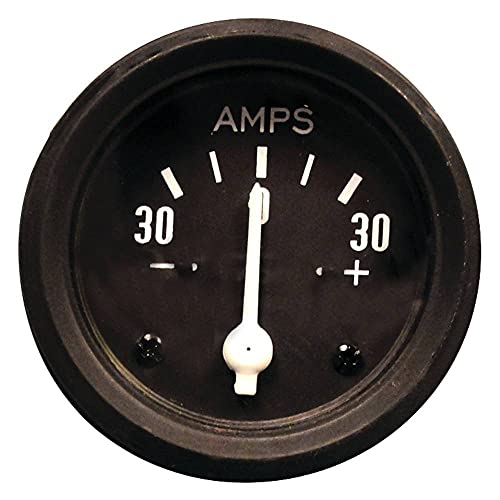
| Best for Vintage Tractors | Measurement type: DC ammeter (tractor charging/discharging) | Panel/installation mount: 2″ bezel opening panel mount (2.03″) | Current range capability: Tractor-range ammeter (nominal tractor charging/discharging currents; OEM replacement) | VIEW LATEST PRICE | Read Our Analysis |
| YXQ 0–20A Analog Panel Ammeter (DC 20A) |

| Compact Panel Pick | Measurement type: DC ammeter (0–20 A) | Panel/installation mount: Panel mount (64 × 56 × 56 mm) | Current range capability: 0–20 A (DC) | VIEW LATEST PRICE | Read Our Analysis |
| Ammeter Gauge Compatible with Ford New Holland Tractors |

| Most Versatile Fit | Measurement type: DC ammeter (tractor charging/discharging) | Panel/installation mount: Panel mount replacement ammeter (fits tractor dash) | Current range capability: Tractor-range ammeter (measures charging/discharging currents for tractors) | VIEW LATEST PRICE | Read Our Analysis |
| Dyno Racing 52mm 2″ 60-0-60A Ammeter Gauge |

| Performance-Focused Gauge | Measurement type: DC ammeter (60–0–60 A, 12V systems) | Panel/installation mount: 2″ (52 mm) panel mount | Current range capability: −60 to +60 A (60–0–60 A) | VIEW LATEST PRICE | Read Our Analysis |
| AstroAI Digital Clamp Multimeter 2000-Count NCV |

| Best Diagnostic Tool | Measurement type: AC/DC multimeter (clamp for AC current) — measures current (AC via clamp) | Panel/installation mount: Handheld clamp meter (clamp head; not panel mount) — portable/use at panel or in-circuit | Current range capability: AC current (clamp) — measures AC current (range depends on model; typical clamp function for AC) | VIEW LATEST PRICE | Read Our Analysis |
| Bayite DC 5-100V 100A Dual Display Volt-Amp Meter |
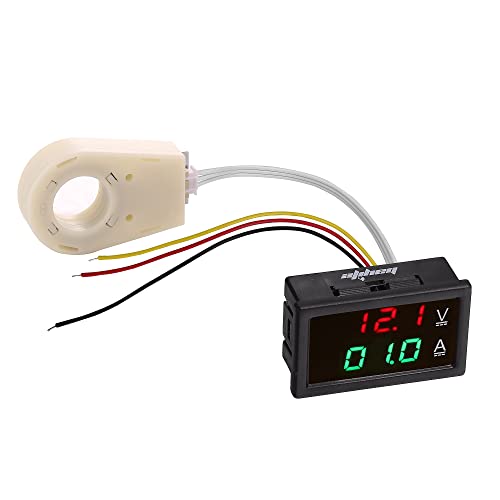
| Best Digital Dual-Read | Measurement type: DC ammeter (±0–100 A using Hall-effect sensor) | Panel/installation mount: Through-hole panel mount (digital gauge with sensor) | Current range capability: ±0–100 A (via Hall-effect sensor) | VIEW LATEST PRICE | Read Our Analysis |
More Details on Our Top Picks
Complete Tractor Amp Meter Replacement for Ford/NAA
Should you require a direct, factory-style replacement for a Ford/NAA tractor, choose the Complete Tractor 1107-0556 amp meter — it’s a lighted, 2″ bezel unit built to OEM specs so it drops into 1953–1957 models like 2N, 8N, 600, 700, 800, 900, 9N, Jubilee and NAA without modification. You’ll get a 100% new aftermarket amp gauge that uses the standard 2.03″ opening and matches OEM fitment. It replaces multiple part numbers (1341365C1, 1536373C1GV, A0NN10670A, etc.). A one-year warranty backs it, and customer support helps with replacements provided it fails.
- Measurement type:DC ammeter (tractor charging/discharging)
- Panel/installation mount:2″ bezel opening panel mount (2.03″)
- Current range capability:Tractor-range ammeter (nominal tractor charging/discharging currents; OEM replacement)
- Power/system compatibility:12V tractor electrical systems (Ford/New Holland vintage)
- New/aftermarket status:100% new aftermarket part (meets OEM specs)
- Includes support or accessories:1-year warranty and replacement support
- Additional Feature:Lighted unit
- Additional Feature:2″ bezel opening
- Additional Feature:1-year warranty
YXQ 0–20A Analog Panel Ammeter (DC 20A)
Should you need a simple, cost‑effective way to monitor DC currents up to 20 A on a control panel, the YXQ 85C1‑A analog ammeter is a good choice — it gives a clear 0–20 A readout with a 75 mV input sensitivity and rugged panel‑mount form factor that’s ideal for hobbyists, small workshops, and basic industrial panels. You’ll get a compact 64 × 56 × 56 mm gauge with 47 mm depth, lightweight 57 g construction, and a plastic bezel in white/beige. Accuracy is class 2.5, mounting uses a 3 mm thread, and the package includes the meter plus installation accessories for quick fitting.
- Measurement type:DC ammeter (0–20 A)
- Panel/installation mount:Panel mount (64 × 56 × 56 mm)
- Current range capability:0–20 A (DC)
- Power/system compatibility:DC systems (unspecified voltage, panel DC meter)
- New/aftermarket status:New aftermarket electronic panel ammeter
- Includes support or accessories:Several installation accessories included
- Additional Feature:75 mV sensitivity
- Additional Feature:Compact 64×56×47mm
- Additional Feature:Class 2.5 accuracy
Ammeter Gauge Compatible with Ford New Holland Tractors
In case you’re restoring or maintaining a Ford/New Holland tractor from the N-series or Jubilee lines, this replacement ammeter gauge is a solid, direct-fit option that tells you at a glance whether the charging system’s doing its job. You get one replacement ammeter (not original) that measures charging/discharging current and fits numerous models: Ford/New Holland 2N, 8N, 9N, 600–900 series, Jubilee, NAA. It also suits Case, International Harvester, Massey Ferguson, and Allis‑Chalmers ranges listed in the specs. Multiple part numbers (A0NN10670A, JAC107917, V6831, 1341365C1, etc.) guarantee compatibility during ordering.
- Measurement type:DC ammeter (tractor charging/discharging)
- Panel/installation mount:Panel mount replacement ammeter (fits tractor dash)
- Current range capability:Tractor-range ammeter (measures charging/discharging currents for tractors)
- Power/system compatibility:12V tractor electrical systems (Ford/New Holland and similar)
- New/aftermarket status:Replacement (not original) aftermarket ammeter gauge
- Includes support or accessories:Supplied as single replacement gauge (typical mounting hardware implied; parts list provided)
- Additional Feature:Broad OEM part crosslist
- Additional Feature:Multi-brand fitment
- Additional Feature:Sold as single unit
Dyno Racing 52mm 2″ 60-0-60A Ammeter Gauge
Should you need a compact, easy-to-read ammeter for a 12V car, boat, or ATV, the Dyno Racing 52mm 60-0-60A gauge is a solid choice — it gives a high-sensitivity, yellow LED-lit pointer that clearly shows charging and discharging up to ±60 amps while fitting standard 2″ dash cutouts. You’ll get a 2″ (52mm) electronic ammeter made for 12V systems with clear pointer and numeric display, low power draw (12V DC, max 0.3A), and broad fitment across cars, boats, trucks, and ATVs. Units arrive new; no manual is included, so plan professional installation for best results.
- Measurement type:DC ammeter (60–0–60 A, 12V systems)
- Panel/installation mount:2″ (52 mm) panel mount
- Current range capability:−60 to +60 A (60–0–60 A)
- Power/system compatibility:12V vehicle/boat/truck/ATV systems
- New/aftermarket status:100% brand new, unused electronic ammeter
- Includes support or accessories:No installation guide included (installation recommended by pro); package simplicity
- Additional Feature:60-0-60A range
- Additional Feature:Yellow LED pointer
- Additional Feature:12V, 0.3A power draw
AstroAI Digital Clamp Multimeter 2000-Count NCV
Should you need a compact clamp meter for quick AC current checks and non-contact voltage detection, the AstroAI Digital Clamp Multimeter is a solid choice — its clamp jaw lets you measure AC current without breaking the circuit, while the NCV mode gives audible and visual alerts for live wires. You’ll measure AC/DC voltage, resistance, capacitance, test diodes and continuity, but bear in mind the clamp only reads AC current (not DC). Center a single conductor in the jaw and don’t clamp an entire cord. Auto-ranging, 2000 counts, Data Hold, Max/Min, backlight, flashlight and safety ratings round out its features.
- Measurement type:AC/DC multimeter (clamp for AC current) — measures current (AC via clamp)
- Panel/installation mount:Handheld clamp meter (clamp head; not panel mount) — portable/use at panel or in-circuit
- Current range capability:AC current (clamp) — measures AC current (range depends on model; typical clamp function for AC)
- Power/system compatibility:AC mains and vehicle systems (measures AC current via clamp; voltage/DC functions included)
- New/aftermarket status:New retail handheld multimeter/clamp meter
- Includes support or accessories:Batteries included (2 × AAA) and California-based support team
- Additional Feature:NCV live-wire test
- Additional Feature:Auto-ranging 2000-count
- Additional Feature:Clamp measures AC only
Bayite DC 5-100V 100A Dual Display Volt-Amp Meter
Should you need a compact, high‑range meter for DC systems, the Bayite DC 5–100V 100A dual display volt‑amp meter is a great choice — it simultaneously shows voltage and positive or negative current using an isolated Hall‑effect sensor, so you can safely monitor up to 300 V and ±100 A with a through‑hole design that accepts large wire and even lets you multiply readings through looping the conductor. You power the unit from 5–100 V DC, read voltage to 300 V and current to ±100 A, and benefit from a 3/4-inch sensor hole that provides electrical isolation and easy installation.
- Measurement type:DC ammeter (±0–100 A using Hall-effect sensor)
- Panel/installation mount:Through-hole panel mount (digital gauge with sensor)
- Current range capability:±0–100 A (via Hall-effect sensor)
- Power/system compatibility:DC systems (power supply DC 5–100 V; measures 0–300 V and ±0–100 A)
- New/aftermarket status:New digital volt-amp meter module
- Includes support or accessories:Hall-effect sensor and wiring for installation included (through-hole sensor)
- Additional Feature:Dual simultaneous displays
- Additional Feature:Hall-effect isolated sensor
- Additional Feature:Through-hole sensor (19mm)
Factors to Consider When Choosing Amp Meter Gauges
At the time of choosing an amp meter gauge, you’ll initially match the measurement range and required accuracy to your application so you get reliable readings. Check mounting size and style, the electrical isolation method (shunt vs. hall effect), and whether the meter’s power requirements and compatibility fit your system. These factors together determine performance, safety, and ease of installation.
Measurement Range Needed
Provided that you want reliable readings, pick an ammeter range that keeps typical and peak currents well inside the scale so the needle stays readable and the meter isn’t stressed. You should choose a range comfortably above your maximum expected current (for example, 0–60 A for a ~40 A peak) so the gauge isn’t pegged. Should current can reverse between charging and discharging, use a center-zero or bipolar range (± values) to show both directions. Match gauge sensitivity and the shunt rating to your wiring and measurement method so small variations are visible; don’t use a coarse 0–100 A dial when you need single-amp resolution. Account for startup/transient spikes through selecting a higher-range meter or adding a shunt/peak limiter to protect the instrument.
Accuracy And Precision
Because accurate readings depend on both the meter and its environment, you should check the instrument’s accuracy class, sensitivity and input ratings to make sure its error and resolution meet your needs. Look at the accuracy class (Class 2.5 = ±2.5% of full scale) to know maximum expected error across the range. Match the meter’s range to expected currents so you’re not operating near zero or full-scale, where accuracy often degrades. For DC, prefer true isolated current sensors—Hall-effect or isolated shunts—to avoid distortion and keep accuracy steady with changing common-mode voltages. Verify sensitivity and internal shunt ratings so the sensing element won’t add significant error. Finally, account for temperature and vibration through choosing gauges with specified accuracy stability across their operating range.
Mounting And Size
In case you’re fitting an amp gauge into a dash, start from confirming the face diameter, bezel cutout and total depth so the instrument actually clears the panel and nearby components. Check common face sizes (for example 2.03″ / 52 mm) and the trim ring fit, then measure overall and mounting depth—many gauges need 40–60 mm behind the panel for wiring and sensor placement. Verify panel hole threading or clip dimensions and choose a mounting orientation (rear clamps, threaded bezel, or flange) that matches your dash. Account for lighting and bezel style: backlit faces or illuminated pointers need space for bulbs/LEDs and a 12 V lamp circuit. For through-panel installs, confirm the hole diameter and leave room for any external sensor or shunt nearby.
Electrical Isolation Method
After you’ve checked panel cutouts and mounting depth, consider how the gauge will be electrically isolated from the circuit it measures—this affects safety, wiring complexity, and where the sensor or shunt can sit. You’ll choose between galvanic methods (CTs or isolated sensors) and magnetic/Hall-effect sensing, or a direct shunt. CTs give high accuracy and safety for AC and pulsed currents but won’t measure DC and need a continuous primary conductor. Hall-effect sensors handle DC and AC, offer compact isolated sensing, and require a specific aperture size for the conductor. Shunts give low-cost, very accurate DC readings but provide no inherent isolation, so you must isolate the display power or add isolation components and make certain proper insulation to protect users and electronics.
Power And Compatibility
Upon choosing an ammeter, make sure its measurement type (AC or DC), current range, and input sensitivity match your system so the meter reads accurately without extra components. Check that the meter supports DC for vehicle and battery use or AC for mains. Match the current range to expected loads, picking a maximum comfortably above peak current (for example, ≥20 A for small engines, ≥60 A for larger charging systems). Verify sensitivity and sensing method—millivolt shunt or Hall-effect—fits your wiring to avoid incorrect readings or added shunts. Confirm supply voltage and power draw for active or digital meters so you won’t overload the system or need an external supply. Finally, confirm mounting dimensions, bezel/opening size, grounding, and polarity so installation is clean and safe.
