

The best bike brake fluid for 2026 is the one your brake system was built to use. DOT fluid suits some brakes, while mineral oil suits others, and mixing them causes trouble fast.
Smooth stops depend on the right fluid, a strong boiling point, and fresh fluid from a sealed bottle. Use the correct bleed kit and keep everything clean for quiet braking and a firm lever.
| CYCOBYCO Avid Bicycle Brake Bleed Kit for All SRAM Series |
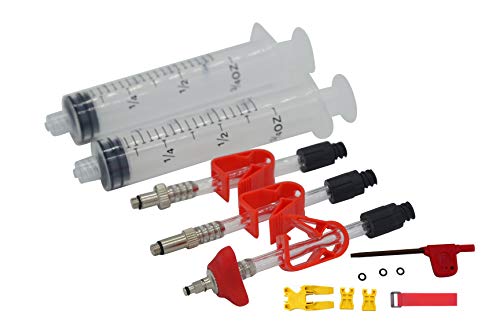
| Best SRAM Bleed Kit | Product Type: Brake bleed kit | Brake System: Hydraulic disc brakes | Fluid Type: DOT 5.1 compatible | VIEW LATEST PRICE | Read Our Analysis |
| SRAM 5.1 DOT Hydraulic Brake Fluid 4oz | bike-oils |

| Best DOT Fluid | Product Type: DOT 5.1 brake fluid | Brake System: Hydraulic disc brakes | Fluid Type: DOT 5.1 fluid | VIEW LATEST PRICE | Read Our Analysis |
| West Biking Hydraulic Disc Brake Bleed Kit |
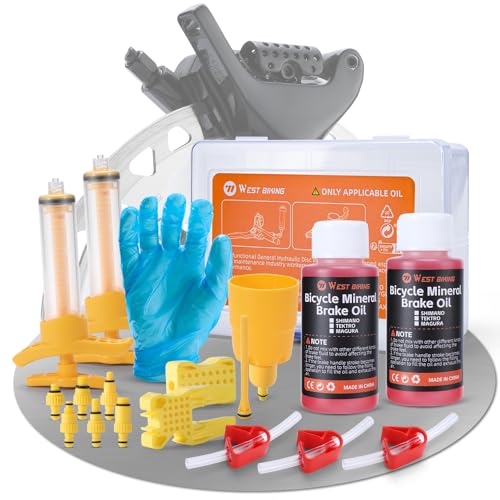
| Best Mineral Oil Kit | Product Type: Hydraulic brake bleed kit | Brake System: Hydraulic disc brakes | Fluid Type: Mineral oil | VIEW LATEST PRICE | Read Our Analysis |
| CHUMXINY 300ML Mineral Oil Brake Fluid |

| Best Mineral Oil Refill | Product Type: Mineral oil brake fluid | Brake System: Hydraulic disc brakes | Fluid Type: Mineral oil | VIEW LATEST PRICE | Read Our Analysis |
| OFBAND Brake Bleeder Kit for Cars and Bikes |

| Best Universal Bleeder | Product Type: Brake bleeder kit | Brake System: Hydraulic brake systems | Fluid Type: Unspecified | VIEW LATEST PRICE | Read Our Analysis |
More Details on Our Top Picks
CYCOBYCO Avid Bicycle Brake Bleed Kit for All SRAM Series
In case you ride SRAM brakes, this is a standout SRAM bleed kit to keep on your bench.
You get drip-free hydraulic brake bleeding for SRAM, Avid, and Formula systems, so you can restore firm lever feel without making your workspace look like a science experiment. It fits Guide, Level, RED eTap HRD, Juicy, Elixir, Code, XO, XX, and more.
- Brand and maker: CYCOBYCO
- Part number: AVSRAM
- ASIN: B091P3V8JH
Note one catch: DOT 5.1 fluid isn’t included, so you’ll need that separately. With a 4.3-star average from 912 reviews and a compact 8.15 x 7.17 x 1.14-inch package, it’s easy to stash.
- Product Type:Brake bleed kit
- Brake System:Hydraulic disc brakes
- Fluid Type:DOT 5.1 compatible
- Compatibility:SRAM/Avid/Formula
- Included Quantity:1 kit
- Manufacturer:CYCOBYCO
- Additional Feature:Drip-free bleeding
- Additional Feature:Bleeding Edge tool
- Additional Feature:Restores brake performance
SRAM 5.1 DOT Hydraulic Brake Fluid 4oz | bike-oils
SRAM 5.1 DOT fluid stands out as your top DOT pick should you run SRAM or Avid hydraulic disc brakes.
You get a 4 oz vacuum-sealed bottle, so the fluid stays pure until you crack it open. And because it uses a DOT 5.1 non-silicone formula, you’re getting a higher boiling point than DOT 3 or DOT 4, which matters whenever long descents heat everything up fast.
Why choose it?
- It’s fully compatible with all SRAM and Avid hydraulic disc brakes.
- It helps maximize brake performance.
- You get smoother, more reliable braking under extreme conditions.
In short, it keeps stops consistent, not exciting.
- Product Type:DOT 5.1 brake fluid
- Brake System:Hydraulic disc brakes
- Fluid Type:DOT 5.1 fluid
- Compatibility:SRAM/Avid
- Included Quantity:4 oz
- Manufacturer:SRAM
- Additional Feature:Higher boiling point
- Additional Feature:Vacuum-sealed bottle
- Additional Feature:Extreme braking reliability
West Biking Hydraulic Disc Brake Bleed Kit
West Biking’s mineral-oil-focused bleed kit suits you provided that you service Shimano, Tektro, or Magura brakes at home. You get broad adapter coverage for most mainstream mineral-oil systems, plus enough gear to handle mountain or road bikes without hunting down extra fittings mid-job.
Inside, you’ll find:
- 12 adapters, including 3 piston types
- 2 precise syringes
- 2 portable 60 ml oil vials
- 1 transparent, spill-resistant funnel
That funnel matters because you can watch fluid level and air bubbles as you bleed. And the included mineral oil stays stable in cold weather for quick brake response. Follow the illustrated guide or QR video, cap bottles fast, and never use DOT.
- Product Type:Hydraulic brake bleed kit
- Brake System:Hydraulic disc brakes
- Fluid Type:Mineral oil
- Compatibility:Shimano/Tektro/Magura
- Included Quantity:1 kit with 120 ml fluid
- Manufacturer:West Biking
- Additional Feature:12 professional adapters
- Additional Feature:Transparent spill-proof funnel
- Additional Feature:QR video tutorials
CHUMXINY 300ML Mineral Oil Brake Fluid
CHUMXINY stands out as your go-to mineral oil refill for Shimano, Tektro, and TRP hydraulic brakes. You get 300 mL total, packed as 2 handy 150 mL bottles, so topping off or doing a full bleed feels simple, not like garage drama.
It suits any system that specifically calls for mineral oil, and that matters.
- It keeps flowing at −52°C for winter rides.
- It handles heat well during hard braking.
- It delivers extremely high wet and dry boiling points.
Use it only where your brake manufacturer specifies mineral oil. Do that, and you’ll keep lever feel consistent, clean, and reassuringly drama-free.
- Product Type:Mineral oil brake fluid
- Brake System:Hydraulic disc brakes
- Fluid Type:Mineral oil
- Compatibility:Shimano/Tektro/TRP
- Included Quantity:300 ml
- Manufacturer:CHUMXINY
- Additional Feature:-52°C cold flow
- Additional Feature:High wet boiling
- Additional Feature:High dry boiling
OFBAND Brake Bleeder Kit for Cars and Bikes
Should you want a universal bleeder kit, OFBAND makes an easy pick for mixed garages and home bike work.
You get a compact 2-set package that fits most hydraulic brake systems on bikes, motorcycles, and cars. Inside, you’ll find:
- 4 hoses
- 2 aluminum one-way check valves
- 6 bleeder caps
- 6 clamps in two sizes
The outlet hoses measure 13.77 inches, the inlet hoses 6.02 inches, so routing stays simple around awkward calipers. And the rubber hoses bend without kinking, resist heat, and handle curves well. Install it fast:
- Connect valve to hose.
- Attach hose to bleeder nozzle.
- Clamp it down, avoid mess. Nice!
- Product Type:Brake bleeder kit
- Brake System:Hydraulic brake systems
- Fluid Type:Unspecified
- Compatibility:Cars/motorcycles/bikes
- Included Quantity:2-set kit
- Manufacturer:OFBAND
- Additional Feature:One-way check valves
- Additional Feature:Dust-proof screw caps
- Additional Feature:Corrosion-resistant aluminum
Factors to Consider When Choosing Brake Fluid for Bikes
Before you pour anything into your bike’s brakes, check a few essentials: brake system compatibility, whether your setup requires DOT fluid or mineral oil, and how the fluid handles heat whenever braking gets intense. And don’t stop there, because boiling point performance, temperature range stability, and clean, well-sealed packaging all affect how consistent your lever feel stays on long descents or in rough weather. Get these basics right, and you’ll avoid expensive mistakes, mushy braking, and the kind of maintenance headache nobody asked for!
Brake System Compatibility
Although brake fluid can look like a small detail, brake system compatibility is where you absolutely can’t wing it, because your calipers, hoses, servo cylinder seals, and reservoir parts are built for one specific fluid chemistry. Ignore that, and you can end up with swollen seals, leaks, sticky pistons, or wear that gets expensive fast.
Keep compatibility simple:
- Read your service manual or reservoir cap, then match the exact fluid listed.
- In case your system uses glycol-based fluid, confirm the required grade, such as DOT 4 or DOT 5.1, since boiling point and viscosity matter.
- Make sure silicone-based DOT 5 is explicitly allowed before using it.
- Should you replace calipers, hoses, or masters, verify every new part matches your system’s fluid. Brakes hate improvisation.
DOT Vs Mineral
When you’re choosing between DOT and mineral brake fluid, the biggest difference isn’t branding or color, it’s chemistry, and that chemistry affects heat handling, maintenance, and whether your seals stay happy.
Keep these points in mind:
- DOT 3, 4, and 5.1 are glycol-based and hygroscopic, so they absorb moisture over time. That means you’ll need regular fluid changes.
- Mineral oil doesn’t absorb water into the system, so service intervals are often longer, though moisture can still collect outside the system.
- Never mix them. Should your brakes call for mineral oil, use mineral oil. Should they call for DOT, use DOT. Mixing can wreck seals, hoses, and pistons fast.
And always follow your brake maker’s spec sheet, because viscosity and seal compatibility matter more than marketing claims.
Boiling Point Performance
Once you look at brake fluid specs, boiling point is one of the numbers that deserves your full attention, because it tells you how well the fluid resists turning into vapor whenever your brakes get seriously hot on long descents, repeated hard stops, or loaded rides.
Focus on two figures:
- Dry boiling point: performance whenever fluid is new. Higher is better, and DOT 5.1 usually tops DOT 4, which tops DOT 3.
- Wet boiling point: performance after moisture gets in. This matters a lot, because absorbed water slashes boiling resistance and can trigger fade.
You want a strong wet boiling point, especially for wet climates or demanding riding. And provided the dry-to-wet drop is huge, performance falls faster. Replace fluid on schedule too, or physics will eventually collect its bill.
Temperature Range Stability
Temperature range stability is what keeps your brakes feeling predictable as the day starts below freezing and ends with a long, heat-soaked descent, so you don’t want to look at boiling point alone.
You need fluid that does two jobs well:
- Stay thin enough in deep cold, often down to about −40°C to −52°C, so lever feel stays consistent and the pistons return quickly.
- Resist heat with strong dry and wet boiling points, because new fluid and moisture-aged fluid behave differently.
DOT fluids usually give you higher boiling points, but they absorb moisture, so wet performance drops over time. Mineral oil often stays less hygroscopic and can remain nicely fluid in the cold, but heat stability depends on the exact formula. Match the ratings to your real riding extremes, or your brakes could get moody.
Fluid Purity Packaging
Even provided the spec sheet looks perfect, bad packaging can ruin great brake fluid before it ever reaches your bleed kit, because both DOT fluid and mineral oil hate dirt, moisture, and sloppy storage.
When you shop, prioritize packaging that protects purity:
- Choose factory-sealed, vacuum-packed bottles or single-use vials, since hygroscopic fluid can absorb moisture fast.
- Check for tamper-evident caps and fully intact seals on larger bottles. Should the cap look suspicious, walk away.
- Prefer opaque or UV-resistant containers, which help limit light damage and temperature swings during storage.
- Read the production date, expiry date, and any initially-opened guidance. Old fluid can lose boiling point and corrosion protection.
- Never decant fluid into random funnels or mystery jars. Use the original bottle or a sterile syringe instead. Your calipers hate glitter-sized debris.
Bleed Kit Compatibility
Don’t overlook bleed kit compatibility, because the right fluid on paper won’t help much provided your kit doesn’t actually match your brakes.
First, match fluid type exactly:
- DOT systems need DOT 4 or 5.1 compatible kits.
- Mineral oil brakes need mineral oil specific kits.
Mixing fluid families can wreck seals and void your warranty fast.
Next, confirm the hardware:
- Correct adapters for your lever and caliper
- Syringes or fittings that seal tightly
- Hoses, clamps, or one-way valves sized for your bleeder screw
And pay attention to how you’ll bleed. Some brake designs prefer upright funnel bleeding, others work better with gravity methods. Clear hoses, transparent reservoirs, and readable instructions help you spot air bubbles and follow the brand’s sequence without guesswork. Because brake fluid shouldn’t become a surprise chemistry experiment.
Included Fluid Quantity
A little extra fluid goes a long way, because the right bottle size can make a routine bleed smooth and simple instead of forcing you to stop halfway through with air still in the line.
Match quantity to your system and bleed method:
- Single-calliper syringe bleeds usually need 30 to 60 mL.
- Full top-ups and multiple bleeds can need 100 to 300 mL.
And don’t buy the exact minimum. Add 20 to 50% extra for spills, old fluid removal, and a full flush, because brake fluid loves wasting itself at the worst moment.
For DOT brakes, 100 to 200 mL often covers one service, while 300 to 500 mL suits several bikes. Mineral-oil systems usually get along with 60 to 150 mL. Also, choose sealed bottles so leftover fluid stays clean for later.
Maintenance Ease
Usually, maintenance ease comes down to how fussy the fluid is once you open the bottle and start a bleed. DOT fluid asks more from you because it’s hygroscopic, so it absorbs moisture, needs tightly sealed bottles and reservoirs, and usually demands more frequent bleeding to keep boiling points from dropping.
Mineral oil is friendlier for home wrenching. It’s less corrosive, less moisture-hungry, and usually lets you stretch complete fluid changes longer.
Keep maintenance simple:
- Confirm your manufacturer’s spec initially. DOT and mineral oil aren’t interchangeable, and the wrong one can swell seals fast.
- Choose pre-measured, vacuum-sealed bottles and sealed syringes for cleaner refills.
- Use matching syringes, fittings, one-way valves, and clean tubing.
And yes, drip-free tools save time, mess, and your patience.
Frequently Asked Questions
Can Bike Brake Fluid Freeze During Winter Rides?
Yes, your bike brake fluid can freeze, but you likely won’t face it on typical winter rides. Don’t worry—DOT and mineral oils resist freezing well. You should still check contamination, since absorbed water lowers cold-weather performance.
How Often Should Unused Brake Fluid Be Replaced After Opening?
You should replace unused brake fluid within 6 to 12 months after opening, depending on type and storage. Keep it tightly sealed in a cool, dry place, and don’t use it in case contamination seems likely.
Is Brake Fluid Safe to Carry Inside a Hydration Pack?
Yes, you can carry brake fluid in a hydration pack only provided you seal it in its original container, then bag it separately. You shouldn’t store it beside drinking water, because leaks can contaminate your gear.
Can Contaminated Brake Fluid Damage Brake Pads or Rotors?
Yes, contaminated brake fluid can damage your pads or rotors; smooth braking turns gritty fast. You’ll get reduced friction, glazing, noise, and uneven wear. In the event fluid leaks onto braking surfaces, you should clean or replace parts.
What Are the Signs of Brake Fluid Leaking While Riding?
You’ll notice spongy brakes, weaker stopping power, a brake lever pulling farther than usual, fluid on the caliper or frame, squealing, and a burning smell. You could also see drops forming or your reservoir level falling.
