

The best brake rotors for an F-150 in 2026 depend on how the truck is used. Some rotors are better for towing, while others suit daily driving or older model years.
The right set can improve stopping feel, reduce noise, and handle heat better. This guide covers five strong options that match different F-150 needs.
| Detroit Axle Brake Kit for Ford/Lincoln |

| Best Full Kit | Vehicle Fitment: 2018–2020 Ford F-150; 2018–2021 Expedition; 2018–2021 Navigator | Kit Position: Front and rear | Rotor Design: Standard disc rotors | VIEW LATEST PRICE | Read Our Analysis |
| Detroit Axle Front Brake Kit for Ford/Lincoln |
| Front-Only Value | Vehicle Fitment: 2010–2020 Ford F-150; 2010–2020 Expedition; 2010–2021 Navigator | Kit Position: Front only | Rotor Design: Standard disc rotors | VIEW LATEST PRICE | Read Our Analysis |
| Detroit Axle Brake Kit for 1999-2003 Ford F-150 |
| Best for Older F-150s | Vehicle Fitment: 1999–2003 Ford F-150 4WD, 5-lug, excludes Lightning | Kit Position: Front and rear | Rotor Design: Drilled and slotted rotors | VIEW LATEST PRICE | Read Our Analysis |
| PowerStop Front Brake Kit KOE3167 for Ford/Lincoln |

| Trusted Daily Driver | Vehicle Fitment: 2010–2020 Ford F-150; 2010–2021 Expedition; 2010–2021 Navigator | Kit Position: Front only | Rotor Design: OE replacement rotors, non-coated | VIEW LATEST PRICE | Read Our Analysis |
| Betthand Front Brake Rotors and Pads Kit |

| Performance Upgrade Pick | Vehicle Fitment: 2010–2020 Ford F-150; 2010–2021 Expedition; 2010–2021 Navigator; some Lobo/F-150 EPB models | Kit Position: Front only | Rotor Design: Vented, drilled, and slotted rotors with Geomet coating | VIEW LATEST PRICE | Read Our Analysis |
More Details on Our Top Picks
Detroit Axle Brake Kit for Ford/Lincoln
In case you desire a full-kit pick for your F-150, this Detroit Axle set makes things easy. You get:
- 2 front rotors, 13.78 inches
- 2 rear rotors, 13.23 inches
- Front and rear ceramic pads with hardware
- Brake cleaner and fluid
It fits 2018 to 2020 F-150 models with an electric parking brake, and also certain Expedition and Navigator years. You’re getting OEM-style fit, solid stopping power, and a 10-year warranty, which is longer than your average weekend repair. And at 40 pounds, it’s not exactly featherweight. Check part number 10PR471016 should you wish to confirm match before ordering online.
- Vehicle Fitment:2018–2020 Ford F-150; 2018–2021 Expedition; 2018–2021 Navigator
- Kit Position:Front and rear
- Rotor Design:Standard disc rotors
- Pad Material:Ceramic
- Included Components:Rotors, pads, hardware, brake cleaner, brake fluid
- Warranty:10-year
- Additional Feature:OEM-spec fit and finish
- Additional Feature:Impact wear fatigue tested
- Additional Feature:Includes brake cleaner/fluid
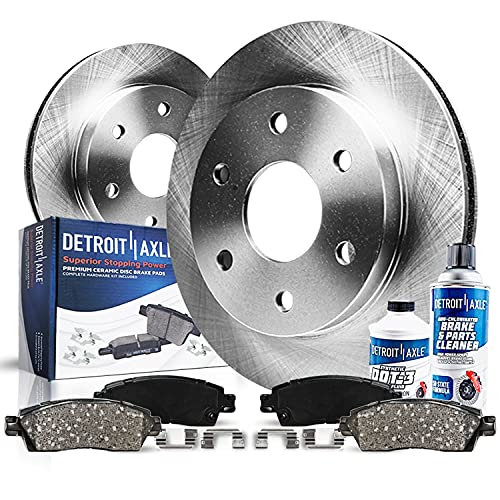
Detroit Axle Front Brake Kit for Ford/Lincoln
Should you want front-only value, this Detroit Axle kit makes sense for budget-minded F-150 owners. You get:
- 2 front rotors
- 2 ceramic pads with hardware
- 12 oz brake fluid
- 10 oz brake cleaner
It fits 2010 to 2020 F-150s, but only 2010 to 2014 6-lug models, plus certain Expeditions and Navigators. That vehicle-specific fit matters because brake jobs are annoying enough already. Built to exceed OEM specs, this kit aims for solid stopping power and proper finish. And the 10-year warranty adds welcome peace of mind. At 67.5 pounds, part number 6PR1300050 isn’t light, but your front end will appreciate the refresh.
- Vehicle Fitment:2010–2020 Ford F-150; 2010–2020 Expedition; 2010–2021 Navigator
- Kit Position:Front only
- Rotor Design:Standard disc rotors
- Pad Material:Ceramic
- Included Components:Front rotors, front pads, hardware, brake fluid, brake cleaner
- Warranty:10-year
- Additional Feature:Front-only replacement kit
- Additional Feature:Impact wear fatigue tested
- Additional Feature:Includes brake cleaner/fluid
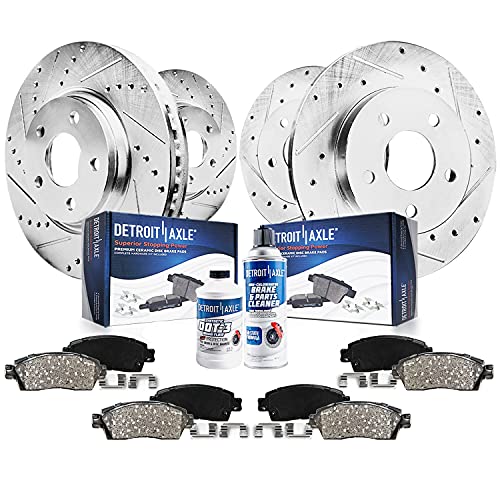
Detroit Axle Brake Kit for 1999-2003 Ford F-150
Detroit Axle’s kit suits older F-150s that need a full front-and-rear brake refresh without guesswork. You get:
- 4 drilled-and-slotted rotors
- 4 ceramic pads
- 2 brake cleaner and fluid items
It fits 1999 to 2003 4WD F-150s with 5-lug hubs, but not the Lightning. Front rotors measure 12.13 inches, rear rotors 13.15, and wheel studs can be 12 mm or 14 mm. That broad compatibility saves you from parts-counter roulette.
You’ll like the premium ceramic pads because they last longer and stay quieter than basic metallic pads. And the rotors exceed OEM specs for fit, finish, and stopping power, backed with a 10-year warranty too.
- Vehicle Fitment:1999–2003 Ford F-150 4WD, 5-lug, excludes Lightning
- Kit Position:Front and rear
- Rotor Design:Drilled and slotted rotors
- Pad Material:Ceramic
- Included Components:4 rotors, 4 pads, brake cleaner, brake fluid
- Warranty:10-year
- Additional Feature:Drilled-and-slotted rotors
- Additional Feature:Smooth quiet braking
- Additional Feature:Excludes Lightning models
PowerStop Front Brake Kit KOE3167 for Ford/Lincoln
PowerStop’s trusted daily driver kit fits F-150 owners who want straightforward, OE-style braking with fewer guesswork parts. You get:
- 2 front Z17 ceramic pads
- 2 OE replacement rotors
- Installation hardware
The Z17 pads use a thermal-scorched ceramic formula with chamfered, slotted edges, so you get cleaner, quieter stops and response that beats basic factory pads. The rotors are mill-balanced for smoother braking feel, though they’re non-coated, so don’t expect magic against rust. Fitment covers 2010 to 2020 F-150s, plus Expedition and Navigator applications. Before you buy, confirm fitment carefully. Warranty coverage runs 60-day, 24-month, or 24,000-mile terms.
- Vehicle Fitment:2010–2020 Ford F-150; 2010–2021 Expedition; 2010–2021 Navigator
- Kit Position:Front only
- Rotor Design:OE replacement rotors, non-coated
- Pad Material:Z17 ceramic
- Included Components:Front rotors, front pads, installation hardware
- Warranty:Limited 60-day / 24-month / 24,000-mile
- Additional Feature:Thermal scorched pads
- Additional Feature:Mill-balanced rotors
- Additional Feature:Chamfered pad edges
Betthand Front Brake Rotors and Pads Kit
Betthand’s performance upgrade pick makes the most sense provided you want stronger heat control on an F-150 that works hard.
You get 13.78-inch front rotors with a vented, drilled, and slotted design, so heat escapes fast, dust clears better, and fade drops about 20% whenever you haul or descend long grades.
Key reasons to take into account it:
- Geomet zinc-aluminum coating fights moisture, salt, and humidity, keeping corrosion in check.
- Ceramic pads run quieter, smoother, and create less dust.
Fitment covers many 2010 to 2020 F-150s, including 2015 to 2017 electronic parking brake models. Follow the included install and break-in guide, because brakes hate shortcuts.
- Vehicle Fitment:2010–2020 Ford F-150; 2010–2021 Expedition; 2010–2021 Navigator; some Lobo/F-150 EPB models
- Kit Position:Front only
- Rotor Design:Vented, drilled, and slotted rotors with Geomet coating
- Pad Material:Premium ceramic
- Included Components:Front rotors and pads kit with installation guide
- Warranty:Not specified
- Additional Feature:Geomet zinc-aluminum coating
- Additional Feature:Faster heat dissipation
- Additional Feature:Break-in instructions included
Factors to Consider When Choosing Brake Rotors for F150
When I choose brake rotors for an F150, I start with exact vehicle fitment and the correct rotor size, because even a small mismatch in diameter or bolt pattern can turn a simple brake job into a headache fast. And I also look at whether you need front rotors only or a full kit, plus parking brake compatibility in case your truck uses a rear drum-in-hat setup. Rotor design style matters too, because plain, drilled, or slotted rotors each suit different driving needs, and I want you to match the hardware to how your truck actually works!
Exact Vehicle Fitment
Because F-150 brake rotors aren’t one-size-fits-all, I always start fitment through narrowing down the exact truck in front of me: model year, 2WD or 4WD, cab and bed configuration, wheel stud count and stud diameter, and whether the rear setup uses a manual parking brake or an electric parking brake system.
Then I cross-reference the VIN or OEM part number, because generic listings love to overpromise. I also confirm:
- stud count and stud diameter, like 5-lug with 12 mm or 14 mm studs
- rotor hat and hub bore compatibility, so nothing binds or sits crooked
- rear rotor provisions for EPB-equipped trucks
Small fitment mismatches cause big headaches, from interference at the hub to caliper alignment problems. Boring step? Yes. Expensive mistake prevention? Also yes, and absolutely worth doing.
Rotor Size Match
Even though two F-150s look nearly identical in the driveway, I don’t assume they share the same rotor size, since Ford used multiple diameters, thicknesses, and rear brake configurations across different years and axles.
I always verify:
- Rotor diameter for the exact truck and axle, often about 12.13 to 13.78 inches.
- Nominal thickness and minimum thickness, so pad clearance stays correct and rotors don’t become undersized too soon.
- Hat diameter, bolt circle, and center bore, because one mismatch can create vibration or mounting drama.
I also match the original rotor design. Front axles usually need vented rotors to shed heat when the truck works hard. And should your rear brakes include an electronic or manual parking brake, I make sure the rotor’s parking-brake interface, like a drum-in-hat setup, lines up properly.
Front Or Full Kit
Once I’ve confirmed the exact rotor size and rear brake setup on an F-150, I decide whether a front-only kit makes sense or whether a full front-and-rear kit will save me time and headaches later.
I check wear initially:
- In case rear rotors show matching grooves, heat spots, or thickness below minimum spec, I go full kit.
- In case pads are worn on both axles, same answer.
- In the event the rear is still within spec, I’ll often replace just the fronts.
That works because the front brakes usually handle about 60 to 70 percent of stopping duty on an F-150. But I always replace rotors in axle pairs, never just one side. Full kits cost more upfront, sure, yet when both axles need parts, they often save labor, hardware runs, and future annoyance.
Parking Brake Compatibility
Why does parking brake compatibility matter so much on an F-150? Because the rear rotor has to match how your truck actually holds itself in place. I always confirm these basics before I buy:
- Manual cable or electronic parking brake.
- Internal drum, separate e-brake shoe, or external pad contact setup.
- Correct rotor thickness, center bore, and hole dimensions.
If those details are off, the parking brake can drag, bind, or barely hold, which is a terrible surprise on a slope. And yes, gravity loves bad parts. I also check whether the rotor supports the right adjustment method, like self-adjusting cable hardware or electronic actuators, so park-hold force stays consistent over time. Match the rotor to the actuation method, and the whole rear brake system works like it should.
Rotor Design Style
As I look at rotor design style for an F-150, I start with how the truck actually works, because a rotor that’s perfect for light commuting can come up short fast whenever towing, hauling, or managing repeated hard stops.
I break styles down simply:
- Smooth rotors: quiet, affordable, OEM-like, but slower to shed heat.
- Vented rotors: internal vanes move air, cut temperatures, and help resist fade under load.
- Slotted rotors: sweep away gas and dust, improving bite in rain, though they can wear faster.
- Drilled rotors: improve cooling and wet grip, but holes can create stress points.
- Combo designs: blend venting, slots, or drilling for stronger consistency.
If I tow often, I lean vented or combo. For easy daily driving, smooth rotors usually make the most practical sense.
Pad Material Choice
Rotor style sets the foundation, but pad material has just as much say in how my F-150 stops, sounds, and holds up over time. I match the compound to how you drive, because the wrong pad can make a great rotor feel mediocre, fast.
- Ceramic pads: cleaner wheels, quieter stops, smoother daily braking.
- Semi-metallic pads: stronger initial bite and better heat tolerance for towing, but more dust, more noise, and quicker rotor wear.
- Low-metallic or sintered pads: excellent fade resistance for repeated hard braking, yet usually noisier and tougher on rotors.
I also check two specs:
- Friction coefficient for bite level.
- Operating temperature range for real workload.
And I balance longevity with rotor compatibility. Harder pads last longer but can chew through rotors. Softer pads spare rotors, though replacement comes sooner.
Durability And Testing
While I’m narrowing down brake rotors for an F-150, durability sits near the top of my checklist, because a rotor that can’t manage heat, moisture, and repeated heavy stops won’t stay smooth for long.
I focus on a few durability clues:
- Impact, wear, and fatigue validation, which helps a rotor resist cracking and hold thickness under hard braking.
- Corrosion-resistant coatings with strong salt-spray results, especially provided winter roads dump salt like it’s confetti.
- Vented, drilled, or slotted designs, because better heat release means less thermal stress and lower warpage risk while towing.
I also check material quality. Mill-balanced rotors with correct metallurgy and tight manufacturing tolerances reduce runout, uneven wear, and that annoying brake pulsation. And documented durability protocols or long coverage periods can signal a rotor built to last.
Warranty And Support
Because brake rotors for an F-150 aren’t exactly a buy-it-and-forget-it part, I always read the warranty and support details before I put much weight on price or brand name. I want coverage that matches how you drive, whether that means 12,000 miles of light commuting or years of towing, hauling, and winter road salt.
Here’s what I check:
- Warranty length and mileage limits.
- Parts only vs. parts and labor coverage.
- Installation requirements, especially proof of professional work.
- Exclusions like corrosion, wear, track use, or bad install jobs.
- Support channels: phone, email, and online claims portals.
- Claim turnaround time, because nobody wants a truck parked for weeks.
- Fitment help, instructions, and rotor availability for replacements during the warranty period too.
Frequently Asked Questions
How Often Should F150 Brake Rotors Be Replaced?
Like a heartbeat warning, I’d replace F150 brake rotors about every 30,000 to 70,000 miles, but I always tell you to inspect them sooner should you notice warping, deep grooves, vibration, squealing, or thinning below specs.
Can Warped Rotors Cause Steering Wheel Vibration?
Yes, I’ve seen warped rotors cause steering wheel vibration, especially while braking. I’d tell you the pulsation usually comes from uneven rotor thickness or heat spots, and it can worsen braking performance should you ignore it.
Are Drilled Rotors Better for Daily Driving?
No, I don’t believe drilled rotors are better for daily driving. I’d recommend quality blank or slotted rotors instead, because they’re quieter, last longer, resist cracking better, and still give you strong, consistent braking.
Do Ceramic Brake Pads Reduce Rotor Wear?
Yes—ceramic brake pads usually reduce rotor wear; in one comparison, they cut visible rotor scoring about 20% versus semi-metallic pads. I’d recommend them to you for cleaner wheels, quieter braking, and longer-lasting rotors generally.
Should Brake Rotors Be Replaced in Pairs?
Yes, I’d replace brake rotors in pairs on the same axle because you’ll get even braking, balanced wear, and fewer vibrations. I wouldn’t mix old and new rotors unless a manufacturer specifically says it’s acceptable.
