

The best brake rotors for a Honda Accord in 2026 come down to five smart picks: OEM-style sets, coated anti-rust rotors, drilled and slotted options, rear replacements, and full kits with pads.
Each one suits a different kind of driver and a different Accord year. The right fit can cut noise, save money, and make installation far less frustrating. Here’s a quick look at which rotor type makes the most sense for your Accord.
| PowerStop Front Brake Kit KOE1043 |

| Daily Driver Pick | Vehicle Fitment: Honda Accord 2003–2012; also select Acura/Honda models | Brake Position: Front | Included Parts: Rotors, ceramic pads, shims, hardware | VIEW LATEST PRICE | Read Our Analysis |
| Detroit Axle V6 Brake Kit for Honda Accord |
| Best for V6 | Vehicle Fitment: Honda Accord 1998–2002 V6 only | Brake Position: Front and rear | Included Parts: Rotors, ceramic pads, hardware, cleaner/fluid | VIEW LATEST PRICE | Read Our Analysis |
| ACDelco Silver Rear Brake Rotor (18A2546A) |
| Budget-Friendly Pick | Vehicle Fitment: Select Honda Accord; also select Acura/Honda models | Brake Position: Rear | Included Parts: Rear rotor only | VIEW LATEST PRICE | Read Our Analysis |
| Betthand Brakes and Rotors for Honda Accord LX |

| Corrosion-Resistant Choice | Vehicle Fitment: Honda Accord LX 2008–2017 2.4L | Brake Position: Front and rear | Included Parts: Rotors and ceramic pads | VIEW LATEST PRICE | Read Our Analysis |
| Detroit Axle 8pc Brake Kit for Honda Accord |
| Sport Trim Pick | Vehicle Fitment: Honda Accord Sport/Touring 2016–2017 | Brake Position: Front and rear | Included Parts: Rotors, ceramic pads, hardware | VIEW LATEST PRICE | Read Our Analysis |
More Details on Our Top Picks
PowerStop Front Brake Kit KOE1043
Should you want a daily driver pick, the PowerStop Front Brake Kit KOE1043 fits the job beautifully. You get OE replacement front rotors, Z17 ceramic pads, rubberized shims, and stainless-steel hardware in one 30.7 pound package, so installation stays straightforward.
Why it works:
- The thermal scorched, chamfered, slotted pads bed in fast and keep noise and dust down.
- The mill-balanced, non-coated rotors help deliver smooth braking without weird vibrations, which your coffee will appreciate.
- It bolts on with no modifications.
Before buying, confirm fitment for your Accord or compatible Acura, Civic, CR-V, CR-Z, or Element, and observe the 2-year warranty too.
- Vehicle Fitment:Honda Accord 2003–2012; also select Acura/Honda models
- Brake Position:Front
- Included Parts:Rotors, ceramic pads, shims, hardware
- Rotor Design:OE replacement, mill-balanced, non-coated
- Pad Material:Z17 ceramic
- Warranty:2-year; 24-month/24,000-mile limited
- Additional Feature:Low-dust braking
- Additional Feature:Thermal scorched pads
- Additional Feature:Stainless install hardware
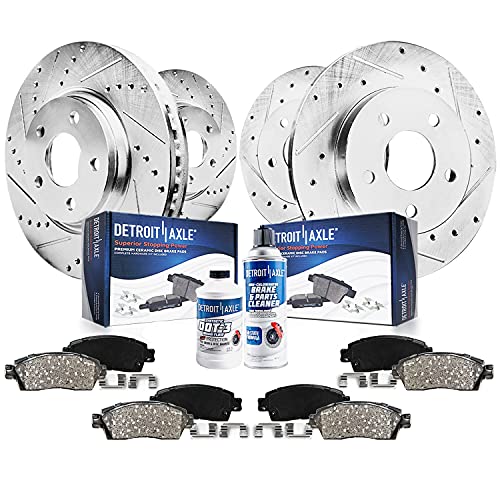
Detroit Axle V6 Brake Kit for Honda Accord
Should you’ve got a V6 Accord, this Detroit Axle kit fits your setup precisely. It’s built for 1998 to 2002 Honda Accord 3.0L V6 models with 4 wheel disc brakes, so check your records before ordering.
You get:
- 11.10 inch front drilled and slotted rotors
- 10.24 inch rear drilled and slotted rotors
- Front and rear 100% ceramic pads
- Hardware, plus brake cleaner and fluid
Those drilled and slotted rotors can deliver up to 20% stronger braking than standard rotors, while zinc dichromate plating helps fight rust. And with a 10 year warranty, you’re buying long-term peace of mind, not mystery metal.
- Vehicle Fitment:Honda Accord 1998–2002 V6 only
- Brake Position:Front and rear
- Included Parts:Rotors, ceramic pads, hardware, cleaner/fluid
- Rotor Design:Drilled and slotted, zinc plated
- Pad Material:100% ceramic
- Warranty:10-year
- Additional Feature:Zinc dichromate plating
- Additional Feature:Includes brake cleaner
- Additional Feature:20% better braking
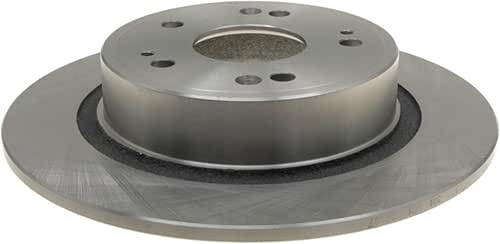
ACDelco Silver Rear Brake Rotor (18A2546A)
For Accord owners after a budget-friendly pick, the ACDelco Silver Rear Brake Rotor 18A2546A makes solid sense. You get a cast iron rear rotor built for daily driving, with a non-directional ground finish and balanced design that help cut noise, vibration, and harshness.
Keep these points in mind:
- It fits select Accord, Civic, TSX, ILX, and RDX models, so confirm fit through VIN.
- Rounded edges add strength under heat and load.
- A smooth surface reduces thickness variation, which helps your brake pads wear more evenly.
Pair it with ACDelco rear pads for a smart value setup. And should your front rotors be tired, update all four corners.
- Vehicle Fitment:Select Honda Accord; also select Acura/Honda models
- Brake Position:Rear
- Included Parts:Rear rotor only
- Rotor Design:Cast iron, non-directional ground, balanced
- Pad Material:Not included
- Warranty:Not stated
- Additional Feature:Multi-alloy construction
- Additional Feature:Non-directional ground finish
- Additional Feature:Rounded radius edges
Betthand Brakes and Rotors for Honda Accord LX
Betthand’s corrosion-resistant choice fits your 2008–2017 Honda Accord LX 2.4L with a complete front-and-rear kit. You get Geomet-coated rotors and ceramic pads, plus fitment help, break-in instructions, and a one-year replacement warranty.
Why it stands out:
- Vented, slotted, drilled rotors move heat fast, up to 3x faster than solid designs, helping cut fade by 20%.
- The zinc-aluminum Geomet layer fights moisture, salt, and humidity, so rust doesn’t get a head start.
- Ceramic pads stay quieter, create less dust, and reduce rotor wear.
Use OEM-style numbers 96711, 980577, 31257, and 31479 to confirm fitment before wrench time.
- Vehicle Fitment:Honda Accord LX 2008–2017 2.4L
- Brake Position:Front and rear
- Included Parts:Rotors and ceramic pads
- Rotor Design:Vented, drilled, slotted, Geomet coated
- Pad Material:Premium ceramic
- Warranty:1-year replacement
- Additional Feature:Geomet corrosion coating
- Additional Feature:150°F cooler operation
- Additional Feature:Break-in guide included
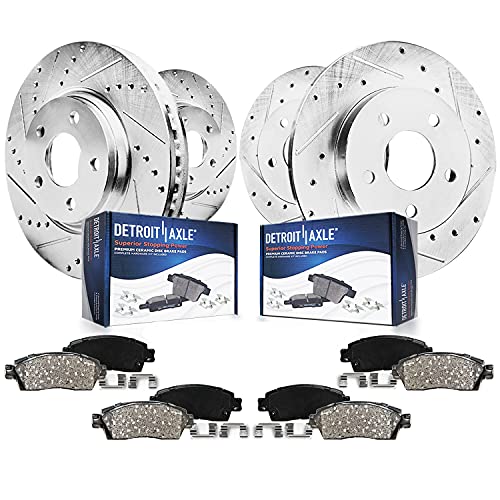
Detroit Axle 8pc Brake Kit for Honda Accord
Detroit Axle’s sport trim pick fits 2016 to 2017 Honda Accord Sport and Touring models with confidence. You get an 8-piece kit sized right for your car: 12.28-inch front rotors and 11.10-inch rears.
Inside the box, you’re getting:
- 2 front drilled and slotted rotors
- 2 rear drilled and slotted rotors
- Front and rear ceramic pads with hardware
That matters because the rotor slots and drill holes help move heat, gas, and debris away, while ceramic pads keep dust down and pedal feel steady. And since it’s built to exceed OEM specs, fit and finish should stay drama-free. Bonus: a 10-year warranty is hard to ignore.
- Vehicle Fitment:Honda Accord Sport/Touring 2016–2017
- Brake Position:Front and rear
- Included Parts:Rotors, ceramic pads, hardware
- Rotor Design:Drilled and slotted
- Pad Material:Ceramic
- Warranty:10-year
- Additional Feature:Exceeds OEM specifications
- Additional Feature:Wear fatigue tested
- Additional Feature:Reduced brake dust
Factors to Consider When Choosing Brake Rotors for Honda Accord
Whenever I choose brake rotors for a Honda Accord, I start with the basics that matter most to you: exact vehicle fitment, solid rotor material, and a protective coating that helps fight rust before it turns your hubs into a science project. And I also look at how well the rotors match your brake pads, because that pairing affects noise, bite, and wear, plus whether your daily commute, highway miles, or harder braking calls for a different rotor setup. Get those factors right, and you won’t just buy parts, you’ll buy better braking!
Vehicle Fitment Accuracy
Although brake rotors for a Honda Accord can look nearly identical at a glance, I always recommend confirming fitment down to the exact year, axle position, engine, transmission, and ideally the VIN, because one small mismatch can turn a simple brake job into an annoying parts-counter sequel.
I also check these details before buying:
- Rotor diameter and thickness, especially front versus rear specs and minimum thickness in the service manual.
- Rotor style at each axle, whether vented or solid, because caliper clearance matters.
- Hub bore, mounting pattern, and whether hardware is included.
And provided catalog listings look fuzzy, I compare OEM part numbers or run a VIN-based fitment lookup. That extra minute can save you from wheel offset headaches, machining surprises, and the classic “almost fits” disaster. Not fun. At all.
Rotor Material Quality
Since rotor quality affects heat control, noise, and long-term wear every time I touch the brake pedal, I pay close attention to the material and manufacturing details instead of just grabbing the cheapest set that fits.
I look at:
- Cast iron quality. Standard cast iron works well, but better alloys and proper heat treating improve thermal conductivity and lifespan.
- Vane design. Vented rotors cool better, and multi-vane internals move heat away faster than basic straight vanes.
- Machining precision. Mill balancing, precision-ground faces, and tight thickness variation tolerances help prevent pulsation, squeaks, and uneven pad wear.
- Slotting or drilling. These features can clear gas and debris at high temperatures, but less mass can mean more stress and possible cracking. Fancy holes aren’t always free upgrades!
Coating And Corrosion
Material quality matters, but I also look hard at coating and corrosion protection, because a Honda Accord rotor can be mechanically sound and still turn into a rusty headache whether road salt and moisture chew up the hat, edges, and cooling vanes.
I recommend checking three things:
- Coating type. Zinc-aluminum systems like GEOMET usually outlast bare cast iron in a wide margin in salt exposure.
- Coverage. I want non-braking areas protected, since rust there can create noise, ugly scaling, and even fitment annoyances.
- Corrosion claims. Compare the maker’s salt-spray resistance numbers against your climate.
I also like selective coatings that leave the braking face uncoated while shielding the rotor body. That setup helps control pitting and thickness variation, which supports stable runout and longer service life too.
Pad And Rotor Match
I always pair the rotor and pad as a system, because even a well-made Honda Accord rotor can get noisy, glaze over, or wear unevenly should the friction material don’t match the rotor’s surface type, thermal capacity, and finish.
I keep this checklist simple:
- Ceramic pads usually fit smooth or slotted rotors best for quieter, lower-dust braking.
- Higher-mass or vented rotors need pads with a matching heat range, or friction can drop fast.
- Pad shims and backing plates should suit the rotor finish, coated or bare, to keep NVH down.
- Softer pads save rotors; harder metallic formulas can score them like a bad kitchen knife.
- Pre-bedded or thermal-scorched pads need a smooth, properly finished rotor face for even contact and consistent stops.
Driving Style Needs
Once I’ve matched the pad and rotor, I look hard at how the Honda Accord actually gets driven, because a brake setup that feels great in quiet stop-and-go commuting can get hot, fade, or chew through pads fast whenever I’m facing steep grades, repeated hard stops, or extra weight in the trunk.
I break it down simply:
- Daily commuting: I’d stick with smooth, vented rotors and standard pads for quiet stops, low dust, and long pad life.
- Hills or towing: I want vented or directional-vaned rotors with more thermal capacity, so heat escapes and fade stays away.
- Spirited driving: Slotted or drilled faces improve bite and clear gas and debris, but pads could disappear quicker.
- Performance use: Multi-alloy, heat-tolerant rotors matter. And I always keep rotor diameter and thickness within OEM spec.
Frequently Asked Questions
How Often Should Honda Accord Brake Rotors Be Replaced?
I’d replace Honda Accord brake rotors once they’re below minimum thickness, warped, or badly scored—often around 50,000 to 70,000 miles, but not on a fixed schedule. I recommend checking them each time you replace brake pads.
Can Warped Rotors Cause Steering Wheel Vibration?
Yes, I’ve seen warped rotors cause steering wheel vibration, especially while braking at higher speeds. I’d tell you to inspect rotors, pads, and wheel components, because similar shaking can also come from uneven wear or suspension issues.
Are Drilled Rotors Better for Daily Driving?
No, I wouldn’t choose drilled rotors for daily driving. I believe quality blank or slotted rotors serve you better, because they stay quieter, resist cracking better, cost less, and still deliver strong, consistent braking performance.
Do Brake Rotors Need a Break-In Period?
Yes, brake rotors do need a break-in period; I’d bed them in so you get smoother stops, stronger bite, and longer life. I’d follow the pad maker’s procedure, because skipping it can cause vibration.
Can I Replace Rotors Without Changing Brake Pads?
Yes, I can replace rotors without changing brake pads, but I wouldn’t recommend it for you. Old pads might wear unevenly, reduce braking performance, and damage new rotors. I’d install fresh pads with new rotors.
