

The best brake rotors for a Toyota Camry in 2026 are the ones that match your exact trim, year, and braking setup. For most drivers, quality coated rotors with a stock-style vented design offer the best mix of quiet stops, long life, and solid value.
Drilled or slotted rotors can help with heat and bite, though they’re usually better suited to heavier use than daily commuting. A smart pick comes down to fitment, rotor size, pad match, and rust resistance.
| TRQ Front Brake Pad and Rotor Set |

| Best OEM-Style | Fitment: Toyota Camry 1992–2001 front | Kit Contents: 2 front rotors, 1 front pad set | Rotor Design: Vented, non-directional | VIEW LATEST PRICE | Read Our Analysis |
| PowerStop Front and Rear Brake Kit K6480 |

| Best Full Kit | Fitment: Lexus ES300h/ES350, Toyota Avalon 2013–2018 front/rear | Kit Contents: 4 rotors, 4 pad sets, hardware | Rotor Design: Drilled & slotted | VIEW LATEST PRICE | Read Our Analysis |
| Drilled Slotted Brake Rotors and Ceramic Pads Kit |
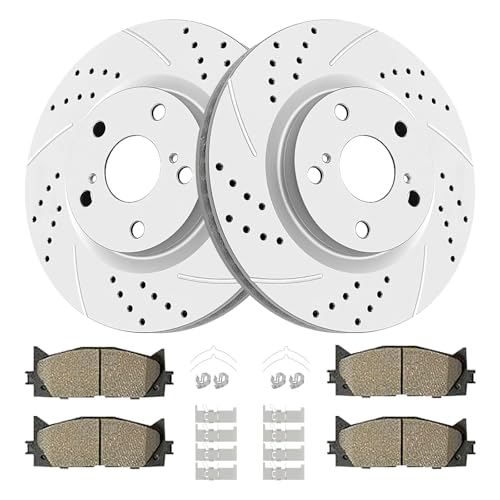
| Budget-Friendly Pick | Fitment: Toyota Avalon/Camry, Lexus ES300h/ES350 front | Kit Contents: 2 front rotors, 4 pads, hardware | Rotor Design: Drilled & slotted | VIEW LATEST PRICE | Read Our Analysis |
| R1 Concepts Front Brake Kit 11.7 Inch |

| Performance Upgrade | Fitment: Lexus ES300h/ES350, Toyota Avalon/Camry front | Kit Contents: 2 front rotors, 4 pads, hardware | Rotor Design: Drilled & diamond-slotted | VIEW LATEST PRICE | Read Our Analysis |
| Front and Rear Brake Kit for Toyota/Lexus |

| Best Front-Rear Set | Fitment: Toyota Avalon/Camry, Lexus ES350 front/rear | Kit Contents: 4 rotors, 8 pads, hardware | Rotor Design: Drilled & slotted | VIEW LATEST PRICE | Read Our Analysis |
More Details on Our Top Picks
TRQ Front Brake Pad and Rotor Set
In case you want an OEM-style fix for an older Camry, this TRQ front set fits the bill.
You get:
- 2 vented 10.04-inch rotors
- 1 front ceramic pad set
- direct-fit hardware for 1992 to 1999 2.2L Camry, plus 2000 to 2001 models with 14-inch wheels
The ceramic pads use positive molding, thermal scorching, chamfers, and a multi-layer shim, which means less dust, quicker bedding-in, and fewer squeaks. Rotors use G3000 alloy and a non-directional finish for smoother braking and better wear. And because it’s a 5-lug setup with no modifications required, installation stays pleasantly drama-free. Double-check fitment before ordering.
- Fitment:Toyota Camry 1992–2001 front
- Kit Contents:2 front rotors, 1 front pad set
- Rotor Design:Vented, non-directional
- Pad Material:Ceramic
- Orientation:Front
- Warranty:2 years
- Additional Feature:Positive molded pads
- Additional Feature:Multi-layer shim
- Additional Feature:G3000 casting alloy
PowerStop Front and Rear Brake Kit K6480
For a complete brake refresh, this full-kit pick gives you matched front and rear rotors, pads, and hardware. You get part number K6480 with:
- 2 front drilled and slotted rotors
- 2 rear drilled and slotted rotors
- Z23 carbon-fiber ceramic pads for both axles
- Installation hardware
You’ll want to confirm fitment initially using Amazon Confirmed Fit or the product description. It fits Lexus ES300h and ES350 2013 to 2018, plus Toyota Avalon 2013 to 2018, so double-check before checkout.
Performance-wise, the pads enhance stopping power over basic OEM-style replacements, while rubberized shims, chamfers, and slots help keep noise down. Silver zinc dichromate plating fights rust, too.
- Fitment:Lexus ES300h/ES350, Toyota Avalon 2013–2018 front/rear
- Kit Contents:4 rotors, 4 pad sets, hardware
- Rotor Design:Drilled & slotted
- Pad Material:Carbon-fiber ceramic
- Orientation:Front and rear
- Warranty:36 months / 36,000 miles
- Additional Feature:Carbon-fiber ceramic pads
- Additional Feature:Silver zinc plating
- Additional Feature:Installation hardware included
Drilled Slotted Brake Rotors and Ceramic Pads Kit
Need a budget-friendly pick for your Camry’s front brakes? This Acinoparts kit fits 2007 to 2017 Camry models and gives you:
- 2 front drilled and slotted rotors
- 4 ceramic pads
- hardware
You get 296 mm front rotors, part 31434, plus D1293 ceramic pads. The drilled and slotted design helps vent heat and brake dust, so you keep steadier stopping performance. And ceramic pads stay quieter and cleaner, which your wheels will appreciate.
Before ordering:
- Check the compatibility chart.
- Confirm front fitment only.
- Consider professional installation for safety.
It includes a 10-year warranty, and no assembly is required upfront.
- Fitment:Toyota Avalon/Camry, Lexus ES300h/ES350 front
- Kit Contents:2 front rotors, 4 pads, hardware
- Rotor Design:Drilled & slotted
- Pad Material:Ceramic
- Orientation:Front
- Warranty:10-year
- Additional Feature:296 mm rotors
- Additional Feature:Hardware included
- Additional Feature:10-year warranty
R1 Concepts Front Brake Kit 11.7 Inch
R1 Concepts delivers a performance upgrade for Camry drivers who want sharper front-end braking without fitment drama. You get 11.7-inch front eLINE rotors, drilled and diamond-slotted, plus four ceramic pads and hardware, so installation stays straightforward.
Why it stands out:
- Fits 2007 to 2017 Camry trims, including 2.5L and 3.5L models
- Uses G3000 iron for solid durability
- Matches O.E.M. specs, so you won’t need modifications
And the ceramic pads help cut dust and noise during daily driving. At 37.2 pounds, this front-axle kit feels substantial, not flimsy. You also get a 1-year manufacturer defect warranty, because surprises belong in movies. Not garages.
- Fitment:Lexus ES300h/ES350, Toyota Avalon/Camry front
- Kit Contents:2 front rotors, 4 pads, hardware
- Rotor Design:Drilled & diamond-slotted
- Pad Material:Ceramic
- Orientation:Front
- Warranty:1 year
- Additional Feature:Diamond-slotted rotors
- Additional Feature:G3000 iron grade
- Additional Feature:OEM-spec direct fit
Front and Rear Brake Kit for Toyota/Lexus
Drivers wanting a complete front-rear set for a 2007 to 2011 Toyota Camry should keep this kit on the shortlist. You get:
- 11.65-inch front drilled and slotted rotors, part 31434
- 11.06-inch rear rotors, part 31433
- Front ceramic pads D1293 and rear pads D1212, with hardware
It also fits the 2008 to 2012 Avalon and 2007 to 2012 Lexus ES350. The drilled and slotted rotor design helps move heat and dust away, so braking stays more stable. And ceramic pads keep noise down and wheels cleaner, because nobody enjoys extra brake dust. Double-check fitment, and let a professional handle installation. Covered through a 10-year warranty.
- Fitment:Toyota Avalon/Camry, Lexus ES350 front/rear
- Kit Contents:4 rotors, 8 pads, hardware
- Rotor Design:Drilled & slotted
- Pad Material:Ceramic
- Orientation:Front and rear
- Warranty:10-year
- Additional Feature:Front and rear set
- Additional Feature:296 mm front rotors
- Additional Feature:281 mm rear rotors
Factors to Consider When Choosing Brake Rotors for Toyota Camry
Upon selecting brake rotors for your Toyota Camry, you’ll want to check a few basics initially: rotor size match, correct vehicle fitment, rotor design style, pad material compatibility, and the heat dissipation your driving demands. And yes, those details matter more than they sound, because the wrong diameter, thickness, or pad pairing can shorten rotor life and leave you with braking that feels off. Get those factors right, and you’ll set yourself up for smoother stops, better durability, and fewer headaches later.
Rotor Size Match
Although brake rotors can look nearly identical at a glance, you need the size to match your Camry exactly or you’ll invite fitment headaches fast: caliper clearance issues, wheel interference, vibration, and uneven braking.
Focus on these dimensions:
- Diameter: Match the factory spec exactly. Some Camrys use roughly 255 mm front rotors, others 296 mm, and that difference absolutely matters.
- Thickness: Check both new thickness and minimum thickness so the caliper piston, pads, and hardware work correctly and don’t overheat.
- Bolt pattern and center bore: They must align with your 5-lug hub or you’ll get poor mounting and annoying vibration.
- Construction and height: Confirm vented versus solid design, plus rotor height and hat dimensions.
And yes, wheel diameter requirements matter too, because brakes hate surprises.
Correct Vehicle Fitment
For correct vehicle fitment, you’ll want to go beyond “Toyota Camry” and match the rotor to your exact car details, because one small difference in model year, engine, trim, axle, or wheel setup can turn a simple brake job into a parts-counter scavenger hunt.
Use your VIN or fitment chart, then confirm:
- Rotor diameter and thickness, since some Camrys use 255 mm rotors while others are closer to 296 mm.
- Whether you have 4-lug or 5-lug wheels, plus the exact bolt pattern.
- Front or rear axle location and wheel size.
- Factory vented or solid front rotor configuration.
- Options like parking brake integration, electronic parking brake, or ABS tone rings.
Miss one detail, and you could end up with a rotor that almost fits. Almost is expensive.
Rotor Design Style
Because rotor design affects heat, noise, pad wear, and even how the pedal feels in traffic, choosing the right style for your Toyota Camry matters more than the packaging hype would have you believe.
For most commutes, plain rotors are the easy win: smooth, quiet, and durable because the pad contacts one uninterrupted surface. Need better heat control? Vented rotors use internal vanes to shed heat and resist fade during long downhill runs or repeated hard stops.
If you want sharper response, consider:
- Drilled rotors for water and gas evacuation, though extreme heat can raise cracking risk.
- Slotted rotors for clearing debris and keeping the friction surface fresh.
- Drilled-and-slotted rotors for stronger wet-weather bite, with a small tradeoff in rotor lifespan versus plain designs.
Pick the style that matches your driving.
Pad Material Choice
While rotor style gets most of the attention, the brake pad material you pair with your Toyota Camry’s rotors has just as much say in how the car stops, sounds, and keeps your wheels looking clean.
Choose based on how you drive:
- Ceramic pads keep daily commuting civilized. You’ll get quieter stops, less visible dust, and cleaner wheels.
- Semi-metallic pads give you stronger initial bite for heavier loads or aggressive driving, but they usually dust more and can wear rotors faster.
- Organic pads feel softer and stay quiet, yet they wear quicker and can fade sooner.
Also check pad construction. Chamfers, multi-layer shims, and thermal scorching help cut vibration, reduce noise, and shorten break-in. And always match the pad compound to your rotor surface, unless buying new rotors sounds fun.
Heat Dissipation Needs
Under repeated braking, heat becomes the real enemy, so your Toyota Camry’s rotors need enough thermal capacity and airflow to keep temperatures under control and pedal feel consistent.
When you’re choosing, focus on:
- Larger diameter rotors, because extra surface area sheds heat faster and helps resist fade during repeated stops.
- Vented, slotted, or cross-drilled designs, which move air through the rotor and clear gases so thermal buildup drops.
- Thicker rotors with more thermal mass. They absorb and spread heat better, though added unsprung weight can slightly influence ride and suspension response.
- Better casting grades and materials, since higher thermal conductivity and crack resistance reduce warping under stress.
And match the rotor to how you drive. Daily commuting needs differ from mountain roads, towing, or spirited runs. Your brakes shouldn’t cook dinner.
Noise And Dust
Heat matters, but day-to-day comfort usually comes down to two things you’ll notice fast: how much dust ends up baked onto your Camry’s wheels and whether the brakes stay quiet instead of chirping at every stoplight.
For both, look beyond the rotor alone:
- Pair properly machined rotors with ceramic pads provided you want less visible dust than semi-metallic setups.
- Choose vented, drilled, or slotted designs whenever you want better heat control, because less glazing and vibration usually means less squeal.
- Pay attention to pad details like chamfered edges, multi-layer shims, and thermal scorching, which help calm vibration at the outset and over time.
And don’t ignore maintenance. Should rotor thickness variation or runout drift out of spec, noise climbs fast. Resurfacing or replacing worn, glazed rotors can restore smooth, quiet stops.
Corrosion Resistance
Because rotors sit in the line of water, road salt, and humid air, corrosion resistance deserves a spot near the top of your checklist whenever you’re choosing brake rotors for a Toyota Camry.
Look for:
- Zinc, dichromate, or similar coatings
- Stainless or treated alloys
- Protective finishes on vented or coated designs
These features slow rust on the hat and inner surfaces, reduce pitting and flaking, and help rotors last longer in wet or salted conditions. Uncoated cast iron can show rust within days, and that crusty buildup could increase wear and create annoying noise.
If you drive through winters or near the coast, prioritize documented corrosion-resistant treatments. And don’t ignore maintenance:
- Clean wheel wells regularly.
- Apply anti-seize at hub contact areas.
That simple routine helps reduce galvanic corrosion and keeps braking performance more consistent.
Warranty And Support
Rust protection helps rotors survive the weather, but a solid warranty helps you should the parts themselves fall short. Before you buy, check the warranty term, including months, years, and mileage caps, so you’re covered against premature wear or manufacturing defects long enough to matter.
Also confirm exactly what’s included:
- Rotors only, or pads and hardware too
- Front pair, rear pair, or full-vehicle coverage
Then read the fine print on claims. You might need:
- Proof of purchase
- Installation receipts
- Photos of the defect
And yes, some brands require an authorized installer, because paperwork apparently needs hobbies. Finally, see whether you receive replacement parts, prorated credit, or a full refund, and whether labor or shipping is covered. Good customer support saves time whenever defects appear.
Frequently Asked Questions
How Often Should Toyota Camry Brake Rotors Be Inspected?
You should inspect your Toyota Camry’s brake rotors at every tire rotation, about every 5,000 to 7,500 miles. Since braking systems cause nearly 22% of vehicle-related issues, you’ll catch warping, grooves, or unsafe thinning promptly.
Can Warped Rotors Affect Fuel Efficiency in a Camry?
Yes, warped rotors can slightly reduce your Camry’s fuel efficiency provided they create drag or uneven braking. You’ll make your engine work harder, especially in stop-and-go traffic, and you could also notice vibration and faster pad wear.
Do Brake Rotors Require a Break-In Period After Installation?
Yes, your brake rotors usually need a short break-in period after installation. You should bed them in with several gentle, controlled stops, because that helps transfer pad material evenly and improves braking performance and longevity.
Are Premium Brake Rotors Worth It for Daily Commuting?
Yes, premium brake rotors can be worth it for your daily commute. Should you believe pricier always means smoother stops, you’re partly right—they often reduce noise, resist warping, and last longer, saving you hassle over time.
Can Worn Brake Rotors Trigger Dashboard Warning Lights?
Yes, worn brake rotors can trigger dashboard warning lights indirectly. You’ll often see ABS, traction control, or brake warnings whenever rotor issues affect wheel speed readings, braking performance, or pad wear sensors. Inspect them promptly.
