

You can keep your Honda running smooth through picking air filters that fit tight and breathe well. For engine protection, try FRAM Extra Guard CA10467 for 2008-2012 Accord 2.4L or FRAM CA12050 for strong ISO 5011 filtration. In case you drive a 2013-2017 Accord 2.4L or Acura TLX 2.4L, EPAuto GP476 matches the OEM shape. For cleaner cabin air, Puroma charcoal (2-pack) or Carory CF134 cuts dust and odors, and there’s more to know next.
| FRAM Extra Guard CA10467 Engine Air Filter Honda Accord |

| Best Engine Protection | Filter type: Engine air filter | Honda fitment: Accord (2008–2012), Crosstour (2012–2015) | Acura fitment: Not listed | VIEW LATEST PRICE | Read Our Analysis |
| Puroma Cabin Air Filter with Activated Charcoal (2-Pack) |

| Best Odor Control | Filter type: Cabin air filter | Honda fitment: Multi-Honda fit (incl. Civic/CR‑V/Odyssey/Accord 2023–2025) | Acura fitment: Multi-Acura fit (RDX/TLX/Integra/MDX) | VIEW LATEST PRICE | Read Our Analysis |
| Activated Carbon Cabin Air Filter for Honda/Acura |
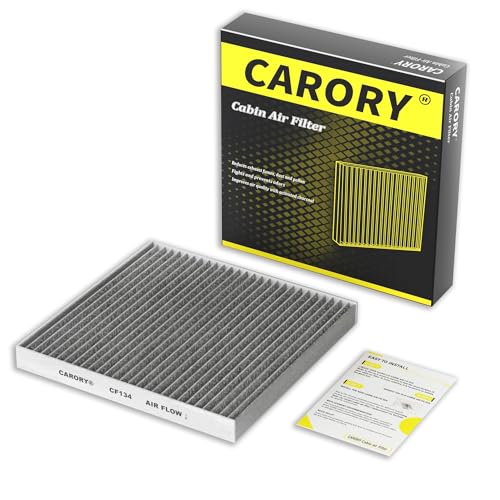
| Broadest Compatibility | Filter type: Cabin air filter | Honda fitment: Multi-Honda fit (incl. Accord 2003–2022, Civic, CR‑V, Pilot, etc.) | Acura fitment: Multi-Acura fit (ILX/MDX/RDX/TL/TLX/TSX, etc.) | VIEW LATEST PRICE | Read Our Analysis |
| FRAM Extra Guard Engine Air Filter CA12050 for Honda |

| Best Performance Boost | Filter type: Engine air filter | Honda fitment: Select Honda vehicles (vehicle-specific fit) | Acura fitment: Not listed | VIEW LATEST PRICE | Read Our Analysis |
| EPAuto GP476 Engine Air Filter for Honda Accord/Acura TLX |

| Best Value Pick | Filter type: Engine air filter | Honda fitment: Accord 2.4L (2013–2017) | Acura fitment: TLX 2.4L (2015–2020) | VIEW LATEST PRICE | Read Our Analysis |
More Details on Our Top Picks
FRAM Extra Guard CA10467 Engine Air Filter Honda Accord
In case you drive a 2008 to 2012 Honda Accord 2.4L or a 2012 to 2015 Honda Crosstour 2.4L and you want an easy win for your engine, the FRAM Extra Guard CA10467 is made for you. You get double the protection of many standard filters, so your engine breathes cleaner and runs calmer.
Because the fine media grabs dirt, dust, and debris like a magnet, you block contamination without choking airflow. Next, you’ll like the 12 months or 12,000 miles of coverage. Installation’s simple: lift the cover, pull the old filter, seat the perimeter seal, then fasten it back.
- Filter type:Engine air filter
- Honda fitment:Accord (2008–2012), Crosstour (2012–2015)
- Acura fitment:Not listed
- Filtration media:Fine filter media
- Change interval:Up to 12 months / 12,000 miles
- Installation ease:Easy DIY; quick swap-in
- Additional Feature:Double protection vs standard
- Additional Feature:Fine media airflow
- Additional Feature:Perimeter seal fit
Puroma Cabin Air Filter with Activated Charcoal (2-Pack)
Your Honda’s cabin can feel like a clean room instead of a stuffy closet when you use the Puroma Cabin Air Filter with Activated Charcoal (2-Pack). It layers soda woven media and activated carbon to trap odor makers, while a tight non woven mesh blocks dust and pollen, so your air feels lighter and your HVAC keeps strong airflow. Next, fit stays stress free: it matches many Hondas, from Fit to CR-V, plus select Acuras like RDX. You’ll swap it fast in about 10 minutes using the airflow arrow. Replace yearly or every 12,000 miles, or 5,000 in grime.
- Filter type:Cabin air filter
- Honda fitment:Multi-Honda fit (incl. Civic/CR‑V/Odyssey/Accord 2023–2025)
- Acura fitment:Multi-Acura fit (RDX/TLX/Integra/MDX)
- Filtration media:Activated charcoal + non-woven layers
- Change interval:12,000 miles / annually (5,000 in heavy pollution)
- Installation ease:Easy install (~10 minutes; airflow arrow)
- Additional Feature:Activated charcoal odor control
- Additional Feature:Includes 2-pack set
- Additional Feature:Airflow direction arrow
Activated Carbon Cabin Air Filter for Honda/Acura
Breathing cleaner air on every drive feels even better each time your cabin filter does more than trap dust, and that’s where an activated carbon cabin air filter for Honda and Acura stands out. Carory’s CF134 adds a carbon layer that helps reduce odors and keeps cabin air feeling fresh, even after a long commute.
Next, fitment matters, so you won’t waste time. It covers many Honda and Acura years, from 2001 through 2024, including Accord, Civic, CR-V, Pilot, Ridgeline, and Acura TL, RDX, and MDX. You can also match it to common OEM numbers like 80292-SDA-A01. It’s 8.4 ounces.
- Filter type:Cabin air filter
- Honda fitment:Multi-Honda fit (incl. Accord 2003–2022, Civic, CR‑V, Pilot, etc.)
- Acura fitment:Multi-Acura fit (ILX/MDX/RDX/TL/TLX/TSX, etc.)
- Filtration media:Activated carbon layer
- Change interval:Not listed
- Installation ease:Not listed (standard cabin filter replacement implied)
- Additional Feature:Broad 2001–2024 coverage
- Additional Feature:Multiple OEM cross-references
- Additional Feature:8.4 oz weight
FRAM Extra Guard Engine Air Filter CA12050 for Honda
A smart pick for many Honda drivers who want quick peace of mind is the FRAM Extra Guard Engine Air Filter CA12050, because it’s built for a vehicle-specific fit that seals tight around the air box. It’s a rectangular filter sized 3.8 x 2.23 x 0.9 inches and weighs 11.3 ounces, so it sits neatly without fuss.
That snug fit matters because the media grabs dirt, dust, and other grit while still letting your engine breathe. FRAM says it delivers 2 times the engine protection in ISO 5011 tests, helping you keep smoother power. At the moment it’s needed, you can swap it in minutes and aim for up to 12,000 miles.
- Filter type:Engine air filter
- Honda fitment:Select Honda vehicles (vehicle-specific fit)
- Acura fitment:Not listed
- Filtration media:Advanced filter media
- Change interval:Up to 12,000 miles
- Installation ease:Easy DIY; minutes; ensure perimeter seal
- Additional Feature:ISO 5011 tested
- Additional Feature:Helps maintain horsepower
- Additional Feature:Advanced filter media
EPAuto GP476 Engine Air Filter for Honda Accord/Acura TLX
Drivers with a 2013 to 2017 Honda Accord 2.4L or a 2015 to 2020 Acura TLX 2.4L will get the best fit from the EPAuto GP476 engine air filter, because it’s built to match the OEM design (17220-5A2-A00) without guesswork. Its pentagonal shape and 11.89 x 7.6 x 2.28 inch size help it sit tight, so unfiltered air doesn’t sneak past.
Next, you’ll feel better understanding it blocks dirt and grit that wear engines down. It can also help fuel mileage. Swap it about every 12,000 miles, and pair CP134 or CF10134 cabin filters.
- Filter type:Engine air filter
- Honda fitment:Accord 2.4L (2013–2017)
- Acura fitment:TLX 2.4L (2015–2020)
- Filtration media:Engine filter media (OEM-style; not further specified)
- Change interval:Every 12,000 miles
- Installation ease:Not listed (direct replacement implied)
- Additional Feature:Improves fuel mileage
- Additional Feature:OEM 17220-5A2-A00 replacement
- Additional Feature:Pentagonal filter shape
Factors to Consider When Choosing Car Air Filters for Honda**
To pick the right air filter for your Honda, you’ll start with matching your exact model and year, because a near fit can still leak and let grit sneak past. Next, you’ll choose between an engine filter and a cabin filter, then you’ll compare media types so you get the airflow and filtration balance your daily driving needs. Finally, you’ll consider how often you want to replace it and how easily it installs, because a snug seal fit helps your Honda breathe clean and keeps you from second guessing the job later.
Honda Model-Year Fit
Why does your Honda’s model year matter so much in case you’re buying an air filter? Because Honda changes small details over time, and those changes decide whether a filter seals tight or sits wrong. A filter could fit a Civic from 2008 to 2012, yet fail on a 2013 even in the event it looks close. Other filters cover a long run, sometimes 10 years or more, but you still need proof, not hope.
Engine Vs Cabin Filter
How do you know which air filter your Honda truly requires while both assert to “clean the air”? Start with where the air is going. The engine air filter guards your engine from dirt and grit, so you keep strong horsepower and steady fuel economy. It’s built to let plenty of air flow, because your Honda needs to breathe to run right.
Next, consider you and your passengers. The cabin air filter cleans the air you inhale through the vents, trapping dust and pollen, and often using charcoal to cut odors. Both filters might last about 12,000 miles or 12 months, but city smog or dusty roads can clog the cabin filter sooner. You can swap both yourself, yet you have to follow airflow arrows on cabin filters.
Filtration Media Type
Both your engine filter and cabin filter promise cleaner air, but the real difference often comes down to what they’re made of. Whenever you choose a finer media, you catch smaller dust, dirt, and debris before it can scratch parts or cloud your vents. Still, you don’t want your Honda to feel like it’s trying to breathe through a straw, so look for high quality media that keeps airflow wide and smooth for strong engine efficiency.
Next, consider what you smell and what you can’t see. Cabin filters with activated carbon layers soak up odors and some gaseous contaminants, which makes every drive feel calmer. Multi-layer or composite designs, like woven fabric plus carbon, trap more pollutants while staying tough, often lasting up to 12,000 miles or 12 months.
Replacement Interval Needs
Although it’s easy to forget an air filter until your Honda starts feeling a little “off,” the replacement interval matters because it protects airflow and peace of mind at the same time. In normal driving, plan on changing the engine air filter about every 12,000 miles or once a year, so your engine can breathe without working harder than it should.
But your roads change the clock. Assuming you drive through dust, heavy traffic fumes, construction zones, or gravel back roads, check it sooner and replace it as often as every 5,000 miles. Whenever you stay on schedule, you reduce dirt buildup, avoid engine contamination, and help preserve horsepower. Also, swap your cabin air filter on a similar timeline, because clean air keeps you comfortable and helps your HVAC run smoothly.
Installation And Seal Fit
During the moment your Honda still feels sluggish after a filter change, the cause is often a tiny gap around the edge that lets dirty air sneak past. You fix that through pulling the old filter out cleanly, then setting the new one in so the gasket touches the box on every side. Next, match the airflow arrow, because the wrong direction can twist the frame and break the seal. After that, press along the perimeter with your fingers and look for corners that lift. Then close the cover evenly and latch it tight, since a loose lid invites bypass. In case you want less stress, pick a tool free DIY filter that seats easily. Finally, reseat once more before you walk away.
