

You want a battery that starts every time, so pick from six proven AGMs: Mighty Max MM‑H6 (12V 70Ah, 760 CCA), ACDelco Gold 94RAGM and 48AGM (36‑month warranty), Goodyear 47 AGM (60Ah, 680 CCA), UPLUS 55Ah (BCI 24/34 fit), and Renogy 12V 70Ah H6 (wide temp range). They balance cold‑crank power, reserve minutes, fitment, and warranties, and they’ll suit most cars and trucks — keep going to see specs, fit tips, and warranty details.
| Mighty Max MM-H6 AGM Car Battery 12V 70Ah |

| Reliable Workhorse | Battery Type: AGM (Absorbent Glass Mat) | Nominal Voltage: 12V | Intended Use / Fitment (Automotive): Start/stop vehicles and standard automotive applications | VIEW LATEST PRICE | Read Our Analysis |
| ACDelco Gold 94RAGM (88864542) 36 Month Warranty AGM BCI Group 94R Battery |

| Professional Grade | Battery Type: AGM (Absorbent Glass Mat) | Nominal Voltage: 12V | Intended Use / Fitment (Automotive): Automotive (BCI Group 94R) — start/stop capable | VIEW LATEST PRICE | Read Our Analysis |
| Goodyear 47 AGM 12V 60Ah Automotive Battery |

| Long-Life Performer | Battery Type: AGM (Absorbent Glass Mat) | Nominal Voltage: 12V | Intended Use / Fitment (Automotive): Automotive (BCI 47) — automotive starting and cycling | VIEW LATEST PRICE | Read Our Analysis |
| ACDelco Gold 48AGM (88864541) 36 Month Warranty AGM BCI Group 48 Battery |
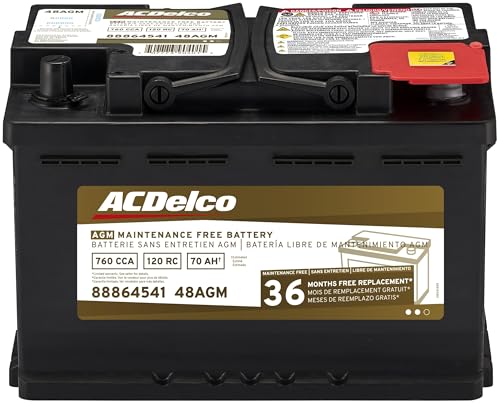
| Start-Stop Specialist | Battery Type: AGM (Absorbent Glass Mat) | Nominal Voltage: 12V | Intended Use / Fitment (Automotive): Automotive (BCI Group 48 applications) | VIEW LATEST PRICE | Read Our Analysis |
| UPLUS AGM 12V 55Ah Car Battery (BCI 24) |

| Budget-Friendly Power | Battery Type: AGM (Absorbent Glass Mat) | Nominal Voltage: 12V | Intended Use / Fitment (Automotive): Automotive (BCI Group 24/34 replacement) — start-stop and high electrical loads | VIEW LATEST PRICE | Read Our Analysis |
| Renogy 12V 70Ah AGM Car Battery H6 |
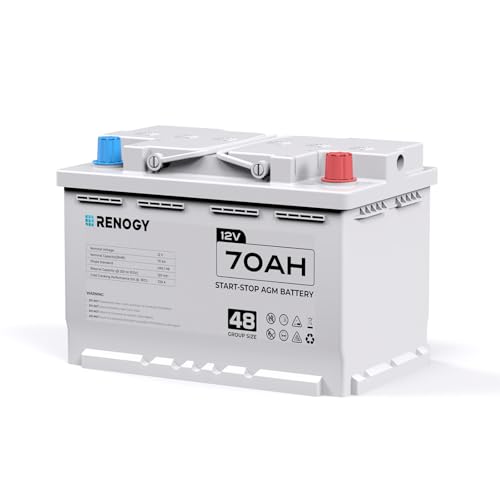
| All-Weather Tough | Battery Type: AGM (Absorbent Glass Mat) | Nominal Voltage: 12V | Intended Use / Fitment (Automotive): Automotive (BCI Group 48) — compact cars, sedans, SUVs, light trucks, marine starting | VIEW LATEST PRICE | Read Our Analysis |
More Details on Our Top Picks
Mighty Max MM-H6 AGM Car Battery 12V 70Ah
In case you need a rugged, maintenance-free battery that delivers strong cold-start power and long reserve time, consider the Mighty Max MM-H6 AGM 12V 70Ah—its 760 CCA and 120-minute reserve capacity make it ideal for start/stop vehicles and drivers who could desire reliable performance in harsh conditions. You’ll get a sealed AGM, spill-proof design that resists shock, vibration, and wide temperature swings. It supports deep-discharge recovery, multiple mounting positions (not upside down), and a right-side positive terminal. At 10.94 x 6.88 x 7.48 inches (BCI 48), it includes mounting screws, ISO/CE-certified build, and a 3-year warranty.
- Battery Type:AGM (Absorbent Glass Mat)
- Nominal Voltage:12V
- Intended Use / Fitment (Automotive):Start/stop vehicles and standard automotive applications
- Maintenance / Leak Characteristics:Sealed, spill-proof / maintenance-free
- Warranty Length:3-year warranty
- Reserve / Starting Performance Metric (CCA or RC listed):CCA 760; RC 120 minutes
- Additional Feature:Polarity: positive right
- Additional Feature:Includes mounting screws
- Additional Feature:Shock/vibration resistant
ACDelco Gold 94RAGM (88864542) 36 Month Warranty AGM BCI Group 94R Battery
Choose the ACDelco Gold 94RAGM in case you need a durable, maintenance-free AGM battery that’s built for high cycling and start/stop vehicles. You’ll get a 36-month free replacement warranty and a precision ribbed machined case that’s 100% pressure and electrical short tested. At 51.6 pounds and BCI Group 94R size, it delivers 80 A with an AGM design that’s leak- and spill-proof. High-density paste, silver-calcium alloy, improved acid circulation, and oxygen recombination enhance life and charge receptiveness. The marine terminal and puncture-resistant separator add reliability for demanding use; heed the Proposition 65 safety notice.
- Battery Type:AGM (Absorbent Glass Mat)
- Nominal Voltage:12V
- Intended Use / Fitment (Automotive):Automotive (BCI Group 94R) — start/stop capable
- Maintenance / Leak Characteristics:Leak- and spill-proof / maintenance-free
- Warranty Length:36-month (3-year) warranty / free replacement period
- Reserve / Starting Performance Metric (CCA or RC listed):Amperage 80 A (high cycling/start capability) — specific CCA not listed; designed for high cycling/start-stop
- Additional Feature:Marine-style terminal
- Additional Feature:Silver Calcium alloy
- Additional Feature:36-month free replacement
Goodyear 47 AGM 12V 60Ah Automotive Battery
Designed for drivers who need dependable cold starts and long life, the Goodyear 47 AGM delivers 680 CCA and a 60 Ah capacity in a compact, maintenance-free AGM package. You’ll get 100 minutes reserve capacity, spill-proof AGM construction, and up to twice the cycle life of conventional lead-acid batteries. It’s BCI group 47, 12V, 40.2 lb, and allows versatile mounting (not upside down); positive terminal on the right. Included are the battery and installation screws; cables sell separately. Built in an ISO-certified factory, CE certified, and backed with a 36-month warranty for reliable ownership.
- Battery Type:AGM (Absorbent Glass Mat)
- Nominal Voltage:12V
- Intended Use / Fitment (Automotive):Automotive (BCI 47) — automotive starting and cycling
- Maintenance / Leak Characteristics:Spill-proof / maintenance-free
- Warranty Length:36-month (3-year) warranty
- Reserve / Starting Performance Metric (CCA or RC listed):CCA 680; RC 100 minutes
- Additional Feature:Up to twice cycle-life
- Additional Feature:Universal fit type
- Additional Feature:Includes installation screws
ACDelco Gold 48AGM (88864541) 36 Month Warranty AGM BCI Group 48 Battery
In case you need a reliable AGM that stays cool under heavy use, the ACDelco Gold 48AGM (88864541) is a solid pick for BCI Group 48 applications—it’s pairs high-density negative paste and a calcium-lead positive grid to improve conductivity and extend cycle life while a sturdy envelope separator and improved acid circulation cut the risk of shorts and thermal stress. You’ll get AGM consistency with increased acid flow, a puncture-resistant envelope separator, and a vent cap that resists leaks. The Silver Calcium stamped alloy further bolsters cycle life and lowers internal resistance. It ships with a 36-month warranty for peace of mind.
- Battery Type:AGM (Absorbent Glass Mat)
- Nominal Voltage:12V
- Intended Use / Fitment (Automotive):Automotive (BCI Group 48 applications)
- Maintenance / Leak Characteristics:AGM / maintenance-free (vent/acid leakage resistant)
- Warranty Length:36-month (3-year) warranty
- Reserve / Starting Performance Metric (CCA or RC listed):(CCA/RC not specified) — constructed for extended cycle life and start-stop performance
- Additional Feature:Envelope separator backing
- Additional Feature:Vent cap anti-leak
- Additional Feature:Enhanced-life stamped alloy
UPLUS AGM 12V 55Ah Car Battery (BCI 24)
In case you need a compact AGM that handles frequent short trips and heavy electrical loads, the UPLUS AGM 12V 55Ah (BCI 24) fits the bill with 650 CCA and a 120-minute reserve capacity. You’ll get a BCI Group 24 (replacement for Group 34) sized 10.87 x 6.61 x 6.89 inches with left positive, right negative terminals. It’s maintenance-free AGM, built for start-stop systems, accessories, and vehicles that sit unused. Expect deep-cycle and cranking capacity from a calcium lead positive grid, up to 4× longer cycle life, 15× better vibration resistance, leak-resistant venting, a 3-year warranty, and local support.
- Battery Type:AGM (Absorbent Glass Mat)
- Nominal Voltage:12V
- Intended Use / Fitment (Automotive):Automotive (BCI Group 24/34 replacement) — start-stop and high electrical loads
- Maintenance / Leak Characteristics:Maintenance-free AGM (no free acid)
- Warranty Length:3-year warranty
- Reserve / Starting Performance Metric (CCA or RC listed):CCA 650; RC 120 minutes
- Additional Feature:Left-positive terminal
- Additional Feature:15× vibration-resistant
- Additional Feature:California/Georgia warehouses
Renogy 12V 70Ah AGM Car Battery H6
Should you need a reliable start-stop battery for a compact car, SUV, or light truck that demands strong cold-start performance, the Renogy 12V 70Ah AGM H6 delivers with 720 CCA and a sealed AGM design that minimizes leaks and maintenance. You’ll get a 12V, 70 Ah pack in BCI Group 48 size, offering 120 minutes reserve capacity and optimized support for vehicles with higher electrical loads and start-stop systems. The sealed AGM construction reduces corrosion risk and upkeep, and the wide operating range (-30°C to 70°C) keeps starts dependable in extreme cold or heat. It’s a practical, durable choice.
- Battery Type:AGM (Absorbent Glass Mat)
- Nominal Voltage:12V
- Intended Use / Fitment (Automotive):Automotive (BCI Group 48) — compact cars, sedans, SUVs, light trucks, marine starting
- Maintenance / Leak Characteristics:Sealed AGM (minimizes acid leaks) / maintenance-free
- Warranty Length:(Warranty not explicitly stated in summary) — implied manufacturer coverage (commonly 3 years)*
- Reserve / Starting Performance Metric (CCA or RC listed):CCA 720; RC 120 minutes
- Additional Feature:Wide temp range (-30–70°C)
- Additional Feature:Group 48 fitment
- Additional Feature:Marine-start compatible
Factors to Consider When Choosing Car Batteries
Upon selecting a car battery, you’ll want to compare AGM versus flooded types, check cold cranking amps, and confirm capacity and reserve to match your driving needs. Make sure the battery’s physical size and fitment work in your tray, and verify terminal location and polarity for easy, safe installation. These factors together determine reliability, starting performance, and compatibility with your vehicle.
Battery Type (AGM vs Flooded)
Because your vehicle’s electrical demands and maintenance preferences differ, choosing between AGM and flooded lead‑acid batteries comes down to tradeoffs in performance, cost, and service needs. AGM batteries use fiberglass mats to immobilize electrolyte, so they’re sealed, spill‑proof, maintenance‑free, and can be mounted in varied positions. They accept charge faster, resist vibration and deep discharges, and work well with start‑stop systems or heavy accessories. Flooded (wet) batteries hold free liquid electrolyte, need upright installation and periodic water checks, and are generally cheaper per amp‑hour. They tolerate overcharging better but usually have shorter cycle life and lower vibration resistance. Pick AGM should you require durability, low maintenance, and flexible mounting; pick flooded for simple, low‑demand, budget‑minded applications.
Cold Cranking Power
Even provided your vehicle ran fine last summer, cold-cranking power matters once temperatures drop: Cold Cranking Amps (CCA) measure how much current a battery can deliver at 0°F (−18°C) for 30 seconds, and higher CCA ratings give you a better chance of turning over a sluggish engine in winter. You should match or exceed your manufacturer’s CCA recommendation, especially in colder climates where thickened oil and slower chemical reactions demand more starting current. Bear in mind CCA isn’t the whole story: a low state of charge or poor reserve capacity still reduces starting ability. Pick a battery with a safety margin above the minimum spec, and be aware repeated cold starts and long freezes increase sulfation and internal resistance, which will lower CCA over time.
Capacity And Reserve
Cold-cranking amps tell you whether a battery will spin your engine in cold weather, but capacity and reserve define how long it can keep electrical systems running once the engine’s off or the alternator fails. Capacity, measured in ampere-hours (Ah), shows how much charge the battery stores—70 Ah means roughly 70 A for one hour or 7 A for ten hours. Reserve capacity (RC) is given in minutes: how long a fully charged battery can supply 25 A at 80°F before voltage drops below usable levels. Match Ah and RC to your parasitic loads and accessory use—short trips, big audio systems, and lots of electronics need higher ratings to avoid deep discharge and premature wear. Recall cold reduces effective Ah and RC, so choose extra margin for winter.
Size And Fitment
While picking a battery, make sure its group size, dimensions, and terminal layout match your vehicle so the unit fits the tray, clears hold‑downs, and reaches the cables without strain. Verify the BCI group number and measure length, width, height, and terminal height to guarantee clearance under the hood and proper alignment with factory cable reach. Confirm post type and polarity separately to avoid incompatible clamps or reversed connections. Check weight and mounting orientation so the battery sits securely in the tray and works with existing hold‑downs to resist vibration. Should your car have a battery management system or start‑stop function, match the original form factor and terminal configuration to keep sensors, brackets, and system behavior correct.
Terminal Location And Polarity
Where are the battery terminals located, and which side is positive? You’ll match polarity to your vehicle’s tray and cable orientation to avoid reversed polarity that can damage the charging system and electronics. Confirm whether the positive post sits on the right or left whilst viewing the battery front and check exact post spacing so cables reach without stretching or needing adapters. Verify top-post, side-post, or terminal-stud connections and pick the same type to prevent incompatible clamps. Take into account post size and thread type for stud or bolt fittings so replacements and accessories fit securely and maintain good contact. In confined installations, confirm terminal orientation and clearance to avoid contact with metal parts, short circuits, or interference.
Cycle Life And Durability
Because cycle life determines how long a battery will reliably deliver usable capacity, you should treat it as a primary selection criterion. Cycle life is usually given as complete charge–discharge cycles until capacity falls to about 80%: AGM and deep‑cycle lead‑acid types can range from hundreds to over a thousand cycles depending on depth of discharge. Don’t ignore calendar life — unused batteries still degrade via self‑discharge and corrosion, so service life combines both effects. Choose batteries with high‑quality, thicker plates and advanced separators to resist sulfation, shedding, and corrosion for better cycle stability. Also control operating conditions: avoid extreme temperatures, high charge/discharge rates, and excessive vibration. Proper thermal management, correct charging profiles, and secure mounting will extend durability.
Warranty And Certification
Cycle life and proper maintenance tell you how long a battery should last, but the warranty and certifications tell you what the maker will stand behind — and how you’ll be protected should something go wrong. You should seek at least 24–36 months free-replacement for AGM or premium batteries; longer free-replacement terms signal confidence and durability. Check whether coverage becomes prorated afterward—prorated payouts shrink as the battery ages, so a full free term is more beneficial. Verify the warranty includes both free replacement and pro rata credit, and read fine print for proof-of-purchase, installation-location limits, return steps, and dealer or authorized-installer requirements. Confirm third-party certifications (ISO, CE or equivalent) and 100% pressure/electrical short testing claims to guarantee consistent quality and safety.
