

Looking for tough flexplates that handle high RPM and fit a range of builds? These six picks cover common needs: Allstar 153T SFI 29.1 for small‑block Chevy internal balance, PRW 168T chromoly for high‑stall Chevy 454 setups, Allstar 168T internal for thicker stock‑matching jobs, plus LS adapter plates and a flexplate/flywheel locking tool for LS swaps and service.
Check balance, tooth count, converter bolt pattern, thickness, and SFI rating to choose the best option for your swap or race application.
More fitment and installation tips follow.
| Allstar Performance 153T SFI 29.1 Flexplate |
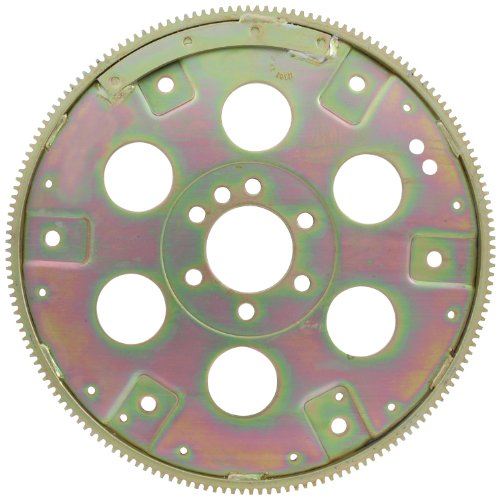
| Internal-Balance Reliability | Compatibility/Engine Fit: Small Block Chevy | Tooth Count / Ring Gear Teeth: 153 teeth | Material / Construction: Steel (gold iridize plated) | VIEW LATEST PRICE | Read Our Analysis |
| PRW SFI Flexplate 168T Chromoly Steel for Chevy 454 |

| Racing-Grade Durability | Compatibility/Engine Fit: Chevy 454 (1970–1990 early applications) | Tooth Count / Ring Gear Teeth: 168 teeth | Material / Construction: Chromoly steel | VIEW LATEST PRICE | Read Our Analysis |
| LS Engine Flexplate/Flywheel Locking Holder Tool |

| Essential Workshop Tool | Compatibility/Engine Fit: LS-series RWD V8 and LT-biased engines (LS1/LS2/LS3/LS6/LSX) — holder tool for LS engines | Tooth Count / Ring Gear Teeth: (Tool — designed to engage flywheel/flexplate teeth; fits LS flexplates) — intended for LS flexplates (typically 168T) | Material / Construction: Alloy steel (locking tool) | VIEW LATEST PRICE | Read Our Analysis |
| Allstar Performance 168T Internal Balance Flexplate |

| Heavy-Duty Standard | Compatibility/Engine Fit: Internal-balance applications (general Chevy/168T internal-balance) — Allstar performance internal-balance | Tooth Count / Ring Gear Teeth: 168 teeth | Material / Construction: Steel (gold zinc chromate finish) | VIEW LATEST PRICE | Read Our Analysis |
| LS V8 Flexplate Adapter Kit for GM LS Engines |

| LS Swap Ready | Compatibility/Engine Fit: GM Gen III LS engines (LS1/LS2/LS6 and 4.8/5.3/6.0 truck engines) | Tooth Count / Ring Gear Teeth: 168 teeth | Material / Construction: Cold-rolled premium steel (forged ring gear) | VIEW LATEST PRICE | Read Our Analysis |
| Adapter Flywheel/Flexplate for Gen III LS Engines |
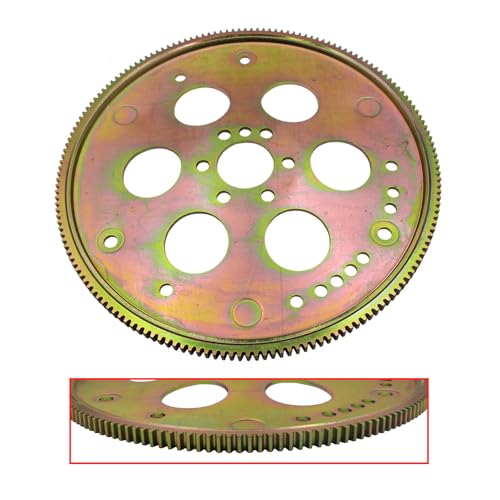
| High-Strength Adapter | Compatibility/Engine Fit: GM Gen III LS engines (LS1/LS2/LS6 and 4.8/5.3/6.0 truck engines) | Tooth Count / Ring Gear Teeth: 168 teeth | Material / Construction: Cold-rolled premium steel (forged ring gear, gold iridited) | VIEW LATEST PRICE | Read Our Analysis |
More Details on Our Top Picks
Allstar Performance 153T SFI 29.1 Flexplate
Should you want a tough, race-ready flexplate for a Small Block Chevy, the Allstar Performance 153-tooth SFI 29.1 flexplate delivers exactly that. You’ll get a gold iridize plated steel plate that’s built for duty and looks sharp. It’s a 153-tooth, internal balance design with dual converter bolt patterns, so you can fit different setups without fuss. The plate is .035 inch thicker than stock, weighs about 5 pounds, and uses a two-piece seal for strength. You’ll appreciate the machined exterior and SFI 29.1 compliance whenever you need safety and reliability on the track.
- Compatibility/Engine Fit:Small Block Chevy
- Tooth Count / Ring Gear Teeth:153 teeth
- Material / Construction:Steel (gold iridize plated)
- Thickness (heavier than stock):0.035 inch thicker than stock
- High-Duty / Racing-Grade Welding or Certification:SFI 29.1 compliant
- Dual/Multiple Converter Bolt Pattern Compatibility (or fits common converter patterns):Dual converter bolt patterns
- Additional Feature:Internal-balance configuration
- Additional Feature:Dual converter bolt patterns
- Additional Feature:Gold iridize plated
PRW SFI Flexplate 168T Chromoly Steel for Chevy 454
Supposing you’re building a high-RPM Chevy 454 and want a flexplate that’s built to take the heat, the PRW SFI 168T chromoly flexplate is made for racers and serious street drivers who need extra strength and reliability. You’ll get an SFI 29.1 certified, 168-tooth external balance unit that fits 1970 to 1990 early-model Chevy 454 applications. It’s chromoly steel, 0.035 inch thicker than stock, and has a double-welded ring gear for added durability. You’ll like the white zinc finish and OEM-exceeding manufacture. Use it with high-stall converters and expect it to handle high RPM and torque.
- Compatibility/Engine Fit:Chevy 454 (1970–1990 early applications)
- Tooth Count / Ring Gear Teeth:168 teeth
- Material / Construction:Chromoly steel
- Thickness (heavier than stock):0.035 inch thicker than stock
- High-Duty / Racing-Grade Welding or Certification:SFI 29.1 certified; double-welded ring gear
- Dual/Multiple Converter Bolt Pattern Compatibility (or fits common converter patterns):Designed for 168T Chevy 454 converter pattern (specific 168-tooth external balance)
- Additional Feature:Chromoly steel construction
- Additional Feature:Double-welded ring gear
- Additional Feature:White zinc finish
LS Engine Flexplate/Flywheel Locking Holder Tool
Who is this tool best for and why will it save you time in the garage? In the event you work on LS-series RWD V8s like LS1, LS2, LS3, LS6, or LSX from 1997–2019, this locking holder fits your engine and clears RWD bellhousings for manual and automatic transmissions. You’ll bolt the alloy steel tool to the starter, lock its four-tooth grip into the flywheel or flexplate, and stop rotation fast. It includes two bolts and washers, needs no extra tools, and resists wear with a black treated finish. Check fitment; it won’t work for FWD or Gen 3 Coyote engines.
- Compatibility/Engine Fit:LS-series RWD V8 and LT-biased engines (LS1/LS2/LS3/LS6/LSX) — holder tool for LS engines
- Tooth Count / Ring Gear Teeth:(Tool — designed to engage flywheel/flexplate teeth; fits LS flexplates) — intended for LS flexplates (typically 168T)
- Material / Construction:Alloy steel (locking tool)
- Thickness (heavier than stock):N/A (tool) — designed to fit and lock typical LS flexplates (no flexplate thickness)
- High-Duty / Racing-Grade Welding or Certification:Tool — built for heavy-duty shop use (high-quality alloy steel; durable)
- Dual/Multiple Converter Bolt Pattern Compatibility (or fits common converter patterns):Tool — works with starter/bolts to lock flywheel/flexplate patterns (fits common LS bolt locations)
- Additional Feature:Bolts to starter
- Additional Feature:Four-tooth engagement
- Additional Feature:Includes bolts/washers
Allstar Performance 168T Internal Balance Flexplate
In case you want a dependable flexplate that handles heavy starts and everyday driving, the Allstar Performance 168T internal balance flexplate fits the bill. You’ll like the thicker material and welded starter ring gear on both sides because they stand up to stress and reduce wear. It ships with a gold zinc chromate finish that resists corrosion, and it supports dual converter bolt patterns so you won’t guess about fit. Made in the United States, it meets SFI 29.1 whenever specified, and comes with manufacturer warranty options plus a 30 day return path for peace of mind.
- Compatibility/Engine Fit:Internal-balance applications (general Chevy/168T internal-balance) — Allstar performance internal-balance
- Tooth Count / Ring Gear Teeth:168 teeth
- Material / Construction:Steel (gold zinc chromate finish)
- Thickness (heavier than stock):0.035 inch thicker than stock (noted thicker material)
- High-Duty / Racing-Grade Welding or Certification:SFI 29.1 compliant; starter ring gear welded on both sides
- Dual/Multiple Converter Bolt Pattern Compatibility (or fits common converter patterns):Dual converter bolt patterns (10-3/4″ and 11-1/2″ unless specified)
- Additional Feature:Dual 10.75″/11.5″ patterns
- Additional Feature:Welded starter ring gear
- Additional Feature:Gold zinc chromate finish
LS V8 Flexplate Adapter Kit for GM LS Engines
Should you be swapping a GM Gen III LS V8 into an older car and want a clean, cost‑effective way to mate it to an initial GM automatic transmission, this LS V8 flexplate adapter kit is made for you because it keeps the stock LS starter and covers common converter bolt patterns for wide compatibility. You’ll get a forged 168-tooth flexplate, double-welded ring gear, and hardware sized for Gen III engines and early-era GM transmissions like TH350 and 700R-4. It fits many LS variants but note some LQ4 6.0 cranks need a flat flexplate. The kit reduces headache and parts hunting.
- Compatibility/Engine Fit:GM Gen III LS engines (LS1/LS2/LS6 and 4.8/5.3/6.0 truck engines)
- Tooth Count / Ring Gear Teeth:168 teeth
- Material / Construction:Cold-rolled premium steel (forged ring gear)
- Thickness (heavier than stock):4 mm (0.035 in) thicker than stock
- High-Duty / Racing-Grade Welding or Certification:SFI 29.1 certified; double-welded/robotic cold-welded ring gear
- Dual/Multiple Converter Bolt Pattern Compatibility (or fits common converter patterns):Works with 10.75″ and 11.066″ (11.1) torque converter bolt patterns
- Additional Feature:Includes converter bolt kit
- Additional Feature:Crankshaft sleeve adapter
- Additional Feature:High-strength 12-point bolts
Adapter Flywheel/Flexplate for Gen III LS Engines
Should you want a tough, drop-in adapter flexplate that lets you use Gen III LS engines with older GM automatics, this is the choice that saves time and money while keeping reliability high. You get a precision piece that fits LS1, LS2, LS6 and many 4.8 to 6.0 truck engines and mates to TH350, 700R-4, 200-4R, 4L60 and Powerglide transmissions. It keeps your factory starter and works with common converter bolt patterns. Built from thicker cold-rolled steel with a forged ring gear, double-welded and SFI 29.1 certified, it’s made for high power swaps.
- Compatibility/Engine Fit:GM Gen III LS engines (LS1/LS2/LS6 and 4.8/5.3/6.0 truck engines)
- Tooth Count / Ring Gear Teeth:168 teeth
- Material / Construction:Cold-rolled premium steel (forged ring gear, gold iridited)
- Thickness (heavier than stock):4 mm (0.035 in) thicker than typical stock
- High-Duty / Racing-Grade Welding or Certification:SFI 29.1 certified; precision/robotic cold-welded double-welded ring gear
- Dual/Multiple Converter Bolt Pattern Compatibility (or fits common converter patterns):Works with 10.75″ and 11.066″ (11.1) torque converter bolt patterns
- Additional Feature:Gold iridited finish
- Additional Feature:Cold-rolled premium steel
- Additional Feature:SFI 29.1 certified
Factors to Consider When Choosing Car Flexplates
When you pick a flexplate, start alongside matching the balance type and tooth count to your engine and starter so everything turns smoothly and reliably. You’ll also want to check material, thickness, and strength for the power you plan to run, and confirm the torque converter bolt pattern fits without modification. These choices work together, so consider how durability, bolt patterns, and balance affect each other prior to you buy.
Balance Type Selection
Balance matters a lot, and picking the right flexplate balance type will keep your engine running smooth and safe. You should match the flexplate to your engine’s balance spec so vibration stays away and bearings last. Should your engine be internally balanced, use an internally balanced flexplate that doesn’t add external counterweights. Should it be externally balanced, pick a flexplate that supplies the correct counterweight mass. Whenever you swap engines or use aftermarket rods, pistons, or a different crank, confirm whether the balance changed because that can force a different flexplate. In the event you’re unsure, check the build documents or have a pro measure the rotating assembly. That step prevents serious wear or catastrophic failure and gives you peace of mind.
Tooth Count Needs
Tooth count is a small number that makes a big difference, and you’ll want to match it exactly to your starter, ring gear, and transmission so the starter can engage reliably. You must match the flexplate tooth count to the starter and ring gear, because common counts like 153 and 168 matter a lot. Should you swap engines or transmissions, check the crank flange design and ring-gear size to make sure everything lines up. Also verify torque converter and starter bolt patterns along with tooth count, since adapters and converters fit particular counts. Higher tooth counts usually mean a larger ring gear, which changes starter engagement geometry and clearance needs. Always confirm tooth count with service manuals or OEM specs for year and model.
Material And Strength
Because your flexplate muscles do the heavy lifting between engine and transmission, picking the right material and strength matters a lot. You’ll choose steel for everyday reliability or chromoly when you want higher tensile strength and better fatigue resistance at high RPMs. Forged or cold-rolled construction gives you consistent grain and toughness, and double-welded ring gears cut the risk of ring-gear separation under repeated shock loads. Match internal versus external balance and mass distribution to your engine’s balancing needs so you avoid vibration and premature bearing wear. Surface treatments like zinc, chromate, or iridite add corrosion resistance to keep fasteners snug and strength intact. Consider how you drive, and pick materials that fit expected RPM and torque demands.
Thickness And Durability
You’ve already seen how material choice and construction affect flexplate performance, and thickness is the next part of that story because it directly shapes durability and how the driveline behaves. You’ll want to pick a flexplate that’s thicker than stock whenever you expect high torque or frequent hard launches. About 0.035 inch extra commonly improves rigidity and resists warping or cracks. Thicker plates spread bolt clamping loads and cut flex at the converter to crank area, so bolts stay tight and fatigue drops. Combine thickness with strong, heat treated steel like chromoly for better strength to weight and longer life. Keep in mind thicker means more rotating mass, so it can change inertia and feel. Match thickness to your converter, driving style, and goals.
Converter Bolt Patterns
Check the converter bolt pattern before you buy a flexplate so the two parts will bolt up without drama. You want the bolt circle diameter and hole count to match the converter, like common 10.75 inch or 11.1 inch patterns or specific 10 or 12 hole layouts. In case you plan swaps, pick a flexplate with dual or multiple patterns to enhance compatibility and reduce stress. Also confirm bolt thread size and pitch, such as 7/16–20 or metric threads, so fasteners fit cleanly. For higher torque builds, match thicker flexplates to converters rated for high stall or high RPM. Don’t forget balance style and bolt orientation, since internal versus external balance affects which converter patterns and adapters you can use.
SFI Certification Requirement
Once you plan a high-performance build or track day, choosing an SFI 29.1 certified flexplate gives you real protection and peace of mind. You want a part tested to contain flailing and failure at high RPM and power. SFI 29.1 checks material thickness, weld quality, and ring gear attachment, so certified plates are usually thicker and reinforced compared with street units. Many tracks and insurers require that label, so you should verify certification before you race or enter events. Should you run a high stall converter, high torque, or increased revs, prioritize an SFI 29.1 rated flexplate to lower the chance of catastrophic damage. Look for clear markings and lab paperwork, and ask vendors for test proof should you feel unsure.
Starter Compatibility Check
Should you want your starter to work reliably after an engine swap or performance upgrade, start with matching the flexplate to the starter’s engagement geometry so the starter pinion reaches, meshes, and retracts without grinding. Next, verify the ring gear diameter and tooth count match your starter so engagement is full and clean. Also check the flexplate offset and starter mounting hole pattern so your stock starter fits without modification. Pay attention to flexplate thickness and crank flange height because small thickness changes about 0.035 in can alter engagement depth. For conversions, confirm the flexplate keeps the starter on the original side and axial position to prevent interference with the bellhousing. Finally, inspect that the ring gear welds are solid and rated for your RPM and torque so gear loosening won’t ruin starting.
Application-Specific Fitment
When you’re picking a flexplate for a specific application, consider fitment as a chain of small but critical matches that all have to work together. You’ll start by confirming tooth count and converter bolt pattern so the ring gear and converter mount correctly, like 153T versus 168T and different bolt circles. Next, check balance type against the crankshaft and harmonic balancer, since internal versus external balance must match to avoid vibration and damage. Then compare thickness and material for your use, choosing thicker chromoly for high RPM or racing. Also inspect crank flange and starter engagement so the starter lines up. Should you be swapping engines, verify adapter needs such as sleeves, spacers, and bolt lengths to prevent interference.
