

You want a cartridge oil filter you can trust, so start with Mann HU 6022 z for newer BMWs, or RA-9972 for many Toyota and Lexus engines. Next, FRAM EG+ CH11665P gives up to 10,000 miles and catches 95% of grit. For Kia V6s, ECOGARD S6127A enhances capacity and blocks 99%. ECOGARD X5608 matches Toyota and Lexus OEM specs and stops over 97% of junk. Keep going to see fitment tips.
| Mann Filter HU 6022 z Cartridge Oil Filter |

| OE-Quality Pick | Vehicle fit: BMW (540i/740i/840/X/Z4/M-series, etc.) | Filter media: Paper | Max interval: Not specified | VIEW LATEST PRICE | Read Our Analysis |
| RA-9972 Engine Oil Filter Cartridge for Lexus Toyota |

| High-Mileage Choice | Vehicle fit: Lexus/Toyota (ES/GS/IS/LS/NX/RX; Camry/RAV4/etc.) | Filter media: Cellulose | Max interval: Up to 15,000 miles | VIEW LATEST PRICE | Read Our Analysis |
| FRAM EG+ CH11665P 10K Mile Cartridge Oil Filter |

| Best for 10K Miles | Vehicle fit: Select vehicle fitments (vehicle-specific) | Filter media: Cellulose/glass blend | Max interval: Up to 10,000 miles | VIEW LATEST PRICE | Read Our Analysis |
| ECOGARD S6127A Engine Oil Filter for Kia Sorento/Sedona |

| Best for Synthetic Oil | Vehicle fit: Kia (Sorento/Sedona 3.3L/3.5L) | Filter media: Synthetic-oil optimized media | Max interval: Up to 10,000 miles | VIEW LATEST PRICE | Read Our Analysis |
| ECOGARD X5608 Premium Engine Oil Filter Toyota |
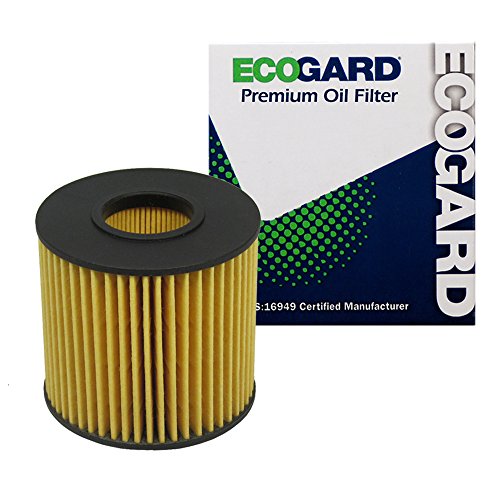
| Best Value Pick | Vehicle fit: Toyota/Lexus (Camry/RAV4/Highlander/Sienna/Tacoma; RX/ES/NX/etc.) | Filter media: Paper | Max interval: Up to 5,000 miles | VIEW LATEST PRICE | Read Our Analysis |
More Details on Our Top Picks
Mann Filter HU 6022 z Cartridge Oil Filter
In case you drive a newer BMW like a 540i, 740i, 840 Series, X Series, or even the Z4, the Mann Filter HU 6022 z is the cartridge oil filter that fits your life and your engine. It’s vehicle-specific, and the listing’s OEM cross-references help you match it with confidence.
Next, you’ll feel the difference at cold starts. This cartridge keeps oil in the module, so oil reaches key parts faster and cuts premature wear. Strong end caps and flexible O-rings seal tightly. The paper media stays steady in heat and pressure, holds lots of dirt, and filters to your model’s needs. Plus, you reuse the housing.
- Vehicle fit:BMW (540i/740i/840/X/Z4/M-series, etc.)
- Filter media:Paper
- Max interval:Not specified
- Filtration rate:Not specified (OE-matched fineness)
- Sealing parts:O-rings + drain plug gasket
- Return policy:30-day (Amazon)
- Additional Feature:Retains oil in module
- Additional Feature:Reusable element housing
- Additional Feature:High dirt-holding capacity
RA-9972 Engine Oil Filter Cartridge for Lexus Toyota
Drivers who want Toyota or Lexus reliability to stay rock solid between oil changes will feel at home with the RA-9972 engine oil filter cartridge, because it’s built for the engines found in models like the Camry, RAV4, Highlander, Tacoma, and Lexus RX350, NX300h, and ES350.
You get over 99% filtration from pleated cellulose media, so grit and exhaust residue don’t keep circling back. Next, the silicone anti drainback valve helps protect on cold starts, even with hot oil. Then a tough nitrile gasket handles heat and time. It’s rated up to 15,000 miles, and the suregrip surface makes DIY swaps easier. Match OEM refs like CH9972.
- Vehicle fit:Lexus/Toyota (ES/GS/IS/LS/NX/RX; Camry/RAV4/etc.)
- Filter media:Cellulose
- Max interval:Up to 15,000 miles
- Filtration rate:>99%
- Sealing parts:Gasket (high nitrile)
- Return policy:30-day (Amazon)
- Additional Feature:Silicone anti-drainback valve
- Additional Feature:Suregrip non-slip surface
- Additional Feature:High nitrile gasket
FRAM EG+ CH11665P 10K Mile Cartridge Oil Filter
Regular oil changes feel a lot less stressful whenever you can trust the filter, and the FRAM EG+ CH11665P is made for that kind of steady, everyday care. You can run it up to 10,000 miles, with conventional or synthetic oil, as long as it matches your exact fitment.
Next, you’ll notice how it protects your engine. Its cellulose and glass media traps 95% of the grit that causes wear, while still holding plenty of dirt over time. A silicone non-drain back valve helps during cold starts and resists hot oil better. Then, SureGrip makes removal less of a knuckle fight.
- Vehicle fit:Select vehicle fitments (vehicle-specific)
- Filter media:Cellulose/glass blend
- Max interval:Up to 10,000 miles
- Filtration rate:95%
- Sealing parts:Silicone anti-drainback valve
- Return policy:30-day (Amazon)
- Additional Feature:Cellulose-glass media blend
- Additional Feature:SureGrip nonslip surface
- Additional Feature:Everyday driver focused
ECOGARD S6127A Engine Oil Filter for Kia Sorento/Sedona
Your Kia Sorento or Sedona’s V6 works hard, so the ECOGARD S6127A cartridge oil filter fits best any time you want calm, steady protection you don’t have to babysit. It’s built for Kia Sorento 3.3L (2014 to 2018), Sedona 3.3L (2015 to 2018), and Sorento 3.5L (2011 to 2013), and it’s engineered and tested to match OE fit and function.
Because it’s tuned for synthetic oil, you can stretch intervals with confidence. It delivers 2X capacity and blocks 99% of grit like carbon, sand, dust, and metal flakes, so your engine stays cleaner up to 10,000 miles.
- Vehicle fit:Kia (Sorento/Sedona 3.3L/3.5L)
- Filter media:Synthetic-oil optimized media
- Max interval:Up to 10,000 miles
- Filtration rate:99%
- Sealing parts:OE-matched sealing/fit (not specified)
- Return policy:30-day (Amazon)
- Additional Feature:Synthetic oil optimized
- Additional Feature:2X filtration capacity
- Additional Feature:OE fit-form-function tested
ECOGARD X5608 Premium Engine Oil Filter Toyota
Mechanics often trust the ECOGARD X5608 because it does the quiet, gritty job that keeps a Toyota engine feeling smooth and protected between oil changes. You get a premium cartridge built to OEM specs, so it seats right and helps stop annoying seepage, thanks to included housing and cap O-rings. It works with synthetic or conventional oil and can run up to 5,000 miles. It blocks over 97% of rough stuff like carbon, sand, dust, and metal bits. It fits many Toyotas, plus Lexus RX and ES, and cross-replaces common OEM numbers.
- Vehicle fit:Toyota/Lexus (Camry/RAV4/Highlander/Sienna/Tacoma; RX/ES/NX/etc.)
- Filter media:Paper
- Max interval:Up to 5,000 miles
- Filtration rate:>97%
- Sealing parts:O-rings (housing + cap)
- Return policy:30-day (Amazon)
- Additional Feature:Includes housing cap O-rings
- Additional Feature:Built to OEM specifications
- Additional Feature:Synthetic/conventional compatible
Factors to Consider When Choosing Cartridge Oil Filters**
To pick the right cartridge oil filter, you’ve got to start with a perfect vehicle fitment match, because a close enough part can still leak or starve your engine. Next, you’ll want to check OEM cross reference numbers, then compare filtration efficiency level and media material quality so you’re not paying for a label while your engine gets less protection. Finally, you should look at dirt holding capacity, since a filter that loads up too fast can shorten your change interval and turn a simple oil change into a headache.
Vehicle Fitment Match
Why does “close enough” feel so tempting as you’re staring at a shelf full of cartridge oil filters? Because they look alike, and you just want to finish the job. But fitment isn’t a guessing game. You need a filter made for your exact make, model, year, and engine, or you risk leaks, weak oil flow, or a housing that won’t seal right. Next, check the thread size and the filter’s height and diameter, since small mismatches can turn install day into a knuckle-busting mess. Then make sure the filter meets the manufacturer’s specs, so it seats in the housing the way it should. Also look for vehicle-specific remarks, like integrated drain plug gaskets or reusable cartridge elements.
OEM Cross-Reference Numbers
That perfect fit you just checked doesn’t mean much in case you grabbed the wrong “equivalent” filter off the shelf. OEM cross reference numbers are your safety net. They link an aftermarket cartridge to the exact factory part code, so you’re not guessing based on size or a clerk’s promise. At the point that you match that number, you’re checking that the replacement meets the maker’s original specs, which helps protect engine reliability and keeps warranty questions quieter.
Next, use those numbers to shop smarter. Many filters list several OEM codes on one box, because one design can cover different engines or model years. Compare those codes across brands, confirm them in your manual or catalog, and you’ll buy with confidence instead of hope.
Filtration Efficiency Level
Although a cartridge oil filter could look like a simple paper tube, its filtration efficiency level tells you how well it protects your engine whilst the oil is working hard. Efficiency is the percent of grit it is able to pull out, and strong filters often rate above 95% to 99%. That matters because tiny dirt, dust, carbon, sand, and metal bits act like sandpaper on bearings and rings.
Next, you’ll want efficiency that stays steady whenever you drive in heat, cold, traffic, or long oil change intervals. A filter can’t just test well once, it has to keep catching fine particles during every start. Still, you don’t want it so tight that oil can’t move. Look for designs that balance high capture with smooth flow, so lubrication never falls behind.
Media Material Quality
During the moment you’re choosing a cartridge oil filter, the media inside matters just as much as the brand name on the box, because it decides what gets trapped and what keeps circling through your engine. You’ll usually see quality paper, synthetic, or a smart blend. Higher-grade media catches finer, harmful grit, so your engine doesn’t silently sand itself down.
Next, consider stress. Good media stays firm when oil runs hot, pressure spikes, or cold starts hit hard. It also resists breaking down when oil additives and contaminants soak into it over time. Look for tight, even pleats, because pleats add surface area and help grab particles while keeping oil moving smoothly. In case the pleats look sloppy, trust your gut and pass.
Dirt-Holding Capacity
At the moment you want your engine to feel safe mile after mile, dirt holding capacity becomes the quiet feature that keeps trouble from piling up. It means how much carbon, dust, and tiny metal bits your cartridge filter can trap and keep before it clogs and needs a change. Whenever this capacity is higher, you can run longer between filter swaps, and you’ll worry less about surprise wear.
After you’ve checked media quality, look at how that media is built for volume. Dense, advanced layers can catch fine grit while still holding plenty of it, so flow stays steady. This matters even more in hard driving, towing, stop and go traffic, or dusty roads, where contamination rises fast. A strong capacity keeps filtration working while your engine needs it most.
Seal And O-Ring Quality
Once your engine is hot and oil pressure is up, the seal and O-ring on a cartridge filter become the small parts that keep everything calm and controlled. You need them to fit tight, so oil stays in the system and your engine keeps steady lubrication, not messy leaks.
Next, pay attention to the material. A flexible O-ring keeps its springiness through heat swings, so it still seals weeks later. You also want seals that resist breakdown from hot oil, additives, and grit that sneaks in. Then look at how the end caps and O-ring are shaped. Good design creates the right squeeze, so filtration stays consistent and unfiltered oil doesn’t slip past. Finally, match materials to your oil, synthetic or conventional, so the seal lasts.
Anti-Drainback Protection
A strong seal keeps oil from leaking out, but you also need oil to stay ready inside the filter while the engine shuts off, and that’s where anti-drainback protection earns your trust. This valve stops oil from draining back, so once you turn the key, oil moves fast instead of leaving parts dry. That quick flow matters most on cold starts, whenever thick oil can lag and friction can spike.
Next, pay attention to the valve material. Silicone anti-drainback valves handle heat far better than standard rubber, and they can last up to three times longer in hot oil. In case you drive a high-mileage car or a performance ride, you’ll feel calmer realizing the filter helps prevent harsh, noisy start-ups and protects the engine right away.
Service Interval Mileage
How far can you safely drive before your cartridge oil filter starts falling behind? That number is your service interval mileage, and it protects your engine from grit and sludge. Most cartridge filters handle about 5,000 to 15,000 miles, but the real limit depends on the media, your engine, and how you drive.
Next, match the filter to your oil choice. In case you run synthetic oil, you can often go longer because the oil stays stable, and many filters are built for that pace. With conventional oil, you might need earlier changes.
Should you push past the recommended miles, contaminants pile up, flow can drop, and wear can creep in quietly. Stick with your car maker’s interval, and you’ll feel confident, not anxious.
