

High-mileage engines do best with oil that fights sludge, protects worn parts, and helps condition older seals.
The best engine oil for high mileage in 2026 depends on your engine’s age, condition, and the way the vehicle gets driven. Some formulas focus on leak control, while others do better in heat, cold starts, or long drain intervals. Here are 7 strong picks worth a close look.
| Mobil 1 High Mileage Synthetic Motor Oil 6-Pack |

| Best Long-Drain | Oil Type: Full synthetic high-mileage motor oil | Viscosity: 5W-30 | Size: 6 x 1 qt | VIEW LATEST PRICE | Read Our Analysis |
| Mobil 1 Advanced Full Synthetic Motor Oil 5W-20 6-Pack of 1 quarts |

| Best Daily Driver | Oil Type: Full synthetic motor oil | Viscosity: 5W-20 | Size: 6 x 1 qt | VIEW LATEST PRICE | Read Our Analysis |
| Slick 50 Original Engine Treatment | 32 oz. Single |
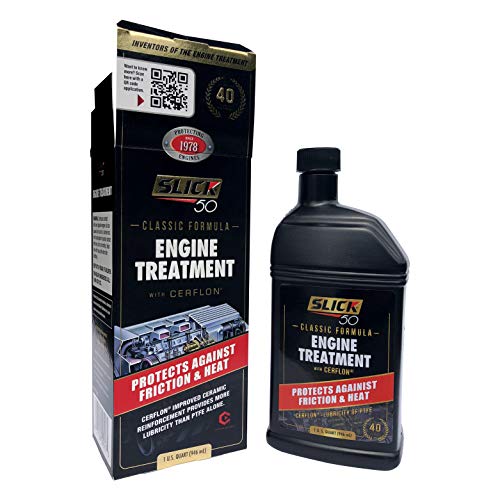
| Best Oil Additive | Oil Type: Engine treatment additive | Viscosity: All oil viscosities compatible | Size: 32 oz | VIEW LATEST PRICE | Read Our Analysis |
| Royal Purple HMX 10W-30 Motor Oil 5 qt |

| Best Premium Pick | Oil Type: High-mileage synthetic motor oil | Viscosity: 10W-30 | Size: 5 qt | VIEW LATEST PRICE | Read Our Analysis |
| Mobil 1 Truck & SUV Full Synthetic Motor Oil 0W-20 5 Quart |

| Best For Trucks | Oil Type: Full synthetic truck/SUV motor oil | Viscosity: 0W-20 | Size: 5 qt | VIEW LATEST PRICE | Read Our Analysis |
| Pennzoil High Mileage 5W-30 Motor Oil 1 Quart |

| Best Budget Pick | Oil Type: Synthetic blend high-mileage motor oil | Viscosity: 5W-30 | Size: 1 qt | VIEW LATEST PRICE | Read Our Analysis |
| Liqui Moly Top Tec 6600 0W-20 Oil |

| Best European Formula | Oil Type: Fully synthetic engine oil | Viscosity: 0W-20 | Size: 5 L | VIEW LATEST PRICE | Read Our Analysis |
More Details on Our Top Picks
Mobil 1 High Mileage Synthetic Motor Oil 6-Pack
Why it stands out:
- Triple Action+ helps protect, clean, and even support power.
- It meets ILSAC GF-6, which helps address LSPI and timing chain wear.
- It protects in brutal extremes, up to 500°F and down to -40°F.
And yes, it also helps fight sludge and deposits, extend engine life, and improve fuel economy. Your engine gets the memo, even should your wallet stay suspicious.
- Oil Type:Full synthetic high-mileage motor oil
- Viscosity:5W-30
- Size:6 x 1 qt
- Engine Focus:High-mileage engines over 75,000 miles
- Change Interval:Up to 20,000 miles
- Key Protection:Deposit/sludge protection, LSPI, timing chain wear
- Additional Feature:Triple Action+ Formula
- Additional Feature:GF-6 LSPI protection
- Additional Feature:Improves fuel economy
Mobil 1 Advanced Full Synthetic Motor Oil 5W-20 6-Pack of 1 quarts
Mobil 1 5W-20 is a daily-driver favorite for high-mileage engines that still need modern protection. You get six 1-quart bottles, which makes top-offs and measured oil changes pleasantly simple.
It helps your engine fight:
- sludge and damaging deposits
- LSPI, a turbo-engine troublemaker
- timing chain wear
You also get protection for up to 10,000 miles between oil changes*, plus heat resistance up to 500°F and cold-flow protection down to -30°F. That wide range matters provided your mornings freeze and your commute cooks. And because it meets ILSAC GF-6, controls oxidation, and supports fuel economy, your engine stays cleaner, smoother, and less drama-prone daily.
- Oil Type:Full synthetic motor oil
- Viscosity:5W-20
- Size:6 x 1 qt
- Engine Focus:General gasoline engines
- Change Interval:Up to 10,000 miles
- Key Protection:Deposit/sludge protection, LSPI, timing chain wear
- Additional Feature:Five-factor engine protection
- Additional Feature:Oxidation control
- Additional Feature:Keeps engine clean
Slick 50 Original Engine Treatment | 32 oz. Single
Slick 50 stands out as a smart oil additive for high-mileage gasoline engines that need extra wear protection. You can use this 32 oz treatment with any oil type or viscosity, so it fits conventional, semi-synthetic, and full synthetic blends without drama.
Its Cerflon® PTFE formula, reinforced with boron nitride, creates a durable ceramic/PTFE barrier that enhances lubricity, fights heat, and helps reduce sludge.
Use it like this:
- Shake well.
- In case your engine holds 5 quarts or less, replace 1 quart with the bottle.
- Should it hold 6 quarts or more, replace 20% of the oil.
- Add yearly or every oil change.
- Oil Type:Engine treatment additive
- Viscosity:All oil viscosities compatible
- Size:32 oz
- Engine Focus:Gasoline engines, new to old
- Change Interval:Every oil change or yearly
- Key Protection:Friction/wear reduction, sludge control
- Additional Feature:Cerflon PTFE technology
- Additional Feature:Boron nitride reinforced
- Additional Feature:Annual treatment use
Royal Purple HMX 10W-30 Motor Oil 5 qt
Royal Purple HMX 10W-30 is a premium pick for older engines that need extra protection. Should your car or light truck has over 75,000 miles, this synthetic formula helps you fight wear, deposits, and oil consumption without overcomplicating maintenance.
You get:
- SAE 10W-30 viscosity for many passenger vehicles
- Zinc and phosphorus anti-wear additives
- Synerlec technology for strong oil film and reduced friction
- Seal conditioners that help reduce leaks and burn-off
For best results:
- Run two 3,000-mile cleanup intervals initially.
- Then extend changes up to 15,000 miles or 12 months, provided your engine is mechanically sound.
Basically, it’s serious help in a 5-quart bottle.
- Oil Type:High-mileage synthetic motor oil
- Viscosity:10W-30
- Size:5 qt
- Engine Focus:High-mileage gas engines over 75,000 miles
- Change Interval:Up to 15,000 miles / 12 months
- Key Protection:Anti-wear, seal revitalization, deposit cleaning
- Additional Feature:Synerlec additive technology
- Additional Feature:Revitalizes hardened seals
- Additional Feature:Zinc/phosphorus anti-wear
Mobil 1 Truck & SUV Full Synthetic Motor Oil 0W-20 5 Quart
For trucks and SUVs, this 0W-20 full synthetic gives you durable protection while towing, hauling, or racking up miles. You get up to 10,000 miles between oil changes, plus strong defense against oxidation, heat, and deposits.
- Mobil 1’s Triple Action Formula helps keep your engine clean.
- Advanced synthetic base oils maintain viscosity under load.
- You get protection up to 500°F and cold-start flow down to -40°F.
That matters when your high-mileage vehicle works hard year-round. And because it’s SAE 0W-20, you get quick circulation at startup without sacrificing protection once everything heats up. Your engine stays cleaner, happier, and less dramatic.
- Oil Type:Full synthetic truck/SUV motor oil
- Viscosity:0W-20
- Size:5 qt
- Engine Focus:Trucks and SUVs
- Change Interval:Up to 10,000 miles
- Key Protection:Oxidation control, deposits, viscosity retention
- Additional Feature:10,000 lb towing-tested
- Additional Feature:Triple Action Formula
- Additional Feature:Oxidation breakdown control
Pennzoil High Mileage 5W-30 Motor Oil 1 Quart
Pennzoil High Mileage 5W-30 is a wallet-friendly smart buy for older engines that need extra help. Should your vehicle has 75,000-plus miles, this synthetic blend helps reduce oil consumption, fights leaks, and protects worn parts without draining your budget.
You also get:
- sludge and deposit control
- wear protection
- LSPI protection for modern turbo engines
It meets API SP-Resource Conserving, ILSAC GF-6A, Chrysler MS-6395, and key Ford specs, so compatibility is broad. Keep your owner’s manual nearby, because boring paperwork still matters. And the limited warranty, up to 10 years or 300,000 miles, adds reassuring long-haul value for daily driving.
- Oil Type:Synthetic blend high-mileage motor oil
- Viscosity:5W-30
- Size:1 qt
- Engine Focus:Worn/high-mileage engines over 75,000 miles
- Change Interval:Not stated
- Key Protection:Sludge protection, wear protection, leak/oil consumption help
- Additional Feature:Synthetic blend formula
- Additional Feature:Helps stop leaks
- Additional Feature:10-year warranty
Liqui Moly Top Tec 6600 0W-20 Oil
Liqui Moly’s European-style Top Tec 6600 0W-20 suits you well provided your high-mileage car calls for BMW Longlife-17 FE+. You get a fully synthetic, low-friction formula that supports cold starts, cleaner internals, and strong oxidation stability.
It also helps with:
- Wear protection for aging engine parts.
- Better efficiency and lower fuel consumption.
- Longer drain intervals, provided your manufacturer allows them.
And because it’s backward compatible with older BMW Longlife standards, you’ve got flexibility. The Longlife-17 FE+ spec also targets LSPI risk, which can prevent nasty knocking. You’ll usually buy one 5-liter bottle, SKU 22046, for vehicle-specific passenger car applications.
- Oil Type:Fully synthetic engine oil
- Viscosity:0W-20
- Size:5 L
- Engine Focus:Passenger car engines
- Change Interval:Extended intervals when permitted
- Key Protection:Wear protection, cleanliness, oxidation stability, LSPI support
- Additional Feature:BMW Longlife-17 FE+
- Additional Feature:Excellent cold-start behavior
- Additional Feature:Reduced fuel consumption
Factors to Consider When Choosing Engine Oil for High Mileage
Whenever I choose engine oil for a high-mileage vehicle, I look at five basics initially: the correct viscosity grade, a high-mileage additive package, your current mileage and drain interval, your engine’s condition, and how the oil performs in hot and cold weather. I want to help you match the oil to what your engine actually needs, because the right formula can support seals, manage wear, and flow properly at startup and at operating temperature. And once I cover these factors, picking the best oil gets a lot less confusing!
Correct Viscosity Grade
Although thicker oil can help an older engine cope with wear, I’d still start with the viscosity grade in your owner’s manual, then adjust only within the limits the manufacturer allows.
Here’s how I’d choose:
- Keep the winter rating, like 0W or 5W, matched to your climate so cold starts stay protected.
- Should wear or oil consumption have increased, I’d consider one step up in hot viscosity, such as 5W-30 to 10W-30, but only once the OEM permits it.
- Check the published operating-temperature viscosity, like SAE 30 versus SAE 40 at 100°C, plus the required API or ILSAC designation.
But thicker isn’t automatically better. It can raise oil pressure and shave a little fuel economy. I’d watch performance, consumption, and the manufacturer’s limits, because engines aren’t mind readers.
High-Mileage Additive Package
Getting the viscosity right sets the foundation, but the additive package is what often makes a high-mileage oil worth buying.
When I read a label, I look for:
- Seal conditioners, often ester-based polymers, because they gently swell tired rubber seals and can cut seepage and oil burn-off.
- Extra detergents and dispersants, which clean up soot and sludge, then keep that debris suspended instead of baking onto parts.
- Anti-wear chemistry, such as zinc, phosphorus, or modern ZDDP alternatives, plus friction modifiers that reduce metal-to-metal contact in engines with looser clearances.
I also like enhanced antioxidants and viscosity improvers, since they help the oil stay stable under heat. And corrosion inhibitors plus anti-foam additives matter more than people reckon, because frothy oil protects about as well as a cappuccino.
Mileage And Drain Interval
Because drain interval is where oil choice meets real-world use, I pay close attention to both the miles on the engine and the miles I expect the oil to cover.
Once an engine passes 75,000 miles, I usually look for high-mileage oil that supports cautious longer intervals. But I don’t presume every older engine can jump straight to 10,000 to 20,000 miles, even with full synthetic.
I use this checklist:
- Start with the owner’s manual.
- Consider shorter clean-up drains, like two 3,000-mile changes, should sludge risk be higher.
- Shorten intervals for towing, heat, short trips, or oil use.
- Use oil analysis to set a personalized interval.
That last step matters most. Lab reports on wear metals, soot, and oxidation beat guesswork every time. Oil isn’t psychic, sadly, despite the marketing.
Engine Condition Needs
While mileage gives me a useful starting point, I choose oil based on the engine’s actual condition, since a clean, tight 120,000-mile engine doesn’t need the same formula as a sludged-up, slightly leaky one at the same odometer reading.
I look at:
- Leaks, oil burn-off, and tired seals. High-mileage oils with seal conditioners can help reduce seepage.
- Sludge and varnish. Should deposits be heavy, I prefer stronger detergents and shorter initial drain intervals to clean gradually.
- Wear and bearing clearance. More wear usually means I want stout anti-wear chemistry, like zinc and phosphorus, plus a slightly stronger oil film.
- Turbo use and heat load. Turbo engines need excellent oxidation resistance and high-temperature protection.
And I still stay within OEM viscosity guidance, adjusting only for the engine’s real-world mechanical condition.
Climate Temperature Performance
Although mileage matters, I also match engine oil to the climate my car lives in, since temperature swings have a huge effect on how fast oil flows at startup and how well it holds its protective film once internal engine temperatures climb toward 500°F.
I focus on a few basics:
- In deep cold, I want 0W or 5W oil, because it pumps fast at -30°F to -40°F and cuts startup wear.
- I check pour point and CCS, or cold-cranking viscosity, so winter mornings don’t turn oil into syrup.
- In heat or heavy hauling, I might step up to a stronger hot-side grade, like 10W-30 instead of 0W-20, provided it’s permitted.
- For big seasonal swings, I choose a grade that balances quick cold flow with oxidation resistance and film strength. Temperamental weather loves drama enough already!
OEM Standards Compliance
Even provided a high-mileage oil looks perfect on the bottle, I still won’t buy it unless it matches the standards my engine calls for, since OEM approvals, API SP, and ILSAC GF-6A or GF-6B tell me the oil meets current requirements for wear control, deposit prevention, emissions-system compatibility, and, in many newer engines, protection against problems like low-speed pre-ignition and timing-chain wear.
I check:
- The owner’s manual for viscosity and factory specs.
- The product data sheet for real approvals, not fluffy claims.
- Whether it supports long-life or FE+ style standards.
And in case I’m considering extended drains or a fuel-economy oil, backward compatibility matters. Marketing talk is cheap; recognized specs prove oxidation control, sludge resistance, and anti-wear protection. Your engine won’t applaud, but it will likely complain less.
Final Thoughts
Assuming I were wrapping this up in one simple rule, I’d say this:
- Match the viscosity your owner’s manual calls for
- Prioritize high-mileage additives like seal conditioners and detergents
- Don’t ignore OEM approvals
For example, provided your 140,000-mile SUV burns a little oil between 5,000-mile changes, a formula like Mobil 1 High Mileage or Pennzoil High Mileage can help manage wear, sludge, and seepage. And yes, that’s cheaper than pretending the leak is “part of its personality.”
