

Pick a synthetic 75W‑90 or 75W‑140 matched to your vehicle spec for towing, high heat, and long service intervals. Lucas Oil 75W‑90 gives heavy‑duty EP protection and resists squeeze‑out. Valvoline SynPower and Advanced 75W‑90 offer strong EP wear control and limited‑slip compatibility. Valvoline FlexFill 75W‑140 speeds filling and handles −50°F to 300°F. STARFIRE 75W‑140 delivers high‑temp stability for heavy loads. Keep going and you’ll get specs, fitment tips, and service guidance.
| Lucas Oil 10048 Synthetic SAE 75W-90 Gear Oil – 1 Gallon |
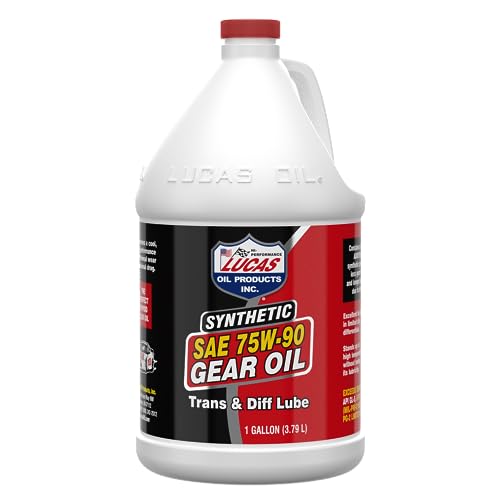
| Best Value | Viscosity Grade: SAE 75W-90 | Formulation Type: Synthetic / blend (synthetic formula) | Primary Application: Vehicle gear/differential applications | VIEW LATEST PRICE | Read Our Analysis |
| STARFIRE 75W-140 Full Synthetic Gear Oil (5 Gal) |
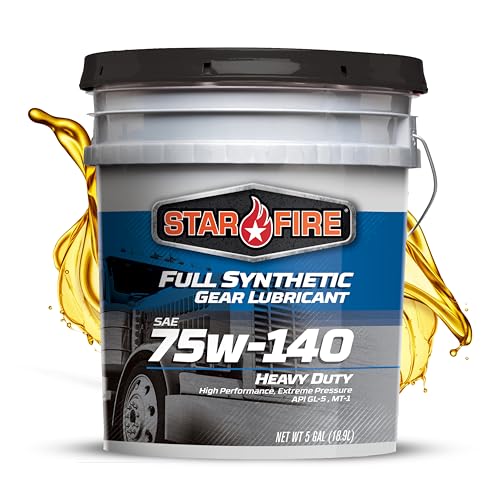
| Heavy-Duty Choice | Viscosity Grade: SAE 75W-140 | Formulation Type: Full synthetic | Primary Application: Heavy-duty differentials, axles, transmissions | VIEW LATEST PRICE | Read Our Analysis |
| Valvoline SynPower SAE 75W-90 Full Synthetic Gear Oil 1 GA |

| Best Overall | Viscosity Grade: SAE 75W-90 | Formulation Type: Full synthetic | Primary Application: Hypoid rear differentials, axles, limited-slip diffs, transmissions | VIEW LATEST PRICE | Read Our Analysis |
| Valvoline FlexFill 75W-140 Full Synthetic Gear Oil |

| Most Convenient | Viscosity Grade: SAE 75W-140 | Formulation Type: Full synthetic | Primary Application: Gear protection (differentials/axles), limited-slip compatibility | VIEW LATEST PRICE | Read Our Analysis |
| Valvoline Advanced Full Synthetic 75W-90 Gear Oil 1 QT |

| Performance Focus | Viscosity Grade: SAE 75W-90 | Formulation Type: Full synthetic | Primary Application: Gear differentials, heavy-duty and towing applications | VIEW LATEST PRICE | Read Our Analysis |
More Details on Our Top Picks
Lucas Oil 10048 Synthetic SAE 75W-90 Gear Oil – 1 Gallon
Choose the Lucas Oil 10048 Synthetic SAE 75W-90 provided you want a heavy-duty, synthetic gear oil that cushions gears under extreme pressure and holds up to high temperatures—ideal for owners who push vehicles hard or need reliable protection for differential and axle applications. You get a 1-gallon (3.8 L) bottle, LUC10048, coming in at 7.35 lb and sized 4x6x6 inches. This 75W-90 blend uses a special additive package to resist squeeze-out and maintain lubricity. It’s rated by many users (4.9/5 from 1,371 reviews), suits vehicle gear applications, and ships with Amazon’s standard return options.
- Viscosity Grade:SAE 75W-90
- Formulation Type:Synthetic / blend (synthetic formula)
- Primary Application:Vehicle gear/differential applications
- Extreme-pressure / Anti-wear Protection:Special additive package cushions gears, resists squeeze-out under extreme pressure
- Limited-Slip Compatibility / Friction Control:Recommended for vehicle gear applications (implied compatible)
- Packaging Size / Unit Volume:1 gallon (128 fl oz / 3.8 L)
- Additional Feature:Long market history
- Additional Feature:High customer rating
- Additional Feature:Cushions gears additive
STARFIRE 75W-140 Full Synthetic Gear Oil (5 Gal)
In case you need heavy-duty protection for fleet differentials or commercial axles, STARFIRE 75W-140 Full Synthetic Gear Oil delivers extreme-pressure, high-temperature stability that keeps hypoid gears from scoring and maintains viscosity under load. You’ll get a 5-gallon pail (38.1 lb, 640 fl oz) of SAE 75W-140 full synthetic lubricant that resists foaming, supports smooth quiet operation, and preserves power transfer up to 300°F. It includes anti-wear, oxidation, rust, and corrosion inhibitors, and’s compatible with GL-5, MT-1, MIL-PRF-2105D/E, Mack GO-J/GO-H, Volvo i-Shift, and PG-2 limited-slip applications. Amazon-rated 4.7/5.
- Viscosity Grade:SAE 75W-140
- Formulation Type:Full synthetic
- Primary Application:Heavy-duty differentials, axles, transmissions
- Extreme-pressure / Anti-wear Protection:Extreme-pressure, high-temperature stability; enhanced anti-wear agents
- Limited-Slip Compatibility / Friction Control:Recommended for limited-slip differentials (PG-2)
- Packaging Size / Unit Volume:5 gallon pail (640 fl oz)
- Additional Feature:5-gallon pail supply
- Additional Feature:MIL-PRF compatible
- Additional Feature:Volvo i-Shift compatible
Valvoline SynPower SAE 75W-90 Full Synthetic Gear Oil 1 GA
Should you tow heavy loads or push your drivetrain in off-road or high‑torque conditions, Valvoline SynPower SAE 75W‑90 delivers the extreme‑pressure and wear protection you need with a full‑synthetic formula and limited‑slip additive. You get a one‑gallon, 128‑fl‑oz pack (item 882505‑EA) formulated for hypoid diffs, conventional axles, limited‑slip units, and non‑synchronized manuals. It offers 1.5x better EP and wear protection versus Valvoline’s Daily Protection and 30% better towing protection per ASTM D‑7452, plus anti‑foaming, thermal stability, rust protection, and cleaner operation. With a 4.8‑star rating and #1 gear oil rank, it’s reliable for severe service.
- Viscosity Grade:SAE 75W-90
- Formulation Type:Full synthetic
- Primary Application:Hypoid rear differentials, axles, limited-slip diffs, transmissions
- Extreme-pressure / Anti-wear Protection:Strong extreme-pressure protection; improved gear wear protection
- Limited-Slip Compatibility / Friction Control:Contains limited-slip additive; suitable for limited-slip differentials
- Packaging Size / Unit Volume:1 gallon (128 fl oz)
- Additional Feature:#1 in Gear Oils
- Additional Feature:Large review count
- Additional Feature:Improved towing protection
Valvoline FlexFill 75W-140 Full Synthetic Gear Oil
Should you tow heavy loads or work in extreme temperatures, the Valvoline FlexFill 75W-140 is built for you: its squeezable 1‑quart pouch cuts filling time and effort while the full synthetic formula keeps gears fluid from −50°F to 300°F and delivers superior wear, rust, and oxidation protection. You’ll squeeze twice the fluid with less effort and fill three times faster than bottles. The oil reduces noise and chattering, includes limited‑slip compatibility, and gives 1.5× better gear‑wear protection plus 30% more defense under heavy loads. It meets GL‑5 and major OEM specs, is American made, and needs no supplemental friction modifier.
- Viscosity Grade:SAE 75W-140
- Formulation Type:Full synthetic
- Primary Application:Gear protection (differentials/axles), limited-slip compatibility
- Extreme-pressure / Anti-wear Protection:Protects gear teeth from premature wear; 1.5× better gear-wear protection
- Limited-Slip Compatibility / Friction Control:Contains limited-slip friction modifier; reduces chattering
- Packaging Size / Unit Volume:1 quart pouch
- Additional Feature:Squeezable FlexFill pouch
- Additional Feature:3X faster filling
- Additional Feature:-50°F cold flow
Valvoline Advanced Full Synthetic 75W-90 Gear Oil 1 QT
Choose Valvoline Advanced Full Synthetic 75W-90 in case you need heavy-duty gear protection for towing, extreme temperatures, and long service intervals. You’ll get an American-made, full-synthetic formula trusted over a brand with 150+ years’ heritage. It meets SAE J2380 and API GL-5, plus MACK GO-J, Meritor 0-94 Rev A, GMW 16445, and factory specs without extra friction modifiers. Additives deliver 1.5× better wear and extreme-pressure protection, corrosion inhibitors, and resistance to oxidation and thermal breakdown. Rated -50°F to 300°F, it boosts towing/load protection by 30% and offers limited-slip clutch-pack performance while reducing noise and chattering.
- Viscosity Grade:SAE 75W-90
- Formulation Type:Full synthetic
- Primary Application:Gear differentials, heavy-duty and towing applications
- Extreme-pressure / Anti-wear Protection:1.5× better gear wear protection; 1.5× stronger extreme-pressure protection
- Limited-Slip Compatibility / Friction Control:Contains limited-slip friction characteristics; reduces noise/chattering
- Packaging Size / Unit Volume:1 quart bottle
- Additional Feature:MACK GO-J approved
- Additional Feature:No friction modifier needed
- Additional Feature:American made
Factors to Consider When Choosing Gear Oils
At the time choosing gear oil, you’ll want to match the right viscosity grade to your gearbox and consider how additives affect wear protection and corrosion resistance. Check the oil’s load and temperature limits and confirm it’s compatible with your seals to avoid leaks or breakdown. Finally, plan service intervals based on operating conditions and the oil’s expected life so you don’t risk premature failure.
Viscosity Grade Selection
Curious which viscosity grade will protect your gears best? You should use the SAE grade your vehicle manufacturer specifies — that tells you the cold‑start (W) and hot‑temperature film strength required. The lower “W” number (for example, 75W) improves cold pumpability and makes shifting easier in cold climates. The second number (90, 140) defines hot running viscosity and load‑carrying ability; pick a higher number for heavier loads, towing, or high operating temperatures so the film stays thick and resists shear thinning. Multi‑grade oils (like 75W‑90) give cold‑start fluidity and hot protection in one product, but always confirm compatibility with seals and limited‑slip units before changing grades to avoid leaks or clutch chatter.
Additive Chemistry Importance
Consider about the additives in a gear oil as the unseen team that keeps gears from failing under stress: EP and anti‑wear chemistries form sacrificial films, friction modifiers tune limited‑slip behavior, and corrosion inhibitors, viscosity improvers, anti‑foam agents and antioxidants preserve performance over time. You should prioritize EP and ZDDP‑type anti‑wear agents whenever gears face high sliding loads and torque; they reduce scuffing, micropitting and metal‑to‑metal wear. For limited‑slip differentials, pick friction modifiers matched to the clutch design to avoid chatter or weak torque transfer. In humid or wet environments, make certain strong corrosion inhibitors and rust preventives. Finally, confirm the package includes viscosity improvers, anti‑foam and oxidation inhibitors so film strength, air entrainment resistance and thermal stability endure through service intervals.
Load And Temperature Limits
Because gearbox life hinges on maintaining a protective lubricant film under real-world stresses, match oil viscosity and thermal limits to your operating temperatures and loads: pick a viscosity grade that provides sufficient film thickness at running temperature without causing excess drag, confirm the oil’s high‑temperature stability and oxidation resistance so it won’t thin or coke under peak heat, and make certain the EP/anti‑wear package and shear stability suit hypoid gears, heavy continuous loads, or shock and towing duty—while also checking cold‑flow (W rating) so startups don’t starve bearings or syncros. Then, choose an oil whose viscosity grade aligns with your gearbox design (75W–90 vs 75W–140), verify published max service temp and shear stability, and match EP additives to torque and duty cycle.
Compatibility With Seals
Guarding seals against premature failure means matching gear oil chemistry and viscosity to the elastomer materials in your gearbox. Check whether additives or friction modifiers in a candidate oil swell, harden, or degrade common seal compounds like nitrile, Viton, or rubber. API GL-5 and many synthetics use sulfur-phosphorus EP agents that can attack seal polymers and yellow metals, raising leak risk provided seals aren’t compatible. Consider viscosity: low-viscosity synthetics can penetrate aged, hardened seals and speed shrinkage; very high-viscosity oils can increase internal pressure and stress seals. Temperature behavior matters too—oils that stay fluid in cold starts reduce contraction, while thermally stable oils avoid oxidation products that embrittle seals. Always consult OEM specs, supplier charts, or run swelling/hardness/tensile compatibility tests before switching oils.
Service Interval Planning
At the moment you plan service intervals for gear oils, start with the manufacturer’s recommended schedule and treat it as your baseline, then tighten or extend that interval based on real-world use and condition monitoring. Check miles, hours, or years and log them to build an accurate history. Should you tow, haul heavy loads, run high temps, or go off-road, shorten intervals. Inspect oil visually for contamination, metal particles, or foaming and send samples for lab analysis (viscosity, TAN/TBN, wear metals) to decide whether to extend or shorten service life. Whenever you switch viscosity grades or synthetic vs. conventional fluids, follow up after the initial 1,000–2,000 miles or 50–100 hours. Include differential and transmission checks with major services.
