

High-temp brake fluid is one of the best upgrades for a fast street or track car. The top 2026 picks offer strong dry and wet boiling points, solid pedal feel, and the right DOT fit for your setup.
This list covers proven options like Motul RBF 660, Castrol SRF, and a few budget-friendly choices. It also touches on caliper grease, since good brake service starts with more than fluid alone.
| Motul RBF 660 Racing Brake Fluid (101667) |

| Track-Day Favorite | Product Type: DOT 4 racing brake fluid | Application: Brake and clutch systems | Temperature Performance: Flash point 204°C | VIEW LATEST PRICE | Read Our Analysis |
| Motul RBF 660 DOT-4 Racing Brake Fluid 500ml |
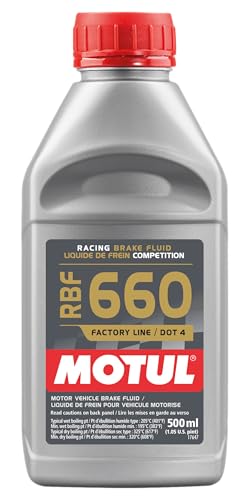
| Performance Pick | Product Type: DOT-4 racing brake fluid | Application: High-performance vehicles and motorcycles | Temperature Performance: Resists boiling and vapor lock | VIEW LATEST PRICE | Read Our Analysis |
| Pyroil DOT 4 Synthetic Brake Fluid (Pack of 6) |

| Budget-Friendly Pick | Product Type: DOT 4 synthetic brake fluid | Application: ABS, disc, or drum brakes | Temperature Performance: 311°F to 446°F | VIEW LATEST PRICE | Read Our Analysis |
| Castrol SRF Racing Brake Fluid – 1 Liter 12512 |

| Professional Grade | Product Type: Racing brake fluid | Application: High-performance braking systems | Temperature Performance: Wet boiling point 270°C | VIEW LATEST PRICE | Read Our Analysis |
| Keze Ceramic Brake Caliper Grease Lubricant (8 oz) |

| Brake Service Essential | Product Type: Ceramic brake caliper grease | Application: Calipers, pins, pads, shims | Temperature Performance: Up to 3000°F | VIEW LATEST PRICE | Read Our Analysis |
More Details on Our Top Picks
Motul RBF 660 Racing Brake Fluid (101667)
In case you want a track-day favorite, Motul RBF 660 is built for heat. You get a DOT 4, 100% synthetic Factory Line fluid in a 500 ml bottle, sized nicely for a flush or top-off.
Why it stands out:
- Extreme thermal resistance and stability
- 204 C flash point
- Works with hydraulic brake and clutch systems
You can use it in:
- Cars
- Trucks
- Motorcycles
- ATVs
It’s a universal-fit option, part number 101667, model MTL101667. And should your brake fluid sees serious punishment, this one helps keep pedal feel more consistent. Basically, it hates heat more than you do.
- Product Type:DOT 4 racing brake fluid
- Application:Brake and clutch systems
- Temperature Performance:Flash point 204°C
- Formulation:100% synthetic
- Package Size:500 ml
- Key Benefit:Extreme thermal resistance
- Additional Feature:DOT 4 rated
- Additional Feature:Universal vehicle fit
- Additional Feature:Hydraulic clutch compatible
Motul RBF 660 DOT-4 Racing Brake Fluid 500ml
Motul RBF 660 is a performance pick for drivers who push brakes hard and need steadfast pedal feel. You get strong thermal resistance, so the fluid resists boiling, prevents vapor lock, and keeps response consistent whenever heat spikes.
Why it stands out:
- It repels moisture, helping preserve fluid integrity and reduce corrosion.
- Its 100% synthetic formula supports durable function and less heat and moisture wear.
- You’ll feel sharper pedal response and better control in street, track day, or competition use.
If you drive a high-performance car or motorcycle, this 500ml bottle gives you dependable braking whenever conditions get serious. Your brake system will thank you.
- Product Type:DOT-4 racing brake fluid
- Application:High-performance vehicles and motorcycles
- Temperature Performance:Resists boiling and vapor lock
- Formulation:100% synthetic
- Package Size:500 ml
- Key Benefit:Consistent braking response
- Additional Feature:Vapor lock prevention
- Additional Feature:Moisture repelling formula
- Additional Feature:Responsive pedal feel
Pyroil DOT 4 Synthetic Brake Fluid (Pack of 6)
Pyroil DOT 4 is a budget-friendly pick for drivers who need solid heat resistance without overspending. You get a synthetic DOT 4 formula that works with ABS, disc, and drum systems, and you can use it anywhere DOT 3 or DOT 4 fluid is specified.
- Temperature range: 311°F to 446°F
- Bottle size: 32 fl oz
- Part number: PYBF4-32
That makes it a practical choice for trucks and daily drivers where corrosion protection matters. The plastic bottle keeps things simple, and the included instruction guide helps should you be doing a fluid change. You also get a 1-year manufacturer warranty, plus a 30-day return window.
- Product Type:DOT 4 synthetic brake fluid
- Application:ABS, disc, or drum brakes
- Temperature Performance:311°F to 446°F
- Formulation:Synthetic high-temp formula
- Package Size:32 fl oz
- Key Benefit:Corrosion prevention
- Additional Feature:ABS system compatible
- Additional Feature:Disc/drum brake support
- Additional Feature:Includes instruction guide
Castrol SRF Racing Brake Fluid – 1 Liter 12512
Choose Castrol SRF, a professional grade pick for racing and rally driving where brake heat can overwhelm ordinary fluid.
You get:
- 1 liter of Castrol SRF Racing Brake Fluid
- Part number 12512
- An exclusive European formula
What matters most is heat control. This fluid delivers an exceptionally high boiling point and strong anti-vapor lock protection, which helps keep your pedal firm when extreme temperatures build fast. Its typical 270°C wet boiling point is especially impressive, because moisture usually drags performance down like an unwanted passenger. Should your high-performance braking system sees serious thermal stress, this fluid gives you the margin and consistency you want lap after lap.
- Product Type:Racing brake fluid
- Application:High-performance braking systems
- Temperature Performance:Wet boiling point 270°C
- Formulation:Exclusive European formula
- Package Size:1 liter
- Key Benefit:Anti-vapor lock protection
- Additional Feature:270°C wet boiling
- Additional Feature:Anti-vapor lock protection
- Additional Feature:European-exclusive formula
Keze Ceramic Brake Caliper Grease Lubricant (8 oz)
Should you do your own brake jobs, this brake service essential stands out with a 3000°F ceramic formula.
You get an 8 oz brush-top can, plus a thick purple grease that shows exactly where you’ve applied it, which is oddly satisfying. Its synthetic MCA and ceramic powder formula clings to:
- slide pins
- calipers
- bolts
- sleeves
- shims
- pads
And that matters, because it cuts friction, prevents seizing, and helps kill squeal before your brakes start singing. It also shields metal from rust, dirt, and moisture. For DIY work, that’s gold. Use a thin coat, keep friction surfaces clean, and enjoy smoother, quieter braking. Customer support’s available too.
- Product Type:Ceramic brake caliper grease
- Application:Calipers, pins, pads, shims
- Temperature Performance:Up to 3000°F
- Formulation:Synthetic MCA with ceramic
- Package Size:8 oz
- Key Benefit:Reduces friction and squeal
- Additional Feature:Brush-top can
- Additional Feature:Purple visible formula
- Additional Feature:3000°F melt resistance
Factors to Consider When Choosing Hi Temp Brake Fluid
Whenever I choose hi temp brake fluid, I look initially at the numbers that matter most to you: dry boiling point for fresh fluid, wet boiling point for fluid that’s absorbed moisture, and DOT compatibility so it actually works with your brake system. And I also match the fluid to your vehicle use case, because a daily commuter, a tow rig, and a track-focused car don’t punish brakes the same way, not even close. Moisture resistance matters too, since brake fluid loves soaking up water like it’s got a hobby, and that directly affects pedal feel, heat tolerance, and long-term performance.
Dry Boiling Point
One spec matters a lot here: dry boiling point, which is simply the temperature at which brand-new, moisture-free brake fluid starts to vaporize, and the higher that number is, the more headroom I get before vapor lock turns a firm pedal into an alarming sponge during hard braking.
When I compare fluids, I look for published numbers initially:
- DOT 3 is usually lower.
- DOT 4 and DOT 5.1 often land around 230 to 270°C, or 446 to 518°F.
- Racing formulas can go well beyond typical OEM specs.
That extra margin matters most provided you drive hard, tow, descend long grades, or rack up repeated high-energy stops. I also match that spec to my service interval, because dry values describe fresh fluid only. Great on paper is nice, but braking confidence under heat is nicer.
Wet Boiling Point
Real-world safety shows up in the wet boiling point, which tells me how hot brake fluid can get after it has absorbed moisture, typically around 3.7% per mass under common standards, before it starts to vaporize and invite vapor lock into the pedal feel.
Because brake fluid is hygroscopic, I pay closer attention to wet boiling point than dry numbers. It mirrors everyday conditions better. Higher values in °C or °F give me more buffer during repeated hard stops, mountain descents, or track sessions.
I’d look for:
- A rating above my brake system’s expected temperatures
- Compliance with minimum thresholds set through regulations
- Clear service interval guidance
And I never forget maintenance. As moisture builds, wet boiling point drops, and braking confidence can disappear faster than free pizza in a paddock. Check fluid regularly, and replace it on schedule.
DOT Compatibility
Although high-temperature numbers grab my attention initially, DOT compatibility is what keeps a brake fluid choice smart, safe, and actually suitable for the car in front of me.
I always check the service manual firstly, then match or exceed the required DOT spec and boiling-point standard. Quick breakdown:
- DOT 3 and DOT 4 are glycol-based, and I can mix them when necessary.
- DOT 5 is silicone-based, not glycol-based, and it should never mix with DOT 3 or DOT 4. Really, never.
- DOT 5.1 is glycol-based too, with higher boiling performance, and it works in systems calling for DOT 3, DOT 4, or DOT 5.1.
And compatibility isn’t just paperwork. Seals, valves, ABS, and ESC hardware are designed around specific fluid chemistry, so the wrong type can create expensive drama fast.
Vehicle Use Case
Once I’ve confirmed DOT compatibility, I narrow the field through how the vehicle actually gets used, because a brake fluid that’s perfect for a commuter can fold under repeated high-heat stops on track, while an ultra-aggressive racing fluid can be overkill for daily driving and ask for more frequent maintenance than most people want.
I match fluid to workload:
- Track days, racing, towing, and long downhill grades need very high boiling points, typically above 250°C dry and 180°C wet, plus strong thermal stability for repeat stops.
- Daily street driving with occasional fun runs usually fits a quality DOT 4 with solid heat performance.
- Motorcycles and ATVs can be picky, so I verify OEM compatibility and the right viscosity for brake and clutch hydraulics.
Choose for your real use, not your fantasy resume.
Moisture Resistance
Longevity matters here, because brake fluid doesn’t just sit quietly in the system, it absorbs moisture from the air over time, and that water contamination drags the boiling point down, softens pedal feel, and raises the odds of vapor lock once the brakes get seriously hot.
When I compare fluids, I focus on:
- Wet boiling point, because it shows how well a fluid holds up after moisture gets in.
- Corrosion protection, since extra water can attack lines, calipers, and the primary cylinder from the inside out.
I also like formulations that better manage hygroscopic absorption, because they slow the boiling-point drop and stretch service life a bit. But no fluid is magic. I’d still change it at the maker’s interval, or sooner for track days, because brake systems aren’t aquariums and water always finds a way.
Pedal Feel Stability
Provided that I care about how the brake pedal feels lap after lap or coming down a long grade, I look hard at pedal feel stability, because a fluid that resists heat, moisture, and compression keeps the pedal firm instead of letting it go long and mushy as things get spicy.
I focus on:
- Higher dry and wet boiling points, which cut vapor bubbles under repeated heavy braking.
- Low hygroscopicity, so absorbed moisture doesn’t drag boiling points down and soften the pedal.
- Proper low-temperature viscosity, which keeps cold-start response crisp instead of syrupy.
And I also want stable compressibility with minimal aeration under pressure. That means predictable pedal travel, not a weird half-squish halfway through a corner. Chemical and thermal stability matter too, since breakdown hurts firmness fast. In short, consistent fluid equals consistent confidence.
Fluid Change Interval
Even in the event that a high-temp brake fluid posts impressive boiling numbers on the label, I still care just as much about how often I’ll need to change it, because glycol-based DOT fluids slowly absorb moisture from the air and that water drags wet boiling performance down over time.
I’d plan around these intervals:
- Every 1 to 2 years for normal driving.
- Every 3 to 6 months in case you see repeated hard braking.
I also like checking moisture with strips or an electronic hygrometer. Once water content climbs past about 2%, I’d flush it. And yes, flush the whole system, not simply top off the reservoir, because old fluid contaminates the new stuff fast. Afterward, I’d bleed thoroughly, confirm a firm pedal, and recheck condition sooner after any especially demanding use.
Track Vs Street
Change intervals matter, but I’d still pick brake fluid differently for a street car than for something that sees regular track laps, because the heat load isn’t remotely the same.
For track duty, I want:
- Dry boiling points above 260°C
- Wet boiling points above 170°C
- Synthetic formulas that keep viscosity stable and the pedal firm through repeated thermal cycling
Why? Heavy braking can boil weak fluid, create vapor, and give me a long, mushy pedal right just as I need consistency most. And track cars absorb moisture faster, so wet boiling point matters a lot.
For street driving, I’m usually fine with a quality DOT 3 or DOT 4 fluid that protects against corrosion and plays nicely with ABS. Service matters too:
- Track car: inspect or replace after events
- Street car: follow longer intervals
Frequently Asked Questions
Can Hi Temp Brake Fluid Damage Painted Surfaces During Spills?
Yes, I’d tell you hi-temp brake fluid can damage painted surfaces during spills. I recommend wiping it off immediately, rinsing with water, and avoiding rubbing, because even brief contact can soften, stain, or strip paint.
How Often Should Unopened Brake Fluid Be Replaced on the Shelf?
I replace unopened brake fluid on the shelf every two to five years, depending on manufacturer guidance. Since brake fluid can absorb moisture once compromised, I tell you to check dates, seals, and storage conditions carefully.
Is Brake Fluid Disposal Regulated in Most States?
Yes, I’d tell you most states do regulate brake fluid disposal because it’s usually treated as hazardous or automotive waste. I recommend you never dump it; use local collection sites, shops, or municipal programs.
Can Altitude Changes Affect Brake Fluid Performance or Pedal Feel?
Yes, I’ve seen altitude changes slightly affect pedal feel because lower air pressure can encourage dissolved gases or moisture to expand. I’d still expect good fluid and a sealed system to minimize noticeable performance changes.
What Safety Gear Is Recommended When Changing Brake Fluid?
Like a knight facing dragon’s blood, I wear nitrile gloves, safety goggles, and old clothes. I’d also keep shop towels, closed-toe shoes, and a catch pan handy, because brake fluid burns skin and damages paint.
