

A good indoor bike rack keeps your bike off the floor and frees up space fast.
Wall mounts work well for lightweight bikes and tight rooms. Floor racks are easier to use and need no drilling. Ceiling hoists suit garages with extra height. The best choice depends on your bike’s weight, your wall type, and how often you ride.
| monTEK Swivel Bike Wall Mount 77 lbs Capacity |

| Best Wall Mount | Mount Type: Wall mount | Bike Capacity: 1 bike | Space Saving: Swivels flat | VIEW LATEST PRICE | Read Our Analysis |
| CHEPARK Indoor Bike Floor Stand Rack for 1 Bike |

| Best Freestanding Stand | Mount Type: Floor mount | Bike Capacity: 1 bike | Space Saving: Small footprint | VIEW LATEST PRICE | Read Our Analysis |
| TORACK 6 Bike Wall Mount Storage Rack |
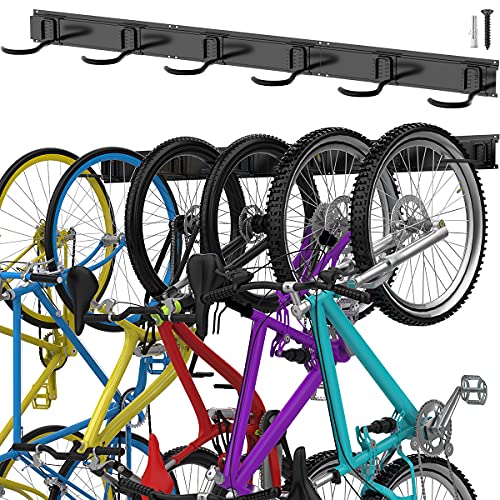
| Best 6-Bike Rack | Mount Type: Wall mount | Bike Capacity: 6 bikes | Space Saving: Vertical storage | VIEW LATEST PRICE | Read Our Analysis |
| HORUSDY 6-Bike Wall Mount Storage Rack with Helmet Hooks |
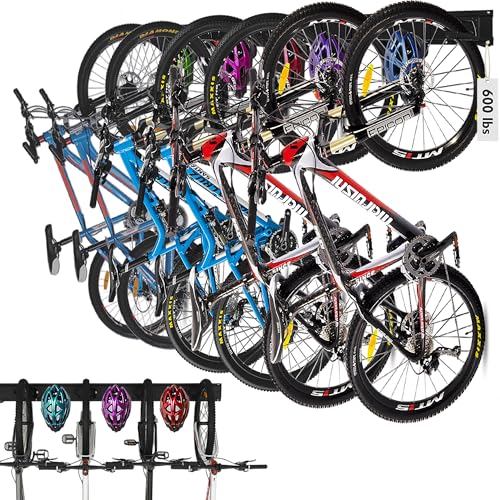
| Best Heavy-Duty Rack | Mount Type: Wall mount | Bike Capacity: 6 bikes | Space Saving: Rail organizer | VIEW LATEST PRICE | Read Our Analysis |
| RAD Cycle Aluminum Bike Stand for Two Bicycles |
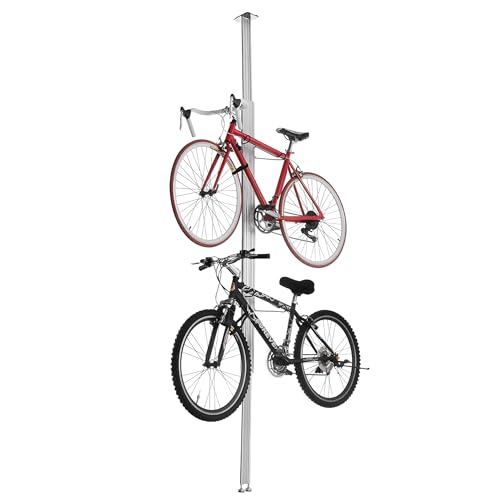
| Best Ceiling-Mount | Mount Type: Ceiling mount | Bike Capacity: 2 bikes | Space Saving: Overhead storage | VIEW LATEST PRICE | Read Our Analysis |
More Details on Our Top Picks
monTEK Swivel Bike Wall Mount 77 lbs Capacity
Should you need the best wall mount-style storage for heavier bikes, monTEK fits the bill. You can store road, MTB, hybrid, e-bikes, BMX, and more, as long as you don’t use fenders. It fits 16″ to 29″ wheels and tires up to 3.54″ wide, with four length settings for a custom fit. You won’t need to deadlift the bike; just balance it on the rear wheel and roll it in. The 120-degree swivel frees floor space, and it folds flat. Steel construction supports 77 lbs. Install it on wood studs or masonry walls only.
- Mount Type:Wall mount
- Bike Capacity:1 bike
- Space Saving:Swivels flat
- Bike Compatibility:16-29 in wheels
- Material:Steel
- Assembly:Hardware included
- Additional Feature:120-degree swivel
- Additional Feature:Rear-wheel roll-in
- Additional Feature:Folds flat
CHEPARK Indoor Bike Floor Stand Rack for 1 Bike
CHEPARK’s freestanding floor stand is a smart pick should you want easy, no-lift indoor bike storage. You roll your bike onto the tray, and the rack holds it upright without touching the rim or spokes. It fits 20″ to 29″ wheels and tires up to 2.4 inches, so you can store most mountain, road, cyclocross, and hybrid bikes. Fully adjustable sliders and three-point support keep things steady, while four rubber feet help on polished floors. Its compact metal frame saves space in garages, apartments, basements, and sheds.
- Mount Type:Floor mount
- Bike Capacity:1 bike
- Space Saving:Small footprint
- Bike Compatibility:20-29 in wheels
- Material:Metal
- Assembly:No assembly
- Additional Feature:Freestanding floor stand
- Additional Feature:Three-point wheel support
- Additional Feature:Rubberized feet
TORACK 6 Bike Wall Mount Storage Rack
TORACK’s 6-bike wall mount works especially well provided you require serious vertical storage. You get three interlocking 16-inch steel rails, six rubber-coated snap hooks, and all mounting hardware, so you can organize bikes on one wall instead of across your floor. The wide hooks fit tires up to 4.4 inches, including fat bikes, mountain bikes, hybrids, and kids’ bikes. It supports up to 400 pounds, uses a powder-coated anti-rust finish, and installs on 16-inch studs with a drill and level. It’s a smart indoor garage solution.
- Mount Type:Wall mount
- Bike Capacity:6 bikes
- Space Saving:Vertical storage
- Bike Compatibility:Up to 4.4 in tires
- Material:Heavy-gauge steel
- Assembly:Required
- Additional Feature:400 lbs loading
- Additional Feature:GS certified
- Additional Feature:4.4-inch fat-tire hooks
HORUSDY 6-Bike Wall Mount Storage Rack with Helmet Hooks
Should you need a heavy-duty rack for multiple bikes, HORUSDY’s wall mount system stands out. You get a professional storage setup with 4 tracks and 12 movable hooks, so you can arrange bikes however you like. The special hooks hold up to 6 bikes and 6 helmets, while the 64-inch rail can also split into four 16-inch sections. It fits road, folding, mountain, adult, kids, and hybrid bikes. With its steel frame supporting 600 lbs and rubber-coated sleeves, it protects your gear and keeps your garage tidy.
- Mount Type:Wall mount
- Bike Capacity:6 bikes
- Space Saving:Rail organizer
- Bike Compatibility:Road to kids bikes
- Material:Steel
- Assembly:Required
- Additional Feature:600 lbs capacity
- Additional Feature:Helmet hooks included
- Additional Feature:64-inch guide rail
RAD Cycle Aluminum Bike Stand for Two Bicycles
The RAD Cycle Aluminum Bike Stand suits you provided that you need a ceiling-mounted rack with room for two bikes. It secures to ceilings 7 to 11 feet high and adjusts as required, so you can fit different spaces. The aluminum top plate supports the load and helps protect your ceiling, while vinyl-coated arms cradle your bikes and help prevent paint damage. Tipping the scales at 13 pounds assembled, it still holds up to 200 pounds. Its 7-11L x 14.5W x 9.5D size makes it a practical storage or display choice whenever you want to reclaim floor space.
- Mount Type:Ceiling mount
- Bike Capacity:2 bikes
- Space Saving:Overhead storage
- Bike Compatibility:Two-bike support
- Material:Aluminum
- Assembly:Required
- Additional Feature:Ceiling-mounted design
- Additional Feature:7-11 foot ceilings
- Additional Feature:Vinyl-coated arms
Factors to Consider When Choosing an Indoor Bike Rack
Once you choose an indoor bike rack, start initially checking how much storage space you’ve got and whether the rack fits your bike’s size and style. You’ll also want to compare mount type, weight capacity, and how easy it is to install. The right pick keeps your bike secure without crowding your home.
Storage Space
Before you buy an indoor bike rack, measure your available floor and wall space—width, depth, and height—so your bike’s wheelbase and handlebar width fit without blocking walkways. Should you be short on space, choose a vertical or wall-mounted rack that folds flat or swivels away once you’re done riding. Check storage depth too, since tire width and add-ons like fenders, racks, or baskets can create extra clearance needs. In case you’re storing more than one bike, leave enough room between mounts so you can remove each bike easily; rails usually need 6–12 inches, while hanging hooks need 12–18 inches. For ceiling-mounted options, make sure your room gives you at least 7–8 feet of clearance for safe access and installation.
Bike Compatibility
Once you’ve confirmed the rack will fit your floor or wall space, make sure it also fits your bike. Check wheel diameter and tire width initially; many racks work with 16″–29″ wheels and tires up to about 3.5″ for plus or fat bikes. Next, confirm the rack can handle your bike’s type and weight, especially in case you ride a heavier e-bike. Match the rack’s contact points to your bike: wheel trays, fork or frame hooks, or hoists should support it without stressing the rim or frame. Measure wheelbase, handlebar width, and total height so the bike sits securely and doesn’t block doors or other bikes. In the event you’ve got fenders, suspension forks, or unusual geometry, verify the rack includes the right clearance or adapters.
Mount Type
Mount type shapes how easily your rack fits into daily life, so choose one that matches your space and how often you’ll grab the bike. Wall-mounted racks free up floor space, but you’ll need solid studs or masonry for a secure install. Floor stands skip drilling, so they’re great provided you rent or want to protect polished floors; just make sure the base stays stable and the tray fits your tire size. Ceiling mounts work well whenever you’ve got enough headroom and strong joists, since they move the bike overhead. Should your hallway feel cramped, a swivel rack can rotate 90 to 120 degrees for easier access. Rail systems let you reposition hooks, but they need a continuous stud line or reinforced surface.
Weight Capacity
After you’ve picked the mount style, make sure the rack can actually handle your bike’s weight. Check the stated capacity against your heaviest bike, then add at least a 20% safety margin. Should you ride an e-bike, bear in mind that battery-equipped models can weigh 40 to 70+ pounds. Also verify whether the rating applies to each hook or slot, or to the whole unit, since a multi-bike rail could split the load. For ceiling or overhead racks, confirm the rack rating and the joist or ceiling strength. Look for capacity that covers more than static weight in case you’ll move bikes often. Designs with multiple contact points spread load better and reduce stress on heavier frames.
Installation Ease
Installation ease can make or break a rack you’ll use every day, so check what the setup actually demands before you buy. You’ll want to know whether the rack needs wall studs, concrete anchors, or ceiling joists, since heavier loads usually call for solid mounting. Review the box for included hardware and tools, because you shouldn’t need extra trips for a drill, level, anchors, or screws. Consider how much lifting you can handle: floor stands and wheel-tray styles let you roll the bike in, while wall and ceiling mounts might require you to hoist it. Adjustable hooks, arms, and swivel features can also help you line things up faster. Finally, measure clearance and folding space so you don’t keep reinstalling it.
Protection Features
Protection matters just as much as strength, so check how the rack touches your bike before you buy. You should look for rubber- or vinyl-coated contact points, because they help prevent paint scratches and cut down on slipping whenever you hang or lean a bike. Make sure wheel trays or cradles fit your tire width, especially in case you ride fat or wide tires, since the wrong size can create pressure points and deform rubber. Padded hooks, arms, and rounded edges also protect frame finish and carbon tubing through spreading stress more evenly. Check load ratings for each hook or rail, not just the total rack capacity. Leave a few inches from the wall for airflow, so moisture doesn’t collect and damage metal or painted parts.
Adjustability Options
Once you’ve checked that a rack protects your bike’s finish, look at how easily it adjusts to your space and bike sizes. Choose adjustable length or rail segments so you can match wall studs or ceiling height; overhead systems often cover 7–11 feet. Look for wheel trays and sliders with multiple positions, because they’ll fit wheel diameters from 16″ to 29″ and tires up to about 3–4″ wide. Height-adjustable hooks, arms, or swivels give you clearance for different frame shapes, and they can fold bikes flat or pivot them about 120° to open floor space. Check load ratings for each arm or hook, too. Rubber-coated, telescoping, or pivoting mounts with incremental settings help prevent slipping and keep adjustments secure.
Wrap Up
To save floor space, you should pick an indoor bike rack that fits your bike, your walls, and your daily routine. A swivel wall mount, like the monTEK, can keep things compact and easy to access, while multi-bike racks work better for shared spaces. Choose sturdy steel, protective coatings, and proper weight ratings, especially for e-bikes. With the right rack, your garage or room’ll stay organized like a tidy toolbox.
