

You can fix MPG fast through swapping in the right O2 sensors for your Toyota. Start with Denso 234-4260 for many Toyota and Lexus models, since its zirconia core reacts quickly and its PTFE filter fights grime. For a 2006 to 2008 RAV4 2.4L, BDFHYK’s 2-pack covers upstream and downstream. Newer Camry, RAV4, and ES300H owners can use 234-9307 and 234-9304. Corolla 1.8L drivers should match the correct downstream unit, and you’ll want a 22mm offset socket too, so the next steps feel easier.
| Denso Oxygen Sensor 234-4260 for Toyota/Lexus |
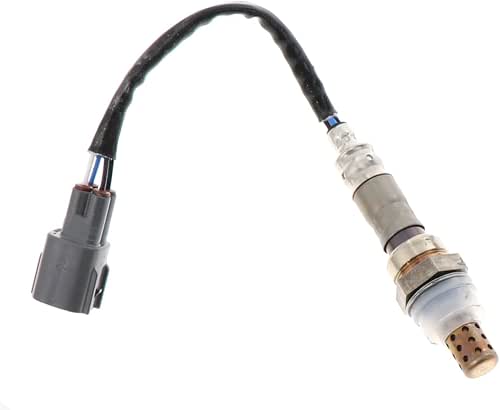
| OEM-Grade Replacement | Vehicle fit: Toyota/Lexus (many models, 2003–2016) | Sensor position: O2 sensor (position not specified) | Package quantity: 1 pack | VIEW LATEST PRICE | Read Our Analysis |
| Offset Oxygen Sensor Socket 3/8” Drive 22mm |

| Best Install Tool | Vehicle fit: Universal (fits most O2 sensors) | Sensor position: O2 sensor tool (N/A) | Package quantity: 1 pack | VIEW LATEST PRICE | Read Our Analysis |
| BDFHYK O2 Oxygen Sensors for Toyota RAV4 (2-Pack) |

| Best Budget Pair | Vehicle fit: Toyota RAV4 2.4L (2006–2008) | Sensor position: Upstream + downstream | Package quantity: 2 pack | VIEW LATEST PRICE | Read Our Analysis |
| 2X Upstream&Downstream Oxygen Sensors for Toyota Camry/RAV4/Lexus ES300H |

| Newest Model Fit | Vehicle fit: Camry/RAV4/ES300H 2.5L (2018–2024) | Sensor position: Upstream + downstream | Package quantity: 2 pack | VIEW LATEST PRICE | Read Our Analysis |
| Downstream O2 Oxygen Sensor for Toyota Corolla 1.8L |

| Best for Corolla/Matrix | Vehicle fit: Corolla/Matrix/Vibe 1.8L (2003–2008) | Sensor position: Upstream or downstream | Package quantity: 1 pack | VIEW LATEST PRICE | Read Our Analysis |
More Details on Our Top Picks
Denso Oxygen Sensor 234-4260 for Toyota/Lexus
Should your Toyota or Lexus starts to idle rough, burn more gas, or throw a check engine light, the Denso Oxygen (O2) Sensor 234-4260 is a smart pick because it’s built to match how these engines read exhaust in real life. You get a narrow band sensor with a 4 wire connector that’s 9.45 inches long, so fitment feels stress free. It suits many Toyota and Lexus years, including 4Runner, Camry, Tacoma, Tundra, ES350, and GX. Stainless steel fights corrosion, while a PTFE filter blocks grime. The refined zirconia element reacts fast.
- Vehicle fit:Toyota/Lexus (many models, 2003–2016)
- Sensor position:O2 sensor (position not specified)
- Package quantity:1 pack
- OEM/part reference:Denso 234-4260 + OE cross-refs
- Material:Stainless steel
- Install design:4-wire harness (9.45″)
- Additional Feature:PTFE contaminant filter
- Additional Feature:Refined zirconia element
- Additional Feature:4-wire 9.45″ harness
Offset Oxygen Sensor Socket 3/8” Drive 22mm
Stuck oxygen sensors can make you feel like your Toyota is winning the tug of war, but an offset oxygen sensor socket like this 3/8 inch drive, 22mm tool turns that fight into a fair match. You slide it on from the side, so the wire gate protects the harness while you work.
Next, you’ll like the slotted, offset shape because it reaches tight spots and gives you more advantage. The chrome molybdenum steel meets ANSI and ASME standards, so you can push hard without fear. Use any 3/8 inch ratchet or breaker bar, save time, and get sensors out clean.
- Vehicle fit:Universal (fits most O2 sensors)
- Sensor position:O2 sensor tool (N/A)
- Package quantity:1 pack
- OEM/part reference:22mm (7/8″) O2 sensor socket size
- Material:Chrome molybdenum steel
- Install design:Slotted offset socket + wire gate
- Additional Feature:Offset compact profile
- Additional Feature:Slotted wire-gate access
- Additional Feature:Chrome moly steel
BDFHYK O2 Oxygen Sensors for Toyota RAV4 (2-Pack)
Should you drive a 2006 to 2008 Toyota RAV4 2.4L and you want your engine to feel steady again, the BDFHYK O2 Oxygen Sensors 2-pack fits that need really well because it includes both the upstream and downstream sensors in one box. They match OEM specs and replace common OE numbers like 234-4622 and 234-9041, so your fit can feel worry-free provided you confirm the photos initially.
Next comes what you’ll notice: quick response, smoother starts, and stronger pull. Stainless steel and heat-safe parts help them last. Let the exhaust cool, protect the threads, and use proper tools. You also get 22-month support.
- Vehicle fit:Toyota RAV4 2.4L (2006–2008)
- Sensor position:Upstream + downstream
- Package quantity:2 pack
- OEM/part reference:Replaces 234-4622 & 234-9041 + OE list
- Material:Stainless steel + high-temp materials
- Install design:OEM-spec replacement (plug-and-fit style)
- Additional Feature:2-pack set
- Additional Feature:Fast response time
- Additional Feature:22-month quality assurance
2X Upstream&Downstream Oxygen Sensors for Toyota Camry/RAV4/Lexus ES300H
At the moment your Camry, RAV4, or ES300H starts feeling a little “off,” the right oxygen sensors can bring that smooth, confident drive back fast. This set gives you both sensors you need: upstream 234-9307 and downstream 234-9304 for 2018 to 2024 Camry 2.5L, 2019 to 2024 RAV4 2.5L, and 2019 to 2024 ES300H 2.5L. It uses OE connectors and correct wire length, so fit feels natural. Next, it resists heat, vibration, and corrosion, keeping signals steady. Also, you get 24 hour support. Verify the plug initially.
- Vehicle fit:Camry/RAV4/ES300H 2.5L (2018–2024)
- Sensor position:Upstream + downstream
- Package quantity:2 pack
- OEM/part reference:234-9307 (up) & 234-9304 (down)
- Material:High-temp/vibration-resistant build (material not specified)
- Install design:OE connectors + OE wire length
- Additional Feature:OE connectors included
- Additional Feature:Vibration damage resistant
- Additional Feature:24-hour support response
Downstream O2 Oxygen Sensor for Toyota Corolla 1.8L
Should your Corolla start to idle rough, stall at stops, or feel slow once you press the gas, a reliable downstream O2 oxygen sensor can bring back that smooth, confident drive you miss. This sensor fits 2003 to 2008 Corolla, Matrix, and Pontiac Vibe 1.8L, and it can replace upstream or downstream units, so match part 234-4233 before you buy.
Next, you’ll like the tough build: a stainless steel shell, an aluminum oxide capture layer, and a trap layer that shields the platinum electrode. Pre-coated threads help it install tight. After combustion, it reads oxygen, sends voltage to your computer, and helps steady idle. Support replies within 24 hours.
- Vehicle fit:Corolla/Matrix/Vibe 1.8L (2003–2008)
- Sensor position:Upstream or downstream
- Package quantity:1 pack
- OEM/part reference:Replaces 234-4233
- Material:Stainless steel shell
- Install design:Pre-coated threads
- Additional Feature:Aluminum oxide capture layer
- Additional Feature:Pre-coated threads
- Additional Feature:Trap-layer electrode protection
Factors to Consider When Choosing Oxygen Sensors for Toyota**
Before you buy an oxygen sensor for your Toyota, you’ll want to match the exact vehicle fitment and model years, because even a small mismatch can waste your time and money. Next, you’ll choose between upstream versus downstream placement and confirm the sensor type and wiring, so the plug, wire length, and connector fit your cable without stress. Then, you’ll look for strong materials and heat resistance and consider installation tools and access, because a tight spot under the car can turn a “quick swap” into a real knuckle buster.
Vehicle Fitment And Years
Why does fitment matter so much when you’re picking an oxygen sensor for your Toyota? Because the wrong match can trigger codes, hurt MPG, or simply not bolt in. Initially, confirm your exact model and production year. A Camry, Corolla, RAV4, or 4Runner can use different sensors, even within the same nameplate, because engine size and year ranges change the design. Next, verify the sensor position listed for your vehicle, since Toyota might use different versions according to location and year. Then, match the wiring connector length, connector shape, and pin layout to what’s on your car, so you don’t fight a stubborn plug. Lastly, cross-check OEM part numbers and approved year ranges prior to your purchase. You’ll feel confident at install time.
Upstream Versus Downstream
Getting the right fitment is a huge relief, but you also need to pick the correct sensor type for the spot it serves on your Toyota: upstream or downstream. The upstream sensor sits before the catalytic converter, so it reads exhaust right after combustion. Because it reacts fast, it talks directly to the engine computer, helping it fine tune the air fuel mix and protect your MPG.
Next, the downstream sensor sits after the converter. It checks how well the converter cleans up the exhaust, so it’s more about long term emissions control than day to day power. In case it flags trouble, you might be facing a tired converter. Still, don’t guess. Toyota uses different sensor locations and connectors, so verify you’re replacing the right one.
Sensor Type And Wiring
How do you know an oxygen sensor will plug in cleanly and read right the initial time? You match the sensor type and the wiring to what your Toyota already uses. Most Toyotas run narrow band sensors with a 4 wire cable assembly, so don’t gamble on a different setup.
Next, check cable assembly length. A 9 to 10 inch lead usually reaches the factory clip points without stretching or bunching. Then, confirm the four wires are truly separated for heater power, heater ground, signal, and signal ground. That heater circuit helps the sensor wake up fast, so your fuel trim settles sooner. Also, look for corrosion resistant wiring and a protective filter, because grime can blur the signal. Finally, insist on OE style connectors so you won’t fight pins or loose locks.
Materials And Heat Resistance
Since your Toyota’s oxygen sensor sits inches from blazing exhaust flow, the materials inside it matter just as much as the fit. You want corrosion resistant stainless steel on the shell, because it fights rust from moisture, road salt, and hot gases that never quit. That toughness helps the sensor stay sealed and steady during vibration shakes everything.
Next, pay close attention to the sensing core. Advanced zirconia reacts fast, so your engine computer gets clean, accurate oxygen readings even as exhaust temps climb. Then there’s the filter. A PTFE filter blocks soot and fuel additives, so the sensor breathes right without cooking itself. At the outset these high temp materials work together, you avoid early breakdown and keep control sharp, mile after mile.
Installation Tools And Access
Where will your hands actually fit as it’s time to swap that oxygen sensor on your Toyota? Access decides whether this job feels simple or like a knuckle busting puzzle. Start through letting the exhaust cool all the way, because hot pipes burn fast and ruin your focus. Then grab an offset oxygen sensor socket, 22mm with a 3/8-inch drive, so you can reach tight spots without crushing the sensor wires. The slotted body and wire gate let you turn the sensor while the cable stays connected, which keeps you from yanking or twisting wires. Next, match it with a ratchet or breaker lever that fits the drive. Choose chrome molybdenum steel for strong torque and fewer rounded flats.
