

You’ll want stiff, well‑fitting bars that bolt on without surprises: top picks are Ford Racing M-20201-S197 for 2005–2014 Mustangs, SR Performance 4130 chromoly for 2015–2020 Mustangs, SR Performance tubular for 1994–2004 Mustangs, CTCAUTO red brace for 2016–2019 Civics, and CTCAUTO variants for select BMWs; each improves front-end rigidity, steering feel, and cornering whenever matched to your trim and engine covers, and the next section explains fitment, materials, and installation subtleties.
| Ford Racing M20201S197 Strut Tower Brace for Ford Mustang |

| Best for Mustang GT | Fitment (Vehicle): 2005–2014 Ford Mustang GT (specifics: 2005–2010 without engine dress-up cover; 2011–2014 with dress-up cover) — not V6 or supercharged; excludes certain intake shrouds | Purpose / Performance Benefit: Increases front-end rigidity and improves handling | Construction Type / Design: Parallel beam tubular design | VIEW LATEST PRICE | Read Our Analysis |
| CTCAUTO Red Strut Tower Brace for 2016-2019 Honda Civic |

| Budget-Friendly Pick | Fitment (Vehicle): 2016–2019 Honda Civic | Purpose / Performance Benefit: Improves steering responsiveness and chassis rigidity for better cornering/high-speed stability | Construction Type / Design: Shaft and welded brackets (performance strut bar design) | VIEW LATEST PRICE | Read Our Analysis |
| SR Performance Strut Tower Brace for 1994–2004 Mustang |
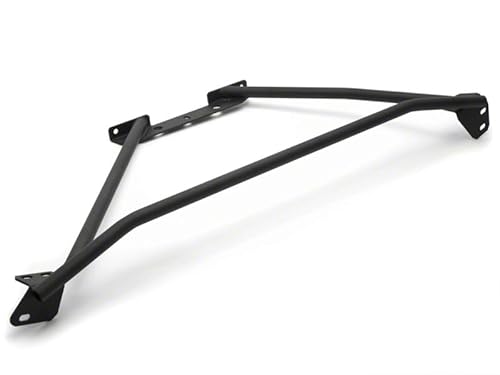
| Classic Mustang Fit | Fitment (Vehicle): 1994–2004 Ford Mustang (GT and V6; not Cobra/Mach 1/Bullitt) | Purpose / Performance Benefit: Reduces chassis/suspension flex to improve stability and handling | Construction Type / Design: Tubular high‑strength steel construction | VIEW LATEST PRICE | Read Our Analysis |
| SR Performance 4130 Chromoly Strut Tower Brace for Mustang |

| Professional Grade | Fitment (Vehicle): 2015–2020 Mustang (GT and EcoBoost) | Purpose / Performance Benefit: Strengthens chassis rigidity, reduces body flex, improves cornering confidence and steering response | Construction Type / Design: Parallel tubular beam (4130 chromoly) | VIEW LATEST PRICE | Read Our Analysis |
| CTCAUTO Red Performance Strut Tower Brace for BMW |

| Best Fit for BMW Models | Fitment (Vehicle): Various BMW models (1999–2006 list including 3-series and M3) | Purpose / Performance Benefit: Improves responsiveness and handling; redistributes forces to reduce wear | Construction Type / Design: Shaft and welded brackets (tubular performance strut bar) | VIEW LATEST PRICE | Read Our Analysis |
More Details on Our Top Picks
Ford Racing M20201S197 Strut Tower Brace for Ford Mustang
Choose the Ford Racing M-20201-S197 provided you drive a 2005–2014 Mustang GT and want a factory-style upgrade that actually tightens front-end feel; its parallel-beam design and black powdercoat deliver added rigidity and improved handling while keeping a clean OEM look with a stainless Ford Racing emblem. You’ll fit it to 2005–2010 GTs without the engine dress-up cover or 2011–2014 GTs with the cover; it won’t fit V6s, boosted GTs, or 2005–2010 GTs with the intake shroud. Coming in at about 8 pounds and measuring roughly 28–30 inches, it’s durable, reviewed well, and still supported by the manufacturer.
- Fitment (Vehicle):2005–2014 Ford Mustang GT (specifics: 2005–2010 without engine dress-up cover; 2011–2014 with dress-up cover) — not V6 or supercharged; excludes certain intake shrouds
- Purpose / Performance Benefit:Increases front-end rigidity and improves handling
- Construction Type / Design:Parallel beam tubular design
- Installation Style:Bolt‑on replacement (fits specific models; exclusions noted)
- Finish / Appearance:Black powdercoat with stainless steel Ford Racing emblem
- Durability / Material Emphasis:Powdercoated construction for corrosion resistance; stainless emblem (steel construction implied)
- Additional Feature:Stainless Ford Racing emblem
- Additional Feature:Fits specific GT variants
- Additional Feature:8 pounds item weight
CTCAUTO Red Strut Tower Brace for 2016-2019 Honda Civic
Should you drive a 2016–2019 Honda Civic and want crisper steering and firmer chassis feel, the CTCAUTO red strut tower brace is a straightforward upgrade that bolts on in place of your factory bar. You’ll get improved responsiveness and quicker steering input, plus more precise cornering thanks to improved chassis rigidity. The welded shaft and brackets optimize force distribution, helping stability at higher speeds while redistributing tension between left and right strut towers to reduce suspension wear. It’s a direct replacement for the OEM bar on compatible Civics, built from high-quality auto parts. Confirm fitment before purchase; it’s not a genuine GM part.
- Fitment (Vehicle):2016–2019 Honda Civic
- Purpose / Performance Benefit:Improves steering responsiveness and chassis rigidity for better cornering/high-speed stability
- Construction Type / Design:Shaft and welded brackets (performance strut bar design)
- Installation Style:Direct replacement; easy installation (confirm fitment)
- Finish / Appearance:Red finish (color: red)
- Durability / Material Emphasis:Welded shaft and brackets for optimized force distribution and rigidity
- Additional Feature:Red powdercoated finish
- Additional Feature:Direct replacement design
- Additional Feature:Welded shaft and brackets
SR Performance Strut Tower Brace for 1994–2004 Mustang
Should you drive a 1994–2004 Mustang GT or V6 and want sharper, more predictable cornering without swapping to race-only parts, the SR Performance strut tower brace is a smart, lightweight upgrade that ties the shock towers together to reduce chassis flex. You’ll notice steadier, more planted handling as suspension geometry stays consistent through turns, enhancing confidence for street and weekend driving. It fits GT and V6 models only, not Cobra, Mach 1, or Bullitt, and matches factory tower geometry. Tubular high-strength steel adds rigidity while keeping weight low and clearance for stock intake. Installation bolts on but requires drilling; SR backs it with accessible support.
- Fitment (Vehicle):1994–2004 Ford Mustang (GT and V6; not Cobra/Mach 1/Bullitt)
- Purpose / Performance Benefit:Reduces chassis/suspension flex to improve stability and handling
- Construction Type / Design:Tubular high‑strength steel construction
- Installation Style:Bolt‑on but requires drilling for mounting
- Finish / Appearance:(Not explicitly stated) typical bare/painted tubular steel finish—described as matching factory tower geometry (implied painted/coated)
- Durability / Material Emphasis:High‑strength tubular steel for reinforced support and minimized weight
- Additional Feature:Drilling required installation
- Additional Feature:Maintains factory intake clearance
- Additional Feature:Compatible with V6 and GT
SR Performance 4130 Chromoly Strut Tower Brace for Mustang
Should you want a direct-fit brace that stiffens the front end without adding unnecessary weight, the SR Performance 4130 Chromoly Strut Tower Brace is built for 2015–2020 Mustang GT and EcoBoost owners who push their cars on backroads or just want sharper daily driving. You’ll get a parallel tubular beam made from aircraft-grade 4130 chromoly steel with a durable black powder coat, giving superior strength and lightweight durability. It bolts on with basic hand tools, clears the factory intake manifold, and needs no cutting or drilling. Expect reduced body flex, crisper steering response, improved cornering confidence, and long-term reliability.
- Fitment (Vehicle):2015–2020 Mustang (GT and EcoBoost)
- Purpose / Performance Benefit:Strengthens chassis rigidity, reduces body flex, improves cornering confidence and steering response
- Construction Type / Design:Parallel tubular beam (4130 chromoly)
- Installation Style:Direct bolt‑on; no drilling or cutting required
- Finish / Appearance:Black powdercoat finish
- Durability / Material Emphasis:Aircraft‑grade 4130 chromoly steel (strong and lightweight)
- Additional Feature:4130 chromoly construction
- Additional Feature:Direct bolt-on install
- Additional Feature:Clears factory intake manifold
CTCAUTO Red Performance Strut Tower Brace for BMW
Should you want sharper cornering and firmer chassis feel on compatible BMWs, the CTCAUTO Red Performance Strut Tower Brace is a direct-fit, high-rigidity upgrade that’s ideal for drivers who push handling without changing suspension components. You’ll get improved responsiveness and more even load sharing across the chassis, reducing wear through redistributing tension between left and right strut towers. The welded shaft and brackets maximize rigidity and optimize force distribution. It fits many BMW models from 1999–2006 including various 3-series and M3s. Installation’s easy, but you should confirm fitment before purchase. Note: it’s not an OEM GM part.
- Fitment (Vehicle):Various BMW models (1999–2006 list including 3-series and M3)
- Purpose / Performance Benefit:Improves responsiveness and handling; redistributes forces to reduce wear
- Construction Type / Design:Shaft and welded brackets (tubular performance strut bar)
- Installation Style:Direct replacement; easy installation (confirm fitment)
- Finish / Appearance:Red finish (color: red)
- Durability / Material Emphasis:Welded shaft and brackets; described as high‑quality auto parts construction
- Additional Feature:Wide BMW model fitment
- Additional Feature:Welded shaft and brackets
- Additional Feature:Red visual accent
Factors to Consider When Choosing Performance Strut Tower Braces
At the moment choosing a performance strut tower brace, you’ll want to check vehicle compatibility initially so the fit and mounting points match your BMW or other car. Consider material strength and weight—aluminum and chromoly offer different stiffness-to-weight tradeoffs—along with mounting style to make certain proper load transfer. Finally, pick a durable finish with good corrosion resistance to keep the brace looking and performing well over time.
Vehicle Compatibility
Because fitment varies even within the same model line, you need to confirm a strut tower brace is engineered for your exact make, year, and trim before buying. Check compatibility with engine types, body styles, and facelift changes since mounting points and clearances shift. Make sure the brace clears factory engine covers, intake shrouds, or any aftermarket dress-up pieces you’ve installed. Verify the design suits your suspension layout — MacPherson strut versus double wishbone — and matches mounting point geometry for proper load transfer and bolt-on fit. Determine whether the brace fits both performance and non-performance variants (GT vs. V6, turbo vs. NA), as reinforcement needs differ. Should you plan major upgrades, confirm clearance or adaptability to avoid rework later.
Material Strength
In case you want a strut tower brace that actually improves chassis stiffness without adding unnecessary weight, focus initially on the material and its construction — chromoly alloys like 4130 give you the best strength-to-weight ratio so manufacturers can use thinner tubing, while larger diameters and thicker walls boost bending and torsional rigidity. You should compare yield strength (ksi or MPa) and review FEA results whenever available to predict behavior under load. Inspect weld quality and joint design; poor penetration or minimal throat thickness creates weak points. Prefer braces with corrosion-resistant finishes or proper plating and powder coat, since rust in stressed areas causes fatigue and reduces life. In short, pick higher-strength alloys, adequate tube geometry, solid welding, and protective finishes to maximize lasting stiffness.
Mounting Style
Although mounting style might seem like a minor detail, it determines how a brace transfers loads, how much installation work you face, and whether routine service remains easy. You’ll choose bolt-on designs in case you want straightforward fitment using factory holes and OEM stud patterns that clear intakes and engine parts—no cutting or welding needed. Drill/weld options give a more permanent anchor and can support custom brackets, but they increase labor and complicate future changes. Decide between single central bars and dual/parallel-beam layouts: dual designs spread forces across more mounting points for greater rigidity. Use proper Grade 8 or equivalent hardware and follow torque specs to keep clamps preloaded. Finally, confirm the brace preserves access to oil fills, strut adjustments, and coilovers for easy service.
Weight Considerations
Once you’ve settled on mounting and access needs, pay close attention to the brace’s weight and how it affects the car. Heavier braces can increase front-end rigidity but add sprung or unsprung mass, slightly hurting acceleration and fuel economy. Choose chromoly or aluminum when you want high strength-to-weight ratios that stiffen the chassis without piling on pounds. Keep in mind the total system weight — brackets and fasteners can erase a lightweight tube’s advantage. Also consider how mass up high influences center of gravity and rotational inertia; lighter components near the strut tops preserve responsiveness. Don’t judge by weight alone: tube diameter, wall thickness, and material strength determine flex under load. Balance stiffness, durability, and net added mass for best handling.
Finish And Corrosion Resistance
Because your strut brace sits in a hot, salty, and vibration-prone area, its finish matters as much as the metal underneath; choose coatings or materials that resist chips, moisture, and heat so rust doesn’t start at fasteners, welds, or bare spots. Powdercoat and epoxy give durable, chip-resistant protection against road salts and moisture and typically last years with proper care. Stainless or chromoly offer built-in corrosion resistance, though grades and heat treatments affect longevity. Avoid bare or simple painted finishes unless you commit to regular inspection and touch-ups where scratches expose metal. Verify finish cure ratings and temperature specs—under-hood temps often reach 200–500°F—to prevent blistering or loss of adhesion. Assure fasteners, welds, and mounting plates share the brace’s protection or are stainless/galvanized.
Handling And Performance Gains
Should you want sharper steering and more consistent grip in corners, a quality strut tower brace limits chassis flex through tying the shock towers together so suspension geometry stays closer to its intended settings under load. You’ll notice quicker initial turn-in and a more precise steering feel because increased front-end rigidity reduces unwanted movement. That stability helps maintain camber and toe under hard cornering, preserving the tire contact patch and improving grip. Realize gains vary: softer unibody cars typically benefit more than already-stiff chassis. Also bear in mind effectiveness scales with brace stiffness and mounting quality—stiff materials and solid attachment points transfer loads; flexible bars or loose mounts can negate improvements. Choose a brace that matches your vehicle’s baseline rigidity and intended use.
Installation Complexity
While some strut tower braces bolt in with basic hand tools, others demand drilling, trimming, or removal of engine covers and intake shrouds—so check fitment and required steps before you buy. You’ll find direct-fit braces that match factory tower geometry usually install in 15–45 minutes with a socket set, torque wrench, and protective pads. Universal or custom bars can take one to several hours because you’ll need template fitting, alignment, and possibly clearancing. Vehicles with nonstandard under-hood layouts might force you to remove covers or trim components for proper seating. Follow specified torque specs and confirm equal seating on both towers to avoid stressing mounts or inducing chassis distortion. Should drilling or paint touch-up be required, plan for specialty tools and prep time.
