

You’ll want reliable stopping power whether you tow, haul, or daily drive, so pick systems matched to your vehicle and trailer. Choose PowerStop Truck & Tow for heavy-duty rotors and ceramic pads, Ford Hydro-Enhance units for diesel or high-GVWR rigs, Roadmaster Invisibrake to energize towed vacuum brakes, and the Hydro Enhance Super Duty for Excursion/Super Duty swaps. ATEM POWER gives a lightweight LiFePO4 trailer controller; add a 3L manual vacuum bleeder for solo bleeding. Keep going to see fitment, plumbing, and installation tips.
| PowerStop Brake Kit for Toyota Tundra Land Cruiser Sequoia |

| Truck & Tow Upgrade | Application / Use: Truck & SUV brake upgrade (towing/hauling, 4x4s) | Power / Actuation Type: Friction (rotors + ceramic pads) — mechanical/hydraulic vehicle braking | Vehicle Fitment / Compatibility: Specific Toyota/Lexus models (Tundra, Sequoia, Land Cruiser, LX570) years listed | VIEW LATEST PRICE | Read Our Analysis |
| Hydro-Boost Hydraulic Brake Booster Replacement for Ford F-350 |

| Heavy-Duty Replacement | Application / Use: Heavy-duty hydraulic booster replacement (Ford F-series, motorhome/chassis) | Power / Actuation Type: Hydraulic (Hydro-Boost hydraulic power brake booster) | Vehicle Fitment / Compatibility: Ford F-350, F-Super Duty, F-53, F-59 (late ’80s–’90s) with GVW 15,700–18,000 lb | VIEW LATEST PRICE | Read Our Analysis |
| Roadmaster Invisibrake Support Braking System with Breakaway |
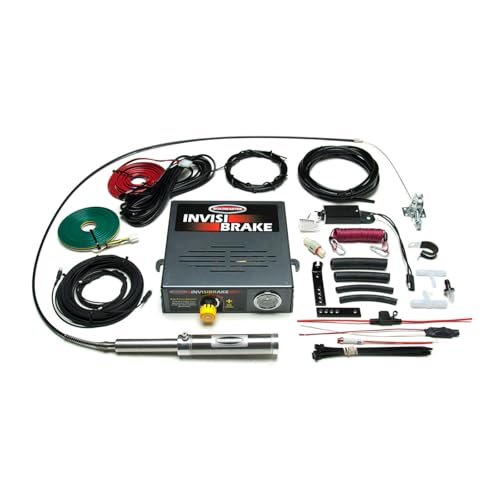
| Towed-Vehicle Solution | Application / Use: Towed-vehicle support braking system (vacuum-powered brakes) | Power / Actuation Type: Electrical assist to vacuum brakes (battery-powered support) | Vehicle Fitment / Compatibility: Towed vehicles with vacuum-powered brakes (general fit) | VIEW LATEST PRICE | Read Our Analysis |
| Hydraulic Power Brake Booster for Ford Super Duty |

| Super Duty Fit | Application / Use: Hydraulic booster replacement for Ford Super Duty/Excursion | Power / Actuation Type: Hydraulic (Hydro Boost hydraulic power brake booster) | Vehicle Fitment / Compatibility: Ford Excursion and Super Duty F-250/350/450/550 (1999–2005) engine fits listed | VIEW LATEST PRICE | Read Our Analysis |
| ATEM POWER Trailer Brake Controller Kit with LiFePO4 |
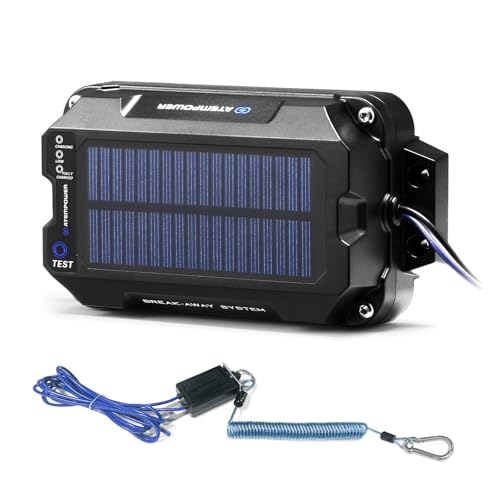
| Off-Grid Trailer Controller | Application / Use: Trailer electric brake controller / emergency trailer braking | Power / Actuation Type: Electrical (battery-powered electric trailer brake actuator) | Vehicle Fitment / Compatibility: Trailers/caravans with electric brakes on 1–2 axles (GTM focused, ADR compliance) | VIEW LATEST PRICE | Read Our Analysis |
| 3L Manual Vacuum Brake Bleeder Kit with Adapters |

| DIY Brake Maintenance | Application / Use: Brake bleeding / maintenance tool (service use) | Power / Actuation Type: Manual vacuum (hand-pumped vacuum bleeding tool) | Vehicle Fitment / Compatibility: Most passenger vehicles (multiple master-cylinder adapter sizes covering many makes) | VIEW LATEST PRICE | Read Our Analysis |
More Details on Our Top Picks
PowerStop Brake Kit for Toyota Tundra Land Cruiser Sequoia
Should you tow, haul, or drive in the mountains with a Tundra, Sequoia, or Land Cruiser, the PowerStop K2813-36 Truck & Tow kit is built to give you stronger, fade-resistant braking whenever you need it most — drilled-and-slotted rotors paired with carbon-fiber ceramic pads deliver reliable stopping power and longer life under heavy-duty use. You’ll get front and rear drilled-and-slotted rotors plus carbon-fiber ceramic pad sets with hardware, engineered for trucks, SUVs, 4x4s, and lifted rigs. It fits Tundra (select years), Sequoia (2008–2022), Land Cruiser and LX570 (2016–2021), targeting towing, hauling, and mountain driving with improved durability.
- Application / Use:Truck & SUV brake upgrade (towing/hauling, 4x4s)
- Power / Actuation Type:Friction (rotors + ceramic pads) — mechanical/hydraulic vehicle braking
- Vehicle Fitment / Compatibility:Specific Toyota/Lexus models (Tundra, Sequoia, Land Cruiser, LX570) years listed
- Installation / Mounting:Bolt-on rotor & pad kit (hardware included)
- Materials / Construction:Drilled & slotted steel rotors + carbon-fiber ceramic pads
- Power/Battery / Electrical Info:Passive (no electrical/battery component)
- Additional Feature:Drilled & slotted rotors
- Additional Feature:Carbon-fiber ceramic pads
- Additional Feature:Truck & Tow focused
Hydro-Boost Hydraulic Brake Booster Replacement for Ford F-350
In case you drive a Ford F-350 (1990–1997) or a related heavy-duty chassis and need a direct, rugged replacement, the 52-7079 Hydro-Boost Hydraulic Power Brake Booster is a strong choice because it matches common OE numbers (E8TZ2005B, F81Z2005AC, YC3Z2005BA) and fits GVW ratings up to 18,000 lb. You’ll get a cast-iron Hydro-Boost (52-7079/527079) that replaces hydro-boost systems on F-350, F-Super Duty, F-53 and F-59 chassis from late ’80s to ’00s. Primary cylinder isn’t included; pump plumbing uses one pressure and two return lines. Professional installation’s recommended; weight is about 15.22 lb.
- Application / Use:Heavy-duty hydraulic booster replacement (Ford F-series, motorhome/chassis)
- Power / Actuation Type:Hydraulic (Hydro-Boost hydraulic power brake booster)
- Vehicle Fitment / Compatibility:Ford F-350, F-Super Duty, F-53, F-59 (late ’80s–’90s) with GVW 15,700–18,000 lb
- Installation / Mounting:Direct-replacement Hydro-Boost unit (professional installation recommended)
- Materials / Construction:Cast iron housing (Hydro-Boost)
- Power/Battery / Electrical Info:Hydraulic — no internal battery (plumbs to vehicle hydraulic system)
- Additional Feature:Master cylinder excluded
- Additional Feature:Cast iron construction
- Additional Feature:Polished exterior finish
Roadmaster Invisibrake Support Braking System with Breakaway
Should you tow a vehicle with vacuum-powered brakes and want brake feel that matches the tow vehicle’s, the Roadmaster 8700 Invisibrake Support Braking System with Emergency Breakaway System is a compact, user-friendly solution. You’ll energize power brakes so tow and driving brake feel align, and it works on dead-pedal systems within a 5–100 PSI range. At 8 x 8 x 2 inches you can mount it under seats, behind panels, or in the trunk without losing space. It ties to the towed vehicle battery, trickle-charging while towing and avoiding drain. Made in the USA, it’s built to last.
- Application / Use:Towed-vehicle support braking system (vacuum-powered brakes)
- Power / Actuation Type:Electrical assist to vacuum brakes (battery-powered support)
- Vehicle Fitment / Compatibility:Towed vehicles with vacuum-powered brakes (general fit)
- Installation / Mounting:Compact mountable unit (under seats or panels), hardwired to towed battery
- Materials / Construction:Compact electronic unit (manufacturer-built US; premium components)
- Power/Battery / Electrical Info:Battery-powered (connects to towed vehicle battery; trickle charges while towing)
- Additional Feature:Trickle-charges battery
- Additional Feature:Compact under-seat size
- Additional Feature:Made in USA
Hydraulic Power Brake Booster for Ford Super Duty
Should you haul heavy loads or tow regularly and need reliable braking with power-steering-driven systems, this Hydro Boost hydraulic power brake enhancer is built for Ford Super Duty owners who demand heavy-duty stopping power and OEM-fit replacement. You’ll get a cast-iron Hydro Boost unit finished in black, designed for Ford Excursion (2000–2005) and Super Duty F-250/F-350/F-450/F-550 (1999–2004) with 5.4L, 6.0L, 6.8L, or 7.3L engines. Master cylinder stud thread is 3/8 x 16. Cross-references include 52-7374, 1C3Z2005AA, and others. It ships with the Hydro Boost unit, includes a 12-month guarantee, and you should verify fitment before ordering.
- Application / Use:Hydraulic booster replacement for Ford Super Duty/Excursion
- Power / Actuation Type:Hydraulic (Hydro Boost hydraulic power brake booster)
- Vehicle Fitment / Compatibility:Ford Excursion and Super Duty F-250/350/450/550 (1999–2005) engine fits listed
- Installation / Mounting:Direct-replacement Hydro-Boost unit (bolt-in; check fitment)
- Materials / Construction:Cast iron housing (Hydro Boost)
- Power/Battery / Electrical Info:Hydraulic — no internal battery (vehicle hydraulic system)
- Additional Feature:Multi-engine compatibility
- Additional Feature:Black finish
- Additional Feature:12-month guarantee
ATEM POWER Trailer Brake Controller Kit with LiFePO4
Should you tow trailers with electric brakes and want a lightweight, low-maintenance backup brake controller, the ATEM POWER kit with its built‑in LiFePO4 battery and integrated BMS is a smart choice—its solar panel and LEDs help keep the unit charged and monitored, while the quick-activation safety feature automatically applies the trailer brakes should it separate from your tow vehicle. You’ll get a pre-wired, color-coded setup for easy installation, ABS IP65 housing, and a detachable controller to avoid rain exposure. It supports one- or two-axle electric brakes, helps meet ADR for trailers over 2,000 kg, and includes a three-year warranty.
- Application / Use:Trailer electric brake controller / emergency trailer braking
- Power / Actuation Type:Electrical (battery-powered electric trailer brake actuator)
- Vehicle Fitment / Compatibility:Trailers/caravans with electric brakes on 1–2 axles (GTM focused, ADR compliance)
- Installation / Mounting:Pre-wired, mountable controller and switch (surface or flush mount)
- Materials / Construction:ABS enclosure (IP65 rated) with LiFePO4 battery and electronics
- Power/Battery / Electrical Info:Built-in LiFePO4 battery with BMS and solar trickle-charge panel; LEDs
- Additional Feature:Built-in LiFePO4 battery
- Additional Feature:Integrated solar panel
- Additional Feature:IP65 ABS enclosure
3L Manual Vacuum Brake Bleeder Kit with Adapters
In case you work on brake systems alone, this 3L manual vacuum brake bleeder kit is built to save you time and hassle. You get a 3L reservoir, 1L catch bottle, and four primary-cylinder adapters (43.5, 45, 49.5, 50.7 mm) to fit most Chrysler, European, GM, Mazda, Mitsubishi, Nissan, Subaru, Ford and others. High-strength plastic resists corrosion; a dual-unit PSI/Bar gauge shows pressure. A ring wrench, stable base, and hanging chain add convenience. You pressurize with the hand pump, collect fluid in the catch bottle, and follow the manual. BESTGLOAL offers returns and lifetime support.
- Application / Use:Brake bleeding / maintenance tool (service use)
- Power / Actuation Type:Manual vacuum (hand-pumped vacuum bleeding tool)
- Vehicle Fitment / Compatibility:Most passenger vehicles (multiple master-cylinder adapter sizes covering many makes)
- Installation / Mounting:Handheld/portable setup (attach to master cylinder with included adapters)
- Materials / Construction:High-strength plastic reservoir and fittings (durable, corrosion resistant)
- Power/Battery / Electrical Info:Manual hand-pump (no battery or electrical power)
- Additional Feature:Four master adapters
- Additional Feature:Visual PSI/Bar gauge
- Additional Feature:One-person operation
Factors to Consider When Choosing Power Brake Systems
At the time of choosing a power brake system for your vehicle, you’ll want to check compatibility and match braking power to your driving needs. Consider which servomotor type fits your setup, how complex the installation will be, and whether materials and construction will hold up over time. Those factors will help you pick a system that’s safe, reliable, and right for 2026 requirements.
Vehicle Compatibility
Although it’s tempting to assume any power brake assembly will fit, you must verify exact vehicle compatibility before buying so the amplifier, primary cylinder, and hardware mate properly with your car or truck. Check the listed make, model, year range, and engine variant because booster mounting patterns, pushrod lengths, and master cylinder stud spacing change across trims. Confirm the unit supports your GVWR or GTM while towing; heavy-duty hydraulic boosters and hydro-boosts are sized for higher loads. Match master cylinder thread size, stud pattern (for example 3/8 x 16) and plumbing port count so fittings align with existing lines. Determine whether your vehicle uses vacuum assist or hydro-boost and make certain the replacement operates within available vacuum or pressure. Finally, verify physical envelope, flange orientation, and clearance in the engine bay.
Braking Power Needs
Should your vehicle hauls heavy loads or you drive steep, stop-and-go routes, you need to size the power-assist to the gross vehicle and trailer weight and the maximum braking energy you’ll demand; heavier setups and sustained high-energy stops usually call for hydraulic or hydro-enhancement units rather than vacuum boosters. You should assess gross vehicle and typical trailer weight—trailers over ~2,000 kg (4,400 lb) need greater braking force—and pick a system rated to prevent fade during repeated high-energy stops. Match system output to caliper, line capacity, and primary cylinder sizing to preserve pedal feel and pressure transfer. Also factor response and modulation requirements and any auxiliary needs: pumps, electrical draw, plumbing, and battery capacity must support the assist under expected duty cycles.
Booster Type Selection
For selecting a booster, weigh engine vacuum availability, vehicle weight and towing needs, and installation constraints to pick the right type and capacity. You’ll choose between vacuum boosters—common on gasoline engines needing about 15–20 inHg of manifold vacuum—and hydraulic Hydro-Boost units that use power steering or a dedicated pump whenever vacuum’s insufficient. Match assist ratio and capacity to GVW and braking demands; heavier vehicles or towing setups need higher-assist boosters to keep pedal effort reasonable and stopping power effective. Verify physical fit: stud thread sizes, port alignment, and pushrod geometry must mate with your master cylinder and pedal assembly. Consider failure modes and redundancy—vacuum loss on diesels/turbos or pump dependency on hydraulic systems—so pick the type aligned with expected conditions.
Installation Complexity
Whenever you’re choosing a power brake system, consider beyond just booster type—installation complexity can be the difference between a weekend job and a shop-level project. You’ll find vacuum boosters usually simpler: fewer lines, less plumbing, and easier mounting. Hydro-Boost or hydraulic systems need high-pressure lines, a pump or steering connection, and careful pressure/return routing. Check space and mounting clearances behind the firewall, primary cylinder stud alignment (commonly 3/8″ x 16), and pushrod geometry before buying. Expect ancillary work—primary cylinder swaps, vacuum or hydraulic fittings, and electrical ties—that adds time and could need specialty tools. Plan for bench-bleeding, pressure-testing lines, setting pushrod free play, and following torque specs. Vehicle-specific variations often require custom brackets or fittings, so measure and verify fitment initially.
Durability And Materials
Because your brake system lives in a harsh, high-cycle environment, prioritize durable materials and proven sealing technologies whenever you shop. Choose housings and booster bodies made from corrosion-resistant metals like cast iron or aluminum alloys to resist heat, moisture, and road salt. Inspect diaphragms and seals for high-temperature, chemical-resistant elastomers (nitrile or EPDM) so you avoid vacuum or hydraulic leaks. Verify internal components and valves are specified for high cycle life and fatigue resistance; weak alloys or thin stampings wear quickly. Consider surface finishes and protective coatings—powder coat, zinc plating, anodizing—to prevent rust and galvanic corrosion on external parts and mounting hardware. Finally, confirm rated operating pressures and temperature ranges so materials and bonds won’t crack, swell, or embrittle.
Maintenance Requirements
Although reliable power brakes start with good design, you’ll keep them performing through following a straightforward maintenance routine: inspect hydraulic lines and fittings annually (or every 12,000 miles) for leaks or swelling, check and top off the correct hydraulic or power-steering fluid per the vehicle manual and replace it every 2–3 years, and test booster function at each oil change by watching pedal travel and pressure so you can catch air, failing seals, or other issues promptly. Beyond that, replace worn or corroded mounting studs, grommets, and primary cylinder hardware during service to preserve alignment and prevent vacuum or hydraulic leaks. Also keep electrical connections, batteries, and auxiliary power units clean, charged, and corrosion-free to promote consistent power-assist operation.
Budget And Value
Good maintenance keeps a power-brake system reliable, but whereas you’re shopping or planning an upgrade you need to look beyond service schedules to the total cost of ownership. Set a firm maximum spend that includes installation and any adaptation—master cylinder, lines, fittings—so you compare out-the-door prices, not just MSRPs. Balance upfront cost against expected service life by checking materials and seal-replacement intervals; cast-iron housings could last longer but weigh more, while lightweight designs can raise maintenance frequency. Favor packages that include core components (booster plus mounting hardware) to avoid surprise buys. Account for compatibility-related labor: custom plumbing, electrical work, or brake-line modification adds significant expense. Finally, weigh warranty length and coverage—longer, all-encompassing warranties can lower long-term repair risk despite higher initial cost.
