

The best rear brake caliper for 2026 is one that matches your exact vehicle and holds up under daily use.
Drivers trust calipers with the right fit, solid piston materials, and strong corrosion protection.
A good rear brake caliper should come with the correct hardware, bracket setup, and proper port size.
The top picks ahead make it easier to choose a reliable option without wasting money on poor fitment.
| A-Premium Rear Brake Caliper Assembly with Bracket |

| Best OEM-Style Fit | Position: Rear | Vehicle Fitment: Chevrolet/GMC/Cadillac full-size SUVs and trucks | Part Numbers: 15265833, 22968239, 23279394, 84191287, 22968238, 23279395, 84191288, 18-B5030, 18-B5031 | VIEW LATEST PRICE | Read Our Analysis |
| A-Premium Brake Caliper for GMC Chevrolet Cadillac Hummer |

| Heavy-Duty Pick | Position: Rear or front depending on vehicle; rear-compatible applications listed | Vehicle Fitment: Chevrolet/GMC/Cadillac/Hummer trucks, vans, and SUVs | Part Numbers: 18040101, 18040100, 25848000, 18-B4728, 18-B4729, 18-P4728, 18-P4729 | VIEW LATEST PRICE | Read Our Analysis |
| PHILTOP Rear Brake Caliper Assembly for Jeep/Dodge |
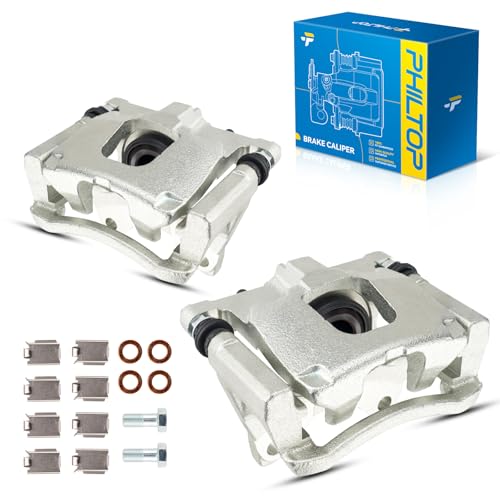
| Budget-Friendly Pick | Position: Rear | Vehicle Fitment: Jeep Wrangler/Liberty, Dodge Nitro | Part Numbers: 18B5046, 18B5047 | VIEW LATEST PRICE | Read Our Analysis |
| PHILTOP Rear Brake Caliper (18-B5058 18-B5059) |

| Best Corrosion Resistance | Position: Rear | Vehicle Fitment: Chevrolet/GMC/Buick/Cadillac/Saturn crossovers/sedans | Part Numbers: 18-B5058, 18-B5059, 18B5058, 18B5059, 185058, 185059, 15855609, 15855616 | VIEW LATEST PRICE | Read Our Analysis |
| PHILTOP Rear Right Brake Caliper Assembly 19-B3358 |

| Best for Sedans | Position: Rear right | Vehicle Fitment: Honda Accord, Acura TSX | Part Numbers: 19-B3358, 19B3358, 193358, 43018TA0A01, 43018TA0A81 | VIEW LATEST PRICE | Read Our Analysis |
More Details on Our Top Picks
A-Premium Rear Brake Caliper Assembly with Bracket
Should you want an OEM-style fit, this rear caliper suits full-size GM SUVs and trucks well. You get a rear assembly with bracket, one phenolic piston, M10 x 1.0 inlet and bleeder ports, plus an anti-rust coating that helps it last.
It fits 4-wheel-disc Chevrolet, GMC, and Cadillac models, including Tahoe, Suburban, Silverado 1500, Yukon, and Escalade families, though some WT, base, LS, SL, and XFE trims are excluded, so check year details carefully.
- References: 15265833, 22968239, 23279394, 84191287
- Coverage: 2007 to 2020 applications
And you’re supported through A-Premium’s one-year unlimited-mileage guarantee, which is reassuring.
- Position:Rear
- Vehicle Fitment:Chevrolet/GMC/Cadillac full-size SUVs and trucks
- Part Numbers:15265833, 22968239, 23279394, 84191287, 22968238, 23279395, 84191288, 18-B5030, 18-B5031
- Piston Details:1 phenolic piston
- Included Hardware:Caliper assembly with bracket
- Surface Protection:Anti-rust coating
- Additional Feature:One-year unlimited-mileage guarantee
- Additional Feature:M10 x 1.0 ports
- Additional Feature:4-wheel disc compatibility
A-Premium Brake Caliper for GMC Chevrolet Cadillac Hummer
Should you need a heavy-duty pick for GM trucks and SUVs, this A-Premium brake caliper deserves a close look. You can get front or rear fitment, but you must match location initially.
It covers a wide GM spread, including:
- Chevrolet Silverado, Suburban, Tahoe, Avalanche
- GMC Sierra, Yukon, Savana
- Cadillac Escalade
- Hummer H2
Before ordering, check:
- Front or rear position
- Year, engine, GVW, and brake code JH6 if required
- Reference numbers like 18040101, 18040100, and 18-B4728
That extra fitment homework matters, because brake calipers aren’t the place for optimistic guesswork.
- Position:Rear or front depending on vehicle; rear-compatible applications listed
- Vehicle Fitment:Chevrolet/GMC/Cadillac/Hummer trucks, vans, and SUVs
- Part Numbers:18040101, 18040100, 25848000, 18-B4728, 18-B4729, 18-P4728, 18-P4729
- Piston Details:Not specified
- Included Hardware:Brake caliper
- Surface Protection:Not specified
- Additional Feature:Front or rear application
- Additional Feature:Hummer H2 compatibility
- Additional Feature:JH6 brake code fitment
PHILTOP Rear Brake Caliper Assembly for Jeep/Dodge
In case you need a budget-friendly pick for older Jeep or Dodge models, this PHILTOP rear caliper set stands out. It fits:
- 2007 to 2017 Jeep Wrangler
- 2018 Jeep Wrangler JK
- 2008 to 2012 Jeep Liberty
- 2007 to 2011 Dodge Nitro
You also get OE references 18B5046 and 18B5047, which helps provided that you’re matching parts without playing detective. Before ordering, confirm compatibility, and should you be unsure, send your vehicle details to the seller for a reply within 24 hours. You’ll like the original-position fit, solid workmanship, high-temperature braking performance, and stable, responsive stopping during emergency braking too.
- Position:Rear
- Vehicle Fitment:Jeep Wrangler/Liberty, Dodge Nitro
- Part Numbers:18B5046, 18B5047
- Piston Details:Not specified
- Included Hardware:Rear caliper assembly
- Surface Protection:Durability/performance focus; coating not specified
- Additional Feature:High-temperature braking performance
- Additional Feature:Emergency braking stability
- Additional Feature:Original-position fit design
PHILTOP Rear Brake Caliper (18-B5058 18-B5059)
PHILTOP’s rear caliper stands out for strong corrosion resistance and a clean OE-style fit on GM crossovers and sedans.
If you drive a Traverse, Acadia, Enclave, XTS, Outlook, or Acadia Limited, this rear assembly fits key OE numbers like 18-B5058 and 18-B5059. You get:
- ductile iron construction
- a phenolic piston
- bracket and mounting hardware
That means easier replacement with fewer surprise parts. The refined galvanizing helps it resist rust for 150 salt-spray hours, and the cast iron body handles sudden braking heat without warping. Each unit meets IATF 16949 production standards and arrives pressure-sealed, not mystery-box nonsense. Weight: 14.48 pounds.
- Position:Rear
- Vehicle Fitment:Chevrolet/GMC/Buick/Cadillac/Saturn crossovers/sedans
- Part Numbers:18-B5058, 18-B5059, 18B5058, 18B5059, 185058, 185059, 15855609, 15855616
- Piston Details:Phenolic piston
- Included Hardware:Caliper, bracket, mounting hardware
- Surface Protection:Galvanized finish, 150-hour salt spray resistance
- Additional Feature:Ductile iron construction
- Additional Feature:150-hour salt spray
- Additional Feature:IATF 16949 certified
PHILTOP Rear Right Brake Caliper Assembly 19-B3358
Built for sedans, this rear right caliper assembly fits Honda Accord 2008 to 2012 and Acura TSX 2009 to 2014. Should you want a direct replacement, this PHILTOP 19-B3358 keeps things simple. You get:
- 1 steel piston
- 1.5 inch piston diameter
- M10 x 1.25 exhaust port
- M10 x 1.0 inlet port
- mounting hardware included
The galvanized finish helps fight corrosion, which matters whenever roads get nasty. And the reference numbers, including 43018TA0A01 and 43018TA0A81, make parts matching easier. Prior to purchasing, enter your vehicle details and confirm compatibility. That tiny step saves you from garage-floor frustration later.
- Position:Rear right
- Vehicle Fitment:Honda Accord, Acura TSX
- Part Numbers:19-B3358, 19B3358, 193358, 43018TA0A01, 43018TA0A81
- Piston Details:1 steel piston, 1.5 in diameter
- Included Hardware:Mounting hardware included
- Surface Protection:Galvanized finish
- Additional Feature:Rear right specific
- Additional Feature:Steel piston construction
- Additional Feature:Multiple life-cycle tests
Factors to Consider When Choosing a Rear Brake Caliper
At the point you choose a rear brake caliper, you need to get the basics right initially: 1) vehicle fitment accuracy, 2) rear position match, and 3) port size compatibility, because even a small mismatch can turn a simple install into a garage-floor headache. And don’t overlook piston material type or a corrosion resistance coating, since those details affect braking consistency, service life, and how well the caliper holds up against heat, road salt, and moisture. Keep these factors in mind, and you’ll narrow your options faster and pick a caliper that fits your vehicle the way it should.
Vehicle Fitment Accuracy
Although rear brake calipers can look almost identical at a glance, fitment gets very specific very fast, so before you order, confirm your exact vehicle year, make, model, trim, and the caliper position, meaning left or right and rear, because a small production-year change or trim-level package can send you to the wrong part in a hurry.
Then verify the details that usually trip people up:
- Brake setup: 2-wheel or 4-wheel disc, brake code, axle type, and any HD or police package.
- Hardware dimensions: bracket pattern, bolt spacing, piston count, and piston diameter to match OEM brake force.
- Ports and references: inlet and bleeder thread sizes, port angle, and OEM replacement numbers.
Get those right, and installation stays straightforward instead of turning into a garage-floor puzzle.
Rear Position Match
Since rear calipers aren’t always mirror-image twins, you’ll want to match the exact rear position, left/driver or right/passenger, before anything else, because the mounting ear orientation, bleeder valve location, brake hose inlet, and parking brake actuator can all sit differently from side to side.
Then confirm the rear setup matches your vehicle:
- Single-piston or multi-piston design.
- Integrated mechanical parking brake or electronic actuator.
- Rotor diameter and overall brake package.
Also check the small stuff, because it isn’t small whenever parts don’t line up:
- Hose inlet and bleeder threads, often M10 x 1.0 or M10 x 1.25.
- Bracket shape and bolt pattern at the rear knuckle.
- Clearance around the rotor, dust shield, and suspension.
Get those details right, and you’ll avoid fitment headaches and uneven rear pad wear later.
Piston Material Type
Start with the piston material, because it quietly shapes how your rear caliper handles heat, wear, corrosion, and long-term reliability. You’ll usually choose among three common directions, and each suits a different job.
- Phenolic: lightweight, corrosion-resistant, and excellent at limiting heat transfer into brake fluid, which helps reduce boil risk.
- Steel or aluminum: stronger, tougher, and better whenever you face repeated high-heat stops, towing loads, or performance driving.
- Ductile iron: very stable under stress and built for longevity, but it adds unsprung weight and passes more heat inward.
And don’t overlook seal and brake-fluid compatibility. Some piston materials need specific seal compounds, or you could invite swelling, leakage, or accelerated wear. For everyday commuting, phenolic often makes sense. For heavy-duty abuse, metal usually wins, no drama.
Port Size Compatibility
Before you bolt anything on, make sure the caliper’s port sizes actually match your brake system, because a rear caliper with the wrong inlet or bleeder threads can turn a simple install into stripped threads, fluid leaks, and a vocabulary lesson you didn’t want.
Check these details:
- Match inlet and bleeder threads to your brake line and wrench specs, often M10 x 1.0 or M10 x 1.25.
- Verify both pitch and outer diameter, not just the nominal size. Close counts in horseshoes, not hydraulics.
- Confirm whether you need a single inlet or multiple ports, and make sure the port angle fits your hard line routing.
- Compare bleeder screw type, size, and position to your original caliper so air evacuates properly and adapters aren’t needed during replacement.
Corrosion Resistance Coating
Even provided the caliper looks great out of the box, the corrosion-resistant coating is what helps it survive road salt, water, and heat without turning into a rusty headache a season later.
Look for:
- Zinc plating, galvanized finishes, or epoxy paint, because each shields cast iron or steel from rust.
- Full, uniform coverage on the caliper body and bracket contact points, which helps prevent seized slide pins and creeping corrosion.
- Heat-stable protection rated for several hundred °F, so brake heat doesn’t cook the finish off.
And check the prep work too. Shot blasting before coating gives the finish a cleaner, rougher surface to bite into, which improves adhesion and durability. A coating that survives 100 to 150 hours of ASTM B117 neutral salt spray without red rust is a very respectable sign, and rust never sleeps.
Included Bracket Hardware
While a rear brake caliper itself gets most of the attention, the included bracket hardware can make or break the install, because in the event the assembly doesn’t come with the correct mounting bracket, bolts, slide pins, clips, and bushings, you can end up with bad alignment, poor rotor clearance, or a caliper that won’t sit where it should.
Before you buy, check:
- Bracket fit. Match the mounting pattern and bolt-hole spacing to your vehicle.
- Fastener quality. Look for hardened steel, plus anti-corrosion or anti-seize coatings.
- Wear items. Fresh guide pin bushings, slide pins, and retaining clips matter.
And provided torque specs or recommended fasteners are included, even better. You’ll install everything correctly, avoid seized pins, prevent uneven pad wear, and skip the joy of uncovering one missing clip mid-job.
Frequently Asked Questions
How Long Does a Rear Brake Caliper Typically Last?
Brake calipers commonly last 75,000 to 100,000 miles, but you’ll see shorter or longer service depending on salt, stopping style, and maintenance. Clean, careful checks catch corrosion promptly, keeping your caliper clamping consistently and safely.
Can a Bad Rear Brake Caliper Reduce Fuel Efficiency?
Yes, a bad rear brake caliper can reduce your fuel efficiency. In case it sticks or drags, your car works harder, creates extra heat, and burns more gas. You should fix it quickly to restore mileage.
Should Rear Brake Calipers Be Replaced in Pairs?
Yes—you should usually replace rear brake calipers in pairs. Here’s why: should one fail, the other often isn’t far behind. Matching both helps you maintain balanced braking, avoid uneven wear, and protect safety.
What Warning Signs Indicate a Sticking Rear Brake Caliper?
You’ll notice a sticking rear brake caliper when your car pulls sideways, the wheel feels unusually hot, braking seems sluggish, pads wear unevenly, fuel economy drops, or you hear grinding, squealing, or smell something burning.
Does Climate Affect Rear Brake Caliper Performance or Lifespan?
Yes, climate affects your rear brake caliper’s performance and lifespan. You’ll see rust in wet, salty regions, seal cracking in extreme heat, and sluggish movement in freezing temperatures. Regular cleaning and inspections help you prevent premature wear.
