

Many people do not realize that a small solar charger can keep a weak 12V battery from becoming a dead one on a busy morning. That is why the right model matters, whether you want a simple maintainer, a magnetic option, or a smarter unit with MPPT control.
From Renogy and SUNAPEX to POWOXI and Battery Tender, each pick offers a different strength, and those differences can save you a lot of hassle later.
| Renogy 10W Solar Trickle Charger Battery Maintainer |  | Best Compact Pick | Power Output: 10W | Voltage: 12V DC | Charge Controller: No controller listed | VIEW LATEST PRICE | Read Our Analysis |
| SUNAPEX 12V 20W Solar Battery Charger Maintainer |  | Best for Versatility | Power Output: 20W | Voltage: 12V | Charge Controller: Built-in controller | VIEW LATEST PRICE | Read Our Analysis |
| Sun Energise 20W 12V Solar Battery Charger Maintainer | 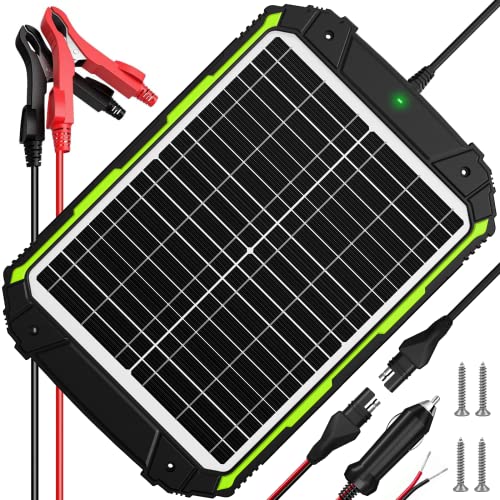 | Best Advanced Charger | Power Output: 20W | Voltage: 12V DC | Charge Controller: Smart MPPT controller | VIEW LATEST PRICE | Read Our Analysis |
| POWOXI 10W 12V Magnetic Solar Battery Maintainer |  | Best Magnetic Mount | Power Output: 10W | Voltage: 12V | Charge Controller: Built-in MPPT controller | VIEW LATEST PRICE | Read Our Analysis |
| POWOXI 12V Solar Battery Charger with MPPT Controller |  | Best Mid-Range Pick | Power Output: 15W | Voltage: 12V | Charge Controller: Built-in MPPT controller | VIEW LATEST PRICE | Read Our Analysis |
| Battery Tender 5W Solar Battery Charger (021-1172) |  | Best Budget Pick | Power Output: 5W | Voltage: 12V | Charge Controller: Charge controller | VIEW LATEST PRICE | Read Our Analysis |
More Details on Our Top Picks
Renogy 10W Solar Trickle Charger Battery Maintainer
The Renogy 10W Solar Trickle Charger Battery Maintainer is a smart choice if you want to keep a car, boat, motorcycle, truck, or RV battery ready with minimal effort. It uses a 10W panel to convert sunlight into 12V DC power and helps prevent deep discharge. It is compatible with Gel, AGM, Flooded, and Lithium batteries, giving you strong flexibility. You can connect it with SAE, ring terminals, alligator clips, or a cigarette lighter plug. Its compact, weatherproof design, suction cups, and lightweight build make setup simple, even when your schedule is not.
- Power Output:10W
- Voltage:12V DC
- Charge Controller:No controller listed
- Waterproof Rating:Weatherproof
- Battery Compatibility:Gel, AGM, Flooded, Lithium
- Mounting Options:Suction cups
- Additional Feature:Suction cup mounting
- Additional Feature:Monocrystalline solar cells
- Additional Feature:Wide temperature range
SUNAPEX 12V 20W Solar Battery Charger Maintainer
SUNAPEX’s 12V 20W solar battery charger maintainer is a practical choice when you want an easy way to keep a vehicle or piece of equipment ready without constantly checking the battery. It works with cars, RVs, boats, trailers, trucks, lawnmowers, and off-grid tools. It is compatible with sealed lead-acid, lithium, LiFePO4, GEL, AGM, and flooded batteries. The monocrystalline panel charges faster than many panels in its size range. The built-in controller helps prevent overcharging and restarts charging as needed. Its IP67 sealed design, simple mounting options, and clear status lights make setup straightforward.
- Power Output:20W
- Voltage:12V
- Charge Controller:Built-in controller
- Waterproof Rating:IP67
- Battery Compatibility:SLA, Lithium, LiFePO4, GEL, AGM, Flooded
- Mounting Options:Suction cups, carabiners
- Additional Feature:Three indicator lights
- Additional Feature:ETFE panel material
- Additional Feature:Lifetime technical support
Sun Energise 20W 12V Solar Battery Charger Maintainer
If you want a compact charger that can keep your battery healthy without much fuss, the Sun Energise 20W 12V Solar Battery Charger Maintainer is a smart choice. Its smart MPPT controller tracks power with up to 99% efficiency, and the three stage cycle helps keep charging safe and steady. You can use it with AGM, gel, SLA, flooded, or LiFePO4 batteries in cars, RVs, boats, tractors, and more. It also adds strong protection, IP65 waterproofing, a clear LED indicator, and easy plug and play cables, so setup feels simple, not stressful.
- Power Output:20W
- Voltage:12V DC
- Charge Controller:Smart MPPT controller
- Waterproof Rating:IP65
- Battery Compatibility:Gel, SLA, Flooded, AGM, LiFePO4
- Mounting Options:Frame holes, plug-and-play
- Additional Feature:3-stage charging
- Additional Feature:Tempered glass panel
- Additional Feature:Snow load resistance
POWOXI 10W 12V Magnetic Solar Battery Maintainer
POWOXI’s 10W 12V Magnetic Solar Battery Maintainer is a smart choice for anyone who wants an easy, low-stress way to keep a 12V battery ready to go. It includes a 10W monocrystalline panel, MPPT control, and support for wet, gel, AGM, EFB, MF, and LiFePO4 batteries. Four magnets help you mount it quickly, while the alligator clip cable gives you another simple option. It is waterproof, durable, and built for outdoor use. The three color light shows charging status, and it will not drain your battery once the sun fades.
- Power Output:10W
- Voltage:12V
- Charge Controller:Built-in MPPT controller
- Waterproof Rating:Waterproof
- Battery Compatibility:Wet, Gel, MF, EFB, AGM, LiFePO₄, lithium-ion
- Mounting Options:Magnetic mount
- Additional Feature:Magnetic mounting
- Additional Feature:Three-color indicator
- Additional Feature:Four powerful magnets
POWOXI 12V Solar Battery Charger with MPPT Controller
The POWOXI 12V Solar Battery Charger with MPPT Controller is a practical choice for drivers who want steady battery maintenance with minimal effort, especially when a car, truck, boat, or RV is parked for days or weeks at a time. Its 15W panel uses MPPT tracking to adapt to changing sunlight, which helps support charging performance on cloudy days. The float stage helps reduce the risk of overcharging, and the 12V design is compatible with Gel, AGM, SLA, VRLA, and lithium batteries. With tempered glass, IP65 protection, and clear LED status lights, it offers straightforward reliability.
- Power Output:15W
- Voltage:12V
- Charge Controller:Built-in MPPT controller
- Waterproof Rating:IP65
- Battery Compatibility:Gel, AGM, SLA, VRLA, Lithium-ion
- Mounting Options:Fabric bag, plug-in
- Additional Feature:99% conversion efficiency
- Additional Feature:Tempered glass construction
- Additional Feature:Fabric storage bag
Battery Tender 5W Solar Battery Charger (021-1172)
Battery Tender 5W Solar Battery Charger (021-1172) is a smart choice for anyone who wants gentle, steady battery care with minimal hassle, especially when a vehicle, boat, or RV sits unused for long periods. It delivers smart charging that provides full power in sunlight, then switches to float mode to help prevent overcharging. It is compatible with LiFePO4, lead acid, AGM, gel, and flooded batteries. You can mount it on a windshield or handlebar, and the suction cups, ring terminal cable, and OBD II connector make installation straightforward. IP67 protection, spark-proof safety, and reverse charging protection add extra peace of mind.
- Power Output:5W
- Voltage:12V
- Charge Controller:Charge controller
- Waterproof Rating:IP67
- Battery Compatibility:Lithium, lead acid, flooded, AGM, gel
- Mounting Options:Suction cups, handlebar bracket
- Additional Feature:OBD II connector
- Additional Feature:Handlebar bracket included
- Additional Feature:Five-year warranty
Factors to Consider When Choosing a Solar Powered Car Battery Charger
When you choose a solar powered car battery charger, start with the solar wattage output because it affects how fast your battery can gain power. You should also check battery compatibility and the charge controller type, so the charger works safely with your car. Next, look at weather resistance and mounting options, because a charger that performs well outdoors and installs easily will save you time and stress.
Solar Wattage Output
Solar wattage output plays a major role in how well a car battery charger supports your vehicle, and a bit more power can make a noticeable difference. You will usually see 5W panels for gentle upkeep, while 10W units help prevent a battery from dropping too low. If you want more strength, 15W to 20W models can restore charge faster and perform better when sunlight is weak or partly blocked. You should match the wattage to your battery size and how often you drive so the panel can offset self-discharge and small parasitic loads without being oversized. Even so, a high-rated panel still depends on good placement, steady sunlight, and an efficient controller, so proper setup matters as much as raw power.
Battery Compatibility
Just as essential as wattage, compatibility determines whether a solar car battery charger will actually help your vehicle or just sit there looking useful. Start by matching the charger to your battery chemistry. Some units work with AGM, gel, flooded lead-acid, sealed lead-acid, or lithium LiFePO4 batteries, but not all of them do. Next, check the voltage system. Most car maintainers are designed for 12V batteries, so the wrong match can lead to poor results. If you want easier care over time, choose a model with a built-in controller or maintenance mode. This helps keep compatible batteries topped off safely. If you run multiple vehicles, look for broad support for starting and deep-cycle batteries.
Charge Controller Type
Now that you know the charger has to match your battery type and voltage, the next thing to check is how it controls the charge. A built-in charge controller helps prevent overcharge and switches to float mode when the battery is full. If you want better efficiency, choose MPPT. It tracks the maximum power point and extracts more energy from weak or cloudy light. A smart controller should also restart charging automatically when voltage drops, so you do not have to unplug and reconnect it. Status lights are useful too, since they let you see sunlight, charging, and full charge at a glance. For 12V maintenance, make sure the controller fits your battery chemistry and includes reverse polarity, short circuit, overvoltage, and overtemperature protection.
Weather Resistance
When you leave a solar charger outdoors, weather resistance matters as much as charging power because a great charger will not help much if rain or heat wears it out too soon. Look for an IP65, IP67, or similar rating, since that tells you the unit can handle dust and water better. Choose a fully sealed design with waterproof materials so moisture cannot get in and damage the electronics. If your charger sits in strong sun, pick UV and heat resistant parts because outdoor temperatures can climb past 140°F and damage weak plastic. Also check that the panel and connectors resist corrosion, sand, and hail. That extra toughness helps keep your charger working in harsh weather.
Mounting Options
Mounting options can make or break how well your solar car battery charger works, because even the best panel still needs the right position to absorb sunlight. Match the mount to your vehicle and the places where you park it. Suction cups work well on glass, magnetic bases are useful when you want fast and secure placement, and handlebar brackets fit motorcycles neatly. If you plan to move the panel often, choose a lightweight, compact design that will not feel like a burden. For permanent outdoor use, select a weatherproof mount that can handle harsh conditions. Also, make sure the cable is long enough and compatible with your setup so the panel can stay in sunlight while the battery remains elsewhere. That small detail can save a lot of trouble later.
Connector Flexibility
Along with good sunlight, connector flexibility can determine how easy your solar car battery charger is to use every day. Look for options such as SAE leads, ring terminals, alligator clips, cigarette lighter plugs, or direct battery connections. These choices let you move one charger between your car, boat, motorcycle, truck, RV, or any other 12V system without searching for adapters. If you want a fast setup, choose plug and play cables with clear labels so you can connect and remove them in seconds. For vehicles whose accessory sockets turn off with the ignition, ring terminals or alligator clips provide a more reliable connection. Extra battery cables, O ring leads, and cigarette lighter adapters also help you match more setups and place the panel where it works best.
Portability and Size
Because space and convenience matter every day, a solar car battery charger should be easy to carry, store, and place where it actually helps. A smaller, lighter unit is easier to keep in a glove box or trunk without crowding your gear. When you move it between vehicles, boats, or motorcycles, that lighter build saves time and effort. Compact size also matters when you need the panel to fit on a windshield, dashboard, or another tight spot without blocking your view. Thin or foldable designs work well when you want quick setup and easy removal. Suction cups, magnets, or carabiners can also make positioning simpler. When space is tight, choose a charger that feels practical, not bulky.
Safety Protections
When you choose a solar powered car battery charger, safety features should be at the top of your list because a good charger should protect your battery as much as it charges it. Look for built-in overcharge protection or an automatic float stage, so the charger stops when the battery is full and starts again only after voltage drops. Next, check for reverse polarity, short circuit, and over current protection, because one wrong clip can cause real trouble. If you plan to leave the charger outdoors, choose IP65 or IP67 waterproofing to handle rain, dust, and sun. Spark proof and blocking diode designs also add protection and reduce backflow risk. In harsh weather, look for under voltage, over voltage, over temperature, and lightning protection too.
Frequently Asked Questions
Can Solar Chargers Work on Cloudy Days?
Yes, you can use solar chargers on cloudy days, but they will work more slowly and produce less power. You will still get some charge, so keep your battery connected whenever daylight is available.
Do I Need to Disconnect My Battery Before Charging?
No, you usually do not need to disconnect your battery before charging. You can leave it connected if your charger is compatible and you follow the instructions. However, avoid overcharging and make sure there is proper ventilation.
How Long Does a Full Charge Usually Take?
Usually, a full charge takes 4 to 24 hours, depending on battery size, charger output, and sunlight. If you have a weak panel, it will take longer.
Will These Chargers Drain My Battery at Night?
No, they usually won’t drain your battery at night, provided they include a blocking diode or controller. You’ll only lose charge if the charger backfeeds current, so check its specs before leaving it connected overnight.
Can I Use One Charger for Multiple Vehicles?
Yes, you can, but you will need to move it between vehicles since one charger will not usually power several at once. Check each battery’s voltage and connector so you do not overcharge or undercharge anything.
