

A good spark plug gauge for 2026 gives you quick, accurate gap checks without slowing you down.
Look for 32-blade feeler sets with both metric and imperial markings. Hardened, laser-etched blades and a solid socket fit make the job smoother. A thin brass blade can help with delicate ignition systems.
| Universal Spark Plug Gap Tool with Steel Feeler Gauge |
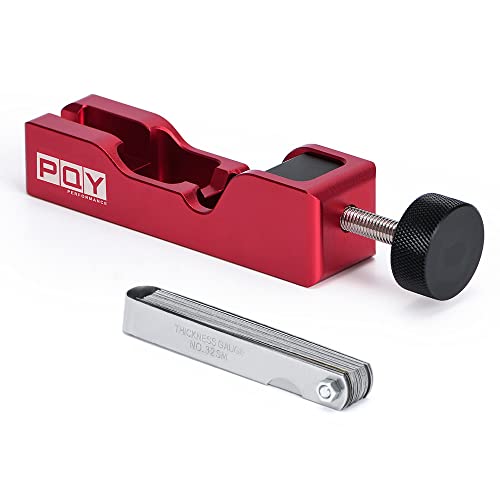
| Best Precision Tool | Main Type: Spark plug gap tool | Blade Count: 32 blades | Measurement Range: 0.04–0.88 mm | VIEW LATEST PRICE | Read Our Analysis |
| Feeler Gauge Set Stainless Steel 32-Blade Metric/Imperial |

| Best Feeler Gauge Set | Main Type: Feeler gauge set | Blade Count: 32 blades | Measurement Range: 0.04–0.88 mm | VIEW LATEST PRICE | Read Our Analysis |
| EMENTOL Spark Plug Socket Set with Extension Bar |
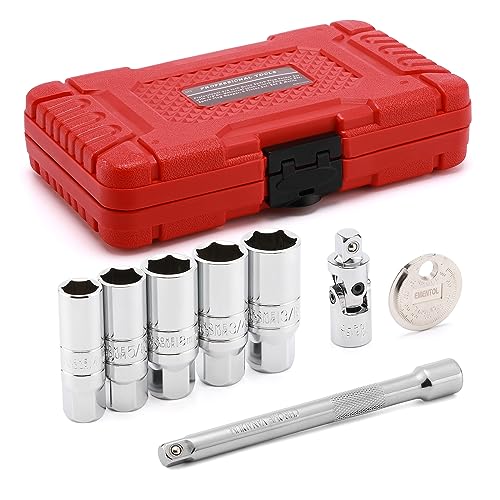
| Best Complete Kit | Main Type: Spark plug socket set | Blade Count: 1 gauge | Measurement Range: 0.6–2.4 mm | VIEW LATEST PRICE | Read Our Analysis |
| Toolwiz Spark Plug Gap Tool with Feeler Gauge |
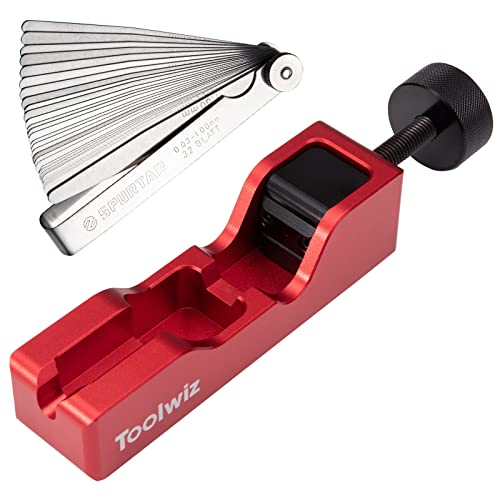
| Best for Easy Adjustments | Main Type: Spark plug gap tool | Blade Count: 32 blades | Measurement Range: 0.03–1.0 mm | VIEW LATEST PRICE | Read Our Analysis |
| 2PCS Spark Plug and Ignition Coil Tester |
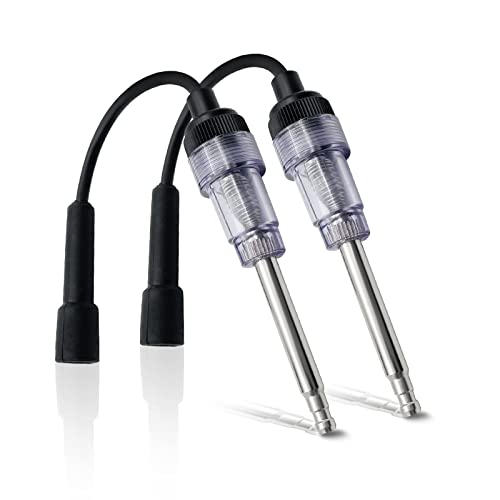
| Best Tester Combo | Main Type: Spark plug tester | Blade Count: No gauge | Measurement Range: No range listed | VIEW LATEST PRICE | Read Our Analysis |
| 2pcs Feeler Gauges Set SAE/Metric Dual Marked |
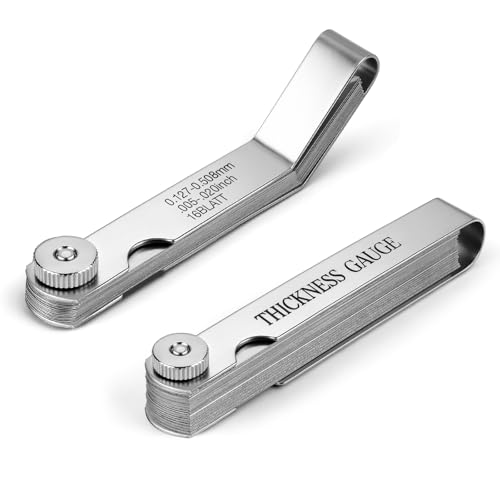
| Best Dual-Range Set | Main Type: Feeler gauge set | Blade Count: 48 blades total | Measurement Range: 0.02–1 mm | VIEW LATEST PRICE | Read Our Analysis |
More Details on Our Top Picks
Universal Spark Plug Gap Tool with Steel Feeler Gauge
Need a precise spark gapper? You can use this PQY Universal Spark Plug Gap Tool with a 32-blade steel feeler gauge for most 10mm, 12mm, 14mm, and 16mm plugs.
It won’t fit 18mm, long-reach, or short-reach styles, so check your plug size initially. The aluminum body feels solid, while the manganese steel blades cover 0.0015 to 0.035 inch. Use the 0.010 inch brass blade for electronic ignitions. Place the plug, pick a blade, and turn the knob slowly. Some electrodes spring back, so aim a touch under target.
- Main Type:Spark plug gap tool
- Blade Count:32 blades
- Measurement Range:0.04–0.88 mm
- Material:Aluminum/steel
- Compatibility:10–16 mm plugs
- Portability:Single compact tool
- Additional Feature:Matte aluminum body
- Additional Feature:Brass ignition blade
- Additional Feature:Spring-back compensation tip
Feeler Gauge Set Stainless Steel 32-Blade Metric/Imperial
This 32-blade feeler gauge set is your go-to for precise spark plug gaps. You get foldable #65 manganese steel blades, so it’s sturdy and easy to stash in a toolbox. Each blade is etched with metric and imperial sizes, from 0.0015 to 0.035 inch and 0.04 to 0.88 mm, which keeps guesswork out of the job.
Use it for tappet clearance, bearing clearance, piston rings, and other tight gaps.
1. Pick the blade. 2. Slide it in. 3. Adjust!
If you want simple, clear measurements, this set makes life easier.
- Main Type:Feeler gauge set
- Blade Count:32 blades
- Measurement Range:0.04–0.88 mm
- Material:Manganese steel
- Compatibility:Spark plugs and general gaps
- Portability:Foldable design
- Additional Feature:Foldable storage design
- Additional Feature:Etched blade sizes
- Additional Feature:Dual marked blades
EMENTOL Spark Plug Socket Set with Extension Bar
EMENTOL’s socket set covers most spark plug jobs in one tidy kit. You get five 6-point sockets, 14 mm, 18 mm, 5/8″, 3/4″, and 13/16″, plus chrome-vanadium steel and a mirror finish that looks sharp enough to distract you from dirty work. The rubber insert holds plugs steady, and the laser-etched sizes save squinting.
Use the 6-inch extension and universal joint for cramped engine bays. It also includes a 0.020 to 0.100 inch gauge, a storage case, and a 1-year guarantee.
- Main Type:Spark plug socket set
- Blade Count:1 gauge
- Measurement Range:0.6–2.4 mm
- Material:Chrome-vanadium steel
- Compatibility:14 mm, 18 mm, 5/8″, 3/4″, 13/16″
- Portability:Storage case included
- Additional Feature:Chrome-vanadium steel sockets
- Additional Feature:Rubber plug insert
- Additional Feature:1-year quality guarantee
Toolwiz Spark Plug Gap Tool with Feeler Gauge
Toolwiz makes spark plug gap adjustments simple for DIY tune-ups. You get a red gap tool plus a 32-blade feeler gauge, and it works with most 10mm, 12mm, 14mm, and 16mm standard plugs. It won’t fit 18mm, long-reach, or short-reach plugs, and it only reduces gaps, never enlarges them.
Place the plug on the tool, pick the right blade, then turn the knob slowly until the electrode closes to spec. For spring-back tips, choose a slightly smaller blade, like 0.028″ for 0.030″. Strong, accurate, and reusable!
- Main Type:Spark plug gap tool
- Blade Count:32 blades
- Measurement Range:0.03–1.0 mm
- Material:65 manganese steel
- Compatibility:10–16 mm plugs
- Portability:Single compact tool
- Additional Feature:Gap-reducing only
- Additional Feature:Hardened polished steel
- Additional Feature:Ready-to-use kit
2PCS Spark Plug and Ignition Coil Tester
Need spark checks? This 2PCS Spark Plug Tester fits automotive, lawnmower, motorcycle, chainsaw, trimmer, snow blower, and generator engines. Its 6 1/4″ shield cable and 5″ shaft with light cover help you reach stubborn spots without contorting like a circus act.
The plated shaft fights rust, the clear housing is replaceable, and the internal bulb lasts. Use it to spot ignition or fuel delivery faults in small or large engines.
Steps: 1) turn the engine off, 2) connect the black plastic end inline, 3) attach the metal end, 4) start up and watch for flashing light.
- Main Type:Spark plug tester
- Blade Count:No gauge
- Measurement Range:No range listed
- Material:Plated metal
- Compatibility:Automotive and small engines
- Portability:Inline tester, compact
- Additional Feature:Flashing spark indicator
- Additional Feature:Replaceable clear housing
- Additional Feature:Straight boot design
2pcs Feeler Gauges Set SAE/Metric Dual Marked
This compact Hoiny set gives you the best dual-range feeler gauge setup for tight spark plug work. You get 32 straight blades and 16 angled blades, so you can slip into awkward gaps without drama.
The straight blades cover 0.0008 to 0.04 in, or 0.02 to 1 mm, while the offset blades run 0.005 to 0.02 in. Dual laser-etched SAE and metric markings keep reading simple. Use it for valves, pistons, bikes, guitars, and spark plugs.
Stainless steel resists rust, wear, and the occasional workshop coffee spill!
- Main Type:Feeler gauge set
- Blade Count:48 blades total
- Measurement Range:0.02–1 mm
- Material:Stainless steel
- Compatibility:Valves, spark plugs, pistons
- Portability:Compact dual-set design
- Additional Feature:Straight and angled blades
- Additional Feature:Laser-etched markings
- Additional Feature:Corrosion-resistant stainless steel
Factors to Consider When Choosing Spark Plugs Gauge
At the time you choose a spark plug gauge, start with the measurement range and make sure it matches the spark plug sizes you work with, because a gauge that skips your needed gap is about as useful as a wrench for soup. Check that the blade material feels sturdy and that the tool gives you clear metric and imperial markings, since both systems show up in real-world maintenance. And pay close attention to adjustment accuracy, since a small error in the gap can throw off performance fast!
Gauge Measurement Range
Start with the gauge’s range, because a spark plug tool that can’t cover your engine’s gap specs is basically a ruler that quits halfway through the job. You want a gauge that spans the common sweet spot, roughly 0.04 mm to 0.88 mm, with tight increments so you can land on values like 0.40 to 0.44 mm without guessing.
For electronic ignition, look for a thin 0.25 mm blade; it’s kinder to sensitive parts and less likely to mangle anything expensive. Suppose you handle different engines, dual-marked metric and imperial scales help a lot, especially whenever you need tiny clearances of 0.02 to 0.05 mm or wider gaps near 1.0 mm. Check both the minimum and maximum range initially. Otherwise, you’ll meet an out-of-range gap, and that’s just mechanics being rude.
Compatible Spark Plug Sizes
A gauge can have the perfect measurement range and still miss the mark provided it won’t fit your spark plug, so size compatibility comes next. Check the thread diameter initially: 10 mm, 12 mm, 14 mm, 16 mm, or 18 mm are the usual suspects. Then confirm reach. Standard-reach gauges often ignore long-reach or short-reach plugs, which is a sneaky little trap.
- Match the hex or thread size to the tool’s compatibility list.
- Watch electrode style: standard plugs are easy, but iridium and platinum designs might have fragile or preset tips that you shouldn’t bend.
- Should your gauge accept multiple diameters, read the supported range and exclusions. Some skip 18 mm or specialty threads.
Fit matters. Otherwise, the tool sits there like it owns the place, and your plug disagrees.
Blade Material Quality
Blade material matters more than it looks, because should the metal bend, rust, or wear unevenly, your gap reading can drift before you even notice. You want blades made from manganese steel or stainless steel; they stay flat, shrug off corrosion, and keep their thickness honest. Hardened, polished blades are even better, since they resist burrs and hold tight tolerances over time.
And in case you work with electronic ignition, look for brass or other soft blades around 0.25 mm, or 0.010 in, so you don’t invite arcing or damage. Check the markings too: laser-etched or stamped lines stay readable after cleaning. Inferior plated blades can stretch, deform, and lie to you. Nobody needs that kind of drama.
Metric And Imperial
Now that you’ve got solid blades, you still need the right unit system, because spark plug gaps are usually listed in either metric or imperial, and mixing them up can send you on a pointless little math excursion. Check your vehicle manual or the plug maker’s spec initially. Many engines sit around 0.6 to 1.0 mm, or 0.024 to 0.040 in, so your gauge should cover both ranges.
Prefer dual-marked blades whenever possible:
- They show mm and inch on the same strip.
- They cut down conversion mistakes.
- They make life easier, which is nice.
Use the blade that matches the spec exactly, like 0.25 mm or 0.010 in. And should you need finer control, look for steps as small as 0.01 mm or 0.001 in.
Adjustment Accuracy
At the moment you’re chasing an exact spark plug gap, accuracy isn’t a nice extra, it’s the whole game. Use a feeler gauge with fine steps, ideally 0.0015 to 0.035 in or 0.04 to 0.88 mm, so you can land within a few thousandths of the maker’s spec. Choose hardened, corrosion-resistant steel blades with clear imperial and metric markings; that makes the thickness obvious, not a guessing game.
For electronic ignition, keep a brass or insulated 0.010 in blade handy so you don’t nick sensitive components. And whenever you bend the electrode, set it slightly tight initially, perhaps 0.42 mm for a 0.44 mm target, because spring-back is real. Check calibration and blade condition often. Nicks, warping, or wear can quietly skew readings.
Tool Durability
Once you’ve got the gap accuracy sorted, the next thing that can quietly ruin your day is a flimsy gauge. Pick one built from hardened manganese or stainless steel, because bent blades are about as useful as a chocolate wrench. Look for:
- Laser-etched markings, not painted labels, so the sizes stay readable after greasy handling.
- A corrosion-resistant finish, like polished or plated steel, to fight rust that can alter blade thickness.
- Foldable or pivot-mounted construction with a stout rivet and an aluminum or steel body, which cuts blade play.
- Heat-treated blades with tight tolerances, so thickness stays precise under repeated mechanical stress.
That durability matters, because your gauge shouldn’t drift after a few tune-ups. Whenever the tool holds its shape and markings, you keep confidence in every measurement.
Ease Of Use
Ease of use can make a spark plug gauge feel like a smart little helper instead of a fiddly metal fan, so start checking how quickly you can read and handle it. You’ll want clear dual markings, metric and imperial, plus laser-etched sizes, so 0.04 mm to about 0.88 mm jumps out fast, not after a squinting contest.
- Pick blades that pivot smoothly and fold into a compact holder, because cramped engine bays don’t care about your patience.
- Choose fine increments, like 32 blades, so you can stack or select a gap without guesswork.
- Look at blade shape: straight blades suit open electrodes, while angled ones reach recessed gaps.
- Hardened, polished steel keeps the feel consistent and resists corrosion, which is handy when life gets greasy.
Final Thoughts
You’ve got plenty of solid choices here, but the best spark plug gauge is the one that matches your plug size, reach, and gap range without fuss. A smart pick gives you stainless or hardened blades, clear metric and imperial marks, and fine steps around 0.40 to 0.44 mm, which matters more than it sounds. Fun fact: a tiny 0.1 mm gap change can affect ignition enough to make an engine feel noticeably different. Small tool, big job!
