

Fast-stopping truck brakes and rotors come down to the right setup, not a flashy brand name. Bigger vented rotors help shed heat, while drilled or slotted designs can improve cooling under hard use.
Pair them with strong pads, such as carbon-ceramic or quality semi-metallic options, for better bite and control. Here’s a look at the 2026 brake and rotor kits worth a spot on your truck.
| Detroit Axle Brake Kit for Chevy GMC Trucks |
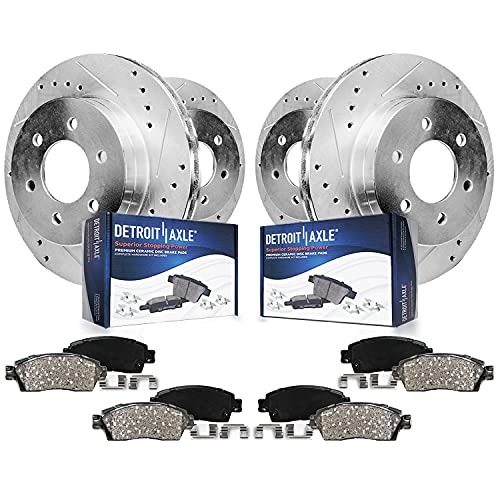
| Budget-Friendly Pick | Vehicle Fitment: Select Chevy/GMC 1500 SUVs, trucks, vans | Kit Contents: 4 rotors + 4 ceramic pads | Rotor Design: Drilled & slotted | VIEW LATEST PRICE | Read Our Analysis |
| PowerStop Front & Rear Brake Kit K5874-36 |

| Best for SUVs | Vehicle Fitment: Lexus GX460 2010–2023; Toyota 4Runner 2010–2024 | Kit Contents: 4 rotors + 4 pad sets + hardware | Rotor Design: Drilled & slotted | VIEW LATEST PRICE | Read Our Analysis |
| Detroit Axle 8pc Brake Kit for Chevy GMC |
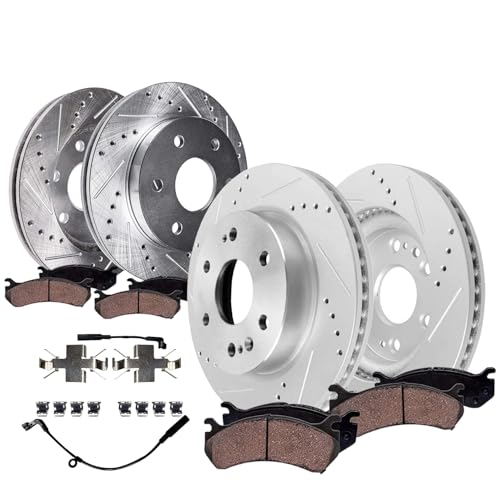
| Newest Truck Fit | Vehicle Fitment: Select Cadillac/Chevy/GMC full-size trucks & SUVs 2019–2024 | Kit Contents: 4 rotors + 4 pad sets + hardware | Rotor Design: Drilled & slotted | VIEW LATEST PRICE | Read Our Analysis |
| PowerStop Truck & Tow Brake Kit K1906-36 |
| Heavy-Duty Towing | Vehicle Fitment: Ford Excursion 2000–2005; Ford F-250 Super Duty 1999–2004 | Kit Contents: 4 rotors + 4 pad sets + hardware | Rotor Design: Drilled & slotted | VIEW LATEST PRICE | Read Our Analysis |
| PowerStop Truck & Tow Brake Kit (K2073-36) |
| Work Truck Pick | Vehicle Fitment: Chevy/GMC 2500/3500 HD trucks 2001–2010 | Kit Contents: 4 rotors + 4 pad sets + hardware | Rotor Design: Drilled & slotted | VIEW LATEST PRICE | Read Our Analysis |
More Details on Our Top Picks
Detroit Axle Brake Kit for Chevy GMC Trucks
In case you want a budget-friendly pick, this Detroit Axle kit fits a lot of Chevy and GMC trucks well.
You get:
- 4 drilled and slotted rotors
- 4 ceramic pads
- Front 12-inch rotors, rear 12.78-inch rotors
It’s a direct-fit full kit for compatible Silverado, Sierra, Tahoe, Yukon, Astro, and Safari models, plus a few Suburban and Avalanche trims, so check caliper and axle details first. The rotors are built to exceed OEM specs for fit and stopping power, while ceramic pads help you get quieter, smoother braking and longer wear. And the 10-year warranty helps, because brakes shouldn’t bring drama. Weight is 77.9 pounds.
- Vehicle Fitment:Select Chevy/GMC 1500 SUVs, trucks, vans
- Kit Contents:4 rotors + 4 ceramic pads
- Rotor Design:Drilled & slotted
- Pad Material:Ceramic
- Warranty:10-year
- Item Weight:77.9 lb
- Additional Feature:10-year coverage
- Additional Feature:Direct-fit replacement
- Additional Feature:Quiet stopping performance
PowerStop Front & Rear Brake Kit K5874-36
PowerStop’s K5874-36 shines for SUVs that tow, haul, climb mountain grades, or roll on bigger tires. Should you drive a 2010 to 2023 Lexus GX460 or 2010 to 2024 Toyota 4Runner, you get a direct-fit Z36 Truck & Tow upgrade with no modifications.
You get:
- Front and rear carbon-fiber ceramic pads
- Drilled and slotted rotors
- Stainless hardware and shims
That combo enhances stopping power, cuts dust, and manages heat better, so fade stays in check when gravity gets rude. The G3000 rotors meet OE tolerances, and Silver Zinc Dichromate plating fights rust. Expect multiple boxes, plus a 36-month, 36,000-mile limited warranty too.
- Vehicle Fitment:Lexus GX460 2010–2023; Toyota 4Runner 2010–2024
- Kit Contents:4 rotors + 4 pad sets + hardware
- Rotor Design:Drilled & slotted
- Pad Material:Carbon-fiber ceramic
- Warranty:36 months / 36,000 miles
- Item Weight:78.81 lb
- Additional Feature:Silver zinc plating
- Additional Feature:Premium stainless hardware
- Additional Feature:Towing-focused upgrade
Detroit Axle 8pc Brake Kit for Chevy GMC
Need a newest truck fit for your late-model Chevy or GMC? This Detroit Axle 8pc kit gives you:
- 13.50-inch front drilled and slotted rotors
- 13.58-inch rear drilled and slotted rotors
- Front and rear ceramic pads with hardware
You get solid coverage for select 2019 to 2024 Silverado 1500, Sierra, Tahoe, Suburban, Yukon, Yukon XL, and some Escalade trims, including 2022 LTD. But check fitment carefully, especially electronic parking brake details, and skip it provided your truck has Brembo brakes.
Detroit Axle builds this kit to exceed OEM specs for fit, finish, and stopping power. And the 10-year warranty adds confidence, because brake jobs are enough excitement already.
- Vehicle Fitment:Select Cadillac/Chevy/GMC full-size trucks & SUVs 2019–2024
- Kit Contents:4 rotors + 4 pad sets + hardware
- Rotor Design:Drilled & slotted
- Pad Material:Ceramic
- Warranty:10-year
- Item Weight:40 lb
- Additional Feature:Not for Brembo
- Additional Feature:Electronic parking brake
- Additional Feature:Durability-tested construction
PowerStop Truck & Tow Brake Kit K1906-36
Built for heavy-duty towing, this kit suits Ford Excursion and F-250 Super Duty drivers who want a full brake upgrade at once. You get front and rear Z36 carbon-fiber ceramic pads, drilled and slotted rotors, and hardware, so you won’t piece together parts later.
Why it stands out:
- Fits Ford Excursion 2000 to 2005 and F-250 Super Duty 1999 to 2004
- Z36 pads amplify stopping power over stock and stay ultra-quiet
- Rotors vent heat, reduce fade, and resist cracks
And the silver zinc plating helps fight rust. Check Amazon Confirmed Fit initially, and expect multiple boxes. You also get a 36-month, 36,000-mile warranty.
- Vehicle Fitment:Ford Excursion 2000–2005; Ford F-250 Super Duty 1999–2004
- Kit Contents:4 rotors + 4 pad sets + hardware
- Rotor Design:Drilled & slotted
- Pad Material:Carbon-fiber ceramic
- Warranty:36 months / 36,000 miles
- Item Weight:Not specified
- Additional Feature:Ultra-quiet operation
- Additional Feature:Crack-resistant construction
- Additional Feature:Rust-resistant plating
PowerStop Truck & Tow Brake Kit (K2073-36)
For a work truck pick, this kit fits heavy-duty GM rigs that tow hard and stop often. You get front and rear drilled-slotted rotors, Z36 carbon-fiber ceramic pads, and stainless hardware for direct-fit installation on 2001 to 2010 Silverado and Sierra 2500 HD models, plus certain 3500 SRW applications.
Why it works:
- Carbon-fiber ceramic pads give you strong, low-dust braking.
- Stainless shims cut noise and vibration.
- G3000 rotors vent heat, clear debris, and help resist fade on long downhill pulls.
- Silver zinc dichromate coating fights rust.
And with a 36-month, 36,000-mile warranty, you’ve got useful backup too.
- Vehicle Fitment:Chevy/GMC 2500/3500 HD trucks 2001–2010
- Kit Contents:4 rotors + 4 pad sets + hardware
- Rotor Design:Drilled & slotted
- Pad Material:Carbon-fiber ceramic
- Warranty:36 months / 36,000 miles
- Item Weight:61 lb
- Additional Feature:Low-dust braking
- Additional Feature:Stainless-steel shims
- Additional Feature:Severe-duty performance
Factors to Consider When Choosing Truck Brakes and Rotors
Whenever you choose truck brakes and rotors, you need to get the basics right initially: vehicle fitment accuracy, rotor size and design, and pad material choice. And should you tow a trailer, haul heavy loads, or spend time on long downhill grades, you’ll also want strong heat and fade resistance so your stopping power doesn’t tap out at the worst moment. Pick the right combination, and you’ll get safer, smoother braking without turning every stop into a small negotiation with physics.
Vehicle Fitment Accuracy
Fitment is the gatekeeper here, because even a high-quality brake and rotor kit won’t help you provided the basic dimensions don’t line up with your truck.
Before you order, confirm:
- Factory rotor specs, including diameter, thickness, and bolt pattern, so the kit matches direct-fit requirements.
- Caliper type, piston count, and whether you have an electronic parking brake, because pad shape and hardware vary.
- Hub bore, offset, lug count, and wheel bolt pattern, since bad matches can cause vibration or poor seating.
Then go one step deeper:
- Match 2WD or 4WD.
- Verify rear disc or drum.
- Check special axle options like limited-slip, QuadraSteer, or hybrid hubs.
- Use your exact model year, trim, tow package, and factory brake upgrades. Close enough isn’t close enough here!
Rotor Size And Design
Once you’ve confirmed the kit actually fits your truck, rotor size and design decide how that brake system behaves under real work, especially should you tow, haul, or spend time creeping down long grades with a loaded bed.
Go bigger, within spec. A 14-inch rotor usually carries more heat and adds braking advantage than a 12-inch one, so temperatures drop and fade resistance improves. Also watch:
- Thickness and mass: more material absorbs heat and stays stiffer, which helps resist warping, but extra unsprung weight can nibble at ride quality and fuel economy.
- Slotting or drilling: these clear water, dust, and gases, but overly drilled rotors can crack after brutal heat cycles.
- Metallurgy and coatings: better alloys and plated finishes fight rust and maintain runout stability.
Match diameter, hat, and sensor clearances exactly.
Pad Material Choice
Although rotor size handles much of the heat, pad material is what shapes the brake pedal’s personality day to day, from the initial cold stop in the morning to a long, sweaty descent with a trailer pushing from behind.
Choose according to how you drive:
- Ceramic: best assuming you want quiet operation, low dust, and long life. You’ll sweep wheels less, but cold-morning bite can feel slightly softer.
- Semi-metallic: metal fibers raise friction and move heat well, so pedal response feels stronger. The tradeoff? More dust, more rotor wear, more “welcome to truck ownership” cleanup.
- Organic: soft, quiet, and gentle on rotors, but they fade sooner whenever temperatures climb.
- Carbon-fiber ceramic blends: a smart step up, with better thermal stability and stronger stopping power.
Always check fade-resistance and temperature ratings before you buy.
Towing And Load Needs
Start with the load, because towing changes everything about how your brakes live and work. Should your truck regularly pulls a trailer, match brake capacity to your combined GVWR and typical tongue weight, not just the empty truck.
Focus on:
- Rotor size: Larger diameter and thicker rotors give you more leverage and mass for heavier hauling.
- Pad compound: Carbon-ceramic or quality ceramic/metallic blends usually handle towing better than basic organic pads.
- System rating: Rotors, pads, calipers, and hardware should meet or exceed OEM torque and load specs.
And in case you tow often, look for vented, drilled, or slotted rotor designs, plus high-temp pad formulas, because long grades punish weak setups fast. Good cooling, solid ventilation, and corrosion protection matter too. Trailers don’t care about your brake budget!
Heat And Fade Resistance
Whenever your truck’s brakes get hot, fade becomes the real enemy, because stopping power can drop fast whenever rotors can’t shed heat and pads begin to lose bite. To keep braking consistent, focus on the hardware that manages temperature, not looks.
- Choose vented, drilled, or slotted rotors in case they add airflow paths and surface area.
- Look for strong metallurgy and more thermal mass, because thicker, larger-diameter rotors absorb more heat per stop.
- Match pad material to the job. Carbon-ceramic and quality metallic compounds usually hold bite better under repeated heavy braking.
And don’t ignore system cooling. Good ventilation, proper caliper clearance, and clean airflow around the brakes help heat escape. But mismatched pads and rotors can glaze, trap heat, and fade sooner, which is about as helpful as bald tires in rain.
Corrosion Protection Features
Fight rust promptly, because corrosion doesn’t just make your rotors look rough, it can shorten brake life, promote uneven rotor thickness, and turn simple service into a seized-bolt headache. Whenever you shop, prioritize:
- Zinc or dichromate plated rotors, which delay surface rust and keep cast iron looking decent longer.
- Stainless-steel or electroplated caliper parts that resist galvanic corrosion, helping slide pins and caliper bolts move instead of fusing in place.
- Corrosion-resistant pad shims and anti-rattle clips, because they reduce metal contact and support proper pad retraction.
Also, choose rotors built to tighter tolerances with protective finishes, since pitting and scoring can snowball into uneven wear. Should you drive through road salt or heavy humidity, clean your brakes regularly and make a few firm stops under load to burn off light surface rust.
Installation Hardware Included
A corrosion-resistant rotor won’t help much provided the small parts around it are missing, low-grade, or wrong for your caliper, so check the hardware list before you buy.
You’ll save time provided the kit includes:
- Caliper bolts, pad clips or shims, wheel lug access pieces, and rotor set screws.
- Proper-size anti-rattle clips matched to your caliper and pad backing plate.
- Correct-grade, correct-thread fasteners for caliper brackets and rotor retention.
And look at the finish. Stainless steel or zinc-plated hardware resists rust better and pairs well with coated rotors for long service life.
Provided your truck needs specialty bits, confirm those too:
- retaining screws
- ABS sensor bolts
- hub-centric rings
Miss one tiny part, and your “simple” brake job gets real complicated, real fast.
Warranty And Coverage
Before you click buy, read the warranty like it’s part of the brake kit, because coverage can vary a lot and the fine print matters more than most people expect.
Check:
- Length and limits. You want both the time period and mileage cap, like 3 years or 36,000 miles.
- Covered parts. Make sure rotors, pads, hardware, and protective coatings are actually included.
- Failure terms. Look for wording on cracking, warping, and corrosion, plus exclusions for bad installation, racing, misuse, or towing beyond capacity.
Then review the claim process:
- Save your receipt and maintenance records.
- Confirm whether pre-authorization or an inspection is required.
- See whether coverage is full replacement or pro-rated.
And don’t forget labor, shipping, and whether you must use an authorized service network. Those costs sneak up fast!
Frequently Asked Questions
How Often Should Truck Brake Fluid Be Replaced?
Replace your truck’s brake fluid every two to three years, though severe towing or mountain driving might demand sooner service. That interval proves a key truth: moisture builds quietly, lowers braking performance, and risks expensive damage.
Can Larger Tires Affect Braking Performance and Stopping Distance?
Yes, larger tires can reduce braking performance and increase stopping distance because they add rotational mass and change mechanical advantage. You’ll often need more brake force, and your truck’s ABS and speedometer calibration can suffer too.
Do Drilled and Slotted Rotors Wear Out Pads Faster?
Yes—drilled and slotted rotors can wear your pads faster, sometimes at 10–20%, because the edges scrape harder. You’ll gain better heat dissipation and bite, but you’ll usually trade away some pad life sooner.
What Causes Brake Pedal Vibration While Towing Heavy Loads?
You’ll usually feel brake pedal vibration while towing heavy loads from overheated, warped rotors, uneven pad deposits, or out-of-balance hubs. Heavy trailers amplify heat and stress, so your brakes can’t clamp smoothly or consistently anymore.
Can I Install Truck Brakes and Rotors Myself?
Yes—you can install truck brakes and rotors yourself; about 25% of DIYers handle brake jobs successfully each year. You’ll need proper tools, torque specs, and patience, but you shouldn’t attempt it provided you’re inexperienced.
