Your vehicle’s braking system is vital for your safety. Brake-related issues cause about 22% of car crashes. For trucks, brake failure contributes to nearly 30% of accidents. Two main friction materials make your braking system work: brake pads and brake shoes. This guide clarifies the fundamental difference between brake pads and shoes.
You will understand the crucial distinctions of brake pads vs brake shoes. Both brake pads and brake shoes stop your car. However, their mechanisms and applications within the braking system vary greatly.
Key Takeaways
Brake pads work with disc brakes. They squeeze a spinning disc to stop your car. Disc brakes stop cars faster and handle heat better.
Brake shoes work with drum brakes. They push outward against the inside of a spinning drum. Drum brakes are often on rear wheels and last longer.
Disc brakes are common on front wheels and many modern cars. Drum brakes are often on rear wheels or older cars.
Brake pads cost less to buy than brake shoes. Replacing brake pads is also easier and takes less time.
Always use the correct brake part for your car. Check your brakes every year or every 12,000 miles for safety.
Braking Systems: Disc vs. Drum
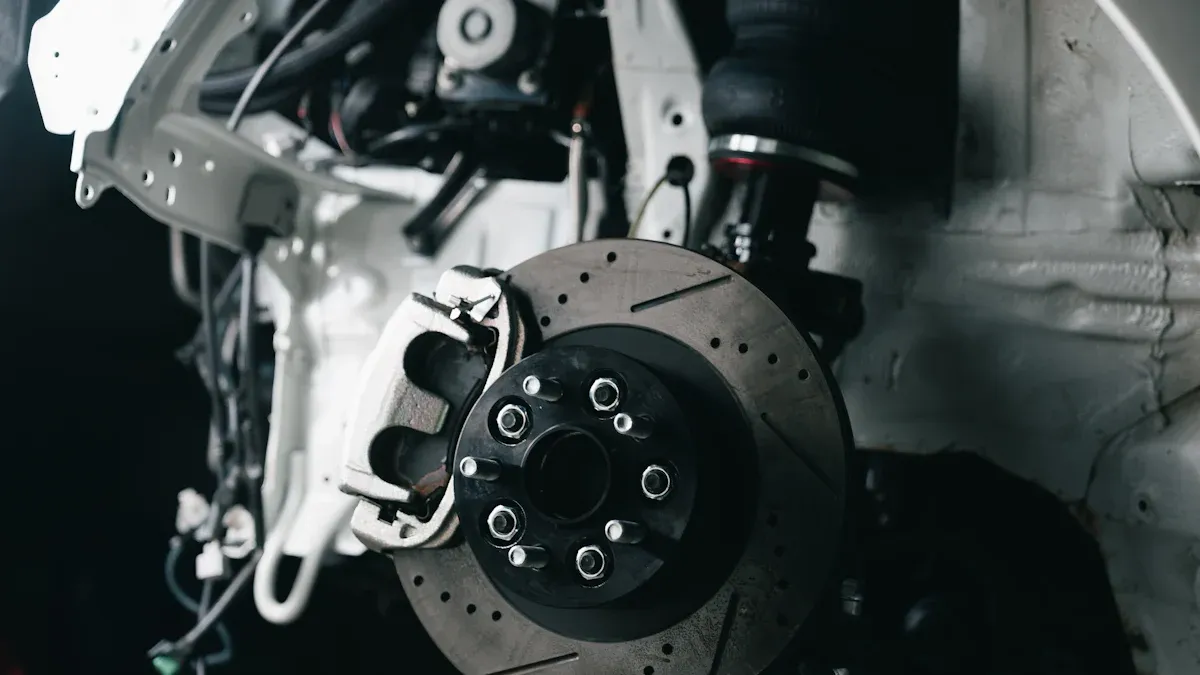
You find two main types of braking systems in vehicles today: disc brakes and drum brakes. Each system uses different friction materials to slow your car. Understanding these systems helps you know how your vehicle stops.
Disc Brakes and Brake Pads
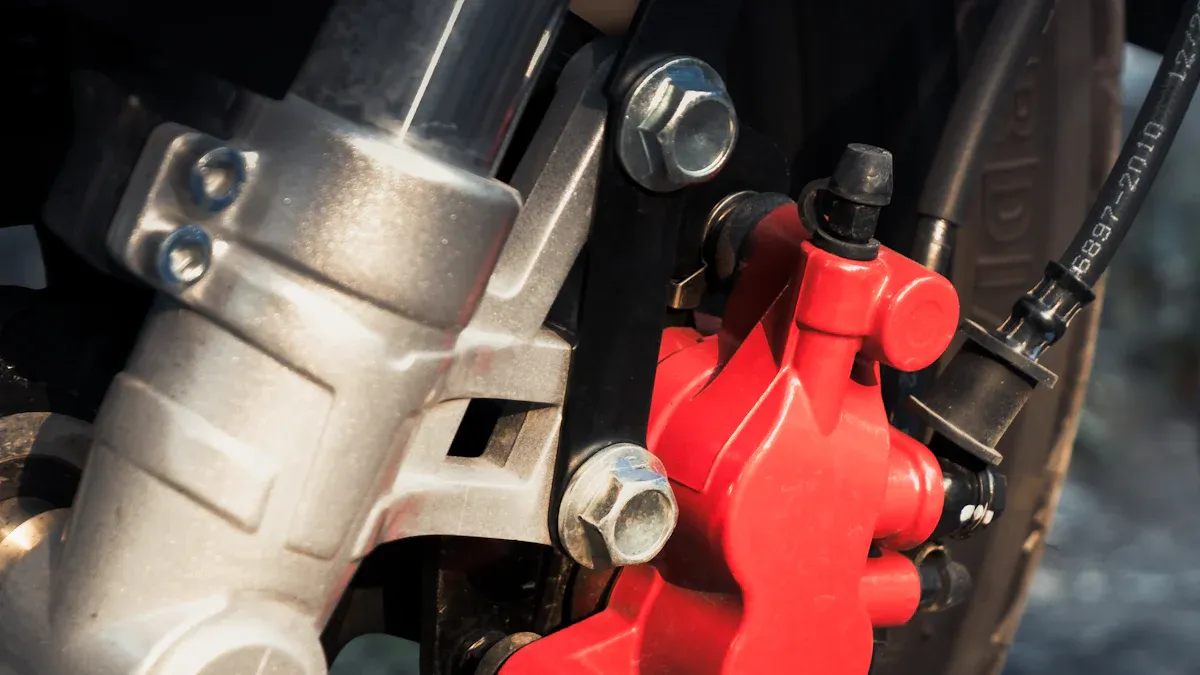
Many modern vehicles use disc brakes, especially on the front wheels. A disc brake works by clamping down on a rotating disc. This action creates friction and slows your wheel.
A typical disc brake includes:
Brake pads: These components press against the disc to create friction.
Disc (rotor): This is the rotating component that the pads press against.
Caliper assembly: This assembly houses the brake pads and frames the rotor, facilitating the pressing action.
When you press the pedal, the caliper squeezes the brake pads onto the disc. This friction converts kinetic energy into heat, stopping your car. Disc brakes offer excellent stopping power. For example, air disc brakes achieve stops approximately 20 feet shorter than federal requirements, stopping at 230 feet compared to the 250 feet required from 60 mph. This means a disc brake system can stop your vehicle faster.
Drum Brakes and Brake Shoes
Older vehicles and the rear wheels of many modern cars often use drum brakes. A drum brake operates differently. Instead of squeezing a disc, it pushes friction material outward against the inside of a rotating drum.
Here are the typical components of a drum brake:
Brake Drum: This heavy, pot-shaped iron component rotates with the wheel and houses all other parts.
Brake Shoes: Unlike flat pads, these are two curved components with friction lining that push outward against the drum’s inner surface.
Wheel Cylinder: This hydraulic part receives pressure from the master cylinder, pushing pistons to force the brake shoes against the drum.
Springs and Adjuster: A system of springs retracts the brake shoes when the pedal is released, while an adjuster keeps the shoes close to the drum as they wear.
When you apply the pedal, the wheel cylinder forces the brake shoes against the drum’s inner surface. This friction slows the wheel. Drum brakes are effective, but they generally have a longer stopping distance compared to disc brakes. At 60 mph, drum brakes average 245 feet for stopping distance, while disc brakes average 230 feet. This shows a 15-foot difference. You can see the clear distinction between brake pads vs brake shoes in their respective systems.
Design and Placement Differences
This section helps you understand the physical differences between brake pads and brake shoes. You will see how their design fits their specific braking system.
Brake Pads: Caliper and Rotor
Brake pads are a key part of a disc brake system. You find them inside a component called the caliper. The caliper sits over the brake rotor, which is a large metal disc. Brake pads are typically flat and rectangular. They have friction material on one side. When you press the brake pedal, the caliper squeezes these brake pads onto both sides of the spinning rotor. This action creates friction and slows your vehicle.
Brake pads come in different material types. Each type offers unique performance characteristics.
Organic Brake Pads: These use natural materials like rubber and glass. They offer quiet braking but may wear faster.
Semi-Metallic Brake Pads: These contain metal fibers. They dissipate heat well and last longer than organic pads.
Ceramic Brake Pads: Made from ceramic compounds, these resist heat and produce less dust. They provide consistent brake performance.
Carbon Fiber Brake Pads: These use carbon fibers for high-performance vehicles. They handle high temperatures and are lightweight.
You can also see the detailed composition of some brake pads:
Brake Shoes: Drum Interior
Brake shoes belong to a drum brake system. You locate them inside a drum, which is a hollow, cylindrical component. Brake shoes are curved. They have friction material on their outer surface. When you apply the brake, the shoes push outward against the inner wall of the rotating drum. This outward pressure creates the friction needed to slow your wheel.
Brake shoe linings also use various materials:
Semi-metallic brake linings: These blend metals like steel and copper.
Non-asbestos organic (NAO) linings: These use organic fibers and resins.
Ceramic brake linings: These contain ceramic fibers and copper.
Carbon composite and aramid fiber linings: These offer advanced performance.
Understanding these design differences helps you see how brake pads vs brake shoes work in their distinct systems.
How Braking Force is Applied
You now understand the design differences between brake pads and brake shoes. Next, you will learn how each component applies the force needed to stop your vehicle. The way they create friction is quite distinct.
Pads: Squeezing the Rotor
Brake pads work by squeezing a rotating disc called a rotor. When you press the brake pedal, a hydraulic system activates. This system pushes a caliper. The caliper then clamps the brake pads onto both sides of the rotor. This action creates friction. The friction slows the rotor’s spin, which in turn slows your wheel.
Here is how the mechanical process works:
You actuate a brake lever or pedal.
This action pulls a cable or pressurizes fluid.
The cable or fluid then actuates a lever arm on the caliper.
This lever arm squeezes the brake pads against the rotor.
The contact between the pads and the rotor generates friction. This friction slows or stops your vehicle.
This squeezing motion is very effective. It provides strong and consistent stopping power.
Shoes: Pushing Against the Drum
Brake shoes operate differently. They push outward against the inside of a rotating drum. When you apply the brake, brake fluid becomes pressurized. This pressure goes from the master cylinder to the wheel cylinder. This pressure pushes pistons. These pistons force the brake shoes into contact with the inner surface of the rotating drum.
This friction reduces the drum’s rotation. It slows your vehicle. When you release the pedal, return springs pull the shoes back. They return to their original position. Drum brakes also have a “self-applying” feature. The drum’s rotation can drag the shoes further into the friction surface. This increases braking force without more effort from you. Each wheel’s brake uses one wheel cylinder. It has two pistons. These pistons push the leading and trailing brake shoes against the drum.
Performance and Stopping Power
You want your vehicle to stop quickly and safely. The type of braking system directly impacts this ability. You will see how brake pads and brake shoes perform in different situations.
Stopping Efficiency and Response
Disc brakes, which use brake pads, offer superior stopping performance. A study by the Federal Motor Carrier Safety Administration (FMCSA) found that disc/disc brake setups resulted in shorter average stopping distances. This shows disc brakes stop your vehicle more effectively. They give you better stopping power and a quicker response. You get consistent braking response, even in wet conditions. This allows for more precise control when you brake. Drum brakes, however, are adequate for daily driving. They generally have less stopping power, especially at higher speeds.
Heat Dissipation Capabilities
Brakes generate a lot of heat when you stop your car. This heat must go away quickly for your brakes to work well. Disc brakes are much better at this. They have an open design. This design allows air to flow around the brake pads and rotor. This helps heat escape easily. Drum brakes, however, have an enclosed design. This traps heat inside the drum. Because of this, drum brakes tend to overheat more quickly than disc brakes. They are harder to cool down. This difference means disc brakes handle heat better. They give you more reliable stopping, especially during quick or repeated stops.
Fade Resistance
Brake fade happens when your brakes get too hot. This causes the friction between the brake pads and rotors to drop. Your stopping power diminishes. This is a temporary problem. Your brakes will work normally again once they cool down.
Heat is the main cause. During long braking, like going down a steep hill, heat can build up faster than it dissipates. This reduces the effectiveness of your brake. Disc brakes are less prone to brake fade because they dissipate heat so well. Drum brakes accumulate heat more easily. This causes them to fade sooner under heavy use.
Durability and Lifespan
You want your vehicle’s braking components to last. Understanding their durability helps you plan for maintenance. Brake pads and brake shoes have different wear characteristics and lifespans.
Wear Characteristics of Brake Pads
Brake pads wear down over time. How they wear can tell you about your braking system’s health. You might see several common wear patterns:
Uneven Wear: One brake pad might have much less friction material than the other. This often happens if a caliper piston does not return to its resting spot.
Tapered Pad Wear: The friction material wears in a wedge shape. This can be due to incorrect pad installation or issues with caliper components.
Cracking, Glazing, or Lifted Edges: You might see physical damage on the friction material. This shows signs of too much heat. Overuse or hydraulic system problems can cause this.
Overlapping Friction Material: The top edge of the pad extends past the rotor’s top. This can happen from worn guide pins or using the wrong parts.
Many factors affect how long your brake pads last.
Type of Brake Pads: Organic pads typically last about 20,000 miles. Semi-metallic pads can last 30,000 to 60,000 miles. Ceramic pads can reach up to 70,000 miles.
Driving Habits: Aggressive driving with frequent stops wears brake pads faster. Smooth driving helps them last longer.
Vehicle Weight: Heavier vehicles need more braking force. This makes brake pads wear out more quickly.
Road Conditions: Driving on hills or in city traffic with many stops increases wear. Highway driving causes less wear.
Maintenance: Regular checks help extend the life of your brake pads.
Longevity of Brake Shoes
Brake shoes generally last longer than brake pads. This is because drum brakes are often on the rear wheels. Rear brakes do less work than front brakes. The lifespan of brake shoes varies greatly. It depends on how you drive and where you drive.
Driving Condition | Typical Lifespan (miles) |
|---|---|
Long-haul / line-haul | 250,000–350,000 |
Regional or mixed-use | 150,000–250,000 |
Vocational or city-duty | 75,000–150,000 |
There is no single mileage number for how long brake shoes should last. Factors like routes, loads, and driver habits change their lifespan. For example, a driver reported their brake shoes lasted about 100,000 miles on a heavy-duty flatbed truck. This included driving on dirt roads and in city traffic. They also noted replacing drums every third time due to dirt and mud exposure.
A driver reported that their brakes last approximately 100,000 miles on a sod-hauling flatbed and about 150,000 miles on a tractor, primarily in flat land conditions.
This shows that even with heavy use, brake shoes can offer significant durability.
Cost and Maintenance
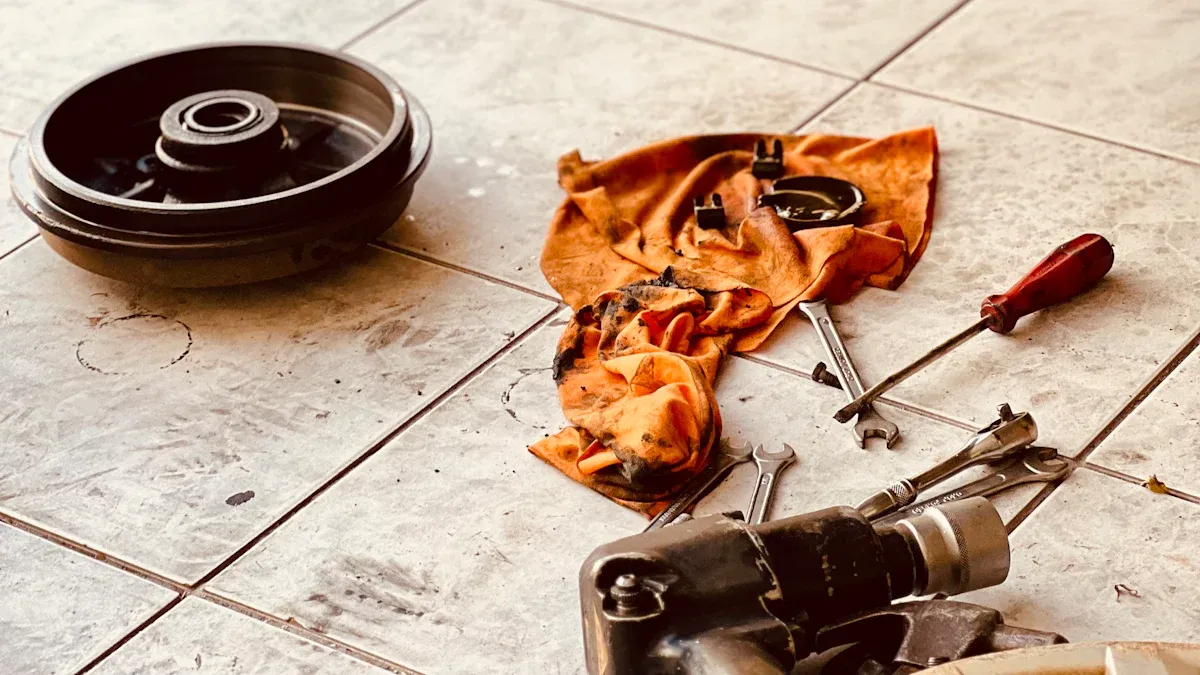
You consider the cost of parts and labor when you maintain your vehicle. Brake pads and brake shoes have different expenses. You will find differences in their initial cost, replacement complexity, and overall maintenance.
Initial Component Cost
The initial cost of brake components varies. Brake pads are generally less expensive than brake shoes for the parts alone. For a standard passenger car, a set of good quality brake pads and rotors for one axle typically costs between $150 and $300. You can find different price points for brake pads depending on their type:
Brake Pad Type | Cost Range (per set) |
|---|---|
Basic Organic | $25 – $50 |
Metal-blend | $30 – $70 |
Premium Ceramic | $50 – $100+ |
Brake shoes often come with more hardware. This can make their initial component cost higher.
Replacement Complexity and Labor
Replacing brake pads is often a simpler job. It usually takes less time. Replacing brake pads and rotors typically takes 1.5 to 2 hours if the process is straightforward. If you need a full brake pad replacement for both front and rear, expect 2-3 hours of labor. If you only replace brakes on a single axle, the labor time is usually 1-2 hours. A brake shoe replacement can be more involved. This is because drum brake systems have more parts inside the drum.
Overall Maintenance Expenses
You will find different long-term maintenance costs for each system. For disc brakes, brake pad replacement is the most frequent service. You also need to replace rotors when they wear thin. A full brake pad replacement can cost between $40 and $70 per wheel for hydraulic systems.
For drum brakes, a complete brake shoe replacement service for both wheels on a rear axle typically costs between $350 and $850. This includes shoes and hardware. If you need new drums or wheel cylinders, the total cost can increase to $650–$1,000. Drum brake systems can last up to 100,000 miles under gentle use. However, factors like towing or corrosion can shorten their lifespan.
Vehicle Application and Identification
You will find different braking systems on various vehicles. Understanding which system your vehicle uses helps you know its capabilities.
Common Vehicle Types
Different vehicles use specific braking systems based on their needs. Early sports cars often used disc brakes on all wheels. This met their high-performance demands. Today, most passenger vehicles commonly use disc brakes. Some lightweight models might still have drum brakes on the rear. Very large and heavy road vehicles increasingly adopt disc brakes. This replaces traditional large drum brakes. Even bicycles, both mountain and road bikes, now almost all come equipped with disc brakes by 2024.
Many cars commonly utilize drum brakes on their rear wheels. They often pair these with disc brakes on the front. Drum brakes are still employed in modern cars, particularly for their rear wheels. They offer benefits like generating less heat and providing more friction contact points in certain situations. This makes them a suitable choice for the rear axle.
Identifying Your Vehicle’s System
You can easily identify your vehicle’s braking system. Look through the spokes of your wheels. If you see a shiny metal disc and a caliper clamping onto it, you have a disc brake system. If you see a solid, enclosed metal drum behind the wheel, you have a drum brake system. You can also check your vehicle’s owner’s manual. It provides specific details about your car’s components. This includes the type of braking system it uses. Knowing your system helps you understand its maintenance needs.
You now understand the key difference between brake pads and shoes. Brake pads work with disc brakes, squeezing a rotor. Brake shoes operate in drum brakes, pushing against a drum. Neither is superior; each suits specific vehicle designs. For optimal brake performance and your safety, consult your vehicle’s manual or a qualified mechanic. Regular brake inspections are crucial for your vehicle’s brake system.
FAQ
Can I use brake pads instead of brake shoes?
No, you cannot. Brake pads work with disc brake systems. Brake shoes work with drum brake systems. These systems are very different. You must use the correct part for your vehicle’s brake type.
Which braking system is better, disc or drum?
Neither system is inherently “better.” Disc brakes offer superior stopping power and heat dissipation. Drum brakes are cost-effective and work well for rear wheels. Manufacturers choose the best system for specific vehicle applications.
How often should I check my vehicle’s brakes?
You should have your vehicle’s brakes inspected regularly. A mechanic should check them at least once a year or every 12,000 miles. This ensures your braking system works safely. Regular checks help prevent serious issues.
What causes brake fade?
Brake fade happens when your vehicle’s brakes get too hot. This heat reduces friction between the components. Your stopping power decreases temporarily. Disc brakes resist fade better than drum brakes.