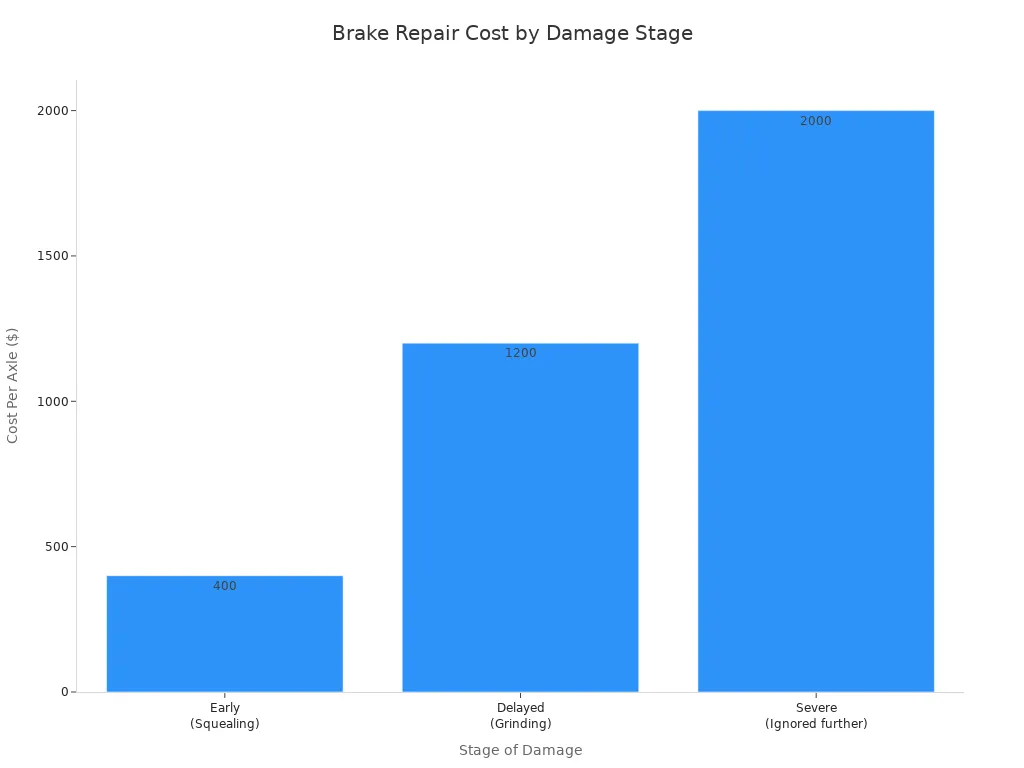
Smoking brakes are a critical warning sign. They indicate excessive heat and potential system failure. Friction often causes this heat. Ignoring this issue can lead to severe safety risks. Your brakes can fail, causing accidents. Brake problems contribute to many accidents; one study found brake defects linked to 42% of crashes involving defective vehicles. Ignoring these signs also causes costly damage. You can warp rotors or ruin brake pads. Severe damage, like a complete brake system rebuild, can cost over $2,000. This chart shows how repair costs escalate with delayed action.
We detail 9 urgent danger signs of Brakes Smoking Causes. We also guide your immediate actions to ensure safety.
Key Takeaways
Smoking brakes mean your car’s brakes are too hot. This can make them stop working well.
Ignoring smoking brakes is dangerous. It can cause accidents and cost a lot to fix later.
Look for signs like a burning smell, less stopping power, or smoke from one wheel. These mean you have a problem.
If your brakes smoke, pull over safely. Let them cool down naturally, and do not pour water on them.
Always get a mechanic to check smoking brakes. They can fix the problem and keep you safe.
Overheated Brakes: The Dangers
Understanding Overheating
Your car’s brakes work by using friction. When you press the brake pedal, brake pads squeeze against spinning rotors. This action creates friction. This friction converts the car’s kinetic energy into heat. This heat then dissipates into the air, slowing your vehicle down. Some heat is normal during braking. However, too much heat causes problems. Excessive heat makes your brakes smoke. It also leads to brake fade. Brake fade means your brakes lose their stopping power.
Immediate Risks
Overheated brakes create several immediate dangers. First, you experience reduced stopping power. This is brake fade. For example, racing brake pads like the Hawk DTC-60 start to fade around 1,700 degrees Fahrenheit. Street-use pads can fade at around 700 degrees Fahrenheit. This means your car takes longer to stop. Second, brake fluid can boil. When brake fluid boils, it creates vapor bubbles. These bubbles make your brake pedal feel soft or spongy. This greatly reduces your braking ability.
Fluid Type | Boiling Point (Dry) | Boiling Point (Wet) |
|---|---|---|
DOT 3 | 205° C / 401° F | 140° C / 284° F |
DOT 4 | 230° C / 446° F | 155° C / 311° F |
DOT 5 | 260° C / 500° F | 180° C / 356° F |
DOT 5.1 | 260° C / 500° F | 180° C / 356° F |
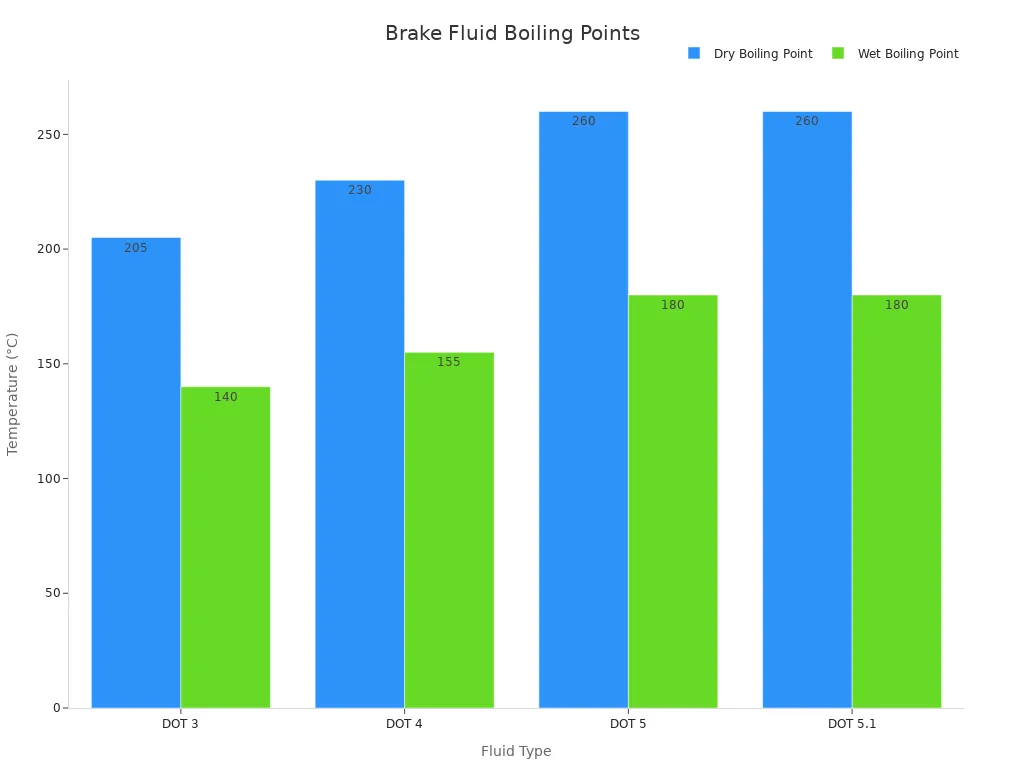
The dry boiling point is for new fluid. The wet boiling point is for fluid that has absorbed water. Third, excessive heat damages brake components. Rotors can warp. Brake pads can get ruined. In extreme cases, brakes can even catch fire. This poses a serious risk to your safety and your vehicle.
9 Urgent Brakes Smoking Danger Signs
When your brakes start smoking, your car is sending you a clear message. You need to pay attention to these urgent danger signs. They point to serious issues within your braking system. Recognizing these signs can prevent accidents and costly repairs.
1. Burning Smell and Smoke
You often notice a distinct burning smell along with smoke. This usually means your brake pads or rotors are severely overheated. Sometimes, it indicates burning brake fluid. Several issues can cause this. Your brake pads might be stuck to the disc. This happens due to brake dust or corrosion. A stuck caliper piston also causes constant friction. This means your brakes are always on. If you have drum brakes, a seized wheel cylinder can make brake shoes continuously rub. This creates heat and smoke, especially from the rear.
Driving with your parking brake even slightly engaged also causes constant drag. This rapidly overheats your rear brakes. New brake pads can also emit a burning smell. This happens as the resin cures during the break-in process. This smell should disappear after a few days. However, if you push your brakes too hard for too long, extreme heat breaks down the resins in the pads. This releases gases that produce a strong burning smell. This is a sign of severe overheating. It often leads to brake fade. These are common Brakes Smoking Causes.
2. Reduced Braking Power
You will notice your car takes longer to stop. This is reduced braking power, also known as brake fade. Overheated brakes cause this. A burning smell after heavy braking often signals this problem. You might also feel vibrations in your steering wheel when you brake. This can happen if your rotors warp from overheating. Overheating significantly reduces your braking efficiency. This makes stopping your vehicle much harder.
3. Smoke from One Wheel
If you see smoke coming from only one wheel, it points to a localized problem. This means the issue is specific to that wheel. A seized caliper is a common culprit. It keeps the brake pad pressed against the rotor. A stuck brake pad can also cause this. Sometimes, a wheel bearing problem generates enough heat to cause smoke. This specific sign helps you diagnose calipers that are not working correctly.
4. Blue or Purple Rotors
Look at your brake rotors. If they appear blue or purple, they have experienced extreme heat. This discoloration clearly shows the rotor has overheated. High temperatures can warp the rotor. This makes it less effective. A component stuck to the rotors can cause them to turn blue. Poor driving habits, like excessive braking or driving in heavy traffic or hilly areas, also frequently lead to damaged and blue brake rotors. This happens due to continuous heat generation.
5. Loud Brake Noises
Loud noises often happen before or with smoking brakes. These noises indicate severe wear or damage. A grinding noise is very serious. It means your brake pads are completely worn down. This causes metal-on-metal contact between the pads and rotors. This can damage your rotors beyond repair. You should stop driving immediately for an inspection. A thumping noise, especially in cars with drum brakes, suggests your brake shoes are hitting an uneven groove in the brake drum. This requires immediate attention.
6. Hard or Soft Brake Pedal
You might feel your brake pedal is either too hard or too soft. A soft, spongy brake pedal often means air is in your brake system. Air can enter the system when your caliper overheats. This causes the brake fluid to boil. When air is in the brake lines, brake fluid cannot flow correctly. If pumping a soft pedal quickly restores pressure, air is likely in the system. A hard pedal can indicate other issues, but both sensations mean your braking system is not working as it should.
7. Vehicle Pulls When Braking
If your vehicle pulls to one side when you brake, your brakes are not applying force evenly. A sticking caliper is a common reason. It prevents correct pressure application or release. This causes a brake pull. A seized piston keeps one pad in constant contact with the rotor. A brake pad contaminated with grease or oil also loses effectiveness. This makes your car pull hard towards the side with the working brake. A damaged brake hose can also cause this. It might allow fluid to flow to the caliper but prevent its return. This keeps the brake applied. These are critical Brakes Smoking Causes that affect steering control.
8. Visible Fluid Leaks
You might see fluid leaking near your brake components. This is a critical sign of hydraulic system failure. Brake fluid leaking onto hot parts can cause smoke. Common sources include worn or damaged brake hoses. These rubber hoses can crack over time. Corroded or punctured brake lines also leak. Seals inside brake calipers or wheel cylinders can wear out, allowing fluid to escape. A faulty master cylinder can also leak. These leaks lead to a loss of brake pressure. This reduces your braking efficiency and can cause complete brake failure.
9. Smoke After Normal Driving
If you see smoke after normal driving, it suggests constant drag. This means something is keeping your brakes partially engaged. A seized caliper is a common cause. Its piston can corrode and stick in an extended position. This makes the pads continuously rub against the rotor. A parking brake issue can also cause this. Corroded caliper pins can also impede movement, leading to stuck calipers. Road debris can obstruct caliper motion. Even internal debris blocking brake fluid flow can keep pads engaged. These issues generate excessive heat and smoke.
Brakes Smoking: Immediate Actions
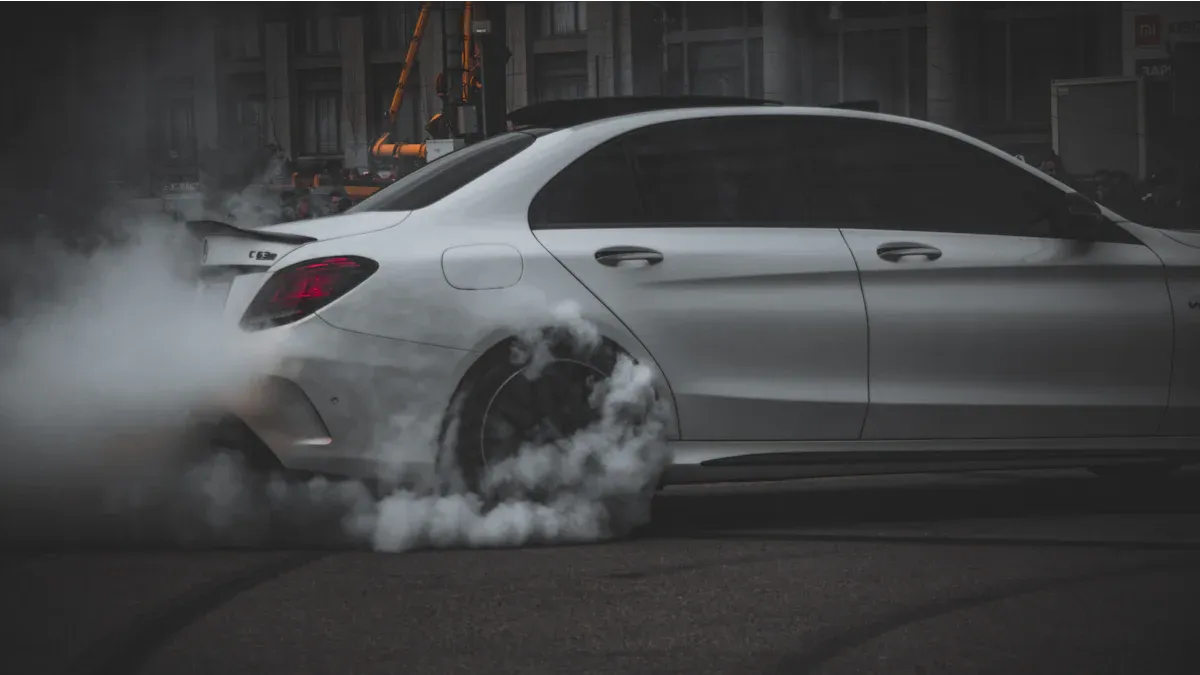
When you notice your brakes smoking, you must act quickly. Your immediate actions can prevent further damage or an accident.
Pull Over Safely
You need to find a safe place to stop your vehicle. Look for a wide shoulder or an empty parking lot. Turn on your hazard lights. This warns other drivers of your situation. You protect yourself and others by pulling over safely.
Allow Brakes to Cool
Do not pour water on hot brakes. This can cause severe damage. Rapid cooling can warp rotors or crack components. Instead, let your brakes cool naturally. Wait at least 30 minutes. This allows the extreme heat to dissipate safely.
Visually Inspect for Damage
Once your brakes are cool, you can perform a visual check. Look for any visible fluid leaks. Check your brake pads for severe wear. You might see discolored rotors, appearing blue or purple. This indicates extreme overheating. A high buildup of brake dust on the wheel also suggests your system needs service. Remember, ignoring smoking brakes can lead to warped rotors or ruined brake pads. Do not touch any hot parts during your inspection.
Assess Driving Safety
You must decide if your car is safe to drive. Do not drive if the smoke is heavy. Avoid driving if your braking performance is severely reduced. If you see fluid leaks, do not drive. These signs mean a serious problem exists. You should arrange for a tow truck. This ensures your safety and prevents further damage.
Seek Professional Help
Smoking brakes indicate a serious problem. You need a qualified mechanic to diagnose and repair the underlying cause. Look for mechanics with ASE certification. This certification, especially the ASE A5 (Automobile Brakes) Certification, shows a technician’s expertise. An Undercar Specialist designation also indicates comprehensive knowledge. ASE-certified mechanics retest every five years. This ensures they stay updated with new technology. A professional can correctly identify the issue and fix it.
Smoking brakes are a serious problem. They demand your immediate attention. These are critical Brakes Smoking Causes. Recognizing these danger signs protects you and your vehicle. Prompt action and professional diagnosis are crucial. They prevent accidents and costly repairs. You avoid further damage like brake fluid boil or fire. Understanding these Brakes Smoking Causes helps you stay safe. If you experience any of these signs, get your brakes inspected by a certified mechanic today.
FAQ
What makes my brakes smoke?
Excessive heat causes your brakes to smoke. Friction from brake pads against rotors creates this heat. Hard braking, a stuck caliper, or a dragging parking brake can all cause overheating. This heat can damage your brake system.
Can I drive my car if the brakes are smoking?
No, you should not drive your car if the brakes are smoking. Smoking brakes mean a serious problem. Driving can lead to brake failure. This puts you and others in danger. Pull over safely and get help.
How long should I wait for my brakes to cool down?
You should wait at least 30 minutes for your brakes to cool down. Do not pour water on them. Rapid cooling can damage components. Let them cool naturally. This prevents further damage to your brake system.
Do new brake pads smoke sometimes?
Yes, new brake pads can sometimes smoke a little. This happens during the “break-in” period. Resins in the pads cure from the heat. This usually stops after a few days of normal driving. If it continues, seek professional help.