

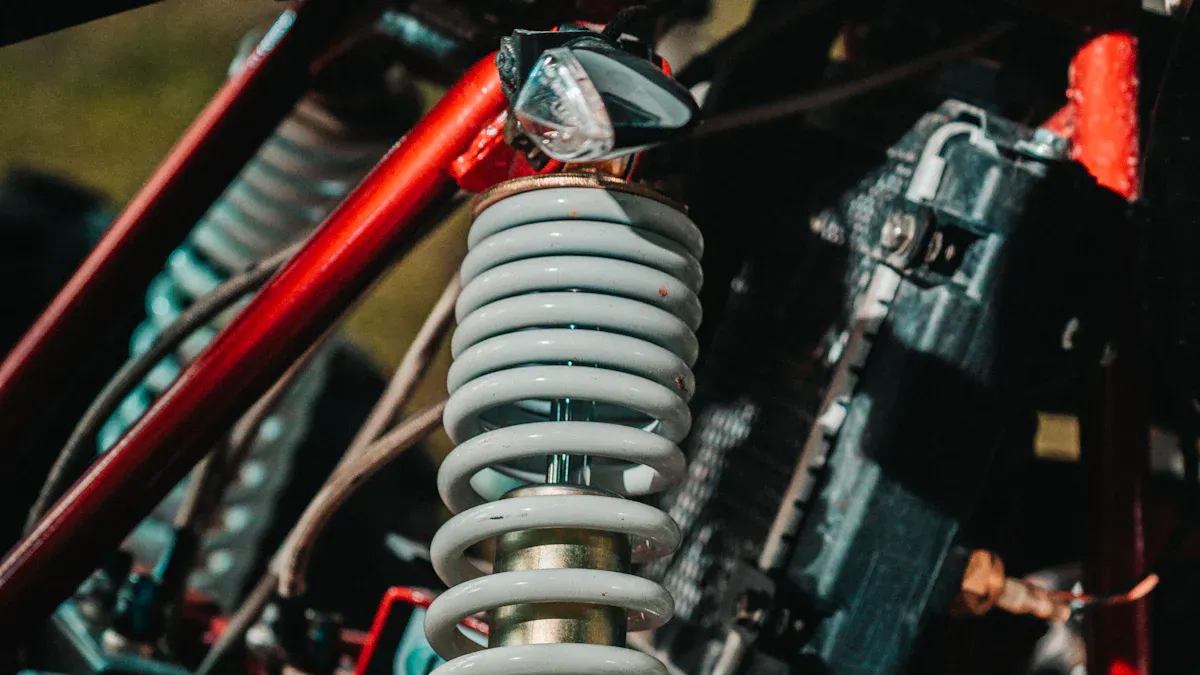
A vehicle’s suspension system significantly impacts its performance, handling, and comfort. Double wishbone suspension features a multi-link design with two A-shaped arms. This design offers precise wheel control. MacPherson strut suspension integrates the shock absorber and spring into a single unit. It uses a single lower control arm. Approximately 80% of passenger vehicles currently utilize MacPherson strut suspension on their front axle. This blog explores the suspension pros and cons of both systems. More than 65% of premium and sports cars utilize double wishbone suspension for enhanced driving dynamics. We compare their differences and applications.
Key Takeaways
Double wishbone suspension offers better handling and comfort. It uses two arms to control the wheel. This system is often found in sports cars and luxury vehicles.
MacPherson strut suspension is simpler and cheaper to make. It combines the shock absorber and spring into one unit. Most everyday cars use this system.
Double wishbone systems cost more to build and fix. They also take up more space. MacPherson struts save money and space.
Double wishbone suspension gives more precise steering. It keeps tires flat on the road during turns. MacPherson struts have less control over tire contact.
Manufacturers choose suspension based on cost, space, and how the car should drive. There is no single ‘best’ suspension system for all cars.
Double Wishbone Suspension Explained
Design and Components
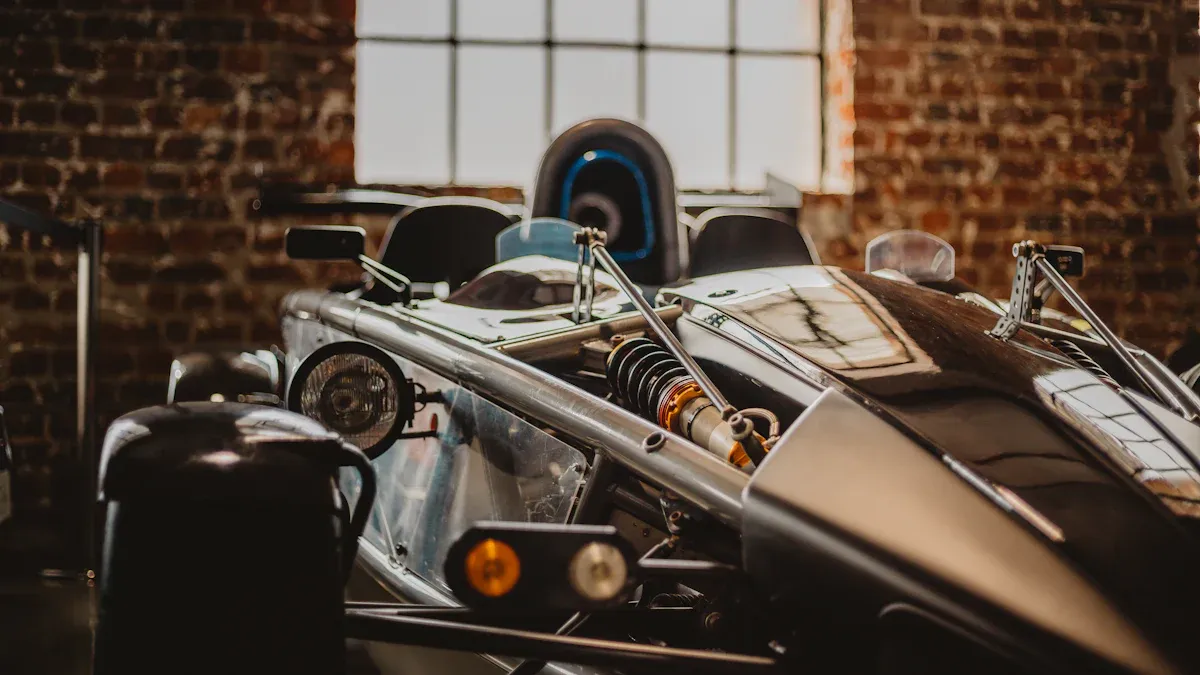
The double wishbone suspension system features a sophisticated design. It uses two wishbone-shaped arms, also known as A-arms or control arms. These arms control wheel movement. An upper A-arm connects to the chassis and the steering knuckle. A lower A-arm also connects to the chassis and the steering knuckle. The upper A-arm is typically shorter than the lower control arm. This design allows for precise wheel control. The system also includes a knuckle, a shock absorber, and a coil spring. Ball joints connect the arms to the knuckle. Bushings manage fore-aft loads. The shock absorber assembly, which includes a damper and spring, absorbs tire vibrations. It also supports the vehicle’s weight. This assembly often installs on the lower control arm. The steering knuckle is crucial for vehicle steering. It connects to both upper and lower control arms. It also connects to the tie rod end for steering input.
Double Wishbone Pros
The double wishbone suspension offers many advantages. It provides excellent camber control. This allows for optimal tire contact. This enhances handling performance. Drivers experience a smoother ride, especially on bumpy roads. The system does not affect wheel alignment during suspension travel. It enables precise steering response. This gives a very good, communicative feel for how the vehicle handles. Technicians can adjust parameters like camber, caster, and toe. This flexibility meets the requirements of the track or road. The double wishbone suspension can be tuned for both comfortable ride quality and superior handling. It also offers packaging flexibility due to its relatively compact design. This makes it suitable for various applications.
Double Wishbone Cons
The double wishbone suspension system has some drawbacks. Its intricate design leads to high manufacturing and maintenance costs. This includes components like ball joints and control arms. The system is also heavier. Its complex design often requires additional components. This can negatively impact fuel efficiency and performance. The double wishbone suspension takes up more space. Its complex design and numerous components occupy a significant amount of room. This can be problematic for smaller vehicles. It also reduces design flexibility. Optimal performance requires precise alignment. This adds to the complexity of setup and maintenance. The manufacturing complexity arises from the need for tight tolerances and custom control arm geometries. This inherently increases production costs.
MacPherson Strut Suspension Explained
Design and Components
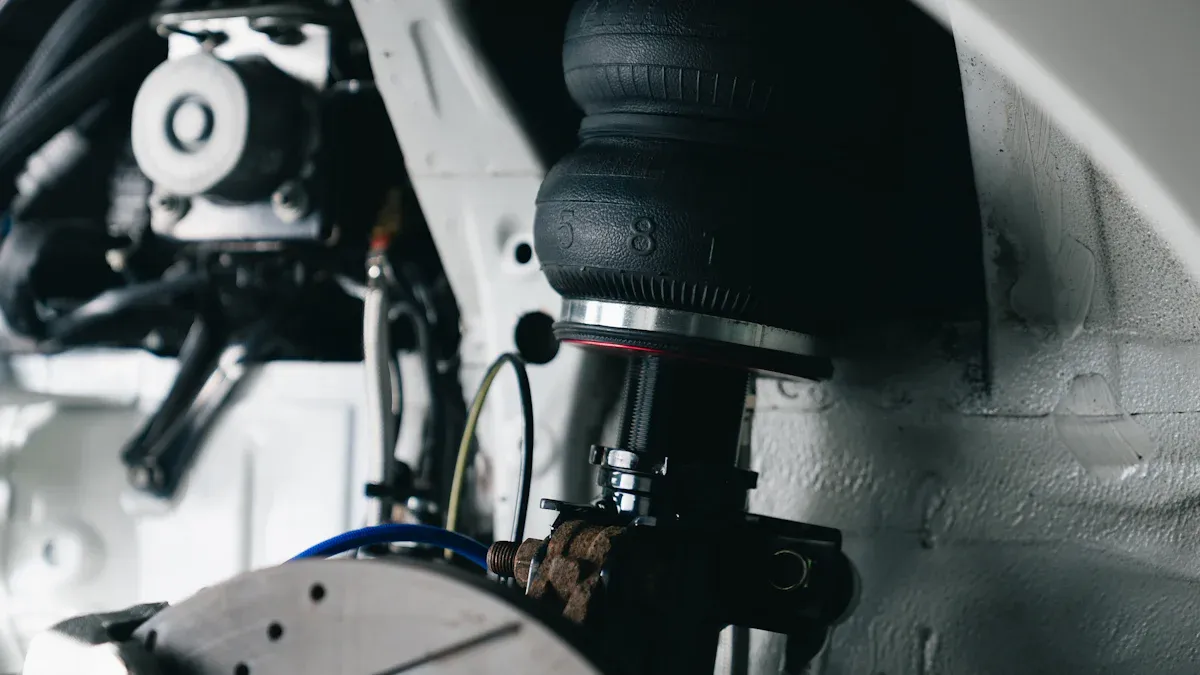
The macpherson struts suspension system features a simpler design. It uses a single lower control arm or wishbone. This arm helps locate the wheel. The strut itself is a key component. It acts as both a shock absorber and a structural part. The strut assembly is the primary component. It is a vertical tube. It houses the shock absorber. It connects the wheel to the vehicle body. A coil spring sits around the shock absorber within the strut assembly. It supports the vehicle’s weight. It also absorbs road shocks. The steering knuckle connects to the bottom of the strut assembly. It holds the wheel hub. It also allows for steering. Mounts and bearings attach the top of the strut to the vehicle body. They allow pivoting. They also absorb vertical movement. This reduces vibration. The design of macpherson struts allows for a simplified assembly.
MacPherson Strut Pros
The macpherson struts offer several benefits. Their simple design reduces manufacturing costs. This makes them cost-effective. The compact size frees up valuable space. This is often in the engine bay. It also maximizes interior cabin space. It increases trunk capacity. This is because it combines the shock absorber and coil spring into one unit. The simple design also contributes to a lightweight nature. It eliminates the need for extra control arms and linkages. This reduces the overall weight of the suspension system. This design flexibility allows adaptation for various vehicle types.
MacPherson Strut Cons
Despite its advantages, the macpherson struts system has drawbacks. It offers limited adjustability. This hinders fine-tuning of handling characteristics. The system tends to have camber changes during cornering. This can negatively impact tire contact. It also affects overall handling. Its integrated design results in limited adjustability. This is compared to other suspension types. Adjusting handling characteristics is more challenging. This includes camber angle, caster angle, and toe pattern. This is due to fixed mounting points. This limitation makes it difficult to improve or upgrade the car’s suspension for better handling control.
Performance and Handling Comparison
Vehicle suspension systems directly impact how a car drives. They affect how the car handles turns, feels on the road, and responds to the driver. This section compares the performance and handling of double wishbone and MacPherson strut suspensions.
Camber Control and Tire Contact
Camber control is crucial for maintaining tire grip during cornering. Double wishbone suspension excels in this area. Its design uses horizontal upper and lower control arms. This setup increases negative camber as the wheel moves upward during cornering. This action keeps the tire flatter on the road. A flatter tire means a larger contact patch with the road surface. This leads to better on-road stability and increased tire grip. The parallel linkage in double wishbone suspension ensures consistent wheel alignment. It keeps the wheels parallel to the car’s vertical line throughout suspension travel. This design helps maintain maximum grip.
MacPherson strut systems operate differently. They lack an upper control arm. This design allows the strut to absorb impacts individually. This can lead to a smoother ride over small bumps. However, it reduces the car’s stability during cornering. The tire contact patch can change more dramatically. This can reduce overall grip when the car leans into a turn. The tire may not stay as flat on the road. This means less of the tire surface touches the ground.
Steering Precision and Response
Double wishbone suspension significantly enhances steering precision. It offers superior control during cornering. This system allows for independent adjustment of camber, caster, and toe angles. Technicians can optimize wheel alignment for specific driving conditions. This precise control helps maintain consistent tire contact. This improves grip and traction. Drivers feel a more direct connection to the road. This results in better feedback and more responsive steering. This contributes to good handling.
MacPherson struts offer less steering precision. Their design has limited adjustability. This restricts the ability to fine-tune handling characteristics. The integrated strut design means fewer independent adjustments are possible. This limits how much technicians can optimize wheel alignment. As a result, MacPherson struts may not provide the same level of handling precision. This is especially true in high-performance driving scenarios. The steering feel can be less direct compared to a double wishbone setup.
Ride Comfort and Stability
Double wishbone suspension often provides a superior balance of ride comfort and stability. Its independent control arms allow engineers to tune the suspension for both smooth rides and firm handling. The system can absorb road imperfections effectively. This keeps the cabin comfortable. At the same time, it maintains excellent body control. This prevents excessive body roll during cornering. This combination contributes to stable driving dynamics. The precise control over wheel movement helps the tire stay planted.
MacPherson struts can offer a comfortable ride, especially over smaller bumps. The strut’s ability to absorb impacts directly contributes to this. However, they can sometimes struggle with stability during aggressive maneuvers. The simpler design means less control over wheel geometry. This can lead to more body roll in turns. The tire may lose some grip more easily under stress. This can make the car feel less stable during hard cornering.
Wheel Travel and Dynamics
Wheel travel refers to how much the wheel can move up and down. Double wishbone suspension generally offers excellent control over wheel travel. Its multi-link design allows for precise management of the tire’s angle and position throughout its movement. This is beneficial for maintaining grip over uneven surfaces. It also helps keep the tire in optimal contact with the road during dynamic driving. This contributes to overall vehicle stability and performance.
MacPherson struts have a more direct connection between the wheel and the chassis. This can sometimes limit the independent movement of the wheel. While effective for everyday driving, this design can sometimes compromise wheel travel control in extreme conditions. The tire’s angle might change more significantly during large suspension movements. This can affect the tire’s ability to maintain consistent grip.
Cost, Complexity, and Space
Vehicle suspension choices involve significant trade-offs. These trade-offs often balance performance with practical considerations. Cost, design complexity, and the space a system occupies are major factors. Manufacturers carefully weigh these aspects when designing a car.
Manufacturing and Maintenance Costs
Manufacturing costs differ greatly between the two suspension types. Double wishbone suspension systems are more expensive to produce. They feature a more intricate design. They also use more individual components. This includes multiple control arms, ball joints, and bushings. These parts require precise manufacturing. This increases production expenses. Evidence shows a double wishbone system is more complex and has more components. This increased component count leads to higher cost, longer service times, and greater weight. Maintenance costs for double wishbone systems are also higher. More parts mean more potential points of wear. Replacing these components can be costly.
MacPherson strut systems offer a cost-effective solution. Their simpler design reduces manufacturing expenses. They combine the shock absorber and spring into one unit. This means fewer parts to produce and assemble. This simplicity translates into lower production costs for car makers. Maintenance is also generally less expensive. Fewer components need replacement. This makes MacPherson struts a popular choice for budget-conscious vehicles.
Design Complexity
The design complexity of each system varies significantly. Double wishbone suspension is inherently more complex. It uses multiple links and pivot points. Engineers must carefully design the geometry of these links. This ensures optimal wheel movement and handling. This complexity allows for fine-tuning of performance characteristics. However, it demands more engineering effort and precise manufacturing. The intricate nature of the system provides superior control over the tire’s contact with the road.
MacPherson strut suspension boasts a simpler design. It integrates the shock absorber and spring into a single strut. A single lower control arm guides the wheel. This straightforward design reduces the number of moving parts. It simplifies the engineering process. This simplicity makes it easier to manufacture and assemble. While less complex, it still provides effective suspension for most driving conditions.
Packaging and Space Efficiency
Space efficiency is a critical factor in vehicle design. Double wishbone suspension systems typically require more horizontal space. The two A-arms extend outwards from the chassis. This can limit space available for the engine or other components. It can also impact the width of the vehicle’s interior or trunk. This design often suits larger vehicles or those where performance is the top priority. Engineers can design around its space requirements.
MacPherson strut systems are highly space-efficient. Their compact design integrates the spring and shock absorber vertically. This saves valuable space in the engine bay. It also allows for more room in the passenger cabin or trunk. This compact footprint makes MacPherson struts ideal for front-wheel-drive cars. These vehicles often have crowded engine compartments. The design helps maximize interior volume. This is a significant advantage for many passenger cars.
Applications and Vehicle Types
Vehicle manufacturers choose suspension systems based on the vehicle’s intended purpose and target market. Each system offers distinct advantages. These advantages influence where manufacturers use them.
Double-Wishbone Suspension Applications
Manufacturers often select double-wishbone suspension for vehicles prioritizing performance and refined handling. This system provides superior handling, stability, and comfort. These benefits make it a preferred choice in high-performance vehicles and premium segments. It offers optimized wheel alignment and control. This is especially beneficial for electric powertrains due to their different weight distribution. The double-wishbone suspension also enhances stability and ride comfort on varied terrains. This makes it widely applied in SUVs, MPVs, and pickup trucks. Its superior handling and responsiveness are crucial for high-performance vehicles. This enables better cornering and agility. It also provides rugged capabilities and off-road performance, essential for ATVs. The balance of comfort, control, and durability makes the double-wishbone suspension design favored across diverse vehicle types. Many consider cars with this setup among the best-handling cars.
MacPherson Strut Applications
MacPherson strut suspension systems are common in a wide range of vehicles. This includes mainstream cars and some high-end models. They are particularly prevalent as front suspension in modern cars. This is due to their effectiveness, simplicity, and low manufacturing cost. Examples include the VW Golf GTI and even select Porsche 911 models. Manufacturers like BMW and Porsche also use this design. This shows it is not limited to ‘mundane cars’. It is employed by ‘pretty much every mainstream car manufacturer in the world’. MacPherson struts are widely adopted in A-, B-, and C-segment cars. This is primarily for their cost and packaging benefits. They are inexpensive to manufacture and occupy minimal internal space. This is especially good for small vehicles with transverse engines. This cost-saving measure is often imperceptible to customers. Manufacturers choose MacPherson struts due to their cost-effectiveness and packaging advantages. They require fewer components. They are lighter and less expensive to produce compared to other independent front suspension systems. The design creates additional lateral space in the engine bay. This is crucial for modern vehicles with transverse-mounted engines. These benefits make MacPherson struts a common choice for the front suspension in many transverse-mounted front-engine unibody vehicles. This includes front-wheel-drive compact cars like the Honda Civic. It also includes all-wheel-drive SUVs such as the Toyota RAV4 and compact crossovers like the Ford Bronco Sport. Understanding the suspension pros and cons helps explain these choices.
Manufacturer’s Choice Factors
Manufacturers weigh several factors when choosing between suspension types. Cost is a major consideration. MacPherson struts are less expensive to manufacture and install. Double-wishbone suspension is more expensive due to its complex design and components. Complexity also plays a role. MacPherson struts have a simpler construction. Double-wishbone suspension has a more complex design with more components. Space efficiency is another key factor. MacPherson struts offer compact construction and allow more cabin space. Double-wishbone suspension is less compact and takes up more space. Ride comfort and stability are also important. MacPherson struts offer a smoother ride by absorbing individual impacts. Double-wishbone suspension can be optimized for both ride and handling. It provides superior stability, better steering, and handling. Handling capabilities differ. MacPherson struts have limitations in handling and adjustability. Double-wishbone suspension offers precise control over wheel movement and better handling. Wheel alignment control also varies. MacPherson struts offer less precise control over wheel alignment. Double-wishbone suspension keeps wheels aligned for better performance. Terrain suitability is considered. MacPherson struts are less suited for challenging terrain. Double-wishbone suspension is more rigid. It handles challenging areas like hilly or curvy terrain.
The target market’s performance expectations significantly influence suspension selection. Consumers demand a superior driving experience. This drives the market for advanced suspension systems. These systems offer enhanced comfort, safety, and performance. Technological advancements in materials and design contribute to more efficient systems. The rising trend of vehicle electrification also influences suspension choice. EVs require specialized suspension systems due to their unique weight distribution. This creates demand for performance suspension systems tailored for EVs. This enhances the overall driving experience. For a performance road car, the suspension pros and cons of each system are carefully evaluated.
Double Wishbone offers superior handling and comfort, but it costs more. MacPherson struts are cost-effective and space-efficient, though they provide less precision. No single suspension system is inherently better. Drivers choose based on priorities like performance, budget, or daily commuting. Automotive engineering always involves trade-offs in suspension system design.
FAQ
Which suspension system offers better handling for sports cars?
Double wishbone suspension provides superior handling. It maintains optimal tire contact during cornering. This allows for precise steering and better grip. Sports cars often use this system for its performance benefits.
Why do most everyday cars use MacPherson struts?
MacPherson struts are cost-effective. They have a simpler design. This reduces manufacturing expenses. They also save space in the engine bay. These benefits make them ideal for mass-produced vehicles.
Does one suspension type provide a more comfortable ride?
Double wishbone suspension often balances comfort and stability well. It absorbs road imperfections effectively. MacPherson struts can offer a comfortable ride over small bumps. However, they may show more body roll during aggressive driving.
Can MacPherson struts be found in high-end vehicles?
Yes, some high-end vehicles use MacPherson struts. Manufacturers like BMW and Porsche use them. Their design offers benefits in specific applications. Engineers can optimize them for performance. This shows their versatility.
Which suspension system is easier to maintain?
MacPherson strut systems are generally easier to maintain. They have fewer components. This simplifies repairs. Double wishbone systems have more parts. This makes their maintenance more complex and costly.
