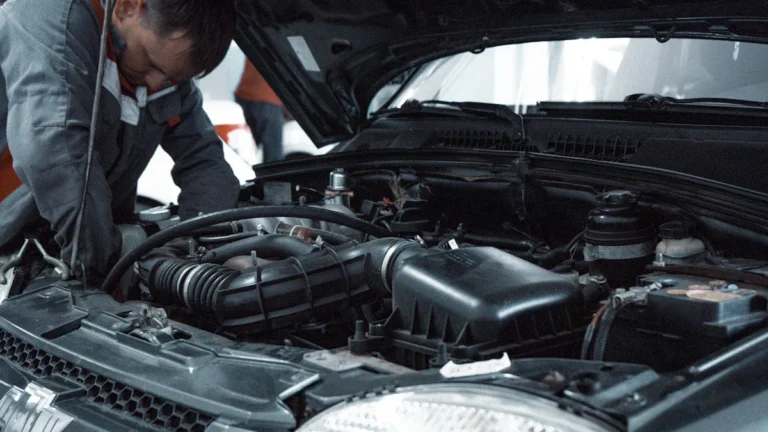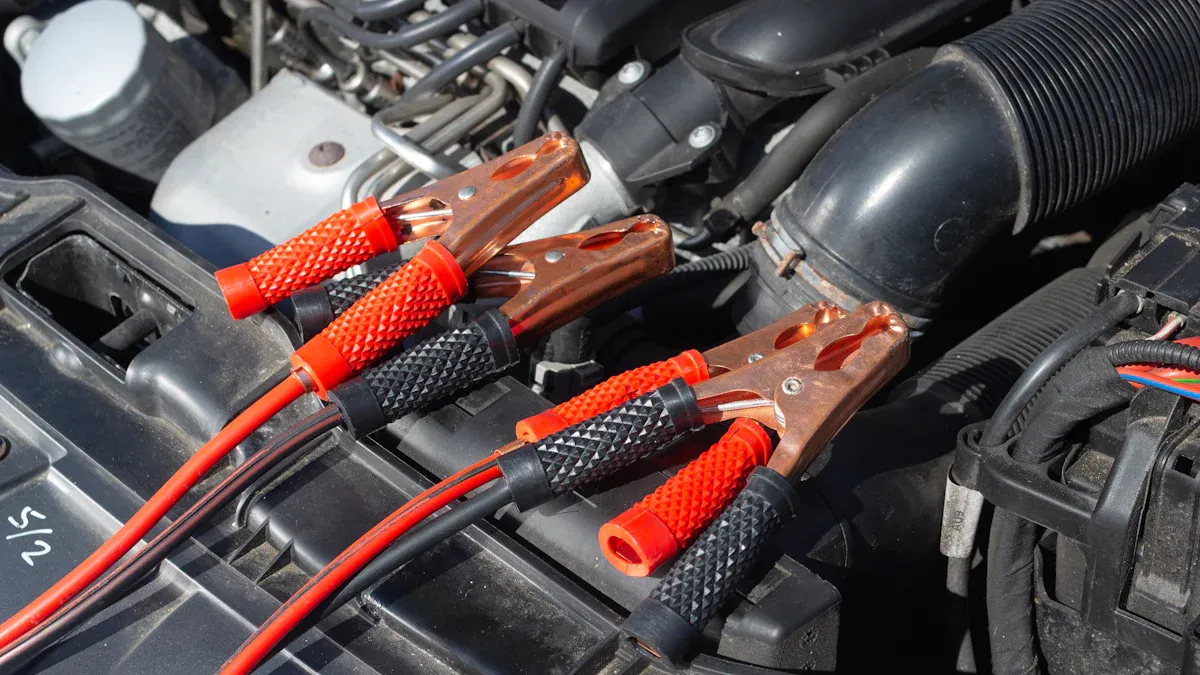
A dead car battery can ruin your day. You face frustration and unexpected delays. This guide will help you recharge a car battery safely and effectively. Learning how to charge a car battery yourself saves money. Professional services often cost more than a new battery, which can range from $75 to $200. You will learn essential steps, necessary equipment, and important safety considerations to charge a car battery with confidence. This knowledge helps you recharge car battery when needed.
Key Takeaways
Always put safety first when working with car batteries. Wear safety glasses and gloves to protect yourself from acid and explosive gases.
Gather the right tools, like a reliable battery charger and jumper cables, before you start. Clean the battery terminals well for a good connection.
Connect your battery charger carefully. Attach the positive clamp to the positive terminal and the negative clamp to a metal part of the car frame. Then, plug in and turn on the charger.
Choose the right charging speed. Slow charging is best for battery health, but fast charging can give a quick boost when needed. Check the voltage to know when the battery is full.
Keep your car battery healthy with regular checks and prevent it from losing its charge. This helps your battery last longer and avoids unexpected problems.
Tools & Safety to Recharge Car Battery
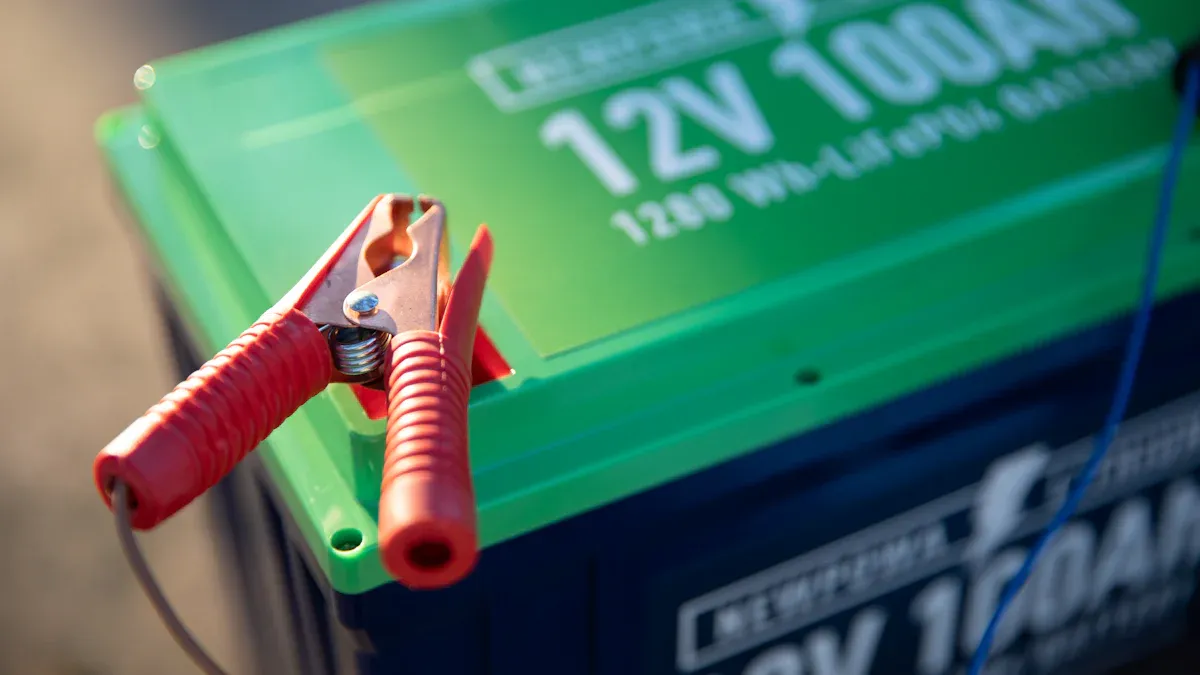
Before you begin to recharge car battery, gather your tools. You also need to understand safety rules. This preparation keeps you safe and makes the job easier.
Essential Equipment
You need the right tools to charge a car battery. A reliable battery charger is your main item. Different types of battery chargers exist. A trickle charger is good for maintaining batteries in vehicles you do not drive often. It prevents the battery from losing its charge over time. Solar chargers work similarly but use sunlight. They are great for RVs or boats. For a completely dead car battery, you need a heavy-duty battery charger. This type provides more power to bring a dead battery back to life. Many modern chargers are automatic. They stop charging when the battery is full. This gives you peace of mind. You also need a pair of jumper cables. These are useful if you need to jump-start your car or another vehicle.
Safety First
Working with car batteries requires caution. Batteries contain corrosive acid. They also produce flammable gases. Always protect yourself. Wear safety glasses or a face shield to protect your eyes from acid splashes. Put on acid-resistant gloves to shield your skin. An apron can also protect your clothing.
Improper handling of a car battery can cause serious problems. Battery acid can cause severe burns to your skin and eyes. It can even lead to blindness. Batteries also release hydrogen and oxygen gas. This mixture is explosive. A spark can cause a fire or explosion. This can lead to serious injury from flying debris and acid. You can also get an electrical shock or burns from short circuits. Metal tools or jewelry can create intense heat if they touch both terminals. Always remove jewelry before working on a battery. Be careful and stay safe.
Charge a Car Battery: Step-by-Step
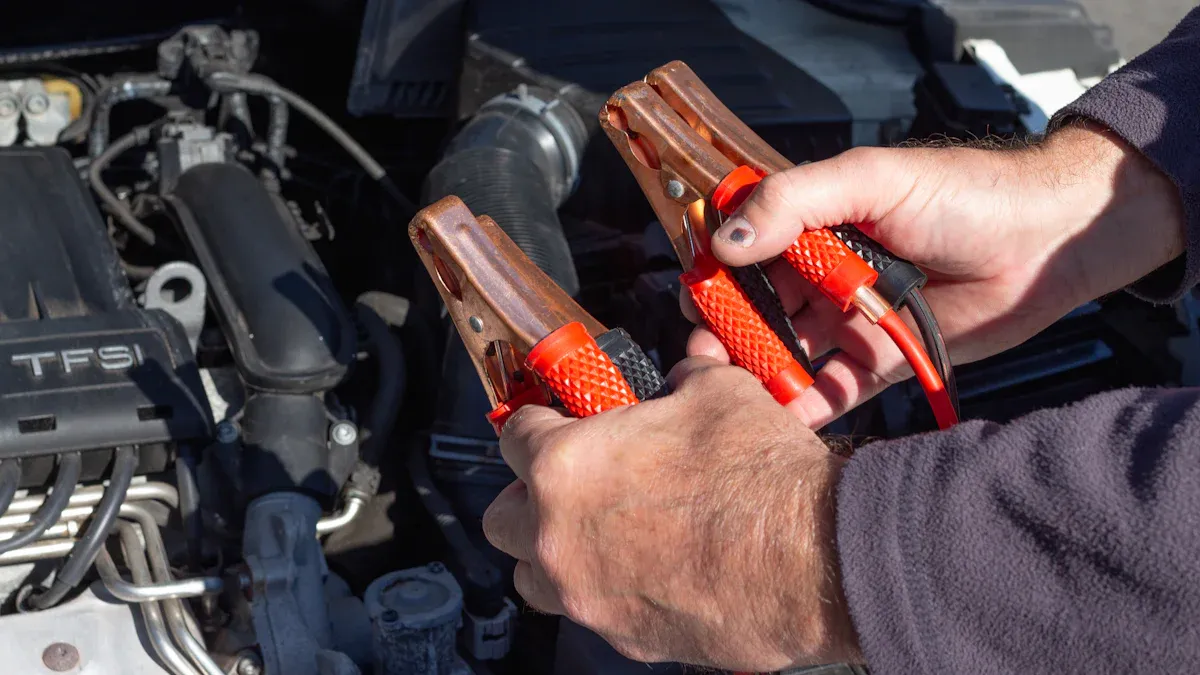
You are now ready to charge a car battery. Follow these instructions carefully. This ensures safety and effectiveness.
Battery Preparation
Before you recharge car battery, you must prepare it. First, ensure your car’s engine is off. You need to clean the battery terminals. Corrosion and dirt can prevent a good connection.
Here is how you clean the terminals:
Prepare the cleaning solution: Mix one tablespoon of baking soda with one cup of water. Stir until it combines well.
Disconnect and inspect the battery: Remove the negative battery cable first. Then, remove the positive cable. Look for leaks, swelling, or bloating on the battery. If you see these, do not clean it. Seek professional help instead.
Scrub the terminals: Dip an old toothbrush into your baking soda solution. Scrub the terminals to remove all buildup and corrosion.
Rinse and dry: Spray the terminals with water or wipe them with a damp rag. This rinses off any residue. Dry them completely with another rag.
Apply petroleum jelly and reattach cables: Dab petroleum jelly onto the dry terminals. This helps prevent future corrosion and improves the connection. Finally, reattach the positive cable, then the negative cable.
You will need these items for cleaning:
Protective gloves (like dish gloves)
Baking soda
Water
Old toothbrush
Rag
Petroleum jelly
Charger Connection
Connecting your battery charger correctly is crucial. Incorrect connections can cause serious problems.
Follow these steps to connect the car battery charger:
Ensure the
battery chargeris unplugged from the power outlet.Connect the red positive (+) clamp of the charger to the positive (+) terminal of the battery.
Connect the black negative (-) clamp of the charger to a clean, unpainted metal part of the car’s frame. Keep it away from the battery and fuel lines. If the battery is out of the car, connect the black clamp to the negative (-) terminal.
Plug the
battery chargerinto a power outlet.Turn on the charger. Set the desired charging rate if your charger allows it.
Incorrect connections can be dangerous. For example, reverse polarity, connecting positive to negative and vice versa, can cause severe damage. This can lead to rapid battery discharge, overheating, chemical leakage, or even an explosion. It can also damage the charger itself. A voltage and current mismatch from an incompatible charger can cause overheating or component failure. Low-quality chargers often lack proper protection, increasing the risk of power surges and short circuits. These issues can lead to thermal runaway, where the battery cannot cool itself, potentially causing a small explosion or fire.
Charging Process
Now you are ready to charge a car battery. The charging process depends on your battery’s condition.
Slow Charging (2-10 Amps): This is the safest way to
charge car battery. It delivers a steady, controlled charge. This prevents too much heat and helps your battery last longer. It is great for routine maintenance but takes several hours.Fast Charging (20-50 Amps): Use this method if your battery is almost dead and needs a quick boost. It charges faster but has a higher risk of overheating. Frequent use can shorten battery life. Use it only when necessary.
If you have a completely dead battery, use a low amp setting, like a 2A trickle charge. Let it charge for at least 72 hours. This prevents damage to the battery. For general charging a car battery, use the lowest setting, typically 2A, until it is fully charged.
You need to know when your battery is fully charged. You can check the voltage with a multimeter.
Charge Level | Voltage Reading |
|---|---|
Fully Charged | 12.6 to 12.7 volts |
Half Charged | 12.4 volts |
Flat | 12.2 volts |
Discharged | Below 12 volts |
To get an accurate reading:
Ensure the battery has rested for at least an hour, ideally overnight.
Connect the red probe of a multimeter to the positive (+) terminal of the battery.
Connect the black probe of a multimeter to the negative (-) terminal of the battery.
Read the voltage on the multimeter. A fully charged battery should show 12.6 to 12.7 volts.
Following these proper charging practices helps you how to charge a car battery effectively.
Safe Disconnection
Once your battery is fully charged, you must disconnect the charger safely. This prevents sparks and potential hazards.
Turn the
battery chargerto the off position before you touch the battery.Never disconnect the battery leads from the charger during the charging process. This can cause sparks, damage, or an explosion.
To prevent arcing, ensure the charger is turned off before disconnecting.
When disconnecting the battery for any reason, always disconnect the negative terminal first. This removes the risk of a short circuit if your wrench slips.
When you reconnect the battery, hook up the negative terminal last.
Charging Time & Alternatives
Factors Affecting Time
You might wonder how long it takes to charge a car battery. Several things affect this time. A standard battery charger generally takes about 4-8 hours to charge a deeply discharged car battery. The battery charges quickly at first. It then slows down as it gets closer to full.
Many factors influence how long you need to charge a car battery:
Battery Size: Larger batteries need more time to charge.
State of Charge (SOC): A very low battery takes longer than one that is only partly drained. Batteries charge faster when they are low. They slow down as they get full.
Battery Health: Older batteries or those with damage may not charge as efficiently.
Battery Temperature: Extreme temperatures can slow down charging. Cold weather makes batteries charge slower. Hot weather can also affect efficiency.
Charger Power Output: A more powerful battery charger can reduce charging time.
Jump-Starting Options
Sometimes you do not have time to fully charge a car battery. You need to jump-start your vehicle. You have a few options for this.
Traditional Jump-Starting with Another Car: This is a common method. You need another working car and jumper cables.
Park the working car close to your car.
Turn off both vehicles.
Connect the red (+) clamp to your dead battery’s positive terminal. Then connect the other red clamp to the working car’s positive terminal.
Connect the black (-) clamp to the working car’s negative terminal. Then connect the other black clamp to an unpainted metal part on your car. Keep it away from the battery.
Start the working car. Let it run for a few minutes.
Try to start your car.
Disconnect the jumper cables in reverse order. Remove the black clamp from your car first.
⚠️ Warning: David Bennett, AAA’s senior repair manager, warns against jump-starting a damaged or frozen battery. This can harm your vehicle and people nearby. Always check your owner’s manual for specific instructions. Incorrect steps can damage your car’s electronics.
Using a Portable Battery Jumper Pack: These are self-contained units. They have their own power source and cables. You connect them directly to your battery. Follow the instructions that come with your specific device. This is a good way to charge car battery off-grid.
Calling for Professional Help: If you are unsure or uncomfortable, call for help. Roadside assistance services can jump-start your vehicle safely. They have trained technicians and the right equipment.
Battery Maintenance for Longevity
You can extend your car battery’s life. Regular maintenance helps prevent unexpected breakdowns. Follow these tips to keep your battery healthy.
Regular Checks
You should inspect your car battery often. Check it at least twice per year. This means every 6 months or every 6,000 miles. Perform electrical testing, including Open Circuit Voltage (OCV), as part of this inspection. Many service centers include battery testing with oil changes.
Watch for signs of a failing battery. These signs tell you when to act:
A battery light on your dashboard turns on.
Your vehicle takes several cranks to start. This is a slow starter.
You see fluid leaking from the battery.
The battery case looks swollen. Excessive heat often causes this.
You notice corrosion on the battery posts. This looks like a greenish-blue buildup.
You need frequent jump-starts, more than once a month.
Your battery is three or more years old, especially if it has been in hot weather.
Preventing Discharges
Many things can cause your car battery to lose its charge. You can prevent these issues.
Common causes of battery discharge include:
Lights left on: Headlights, dome lights, or trunk lights drain power overnight.
Parasitic draw: Stereo systems or phone chargers can use power even when the car is off.
Loose connections: Poor connections can damage the battery.
Extreme temperatures: Hot summer months can damage the battery. Cold weather reveals a weak battery.
Alternator issues: A bad alternator prevents the battery from recharging.
Short trips: Drives under 15 minutes do not fully charge the battery.
Prolonged parking: Leaving a car parked for weeks causes discharge.
You can prevent discharge, especially during storage. Store your battery where the temperature stays between 50 and 60 degrees Fahrenheit. Always fully charge your battery before storage. This stops sulfation, which reduces battery capacity. Check the voltage every three months. If it drops below 12.4 volts, you need to recharge car battery to full capacity. Use a multistage battery maintainer. This keeps your battery topped up. Clean the battery terminals and case. This removes corrosion. You can also disconnect the negative battery cable to prevent discharge. A float charger, like a Noco Genius, is also helpful to charge a car battery. Avoid remote starting your vehicle often during storage. Idling does not sufficiently recharge the battery.
You now understand how to safely and effectively recharge car battery. Always prioritize your safety. Use the proper techniques. Regular battery maintenance prevents future issues. You can manage this task with confidence.