

Imagine a deep, guttural roar. That’s the power of an aggressive sound. Your car’s voice defines its character. It showcases its true performance. You can transform a quiet ride. Make it wild, commanding attention. We will reveal 12 aggressive ways to boost your car sound. Get ready for serious upgrades.
Key Takeaways
Upgrade your exhaust system for a louder car sound. Options include cat-back, axle-back, or full systems.
Engine modifications like cold air intakes or turbochargers change how your engine sounds. They also add power.
Consider advanced mods like headers or electronic exhaust cutouts for extreme sound changes. These offer significant performance gains.
Always check your budget, desired sound, and performance goals. Also, understand legal and warranty impacts before making changes.
You can make your car sound aggressive without spending a lot. Resonator deletes and axle-back exhausts are good budget options.
Upgrade Your Exhaust System
You want to truly transform your car’s sound. You need to upgrade your exhaust system. This is the most direct path to an aggressive auditory presence.
Cat-Back Exhaust
You want a significant sound upgrade. Consider a cat-back exhaust. This system replaces your factory exhaust from the catalytic converter to the tailpipe. You will get a deeper, more aggressive tone. Expect a noticeable increase in volume. This modification often improves exhaust flow. You might see minor performance gains. A cat-back system offers a great balance. You achieve a powerful exhaust note without going too extreme. However, costs can range from $500 to $1,500. This estimate does not include catalytic converters or manifolds. Be aware of potential drone at highway speeds. Always check local noise regulations before you commit.
Axle-Back Exhaust
An axle-back exhaust offers a simpler, more budget-friendly solution. This system replaces only your muffler and exhaust tips. You will hear a louder, more aggressive sound than your stock setup. It is less dramatic than a full cat-back system. Performance gains are minimal. This option is more affordable. Installation is often easier. You can also customize with exhaust tips to perfectly match your car’s style. Expect to pay around $200 to $800 for this modification. Drone can still be a factor, so research specific models.
Full Exhaust System
For the ultimate transformation, choose a full exhaust system. This replaces everything from your engine’s headers to the tailpipe. You will experience the most dramatic sound change. Your car will roar like a true race car. Expect significant performance gains. This system optimizes exhaust flow completely. The pros include maximum sound and power. However, full systems are very expensive. Installation is complex. You will likely face legality and emissions issues in many areas. Drone is almost guaranteed with such an aggressive setup. Prices typically range from $1,000 to $5,000 or more. This is for serious enthusiasts.
Make Your Car Louder: Exhaust Mods
You want to truly make your car louder. These specific exhaust modifications target volume and aggression.
Resonator Delete
You want to make your car louder. A resonator delete is a cost-effective option. You remove the resonator from your exhaust system. This creates a raw, raspy, and significantly louder exhaust note. Performance gains are minimal, but the sound change is very noticeable. Expect to pay between $120 and $300 for this resonator delete modification. A local muffler shop might quote $250 to $300. This specific resonator delete service often costs around $120 for just two mufflers. Be aware of potential drone and check local noise ordinances. If the sound is too aggressive, you can always add a resonator back in for fine-tuning.
Muffler Delete
For an even more aggressive sound, consider a muffler delete. You remove the entire muffler. This makes your car much louder, giving you a raw, untamed exhaust note. It is one of the most impactful ways to make your car louder. Performance gains are usually minor. However, a muffler delete has significant drawbacks. Installing a muffler delete could lead to increased emissions. Some states mandate specific emissions tests, meaning additional expenses. Drone can be severe. Legality is a major concern, as many areas have strict noise regulations.
Performance Muffler
You want a refined, aggressive sound without extreme volume. A performance muffler is your answer. You replace your stock muffler with an aftermarket unit. Performance mufflers create specific exhaust notes, ranging from quiet to aggressive. Their internal design shapes the sound. You can choose an aggressive muffler for significant exterior sound and noticeable interior sound. Many are street legal. Chambered mufflers, like the Flowmaster 40-Series, give a distinct muscle car sound. Glasspack mufflers offer a deep, aggressive note. Turbo mufflers balance noise reduction with performance. This performance muffler upgrade offers noticeable sound improvement and often avoids legality issues of deletes.
Upgraded Downpipes
Upgraded downpipes offer a sophisticated way to make your car louder, especially for turbocharged engines. You replace the restrictive factory downpipe, improving exhaust flow. You will hear a deeper, more aggressive turbo spool, and the overall exhaust note becomes significantly louder. Unlike a simple resonator delete, upgraded downpipes offer substantial performance gains. For smaller engines, you can see up to 100 hp and 100 lb-ft of torque. Larger engines can gain up to 150 hp and over 230 lb-ft. Aftermarket catted downpipes can increase horsepower by an average of 10 to 20 hp. These gains come with upgraded software. While a muffler delete makes your car louder, upgraded downpipes provide a more refined, powerful sound with substantial horsepower. However, downpipes are expensive, installation is complex, and removing catalytic converters is illegal in many places, impacting emissions.
Engine Sound Enhancements
You can make your car sound better by modifying its engine. These changes alter intake and engine acoustics. You will get a more aggressive and powerful auditory experience.
Cold Air Intake
You want to hear your engine breathe. You should install a cold air intake. This modification replaces your restrictive factory air box. It allows more cool, dense air into your engine. You will hear a distinct induction roar. One user reported hearing the air being sucked in, describing it as ‘cool’. Another user with a Vararam intake noted a significant sound change, primarily at wide-open throttle (WOT), reminiscent of ‘old four barrel days’. You might even perceive a slightly deeper exhaust sound. This upgrade improves throttle response. It can also add a few horsepower. The pros include a noticeable sound change and minor performance gains. Cons involve potential heat soak if not properly designed. Prices range from $150 to $500. You get a unique sound for your vehicle.
Turbocharger or Supercharger
You crave serious power and a distinctive sound. Consider adding a turbocharger or supercharger. These forced induction systems compress air into your engine. You will hear a characteristic whine or spooling sound. This sound intensifies with acceleration. A turbocharger installation typically results in a 30 to 40 percent increase in horsepower. This massive power boost comes with an aggressive new sound. Pros include huge performance gains and an exotic sound. Cons are high cost, complex installation, and potential warranty concerns. Expect to pay $3,000 to $10,000 or more.
Engine Tuning and ECU Remap
You can unlock your engine’s true potential. An engine tune or ECU remap optimizes your car’s computer settings. This can change how your engine sounds. Users note their engine sound became ‘more growly’ after a tune. A tuned engine generally sounds ‘more powerful’. You might observe a ‘more aggressive tone’ as you upgrade your tunes. Tunes increase the sound intensity of the engine. It becomes more intense yet ‘more refined’, especially at higher RPMs. The ‘blub blub blub blub blub’ pulsating rhythm, reminiscent of a muscle car, becomes more pronounced at idle. This is due to direct injection, air/fuel mixture, and timing adjustments. Pros include improved performance and a more aggressive engine note. Cons are potential warranty voiding and the need for professional tuning. Prices range from $300 to $1,500.
Camshaft Upgrade
You want a classic muscle car sound. A camshaft upgrade can deliver this. The camshaft controls valve timing. A narrow Lobe Separation Angle (LSA) of 110 degrees or less creates a desirable ‘choppy’ idle sound. This gives your car a very aggressive presence. Longer duration camshafts enhance top-end power. Higher lift camshafts allow more air and fuel into the combustion chamber. This leads to increased horsepower and torque. Pros include a truly unique and aggressive idle sound. Cons are high cost, complex installation, and potential drivability issues with very aggressive cams. Expect to pay $800 to $2,500 for parts and labor.
Advanced Aggressive Sound Mods
You want to push the boundaries. These modifications offer the most extreme sound changes. They often come with significant performance gains.
Headers and Manifolds
You can replace your factory exhaust manifolds with performance headers. These components optimize exhaust gas flow directly from the engine. You will hear an exotic, race-car like sound. This sound is often higher-pitched and more aggressive. Headers significantly improve engine breathing. You gain substantial horsepower and torque. The pros include maximum aggression and significant power increases. Cons involve high cost and complex installation. You might face legality and emissions issues. Prices typically range from $800 to $2,500.
Electronic Exhaust Cutouts
Imagine instant control over your car’s volume. Electronic exhaust cutouts allow you to bypass your muffler with the flip of a switch. You can go from quiet to extremely loud instantly. This modification lets you make your car louder on demand. When open, exhaust gases exit directly, creating a raw, aggressive sound. You get the best of both worlds: a civilized ride and a roaring beast. Pros include on-demand loud sound and incredible versatility. Cons are the cost and potential for exhaust leaks. Using them on public roads can be illegal. Expect to pay $300 to $800 for parts and installation.
Enhance Your Car Audio Setup
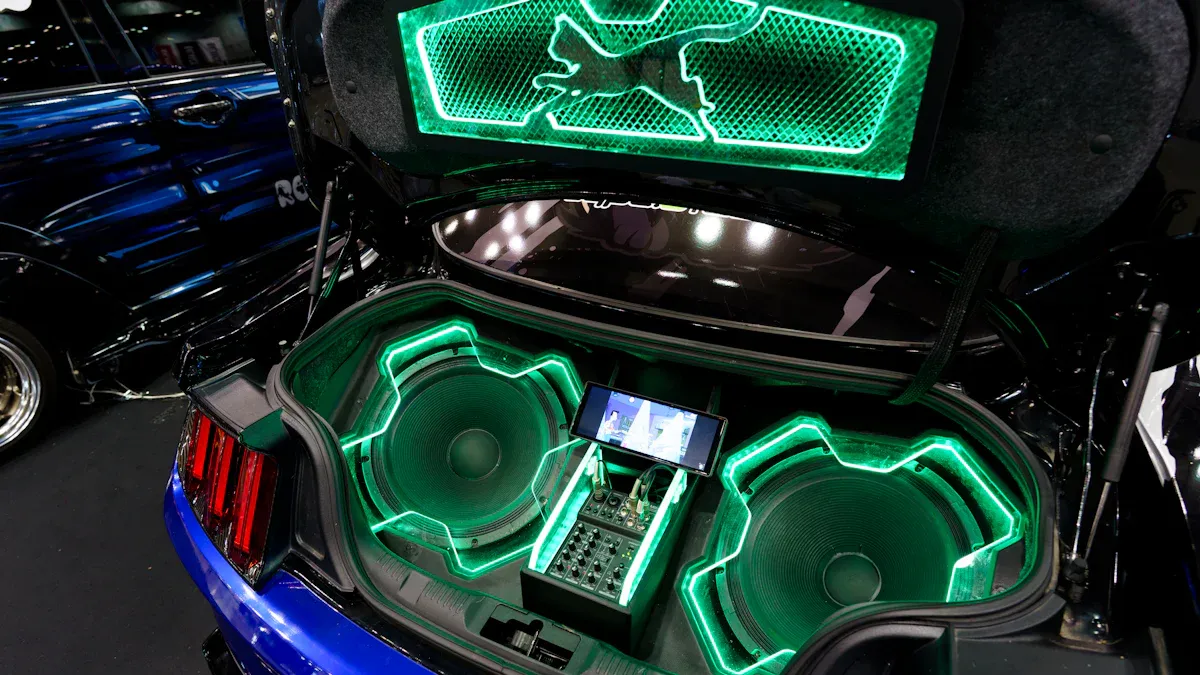
You can also enhance your car’s interior sound experience. This focuses on making your exhaust and engine character more audible. You will also improve overall in-cabin sound quality.
Upgraded Speakers and Subwoofers
You want to truly immerse yourself in your car’s symphony. You should upgrade your speakers and subwoofers. Replacing factory speakers with aftermarket speakers dramatically improves clarity. You will hear every detail of your music. When you add a subwoofer, you gain deep, resonant bass. This makes your engine’s rumble feel more profound. You can also add a car amplifier. This provides the power needed for the best sound quality. These upgrades create a superior car audio setup. They make your favorite tracks sound incredible. They also allow you to better appreciate your car’s aggressive engine notes. The pros include better music and clearer engine sounds. Cons involve cost, added weight, and complex installation. Expect to pay $300 to $1,500 for quality components and installation. This will significantly improve the sound of your car sound systems.
Sound Deadening Installation
You want to refine your car’s interior acoustics. Consider sound deadening installation. This involves applying materials like acoustic foam or mass-loaded vinyl. These materials dampen external noise. They allow your car’s aggressive sounds to shine through. You will experience a quieter, more relaxing drive. You can enjoy podcasts or conversations without raising your voice. Minimizing external sounds enhances the clarity of music and phone calls. This creates a better auditory experience. Reducing continuous noise decreases exhaustion and stress. Sound insulation also helps maintain a uniform temperature. This improves overall comfort. Soundproofing upgrades your vehicle. It makes it more attractive to potential buyers. Automotive experts suggest small upgrades can boost resale value. A quieter cabin reduces driver distractions. It improves attention. This leads to quicker reaction times and a safer driving environment. Pros include a quieter cabin and clearer internal sounds. Cons are cost, weight, and installation complexity. Prices range from $200 to $1,000, depending on coverage.
Choosing How to Boost Your Car Sound
You want to boost your car sound. Making the right choices ensures satisfaction and avoids costly mistakes. Consider these factors carefully before you modify your vehicle.
Budget Considerations
Your budget significantly impacts your options. A basic car stereo upgrade, including a new head unit, costs between $100 and $400 with installation. For more significant sound modifications, costs can range from a few hundred dollars to several thousand for high-end systems. Remember, vehicle-specific factors like your car’s age and model, its existing audio system, and integration with electronics can affect the final price. Your sound quality goals also play a role. Are you aiming for casual listening or an audiophile-grade system? Professional installation is often recommended. It ensures optimal performance and prevents potential issues.
Desired Sound Profile
What kind of sound do you truly want? Do you prefer a deep rumble, a raspy roar, or an exotic, high-pitched scream? Your personal preference for noise levels is crucial. Some modifications deliver a raw, untamed sound. Others offer a more refined, aggressive tone. You must also consider local regulations. Many areas have noise limits, like Virginia’s 85-decibel limit. Choose an exhaust system material that suits your needs. Stainless steel offers durability and rust resistance. Aluminized steel is more affordable but less durable.
Performance Goals
Do you want to make your car sound better while also gaining power? Some modifications, like upgraded downpipes or a full exhaust system, offer substantial horsepower and torque increases alongside a more aggressive sound. Other changes, such as a simple muffler delete, primarily focus on increasing volume with minimal performance impact. Decide if maximizing horsepower and torque is more important than achieving a specific exhaust note.
Legal and Warranty Impacts
Before you modify your car, understand the legal and warranty implications. Many aggressive modifications, especially those involving catalytic converter removal, are illegal in various regions due to emissions regulations. You could face fines or fail inspections. Furthermore, extensive modifications might void your vehicle’s warranty. Always check local noise pollution laws. Seek professional advice from mechanics or specialists. They can help you make informed decisions.
You have explored many ways to boost your car sound. From exhaust upgrades to engine enhancements, you can achieve an aggressive sound. Always balance your desired sound with practicality, legality, and safety. For complex changes, consult professionals. Choose modifications that fit your preferences and local rules. Start your journey to a more aggressive car sound responsibly today.
FAQ
Will these modifications void my car’s warranty?
You should always check with your car dealer. Many aggressive modifications can void your warranty. Protect your investment. Understand the risks before you proceed.
Are aggressive exhaust mods legal everywhere?
No, they are not. You must check your local noise ordinances. Emissions laws also vary by state. Avoid fines. Ensure your car complies with all regulations.
How much horsepower can I gain from these upgrades?
Performance gains vary greatly. Some mods, like downpipes, offer significant power. Others, like a muffler delete, focus on sound. You choose your priority. Maximize both sound and power.
Can I make my car sound aggressive without spending a lot?
Yes, you can. Resonator deletes offer a cost-effective sound boost. Axle-back exhausts are also more affordable. You can achieve a great sound on a budget.
