

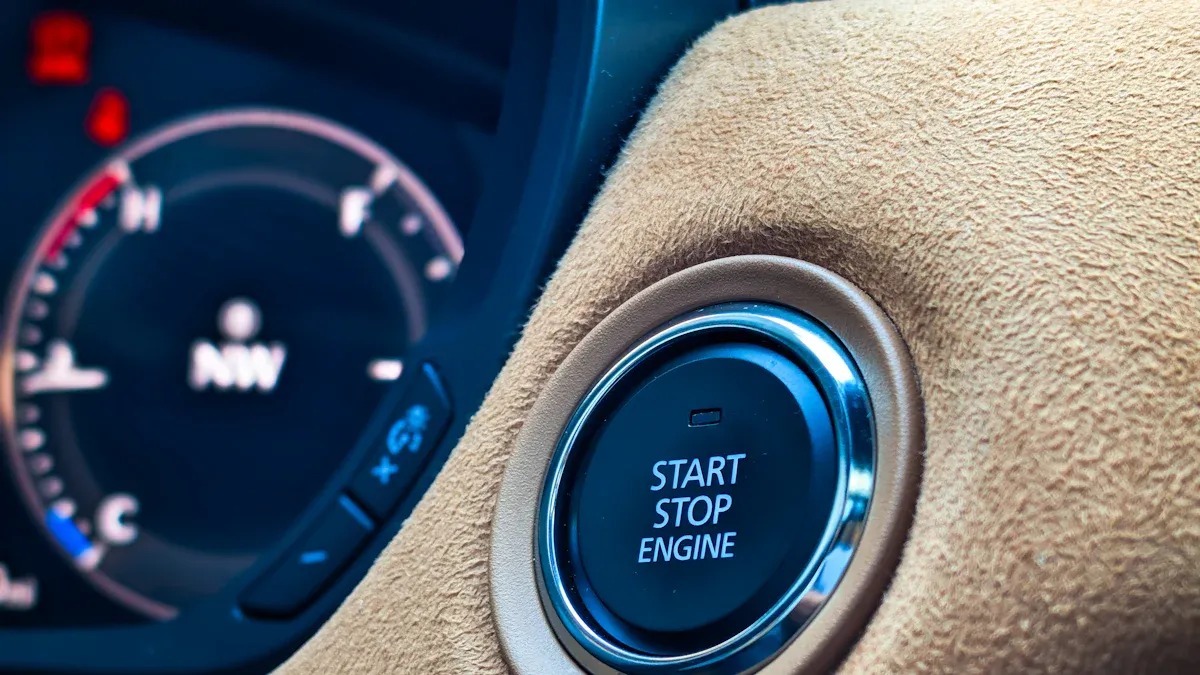
Mazda i-Stop represents a significant advancement in fuel efficiency. This technology automatically stops the engine when you pause, saving fuel and reducing emissions. Understanding how mazda i-stop works enhances your driving experience and helps you make informed decisions as a potential or current Mazda owner.
Key Takeaways
Mazda i-Stop automatically shuts off the engine during stops, saving fuel and reducing emissions, especially in urban driving.
The system offers a quick and quiet restart, enhancing the driving experience compared to conventional start-stop systems.
Regularly monitor the Enhanced Flooded Battery (EFB) to ensure optimal performance of the i-Stop system and maintain fuel efficiency.
Mazda i-Stop Overview

What Is the i-Stop System?
The Mazda i-Stop system is an innovative feature designed to improve fuel efficiency. This system automatically shuts off the engine when your vehicle comes to a stop, such as at traffic lights or in heavy traffic. When you are ready to move again, the engine restarts seamlessly. This process helps you save fuel and reduce emissions, making your driving experience more environmentally friendly.
Mazda’s i-Stop system stands out among other idling stop technologies. It focuses on providing a smooth and quick restart, enhancing your overall driving experience. Unlike conventional systems, which rely on a starter motor, the Mazda i-Stop system uses a unique combustion method to restart the engine. This method injects fuel directly into a cylinder while the engine is off, creating downward piston force. As a result, you enjoy a faster and quieter restart.
How It Works
The technology behind the Mazda i-Stop system involves several key components that work together to optimize performance:
Variable Voltage Alternator (12-25V): This component generates electricity at up to 25V during deceleration, ensuring maximum efficiency.
Electric Double Layer Capacitor (EDLC): This capacitor stores the generated electricity and can be fully charged in seconds, providing power when needed.
DC/DC Converter: This device steps down the electricity from 25V to 12V, distributing it to the vehicle’s electrical components.
Component | Description |
|---|---|
Variable Voltage Alternator (12-25V) | Generates electricity at up to 25V for maximum efficiency during deceleration. |
Electric Double Layer Capacitor (EDLC) | Stores the generated electricity and can be fully charged in seconds. |
DC/DC Converter | Steps down the electricity from 25V to 12V for distribution to the vehicle’s electrical components. |
The Mazda i-Stop system differentiates itself from conventional start-stop systems in several ways:
Feature | Mazda i-Stop | Conventional Systems |
|---|---|---|
Restart Mechanism | Combustion-based | Starter motor |
Restart Speed | Quicker (within 0.35 seconds) | Slower |
Noise Level | Quieter | Noisy |
Fuel Efficiency | Enhanced due to combustion assist | Standard |
This unique approach not only enhances fuel efficiency but also contributes to a smoother driving experience. You will notice that the Mazda i-Stop system is sensitive to battery condition. Regular monitoring of the Enhanced Flooded Battery (EFB) is essential. You should top up the electrolyte level every few months to maintain battery performance. This battery is specifically designed for repeated starts, which is crucial for the i-Stop system to function effectively.
Benefits of Mazda i-Stop
Fuel Efficiency
The Mazda i-Stop system significantly enhances fuel efficiency. When you stop your vehicle, the engine automatically shuts off, which saves fuel that would otherwise be wasted while idling. This feature is especially beneficial in urban driving conditions, where you frequently encounter stop-and-go traffic.
According to testing, vehicles equipped with i-Stop show impressive improvements in fuel efficiency. For example, in Japan’s 10-15 mode, the system can improve fuel efficiency by approximately 15%. However, in EPA city mode, the improvement is only about 0.2%. This variation highlights how real-world driving conditions can affect the effectiveness of the i-Stop technology. While the system excels in stop-and-go scenarios, its benefits diminish during highway driving or when stops are infrequent.
Tip: If you often drive in urban areas, you can expect to see more significant fuel savings with the i-Stop system.
Emissions Reduction
Mazda i-Stop also plays a crucial role in reducing exhaust emissions. By shutting off the engine during idle periods, the system minimizes the amount of fuel burned, leading to lower emissions. This eco-friendly driving feature contributes to a cleaner environment and aligns with the growing demand for sustainable automotive technologies.
The advantages of the i-Stop system for urban drivers include:
Reduced idle times, saving fuel
Lower emissions
Potential savings in fuel costs
Contribution to environmental sustainability
By adopting the i-Stop system, you not only save money on fuel but also help reduce your carbon footprint. This makes your driving experience more responsible and environmentally friendly.
In terms of user feedback, many appreciate the quick and smooth operation of the i-Stop system. They find it superior to similar systems in other vehicles. However, some users express concerns about the long-term effects on engine wear due to the increased number of start cycles. Others note that the system may not be as effective for short trips, as it takes time to engage and can restart the engine too quickly.
Overall, the Mazda i-Stop system offers significant benefits in fuel efficiency and emissions reduction, making it a valuable feature for modern drivers.
Understanding the i-Stop System
Monitoring Indicators
The Mazda i-Stop system provides several indicators on your dashboard to keep you informed about its status. These indicators help you understand when the system is active or if there are any issues. Here’s a quick overview of the key indicators:
Indicator Type | Description |
|---|---|
i-stop Warning Light (Amber) | Indicates various cautions and warnings related to the i-stop system. |
i-stop Indicator Light (Green) | Shows when the engine idling is stopped and turns off when the engine is restarted. |
Flashing i-stop Warning Light | Indicates a malfunction in the system; requires inspection by an expert repairer. |
Flashing i-stop Indicator Light | Notifies you that engine idling is stopped when the shift lever is not in neutral. |
These indicators ensure you stay aware of the i-Stop system’s performance and any necessary actions you may need to take.
Turning Off the System
You may want to turn off the i-Stop system in certain situations. Here are some methods to manually deactivate it:
Method | Description |
|---|---|
Using brake pedal pressure | Control i-stop activation by applying the correct brake pressure. Hard pressure activates it; light pressure keeps the engine running. |
After engine start checklist hack | Create a routine to remember to disable the i-stop system manually after starting the engine. |
Hood switch hack | Disable the hood switch to trick the car into thinking the hood is open, thus disabling the i-stop system. This may affect the alarm system. |
Paper hack | Wedge a piece of paper into the i-stop button to keep it pressed in permanently, but it disables three other buttons. |
OBDII hack | Write specific values to the car’s computer via the OBDII port, though this method is risky. |
Microcontroller solution | Use a microcontroller to simulate pressing the i-stop button, allowing for easy and non-invasive installation. |
Understanding these methods allows you to manage the i-Stop system according to your driving needs.
Mazda i-Stop significantly enhances your vehicle’s efficiency. This system saves fuel by shutting off the engine during stops. You also reduce emissions, contributing to a cleaner environment. Consider the benefits of Mazda i-Stop for your driving experience. It makes your trips more economical and eco-friendly.
FAQ
What happens if the i-Stop system malfunctions?
If the i-Stop system malfunctions, a warning light will appear on your dashboard. You should have it inspected by a qualified technician.
Can I disable the i-Stop system permanently?
You can disable the i-Stop system temporarily, but it is not recommended to disable it permanently. Doing so may affect fuel efficiency.
Does the i-Stop system affect engine performance?
The i-Stop system does not negatively impact engine performance. It enhances fuel efficiency while maintaining smooth operation during driving.



