


BMW, Audi, and Mercedes cars proudly come from Germany. These brands stand as icons in the luxury car market. With their exceptional engineering and innovative designs, they attract drivers worldwide. In 2023, BMW sold over 2 million cars, securing a market share of 2.71%. Mercedes-Benz and Audi follow closely, showcasing their strong presence in the competitive luxury segment. As you explore the world of luxury vehicles, these German brands exemplify quality and performance.
Key Takeaways
BMW, Audi, and Mercedes-Benz are luxury car brands that originate from Germany, known for their quality and performance.
Each brand has a unique focus: BMW emphasizes sporty driving, Mercedes-Benz highlights luxury and comfort, while Audi balances performance with technology.
German automakers are committed to innovation and sustainability, producing electric vehicle options and implementing eco-friendly practices.
The automotive industry in Germany is vital, producing over 4.1 million vehicles annually and contributing 5% to the nation’s GDP.
Understanding the distinct characteristics of these brands can help consumers make informed choices when selecting a luxury vehicle.
BMW Manufacturing in Germany

BMW Overview
BMW, or Bayerische Motoren Werke, has a rich history as a luxury car manufacturer. Founded in 1916, BMW initially produced aircraft engines. After World War I, the company shifted its focus to motorcycles in 1923. In 1928, BMW entered the automobile market by acquiring Fahrzeugfabrik Eisenach, which produced its first car, the Dixi 3/15. The 1930s marked a turning point for BMW as it began establishing itself in the luxury vehicle market. The introduction of the BMW 328 sports car in 1936 showcased the brand’s commitment to performance and innovation.
Over the decades, BMW has solidified its reputation in the luxury automotive sector. The launch of the BMW New Class in the 1960s emphasized sportiness and luxury. Iconic models like the 3 Series and 7 Series helped BMW gain popularity among luxury car enthusiasts. The production of the M series, starting with the M in 1978, further enhanced BMW’s status as a leader in performance and luxury.
Key Manufacturing Plants
BMW operates several key manufacturing plants in Germany, each contributing to the brand’s success. Here’s a look at some of the main facilities:
Plant Location | Models Produced | Notable Features |
|---|---|---|
Munich | BMW 3 Series, BMW 4 Series | Headquarters, BMW Museum, established in 1922 |
Dingolfing | BMW 7 Series, BMW 8 Series, BMW 5 Series | Largest production site in Europe |
Regensburg | BMW 1 Series, BMW 2 Series, BMW Z4 Roadster | Specializes in compact and mid-sized vehicles |
Leipzig | BMW i3, BMW i8 | Focus on electric vehicles, uses renewable energy |
Berlin | Various automotive components, motorcycles | Established in 1969, rich history |
These plants play a crucial role in BMW’s production capabilities. The Munich plant serves as the headquarters and is home to the BMW Museum, showcasing the brand’s heritage. Dingolfing stands out as the largest production site in Europe, producing several high-end models. Regensburg focuses on compact and mid-sized vehicles, while Leipzig emphasizes electric vehicle production. The Berlin facility contributes by manufacturing various automotive components and motorcycles.
BMW’s commitment to quality and innovation shines through its manufacturing processes. Each plant utilizes advanced technology and skilled labor to ensure that every vehicle meets the high standards expected from a luxury car manufacturer.
Audi Production and History
Audi Overview
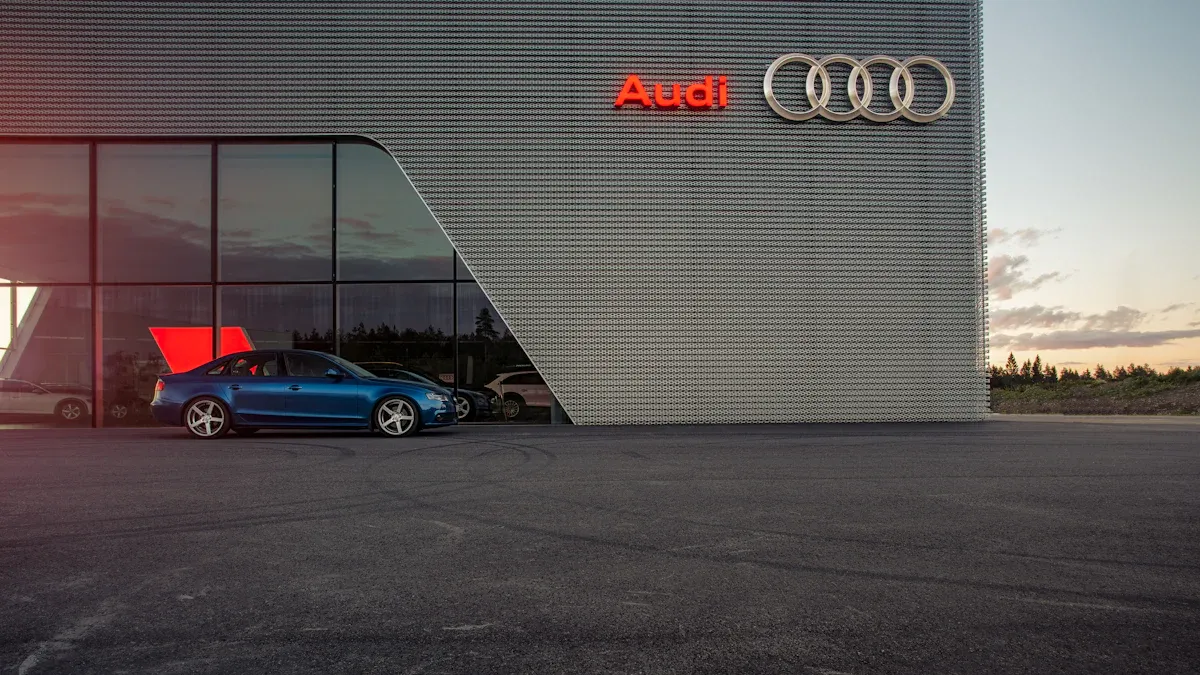
Audi plays a significant role in the luxury car market as part of the German automotive landscape. Founded by August Horch in 1899, Audi has a long history of producing high-quality vehicles. The brand name “Audi” comes from the Latin translation of Horch’s surname, which means “to listen.” After leaving his first company due to disagreements, Horch established Audi in 1909. Over the years, Audi merged with other brands during the Great Depression, forming Auto Union, which is represented by the iconic four rings logo.
Audi’s commitment to quality and innovation has helped it maintain a strong position within the Volkswagen Group. This relationship allows Audi to leverage shared technology and resources, enhancing its offerings in the luxury segment. Despite facing challenges, such as a decline in global sales, Audi remains dedicated to upholding the high standards that distinguish its vehicles. As Oscar da Silva Martins, the director of product and technology communications, noted, “the quality of the brand’s cars was once superior,” and Audi aims to return to those high standards.
Key Manufacturing Plants
Audi operates several key manufacturing plants across Germany, each contributing to the production of its luxury vehicles. Here’s a look at some of the primary facilities:
City | Models Produced |
|---|---|
Ingolstadt | Q6 e-tron, A3, A4, A5 |
Neckarsulm | A4, A5, A6, A7, A8, R8 |
The Ingolstadt plant serves as Audi’s main production facility. It produces popular models like the A3, A4, and A5, showcasing the brand’s commitment to quality and performance. The Neckarsulm plant specializes in higher-end models, including the A8 and R8, which highlight Audi’s luxury appeal.
Audi’s manufacturing facilities emphasize sustainability and innovation. The company has implemented various initiatives to reduce its environmental impact. For instance, Audi focuses on a circular economy, aiming to minimize waste and promote recycling. This commitment aligns with the broader goals of the automotive industry to enhance sustainability while maintaining high production standards.
By investing in advanced technologies and sustainable practices, Audi continues to strengthen its position as a leader in the luxury car market. The combination of rich history, innovative engineering, and commitment to quality ensures that Audi remains a top choice for luxury car enthusiasts.
Mercedes-Benz: A German Luxury Icon
Mercedes Overview
Mercedes-Benz stands as a symbol of luxury and innovation in the automotive world. The brand’s roots trace back to 1886 when Karl Benz patented the Benz Patent-Motorwagen, the first automobile with an internal combustion engine. In 1900, Benz merged with Gottlieb Daimler to form Daimler-Benz AG, marking the beginning of a prestigious legacy. The official founding of the Mercedes-Benz brand occurred in 1926, solidifying its status in the luxury car market.
Mercedes-Benz has consistently set milestones in automotive engineering. The launch of the Mercedes-Benz 300 SL “Gullwing” in 1954 introduced the first production car with fuel injection. In 1972, the S-Class debuted, known for its luxury and cutting-edge technology. Looking ahead, Mercedes-Benz aims for carbon neutrality by 2039, emphasizing sustainability in its future endeavors.
Year | Milestone Description |
|---|---|
1886 | Karl Benz files a patent for the Benz Patent-Motorwagen, the first automobile with an internal combustion engine. |
1900 | Karl Benz and Gottlieb Daimler merge to form Daimler-Benz AG. |
1926 | The official founding of the Mercedes-Benz brand. |
1954 | Launch of the Mercedes-Benz 300 SL “Gullwing,” the first production car with fuel injection. |
1972 | Introduction of the S-Class, known for luxury and cutting-edge technology. |
2039 | Mercedes-Benz sets a goal for carbon neutrality by this year, emphasizing sustainability in its future. |
Key Manufacturing Plants
Mercedes-Benz operates several key manufacturing plants in Germany, each playing a vital role in producing luxury vehicles. Here are some significant facilities:
Plant Location | Significance |
|---|---|
Mercedes-Benz Plant Bremen | Largest private employer in the region with around 11,000 employees; over 10 million vehicles produced; includes production of electric vehicles like EQE and EQC. |
Mercedes-Benz attracts various customers, including luxury car enthusiasts, business clients, safety-conscious consumers, and tech-savvy users. The brand invests heavily in maintaining its prestige and innovation. You can see this through its commitment to luxury, cutting-edge technology, and sustainability practices. By focusing on these principles, Mercedes-Benz continues to lead in the luxury car segment.
Comparing BMW, Audi, and Mercedes
Brand Positioning
When you consider luxury car brands, BMW, Audi, and Mercedes-Benz each carve out distinct niches.
BMW positions itself as a premium automaker that emphasizes the “ultimate driving experience.” The brand focuses on performance and driving pleasure, appealing to those who value sportiness.
Mercedes-Benz targets high-end consumers, promoting a lifestyle of luxury and comfort. The brand is synonymous with elegance and advanced technology.
Audi blends performance with technology, attracting a tech-savvy luxury audience. It effectively balances these elements, making it a strong contender in the luxury segment.
You can see how these brands differentiate themselves through their unique selling propositions:
Brand | Unique Selling Proposition |
|---|---|
BMW | Prioritizes sporty handling and performance |
Mercedes-Benz | Emphasizes luxury, comfort, and advanced technology |
Audi | Offers a balanced compromise of performance, luxury, and technology |
Market Share Insights
In the competitive landscape of luxury car brands, market share plays a crucial role. As of 2024, the BMW Group, alongside Ferrari and Aston Martin, collectively holds over 22% of the luxury car market. While specific percentages for each brand are not detailed, this statistic highlights the significant presence of these major car brands in the luxury segment.
Consumer preferences also vary across international markets. In Europe, BMW, Audi, and Mercedes-Benz dominate due to their historical roots. However, the Asia Pacific region, especially China, is rapidly emerging as a key market. This shift is driven by a growing affluent class and increasing interest in electric vehicles. As a result, while European markets favor traditional luxury brands, Asian markets show openness to both European luxury and local brands.
Understanding these dynamics helps you appreciate how BMW, Audi, and Mercedes-Benz navigate the luxury automotive landscape.
The Impact of German Automakers
Quality and Innovation
German automakers, including BMW, Audi, and Mercedes-Benz, have built a strong reputation for quality. You can see this in their commitment to using high-quality materials. They often incorporate supple leather and solid trim in their vehicles. Manufacturers maintain strict standards for suppliers, ensuring that components like brake pads and suspension parts are durable and reliable. This focus on quality contributes to the long-term reliability and enjoyment of driving these luxury vehicles.
Innovation is another hallmark of German engineering. These brands consistently introduce cutting-edge technology. For example, you can find advanced safety systems and adaptive cruise control in many models. Current innovations include driver assistance packages and seamless infotainment systems. These technologies enhance the overall driving experience and are designed for long-term function and precision.
Global Influence
The influence of German luxury automakers extends far beyond their home country. They set benchmarks for engineering precision and performance. Other countries look to these brands for inspiration in automotive design and technology. Each brand has a unique philosophy that emphasizes driving experience and luxury, shaping consumer expectations worldwide.
German luxury car manufacturers are recognized for their intricate attention to detail. This sets them apart from competitors in other leading automotive nations. Their continuous technological advancements, such as adaptive suspension systems and lightweight materials, enhance performance and safety. As a result, you can see how these brands influence automotive trends and standards globally.
In 2024, the automotive sector generated a turnover of 476 billion euros in Germany. This underscores the importance of the industry to the national economy. The manufacturing sector, which includes automotive production, accounted for 19.7% of Germany’s gross value added. This highlights the pivotal role that German automakers play in driving economic growth and employment.
Germany stands as a vital hub for luxury car manufacturing, producing over 4.1 million vehicles annually. This industry contributes 5% to the nation’s GDP and employs over 800,000 people. The commitment to quality and innovation is evident in the precision engineering and cutting-edge technology found in brands like BMW, Audi, and Mercedes-Benz.
Key Points About Germany’s Automotive Industry:
Key Point
Details
Annual Car Production
4.1 million cars produced
Contribution to GDP
5% of Germany’s GDP
Employment in the Industry
Over 800,000 people employed
Global Export Value
Over €200 billion annually
R&D Investment
5-6% of annual revenue by brands like BMW
German engineering has shaped the global reputation of luxury automobiles. The legacy of innovation began with Carl Benz’s invention of the first true automobile in 1886. Today, German brands set benchmarks for performance and luxury, making them leaders in the automotive world.
FAQ
What is the origin of BMW, Audi, and Mercedes-Benz?
BMW, Audi, and Mercedes-Benz all originate from Germany. These brands have a long history of producing luxury vehicles known for their quality and performance.
Are BMW, Audi, and Mercedes-Benz electric vehicles available?
Yes, all three brands offer electric vehicle options. BMW has the i series, Audi features the e-tron line, and Mercedes-Benz produces the EQ series, focusing on sustainability and innovation.
How do BMW, Audi, and Mercedes-Benz compare in terms of price?
Prices vary based on models and features. Generally, Mercedes-Benz tends to be the most expensive, followed by Audi and then BMW. You can find options across different price ranges within each brand.
Which brand is known for better performance?
BMW is often recognized for its sporty handling and driving experience. Audi also emphasizes performance, while Mercedes-Benz focuses more on luxury and comfort.
Where can I find dealerships for these brands?
You can find BMW, Audi, and Mercedes-Benz dealerships in most major cities. Check their official websites for dealership locations and services offered near you.



