

Brake Caliper Slide Pins come in different designs, placements, and materials because each vehicle has unique braking needs. You might notice that some pins have rubber bushings or special shapes. These differences help match the pin to your car’s brake system. If you understand these details, you can keep your brakes working safely. Studies show that about 22% of vehicle accidents each year link to brake caliper failures. Experts also highlight that strong product design and reliable pins make your brakes safer.
Key Takeaways
Brake Caliper Slide Pins are crucial for smooth braking. They allow the caliper to move, ensuring even pressure on the brake pads.
Different materials like stainless steel and aluminum offer unique benefits. Choose the right material based on your vehicle’s needs for better performance.
Regular maintenance is key. Clean and lubricate slide pins during brake service to prevent issues like uneven pad wear.
Using the correct slide pin is essential for safety. Always match the pin type to your vehicle’s caliper design to avoid braking problems.
Understanding slide pin differences helps you keep your brakes safe. Knowledge empowers you to make informed decisions about your vehicle’s maintenance.
Brake Caliper Slide Pins Overview
What Are Slide Pins
You may wonder what Brake Caliper Slide Pins are and why they matter. Slide pins are metal rods that sit inside the brake caliper bracket. They help the caliper move back and forth when you press the brake pedal. Most modern vehicles use a floating caliper design. This design relies on slide pins to let the caliper shift sideways. When you step on the brakes, the caliper needs to move so the brake pads can press evenly against the spinning rotor. Without these pins, the caliper would not move smoothly, and your brakes would not work as well.
Function in Braking
Brake Caliper Slide Pins play a key role in how your brakes feel and perform. Here is what they do:
Slide pins keep the brake caliper lined up with the caliper bracket. This helps your car stop evenly.
They let the caliper move easily against the bracket. This movement is important for smooth and effective braking.
You need to check and maintain the pins. If they get rusty or dry, your brakes may not work right.
Tip: Clean and lubricate your slide pins during every brake service. This simple step can help prevent uneven pad wear and keep your brakes working safely.
When you understand what Brake Caliper Slide Pins do, you can see why they are so important. They make sure your brakes work smoothly every time you drive.
Key Differences
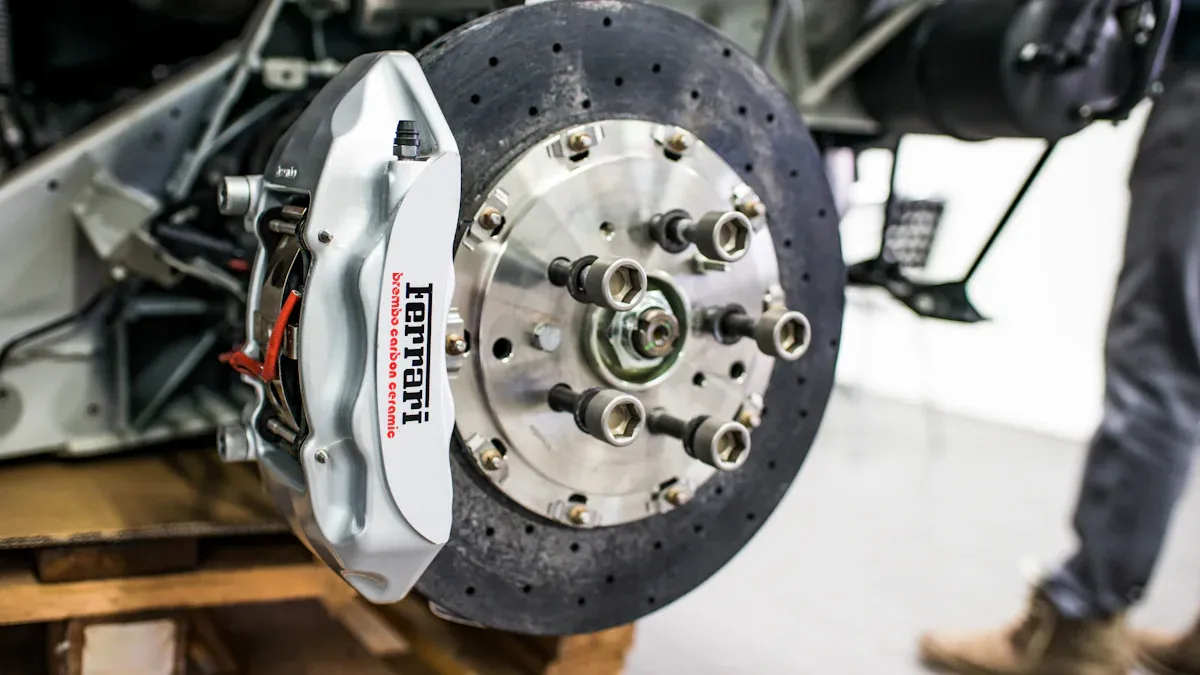
Materials
You will find that Brake Caliper Slide Pins come in different materials. Each material offers unique benefits for your vehicle’s braking system. The table below shows what materials manufacturers use and why:
Material | Advantages | Applications |
|---|---|---|
Stainless Steel | Resists corrosion, strong under pressure | Used in harsh conditions, common in slide pins and bolts |
Aluminum Alloys | Lightweight, good at handling heat, resists rust | Used in passenger and high-performance vehicles |
Cast Iron | Durable, strong, cost-effective | Used in trucks, SUVs, and heavy-duty vehicles |
Carbon Composites | Very light, handles high heat | Used in supercars and racing vehicles |
Ceramics | Strong, resists heat | Used in high-performance braking systems |
Stainless steel pins last longer in wet or salty environments. Aluminum pins help reduce the weight of the car, which can improve fuel efficiency. Cast iron pins work well in heavy vehicles because they can handle more force. You may see carbon composites and ceramics in race cars or sports cars where heat and weight matter most.
Size and Shape
Brake Caliper Slide Pins come in different sizes and shapes. These differences affect how the caliper moves and how well your brakes work. Here are some key points:
Pins with rubber sleeves help the caliper fit better and move smoothly.
Rubber sleeves absorb small gaps, which stops noise and keeps the brakes working quietly.
If a pin does not have a rubber bushing, it can fit too tightly or too loosely. This can cause the brakes to wear unevenly.
The rubber also cushions the first and last contact between the brake pad and the disc.
Rubber sleeves act as anti-rattle devices. They add friction to stop the caliper from shaking inside the bracket.
You may notice that some pins are round, while others have a flat side. The shape helps control how the caliper slides. The size and shape must match the caliper design for the brakes to work right.
Design Features
You will see that Brake Caliper Slide Pins have special design features. These features help the pins do their job better and make your brakes safer.
Some pins have rubber bushings at the end. These bushings reduce noise and vibration.
You may find all-metal pins or pins with rubber ends. Each type has a purpose in the brake system.
Rubber bushings also help dampen sound, making your ride quieter.
Note: Pins with rubber bushings can rust less quickly, but you still need to check them often. Rust can make the pins stick, which can cause uneven brake wear.
Correct placement and matching of pin types are very important. You must use the right pin in the right spot. The guide pins keep the caliper lined up with the rotor. This helps the brake pads wear evenly and keeps your braking smooth. If you mix up the pins or use the wrong type, the caliper may shift or wobble. This can lead to poor braking and faster wear on your pads.
🛠️ Always check that you use the correct pin in the upper and lower positions. Matching the pin type to the caliper design keeps your brakes working safely.
Reasons for Differences
Vehicle Requirements
You will see that different vehicles need different types of brake caliper slide pins. The size, weight, and use of a vehicle all affect what kind of pin works best. For example, a heavy truck needs stronger pins than a small car. Trucks and SUVs often use thicker or more durable pins because they carry more weight and stop bigger loads. Sports cars may use lighter pins to help the car go faster and stop quickly. The brake system design also matters. Some cars use floating calipers, while others use fixed calipers. Each system needs a pin that matches its movement and pressure needs. When you look at your vehicle, you can see that the type of pin used matches the way your car drives and stops.
Performance Needs
You may notice that high-performance vehicles use special slide pin designs. These designs help the brakes work better under stress. Some pins have unique shapes or materials to handle more heat and pressure. For example, race cars often use pins made from carbon composites or ceramics. These materials stay strong even when the brakes get very hot. The design of the pin can also change how the caliper presses on the brake pads.
The study demonstrated that the reverse-pin and fixed calipers provide a more uniform pressure distribution compared to the Fist-style sliding calipers, which suffer from higher piston load offset and decreased clamping efficiency. This suggests that the design of brake caliper slide pins plays a crucial role in enhancing braking performance in high-performance vehicles.
Some pins act as pivot points or have expansion features. These features help the caliper move smoothly and keep the pressure even on both sides of the rotor. When you drive a high-performance car, you want the brakes to respond quickly and evenly. Special pin designs help make this possible.
Maintenance Factors
You will find that maintenance needs also shape the design of brake caliper slide pins. Some pins are easier to clean and lubricate than others. Manufacturers design pins to make regular care simple and to keep your brakes working well.
Brake caliper slide pins require lubrication to ensure smooth movement of the caliper.
Proper lubrication prevents the caliper from rocking on its slides, which is crucial for effective braking performance.
Regular maintenance, including cleaning around the pistons, is necessary during brake inspections.
If you do not maintain the pins, you may run into problems. A user once found a seized sliding pin during a brake inspection. This shows how important it is to check and lubricate the pins. If you use the wrong grease, it can harden and cause the pins to freeze. This leads to uneven pad wear and poor braking.
Maintenance Issue | Description |
|---|---|
Seizing | When the pin seizes, the inboard pad wears down completely while the outboard pad remains intact. |
Uneven Pad Wear | This condition leads to uneven wear of brake pads, often resulting in a spongy brake pedal. |
Importance of Lubrication | Using the correct lubricant is crucial to prevent seizing and ensure smooth operation of the pins. |
Seizing of the slide pin can lead to complete wear of one brake pad.
Uneven pad wear results in compromised braking performance.
Incorrect lubrication can cause the pins to harden and seize.
When you choose or service brake caliper slide pins, you need to think about how easy they are to maintain. Good design helps you keep your brakes safe and working well.
Impact on Drivers
Brake Performance
When you look at what makes your brakes work well, you find that slide pins play a big part. Brake Caliper Slide Pins help your caliper move smoothly. This movement lets your brake pads press evenly on the rotor. You get better stopping power and a safer ride. If you use the right pins and keep them clean and lubricated, your brakes feel firm and respond quickly.
Slide pins keep floating calipers working smoothly.
They help spread pressure evenly across the brake pads.
Lubricated pins stop seizing and keep your brakes strong.
If you ignore the condition of your slide pins, you may notice uneven pad wear or a spongy brake pedal. These signs mean your brakes are not working as they should. Good slide pins help you stop safely every time.
Choosing the Right Pin
You need to know what can happen if you use the wrong slide pins. The risks are real and can affect your safety. The table below shows what problems can come from using incorrect or mismatched pins:
Risk Type | What Can Happen | Why It’s Dangerous |
|---|---|---|
Improper Fitment | Loose or misaligned caliper, leading to uneven brake pad wear and reduced performance. | Poor braking response and longer stopping distances, increasing accident risk. |
Bolt Failure | Caliper instability or detachment due to weak material under stress. | Brake failure, which can lead to severe accidents. |
Difficulty in Maintaining Torque | Incorrect torque leading to over-tightening or under-tightening. | Compromised braking system, resulting in unsafe driving conditions. |
Increased Wear on Components | Uneven wear on brake pads and rotors, leading to premature failure. | Reduced braking power and safety, especially if undetected early on. |
🛑 Tip: Always check your vehicle manual before buying or replacing slide pins. Make sure the pins match your caliper design and fit tightly in place.
When you choose the right slide pins, you protect yourself and others on the road. You also help your brakes last longer and work better.
Brake caliper slide pins differ because of design, placement, and what your vehicle needs. You see these differences in the materials, shapes, and features of each pin.
Always check what type of slide pin your brakes use.
Match the pin to the correct spot during service.
Inspect and maintain pins for safe braking.
Remember: Knowing what makes slide pins different helps you keep your brakes working safely every time you drive.
FAQ
What happens if you use the wrong slide pin?
If you use the wrong slide pin, your brakes may wear unevenly. You might hear noise or feel vibration. Your car could stop less safely. Always match the pin to your caliper.
What signs show a slide pin needs replacement?
Look for rust, sticking, or uneven brake pad wear. If you hear squeaking or feel a spongy pedal, check your slide pins. These signs mean you may need new pins.
What tools do you need to service slide pins?
You need a socket wrench, brake cleaner, and high-temperature grease. Some cars may need a hex key. Always check your manual for the right tools.
What is the purpose of rubber bushings on slide pins?
Rubber bushings help reduce noise and vibration. They let the caliper move smoothly. You get quieter and more even braking with these bushings.
What should you use to lubricate slide pins?
Use a high-temperature, silicone-based brake grease. Avoid regular grease or oil. The right lubricant keeps pins moving and prevents seizing.



