When it comes to your Mercedes-Benz, following the gas recommendation is crucial for keeping your engine running smoothly and efficiently. The recommended fuel for these vehicles is premium gasoline with an octane rating of 91 or higher. This type of fuel helps prevent knocking, which is vital for high-performance engines. If you want your vehicle to perform at its best and last longer, adhering to the manufacturer’s guidelines on fuel is essential. Remember, the right fuel can make all the difference in your driving experience!
Key Takeaways
Always use premium gasoline with an octane rating of 91 or higher for your Mercedes-Benz. This ensures optimal engine performance and longevity.
Using lower octane fuel can lead to engine knocking, which may cause serious damage over time. Protect your engine by following the manufacturer’s fuel guidelines.
Check your owner’s manual for specific fuel requirements for your model. Each model may have different octane needs.
Consider alternative fuels like E85 for compatible models. These options can reduce emissions and support a cleaner environment.
Regular maintenance is crucial. If you suspect fuel issues, conduct tests and replace filters to prevent long-term damage.
Best Gasoline for Mercedes-Benz

When it comes to fueling your Mercedes-Benz, understanding the octane rating is key. Using premium gasoline with an octane rating of 91 or higher is essential for optimal engine performance. Higher octane fuels help prevent engine knocking, which can occur when the fuel-air mixture ignites too early. This knocking can lead to serious engine damage over time.
Tip: Always check your owner’s manual for the specific octane requirements for your model.
Importance of Octane Rating
The octane rating measures a fuel’s ability to resist premature ignition. For high-performance engines like those found in many Mercedes-Benz vehicles, using a fuel with a higher octane rating is crucial. Here are some important points to consider:
Higher octane fuels prevent engine knocking.
Engine knocking can damage components and reduce performance.
Using lower octane fuels can lead to severe engine damage and costly repairs.
In fact, failing to use the recommended high-octane fuel can result in spark knock, which is a high-pitched pinging noise. While your engine’s computer can adjust timing to mitigate some damage, prolonged use of lower octane fuel will reduce fuel efficiency and overall performance.
Manufacturer Specifications
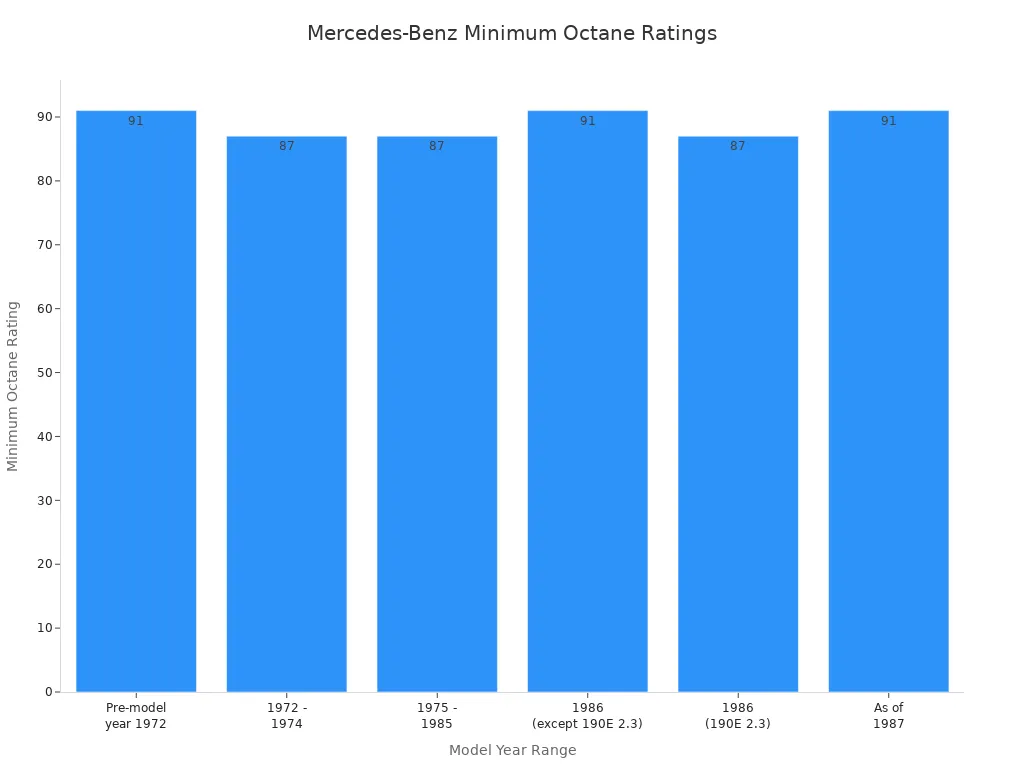
Mercedes-Benz has specific fuel requirements outlined in the owner’s manuals for their vehicles. Here’s a quick look at the recommended fuel types and minimum octane ratings for various model years:
Model Year Range | Recommended Fuel Type | Minimum Octane Rating |
|---|---|---|
Pre-model year 1972 | Premium unleaded gasoline meeting ASTM D439 | 91 |
Model years 1972 – 1974 | Leaded or unleaded gasoline meeting ASTM D439 | 87 |
Model years 1975 – 1985 | Unleaded regular gasoline meeting ASTM D439 | 87 |
Model year 1986 (except 190E 2.3) | Premium unleaded gasoline | 91 |
Model year 1986 (190E 2.3) | Unleaded regular gasoline meeting ASTM D439 | 87 |
As of model year 1987 | Premium unleaded gasoline | 91 |
Model years 2003 – 2005 | Premium unleaded gasoline or Ethanol (E85) | N/A |
Following these Mercedes-Benz gas requirements ensures that your vehicle runs smoothly and efficiently. Always prioritize using premium gasoline to maintain the performance and longevity of your engine.
Consequences of Wrong Fuel
Using the wrong fuel can lead to serious consequences for your Mercedes-Benz. You might think that any gasoline will do, but that’s far from the truth. Let’s dive into how using lower-octane gas can negatively impact your vehicle’s performance and what long-term damage risks you might face.
Engine Performance Issues
When you fill up with regular unleaded gasoline instead of premium gas, you may notice some troubling signs. Your engine might not perform as well as it should. Here are some common issues you could experience:
Engine Type | Common Issues |
|---|---|
Diesel Engine | Rough idling, grinding noises, complete stalls |
Petrol Engine | Poor starting, excessive smoke, sputtering |
General Issues | Premature failure of seals, clogged fuel filters |
Long-term Damage | Seized pistons, damaged catalytic converters |
These problems can lead to frustrating experiences on the road. You might find yourself dealing with poor acceleration or even stalling. If you hear strange noises or notice excessive smoke, it’s a clear sign that your engine is struggling.
Long-term Damage Risks
The risks don’t stop at immediate performance issues. Over time, using the wrong fuel can cause significant damage to your engine. Here’s what you need to know:
Seized Pistons: Lower octane fuels can lead to knocking, which may cause pistons to seize. This can result in costly repairs or even engine replacement.
Damaged Catalytic Converters: Inconsistent combustion from using the wrong fuel can damage your catalytic converter, a critical component for emissions control.
Clogged Fuel Filters: Regularly using the wrong fuel can lead to clogged filters, which restrict fuel flow and can cause further engine issues.
To mitigate these risks, consider these maintenance practices:
If you suspect a fuel issue, conducting fuel pressure tests and diagnostics can help determine the root cause.
Routine maintenance like fuel filter replacement can prevent bigger issues related to incorrect fuel use.
Regularly scheduled maintenance, including spark plug and ignition coil checks, can help prevent engine misfires that may occur from fuel issues.
By sticking to the recommended gasoline requirements, you can avoid these headaches and keep your Mercedes-Benz running smoothly for years to come.
Gas Recommendation for Alternatives
When considering alternative fuels for your Mercedes-Benz, you might wonder about compatibility and environmental impact. Let’s explore how your vehicle can adapt to these options.
Compatibility with Alternative Fuels
Mercedes-Benz has made strides in accommodating alternative fuels. Here are some key points to keep in mind:
Many Mercedes-Benz models, like the CLA, E-Class, and GLE, are flexible fuel vehicles (FFVs). This means they can run on both regular gasoline and E85 ethanol.
E85 is widely available across the country, making it a convenient option for many drivers.
If you choose to use E20, which is a blend of 20% ethanol and 80% gasoline, independent tests show that it performs comparably to conventional gasoline. You won’t notice a drop in performance, and your vehicle will still run smoothly.
Using these alternative fuels can also lead to significant environmental benefits.
Environmental Considerations
Switching to alternative fuels can help reduce your carbon footprint. Here’s how:
Tests indicate that using E20 can lower greenhouse gas emissions significantly. You could see reductions in emissions by around 50% compared to traditional fuels.
The combustion characteristics of alternative fuels are excellent, meaning they burn cleaner. This leads to improved air quality and less pollution.
By opting for alternative fuels, you contribute to a more sustainable future. It’s a small change that can make a big difference for the environment.
As fuel technology advances, Mercedes-Benz continues to innovate. Future advancements may include better cold start functionality and improved combustion chamber designs. These innovations aim to enhance fuel efficiency and reduce emissions even further.
By considering alternative fuels, you not only support your vehicle’s performance but also play a part in protecting the environment.
In summary, using the right fuel for your Mercedes-Benz is essential for keeping your engine in top shape. Always opt for premium gasoline with an octane rating of 91 or higher. This choice helps prevent engine knocking and ensures optimal performance. Remember, ignoring these recommendations can lead to serious engine issues and costly repairs. So, make the smart choice for your vehicle and enjoy a smoother, more efficient ride!
FAQ
What type of gasoline should I use for my Mercedes-Benz?
You should use premium gasoline with an octane rating of 91 or higher. This helps prevent engine knocking and ensures optimal performance.
Can I use regular unleaded gasoline in my Mercedes-Benz?
While you can use regular unleaded gasoline, it’s not recommended. Doing so may lead to engine performance issues and long-term damage.
What happens if I accidentally use the wrong fuel?
Using the wrong fuel can cause engine knocking, poor performance, and potential damage to components like the catalytic converter. Always check your fuel type!
Are alternative fuels compatible with my Mercedes-Benz?
Many models are compatible with alternative fuels like E85. Check your owner’s manual for specific recommendations regarding alternative fuel use.
How can I maintain my engine if I use the wrong fuel?
If you suspect fuel issues, consider getting a fuel pressure test. Regular maintenance, like changing fuel filters, can help prevent further damage.