The 1960s marked a pivotal and exciting decade in automotive history. This period brought significant innovation and cultural shifts. It produced many iconic cars, setting new standards for style and performance. These vehicles became iconic classic cars, defining personal expression. U.S. manufacturers produced approximately 7,746,000 passenger cars in 1964. By 1969, this figure rose to over 8.2 million, surpassing other nations. The classic cars of the 1960s are not just vehicles; they symbolize a vibrant, transformative period. Enthusiasts still cherish them today. This blog explores the most popular cars that defined this golden age of motoring.
Key Takeaways
The 1960s cars showed new styles and strong performance.
American muscle and pony cars offered power and personal style.
Luxury cars like the Cadillac Eldorado and Chevrolet Impala were popular for comfort and status.
European cars like the Volkswagen Beetle and Jaguar E-Type brought unique designs and engineering.
Sports cars such as the Chevrolet Corvette Sting Ray and Shelby Cobra focused on speed and handling.
Iconic American Muscle and Pony Cars
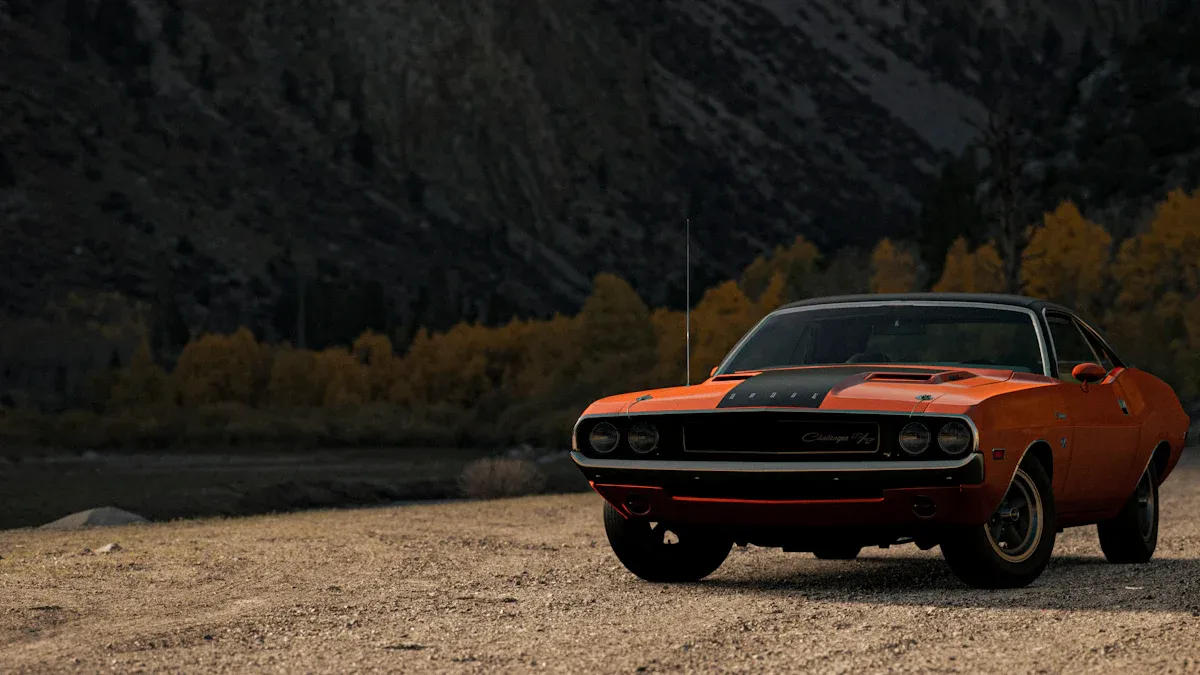
The 1960s brought forth powerful and stylish American vehicles: muscle cars and pony cars. These cars defined a new era of performance and personal expression. Pony cars, a term Ford coined with the Mustang, featured distinct characteristics:
Smaller body, more compact than conventional muscle cars, leading to a sportier look.
Long hood and open mouth front, giving a sleek appearance.
Smaller engines, typically V8s or V6s, though high-performance pony cars had powerful V8s. Manufacturers marketed them to a younger demographic seeking freedom and a powerful engine in a smaller car. Muscle cars, on the other hand, were intermediate-sized cars with high-output full-size engines. They offered advantageous power-to-weight ratios and affordable torque. Other American manufacturers, including Dodge, also produced popular models. The 1960s Dodge Charger and Challenger became significant players, showcasing Dodge’s entry into this competitive market.
Ford Mustang
The Ford Mustang launched in 1964 and quickly became an an iconic symbol of the decade. Its bold styling included:
Long hood, squared roof, and low rear deck, giving the Mustang a powerful stance.
A galloping horse logo, embodying speed, freedom, and the American pioneer spirit.
Customization options, allowing owners to personalize their vehicles. Ford sold over 400,000 Mustang units in its first year, far exceeding the initial forecast of 100,000. The one-millionth Mustang sold within two years. This success established the pony car segment. The Mustang was a significant part of ford cars from the 1960s.
Chevrolet Camaro
Chevrolet introduced the Camaro to directly rival the Ford Mustang. This 1960s chevrolet model quickly gained popularity. The Camaro offered various powerful engine options:
The 1967 Z/28 302ci engine featured a solid lifter camshaft and high-performance cylinder heads.
1968 models included a 396-cubic inch big-block engine for the SS model.
Dealers even offered a 427-cubic inch big-block as a replacement. The Chevrolet Camaro provided strong competition in the pony car market.
Pontiac GTO
The Pontiac GTO started a revolution in the muscle car segment. It influenced the market in several ways:
Pontiac created the GTO by placing a 389 cubic inch V8 engine from their full-size range into an intermediate-sized Tempest.
This approach led to sales doubling Pontiac’s optimistic forecast.
Competitors quickly introduced similar offerings, including those from Dodge. The enthusiast press began categorizing these vehicles as “muscle cars.” The GTO set the stage for a horsepower war among manufacturers. The 1969 GTO Judge with the Ram Air IV engine produced 370 hp. The Pontiac GTO was a true muscle car legend.
The Most Popular Cars: American Luxury and Full-Size
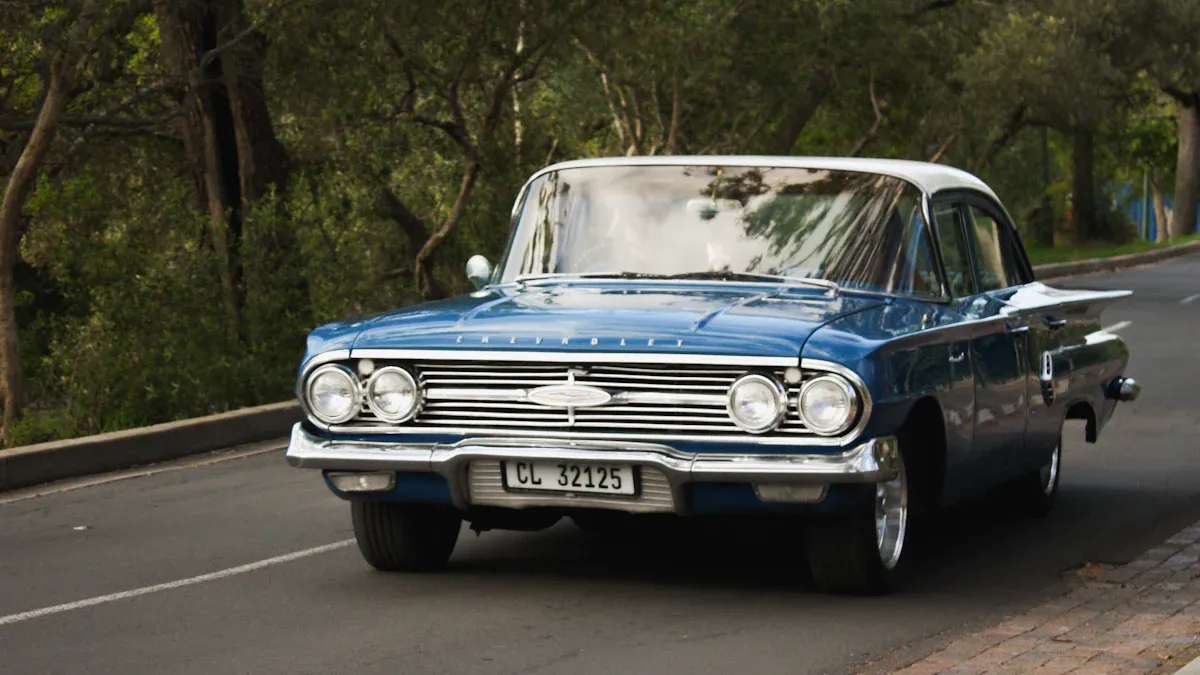
The 1960s saw large, comfortable, and luxurious American vehicles dominate the roads. These cars were popular for daily driving and as status symbols. They played a significant role in American family life. Many models offered premium trim and other features. For example, the Chevrolet Monte Carlo provided luxury and comfort comparable to Cadillac models. Common luxury features included power windows, power locks, and power tops for convertible models.
Cadillac Eldorado
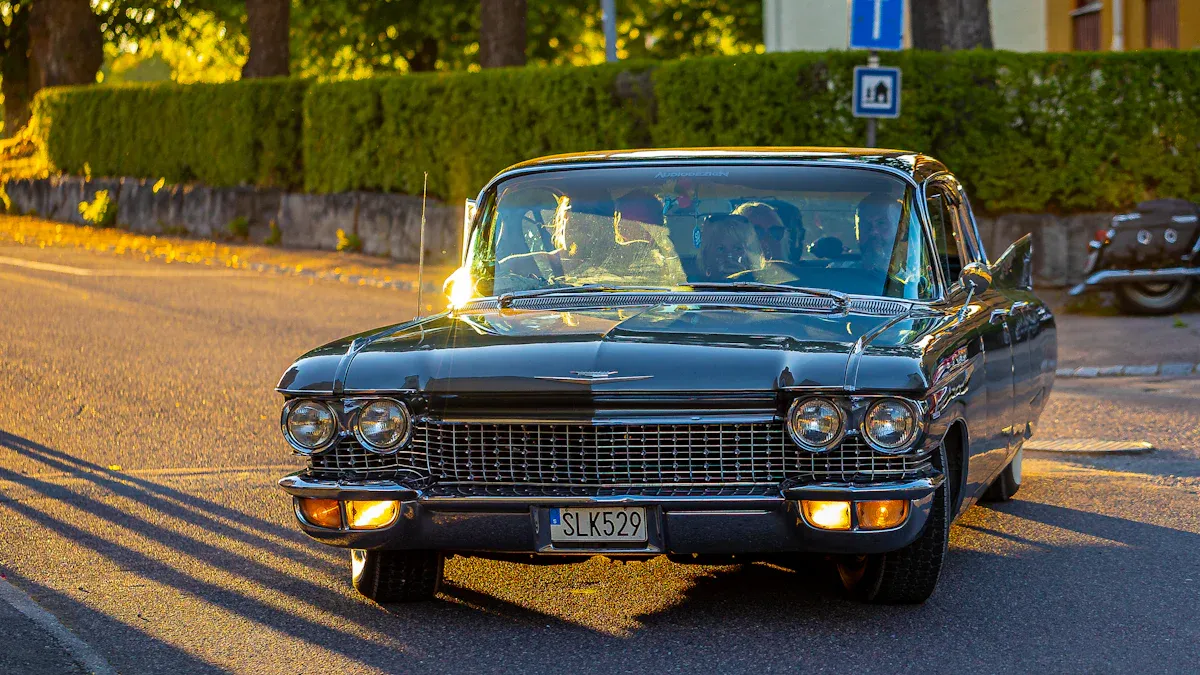
The Cadillac Eldorado showcased significant design innovations. The 1961 model featured a new convex jeweled grille and rear-slanting front pillars. In 1962, it received a mild facelift with a flatter, upright grille. The 1965 design included elevated tailfins and sharp body lines. Headlight pairs switched from horizontal to vertical, allowing for a wider grille. Curved frameless side windows were also introduced. A radical redesign in 1967 made it a front-wheel drive hardtop coupe with angular styling. It was the only Cadillac model with concealed headlamps for 1967 and 1968. The 1960 model introduced an air suspension system, power windows, power seats, and an automatic headlight dimmer.
Chevrolet Impala
The Chevrolet Impala became one of the most popular cars of the 1960s. It started as a top-trim Bel-Air in 1958. It became a standalone model in 1959. That year, it sold approximately 473,000 units. In 1965, the Impala set a record. It sold over 1,000,000 units in North America. It repeated this feat in 1966. The 1965 sales accounted for nearly half of all Chevrolet production. The Impala’s success came from GM’s marketing and skilled stylists. They understood consumer desires. The ability to build quality cabins and body panels also helped. The introduction of the SS designation in 1962, with a powerful 6.7-liter V-8 engine, contributed to its appeal. This helped spark the American muscle car movement.
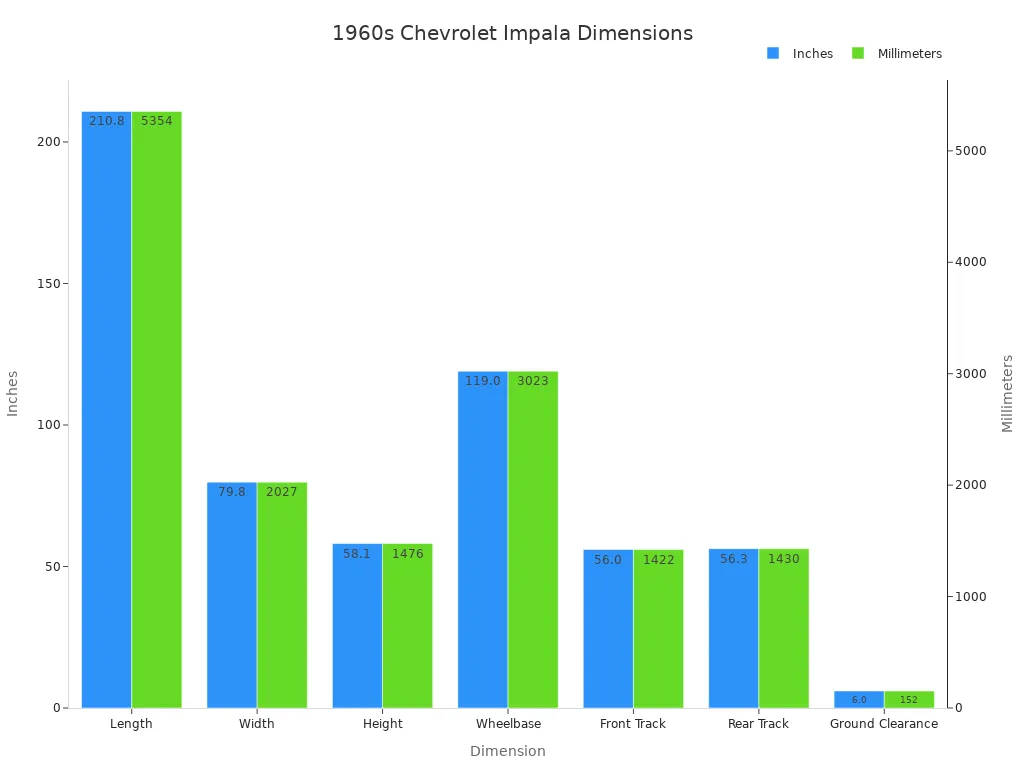
Dimension | Inches | Millimeters |
|---|---|---|
Length | 210.8 | 5354 |
Width | 79.8 | 2027 |
Height | 58.1 | 1476 |
Wheelbase | 119.0 | 3023 |
Front Track | 56.0 | 1422 |
Rear Track | 56.3 | 1430 |
Ground Clearance | 6.0 | 152 |
Lincoln Continental
The Lincoln Continental evolved significantly through the 1960s. The 1961-63 models featured clean styling. The 1964 model increased in size. It had a 3-inch longer wheelbase. This provided more rear-seat legroom. The rear-end design offered 15 percent more cargo space. A new dashboard was also part of the interior. The 1965 model featured a revised front end. It had a more upright grille shape. Ribbed taillights were a notable change. The 1966 body was redesigned. It was 4 inches longer. This model also introduced a two-door coupe. A Lincoln Continental convertible carried U.S. President John F. Kennedy. This highlights its use by notable figures. The ford brand’s return to the limousine market in 1962 also showed its luxury status.
Classic Cars of the 1960s: European Icons
The 1960s also saw influential European models gain significant popularity. These cars left a lasting mark on automotive design and culture. They showcased unique design philosophies and engineering innovations. These vehicles became global symbols of style and performance.
Volkswagen Beetle
The Volkswagen Beetle became a classic symbol of the era. Its unique design and affordability made it popular worldwide. Volkswagen’s advertising campaigns greatly boosted its popularity in the United States.
Volkswagen partnered with Doyle Dane Bernbach (DDB) for influential campaigns.
These campaigns focused on honesty and value, often using humor.
The famous ‘Lemon’ ad addressed a minor flaw, showing Volkswagen’s commitment to quality.
The ‘Think Small’ campaign highlighted the Beetle’s compact size and fuel efficiency.
Advertising successfully connected with the 1960s counter-culture, making the Beetle a symbol of individuality.
Jaguar E-Type
The Jaguar E-Type is an iconic sports car known for its stunning looks and performance. Its engineering innovations were advanced for its time.
The E-Type used unibody construction, integrating the chassis and body for better rigidity and less weight.
It featured a cutting-edge four-wheel disc brake system, rare for production cars then.
The car initially had a 3.8-liter six-cylinder engine, later upgraded to a 4.2-liter version.
An independent rear suspension improved handling and power delivery. Road tests showed the 1961 Jaguar E-Type could reach speeds of 150 mph (240 km/h) under ideal conditions. While advertised at 150 mph, actual production cars typically achieved speeds in the 140s. This was still very impressive. Other high-performance cars like the ferrari 250gto and lamborghini miura also defined this segment.
Porsche 911
The Porsche 911 quickly became a classic sports car. Its design principles guided its development from the start.
From the beginning, the Porsche 911 was designed to be both a race car and a car for urban streets, a principle that has remained for 50 years. Its initial design featured simple, streamlined curves and a minimalistic body. This established Porsche’s distinctive style. The 911 also emphasized continuous reinvention while keeping its fundamental identity. The Porsche 911 offered superior performance compared to its predecessor, the Porsche 356.
Feature | Porsche 356 | Porsche 911 |
|---|---|---|
Engine | Four-cylinder | Six-cylinder |
Valvetrain | Pushrods | Overhead camshafts |
Gearbox | Five-speed gearbox | |
Suspension | Beetle’s basic layout | More advanced affair |
Price (1965) | ~$4500 | ~$6500 |
The 911’s new six-cylinder engine provided more power. It was smooth at all speeds. Its advanced suspension and gearbox made it a driver’s car.
Iconic Performance and Sports Cars
The 1960s captivated enthusiasts with high-performance and specialized sports cars. These vehicles emphasized speed, handling, and racing heritage. They also featured groundbreaking designs. Evaluating these sports machines often involved key performance metrics. Top speed was a primary metric, especially for straight-line performance.
Horsepower and engine displacement were crucial indicators of potential performance. Many big-block V8s exceeded 400 horsepower. Acceleration, measured by 0-60 MPH times, was also a key aspect. Many sports car models achieved this in under 6 seconds. For example, independent tests of the 1968 Ferrari 365 GTB/4 Daytona by Autocar UK revealed a top speed of 174 mph. This sports car could also accelerate from 0-60 mph in 5.4 seconds. It completed a standing quarter-mile in 13.7 seconds at 104 mph. Other high-performance cars like the ferrari 250gto and lamborghini miura also defined this segment.
Chevrolet Corvette Sting Ray
The chevrolet corvette Sting Ray, introduced in 1963, became an iconic American sports car. Its distinctive design featured hidden headlamps and a split rear window. This design made the corvette instantly recognizable. The corvette offered powerful engine options. These included big-block V8s that delivered impressive horsepower. The corvette Sting Ray also improved handling over previous corvette models. This made it a formidable competitor on both roads and race tracks. The corvette represented American engineering prowess in the sports world.
Shelby Cobra
The Shelby Cobra is a legendary sports car with a unique origin. Carroll Shelby recognized the need for a new car. He identified the British AC Ace as a suitable base. This was due to its intelligent design and handling. Shelby’s concept was to combine a lightweight British roadster with a large American V8 engine. He approached AC Cars in September 1961. He proposed building an AC Ace version that could accommodate an American V8 and a Borg-Warner transmission.
AC agreed, provided Shelby could secure a suitable engine. Shelby initially approached General Motors for chevrolet V8 engines. They declined, unwilling to help create a competitor to their corvette. ford, however, was receptive. They provided Shelby with two of their new lightweight Windsor 221 cu. in. small block V8 engines. The fundamental idea behind the Cobra was to integrate a V-8 engine into the lightweight AC Ace chassis. The initial Cobra models, starting with chassis code CSX2000 in 1962, were equipped with 260-cubic-inch ford V-8s. These paired with Borg Warner four-speed manual transmissions. This created a true muscle car in a sports package.
Mini Cooper
The Mini Cooper, a high-performance variant introduced in 1961, quickly made a name for itself in sports motorsport. It won the prestigious Monte Carlo Rally three times within its first decade. It was recognized for its impressive handling and turning capabilities on tight raceways. This allowed it to compete effectively despite lacking straightaway speed.
The Mini Cooper S first hit headlines in Monte Carlo in 1962. Paddy Hopkirk secured first place overall in the Monte Carlo Rally in 1964. Timo Mäkinen repeated the overall victory in 1965. Rauno Aaltonen achieved the third overall victory for the Mini Cooper S in 1967. Beyond rally racing, the Mini was also highly successful on road circuits throughout the 1960s. It secured numerous wins and established itself as a prominent racing sports car of the decade. This small car proved that size does not limit sports prowess. The lamborghini miura and other powerful muscle car models offered different kinds of sports thrills.
The classic cars of the 1960s left a profound impact on automotive culture and design history. These iconic classic cars captured the spirit of their time.
They blended innovation, style, and performance. The 1960s produced many of the most popular cars. These vehicles continue to appeal to collectors and enthusiasts. Their design influences modern automotive trends. The timeless allure of these classic vehicles ensures their place in automotive history as true classic legends. These were truly the most popular cars of their era.
FAQ
What defined a muscle car in the 1960s?
Muscle cars were intermediate-sized American cars. They featured high-output, full-size engines. Manufacturers designed them for powerful performance. These cars offered excellent power-to-weight ratios. They provided affordable torque for enthusiasts.
What made the Ford Mustang so popular?
The Ford Mustang launched in 1964. Its bold styling and customization options attracted many buyers. It offered a sporty look with a long hood and short rear deck. Ford sold over 400,000 units in its first year. This success created the pony car segment.
What was unique about European cars like the Volkswagen Beetle?
European cars often featured unique designs and engineering. The Volkswagen Beetle became popular for its affordability and distinctive shape. Its clever advertising campaigns in the U.S. highlighted its value and compact size. This made it a symbol of individuality.
What distinguished sports cars of the 1960s?
Sports cars of the 1960s emphasized speed, handling, and racing heritage. They often featured groundbreaking designs. Key metrics included top speed, horsepower, and quick acceleration times. Models like the Chevrolet Corvette Sting Ray showcased advanced engineering and performance.