

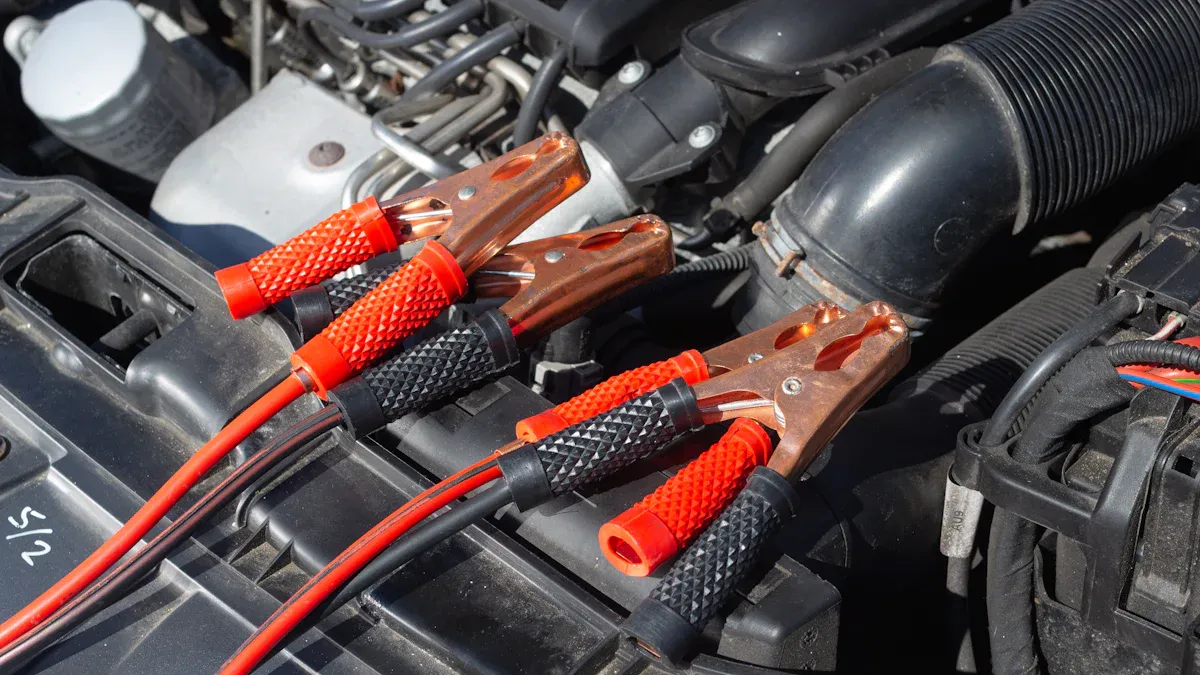
Working with your car battery requires extreme safety. Electrical shock, acid burns, and explosions are serious hazards. You might need to disconnect car battery for maintenance, storage, or component replacement. Disconnecting a car battery safely involves specific precautions. This guide gives you clear, step-by-step instructions. You will prevent damage and stay safe.
Key Takeaways
Always wear safety glasses and gloves. This protects you from acid and sparks.
Disconnect the negative cable first, then the positive cable. This prevents dangerous sparks.
Reconnect the positive cable first, then the negative cable. This is the safe way to put it back.
Clean battery terminals before reconnecting. This helps your car battery work better and last longer.
Never disconnect the battery while your car is running. This can damage your car’s electrical parts.
Safety First: Hazards and Gear

Working with a car battery requires careful attention to safety. You must understand the risks involved before you begin.
Battery Risks
Car batteries present several serious dangers. You face electrical hazards. Bringing metal tools or jewelry into contact with battery terminals can cause electrocution. Touching both terminals at once sends an electrical current through you. Short circuits from conductive objects create sparks. These sparks can cause severe burns and melt metal. Batteries also contain corrosive acids.
Sulfuric acid is highly corrosive. It causes severe burns if it touches your skin or eyes. Spilled acid can contaminate the environment. It can also become airborne, irritating your tissues. Lead in batteries is toxic if you inhale or ingest it, leading to lead poisoning. An explosive mixture of hydrogen and oxygen gases escapes through battery vents. These gases can easily ignite during charging or movement, causing a fire or explosion. Batteries are heavy. They pose a risk of sprains, strains, or other injuries if you do not handle them correctly.
Essential Safety Equipment
You must wear the right gear to protect yourself. Always wear safety glasses or goggles. They protect your eyes from acid splashes and corrosive materials. Chemical-resistant gloves are also essential. They shield your hands from battery acid and other corrosive substances. Consider a face shield for extra protection. It covers your entire face from chemicals. Chemical aprons protect your clothing and skin from splashes. You should also wear loose-fitting, long-sleeved shirts.
Owner’s Manual Check
Always consult your vehicle’s owner’s manual. It provides specific instructions for your car model. The manual might have unique safety warnings or procedures for your car battery.
Preparing for Disconnecting a Car Battery
Preparing for disconnecting a car battery involves several key steps. You must gather your tools and prepare your vehicle. You also need to know where your car battery is located.
Tools for the Job
Before you disconnect your car battery, gather your tools. You will need specific tools for your car battery. Often, two wrenches are necessary. Use one monkey wrench to hold the square part. Use a second monkey wrench or a small ratchet to turn the nut. A 10mm wrench is commonly used. For GM side post batteries, a small ratchet usually works.
Vehicle Preparation
First, turn off your car’s engine completely. Wait at least 10 minutes. This allows electrical systems to power down. Wear your insulated work gloves and safety goggles. Remove all jewelry, including necklaces, watches, and bracelets. This prevents electrical shock.
Use zip ties or other restraints to secure battery cables. This stops them from touching and causing sparks. Once you remove the positive cable, cover its end with a cloth. This avoids metal-to-metal contact. Work in a well-ventilated area. This avoids harmful gases. If your terminal is fused, use a special battery cable removal tool. You might want a memory saver. This keeps your vehicle’s settings, like radio presets.
Locating the Battery
Your car battery is not always under the hood. Manufacturers place batteries in different spots. You might find your car battery in the trunk or even a wheel well. Even with a hidden car battery, you usually find remote terminals under the hood. You use these for jump-starting. Check your owner’s manual for the exact location. Here are some common battery locations:
Vehicle Model | Battery Location |
|---|---|
BMW 3 Series (2012-2021) | Under the hood, right side |
BMW 5 Series (2010-2021) | Trunk, right side |
Chevy Cobalt SS | Trunk |
Ford F-150 (2015-2022) | Under the hood, right side |
Toyota Prius (2004-2012) | Trunk, rear left corner |
Safely Disconnect Car Battery
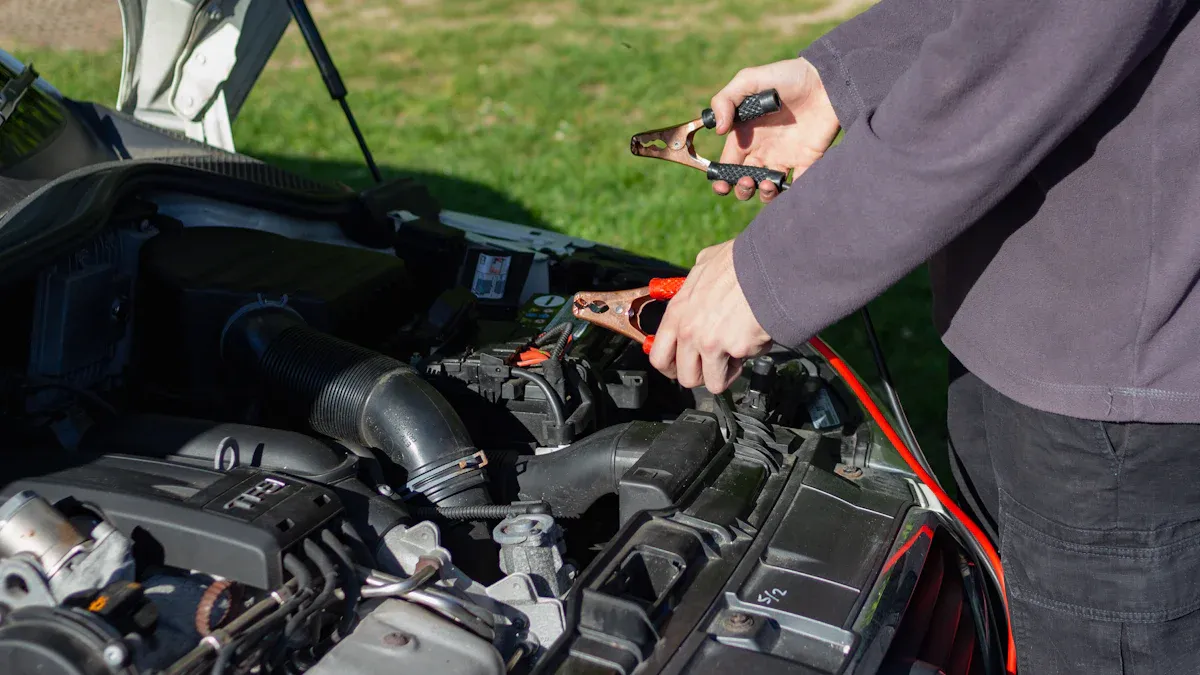
Now you are ready to disconnect car battery. Follow these steps carefully. You will ensure your safety and prevent damage.
Negative Terminal First
Always start with the negative terminal. This prevents accidental short circuits. Locate the negative terminal. It usually has a minus sign (-) and a black cable. You will see a 10mm nut securing the negative battery post. Use a deep socket with a short ratchet. Unscrew the nut about two revolutions. You do not need to remove it completely. Wiggle the terminal off the post. It should come off easily.
Safety Tip: Remove any rings, watches, or other metal items from your fingers. This prevents accidental shorting with the positive terminal.
Once you remove the negative cable, secure it away from any metal parts of the car. You can wrap it in a rag or use a zip tie to hold it. This stops it from accidentally touching metal and causing sparks. Leave the terminal off for approximately 10 seconds before reconnecting.
Positive Terminal Next
After you secure the negative cable, move to the positive terminal. This terminal has a plus sign (+) and a red cable. Use your wrench to loosen the nut on the positive terminal. Carefully lift the cable off the post. Make sure this cable also does not touch any metal on the car. You can wrap it in a rag too.
Remove Hold-Down Clamp
Your car battery sits in a tray. A hold-down clamp keeps it secure. Locate this clamp. It might be a strap, a metal bar, or a plastic tray. Loosen the nuts or bolts holding the clamp in place. Remove the clamp completely. This allows you to lift the car battery out.
Battery Removal and Storage
Carefully lift the car battery from its tray. Remember, car batteries are heavy. Lift with your legs, not your back. Place the battery on a flat, stable surface.
Before you remove the car battery, consider a few things. Some vehicles need a pre-repair scan. This avoids losing stored codes. Also, get anti-theft codes for your radio or other systems. This prevents delays when you reconnect the battery. Some car manufacturers have specific requirements for battery disconnection. For example, Audi and Volkswagen might need the ignition in the ‘on’ position. Always check your owner’s manual or OEM repair information.
If you plan to store the car battery, follow these steps:
Inspect the battery: Look for leaks or damage. Wear protective gloves and goggles.
Clean the battery: Remove any corrosion. Use a mixture of baking soda and water. Clean the top and terminals.
Check electrolyte levels: If your battery has filler caps, check each cell.
Fill low cells: Add distilled water to low cells. Do not overfill.
Charge the battery: Charge the battery if needed. Recheck electrolyte levels after it cools.
Store in a cool, dry place: Keep the battery where it will not freeze.
Use a smart charger: Connect a smart charger or float charger. This maintains the charge during storage.
Store the battery fully charged. This prevents sulfation. Sulfation reduces battery capacity. Regularly check stored batteries. Test the voltage every three months. If it drops below 12.4 volts, recharge it slowly. This prevents lead sulfate buildup.
Reconnecting the Battery
You have successfully disconnected your car battery. Now you need to reconnect it. This process also requires careful steps. You will ensure safety and proper function.
Clean Terminals
Before you reconnect the car battery, clean the terminals. Clean terminals are very important. Corrosion on battery connections shortens a car battery’s lifespan. It also degrades its performance. This corrosion causes electrical shortages. It can permanently damage the battery. Your car might break down or fail to start. Maintaining clean battery connections is essential.
Corrosion is a poor conductor of energy. It severely impacts your vehicle’s electrical system. You will see diminished battery performance. This leads to slow cranking or dim lights. You might hear a clicking sound when starting. If you do not fix this, your battery will die. Corrosion also shortens battery life. It damages battery posts early. This reduces the battery’s average lifespan. You will need an earlier replacement.
“With today’s cars, it’s essential that we have good clean power,” one expert said. Dirt, corrosion, and crud affect car battery performance. They stop full voltage from reaching important accessories and the starter.
You can use a STEELMAN 4-Way Battery Cleaning Tool. This tool works for most top-post style automotive and marine batteries. It has a 6-bladed, tapered reamer. This cleans terminal clamps. It also has positive and negative post cleaners. These clean and reshape posts for the best connection. A built-in wire brush is under the cap. It removes any remaining corrosion. This tool helps ensure longer battery life. It keeps terminals and posts clean. This leads to better contact. It also puts less strain on your car’s systems.
Position Battery
Now, place the car battery back into its tray. Lift the battery carefully. Remember, batteries are heavy. Place the new battery in the same spot as the old one. Ensure it is in the correct location for the hold-down clamp. You might need to move the battery slightly. This helps you achieve the proper positioning. Do this before you tighten the clamp.
Positive Terminal First
You will connect the positive terminal first. This is the opposite of disconnecting. It prevents sparks and damage. Locate the positive terminal. It has a plus sign (+) and a red cable. Place the positive cable onto the positive battery post. Use your wrench to tighten the nut. Make sure it is snug. Do not overtighten it.
Negative Terminal Last
Next, connect the negative terminal. This is the last step for connections. Find the negative terminal. It has a minus sign (-) and a black cable. Place the negative cable onto the negative battery post. Use your wrench to tighten the nut. Ensure it is secure. Do not overtighten.
Secure and Test
After connecting the cables, secure the car battery. Reinstall any clamps or hold-downs. This ensures the battery stays secure during vehicle operation. Make sure all components are securely fastened. They should not interfere with the battery or its connections. Verify everything is in its correct place.
Now, you can start your vehicle.
Turn on the car.
Ensure all electrical components work properly.
Check for any warning lights on the dashboard.
Listen for unusual sounds or issues when the car runs.
If the car does not start, or if it shows issues, double-check all connections. Make sure they are tight and in the correct position. If the battery worked before, retrace your steps. Confirm everything was done correctly. Take a short break if you need to. A fresh perspective helps you find missed steps.
Always prioritize safety. When you disconnect car battery, follow the correct order. Remove the negative cable first, then the positive. Reconnect the positive cable first, then the negative. This process protects you and your car battery. If you are ever unsure how to disconnect car battery, consult a professional. You can confidently handle your vehicle maintenance. This ensures your car runs smoothly and safely.



