

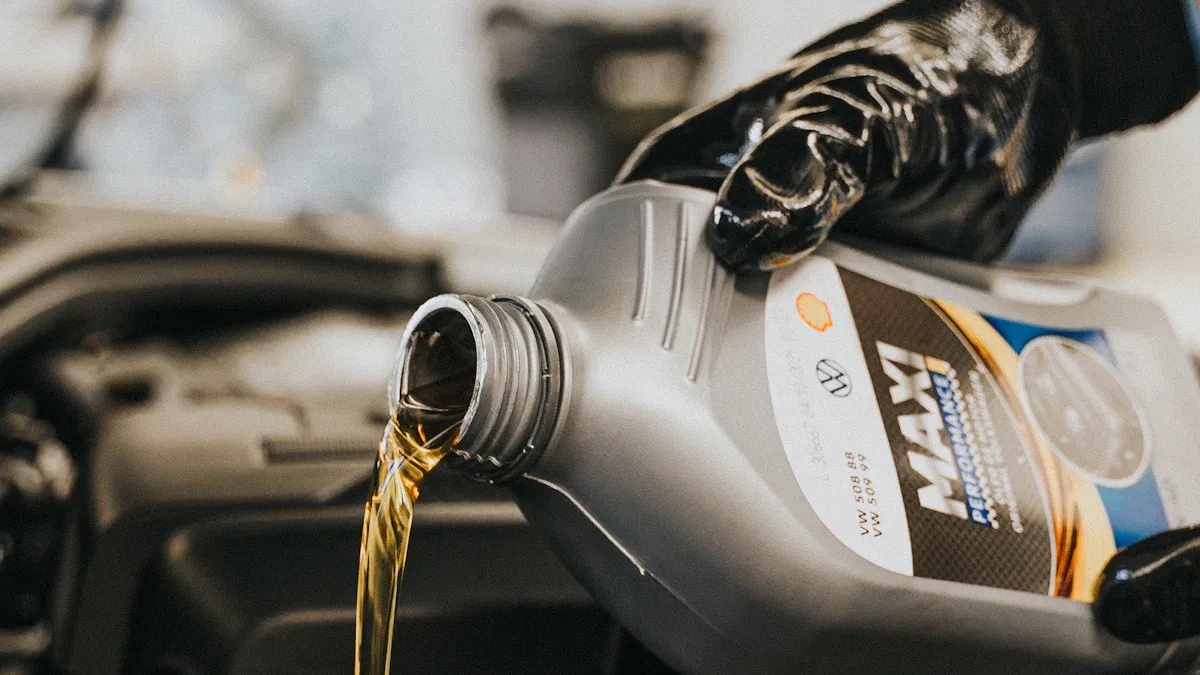
Your car’s engine needs coolant to run properly. This vital fluid, also known as antifreeze, prevents your engine from overheating in hot weather and freezing in cold temperatures. Regular checks of your coolant levels are crucial for your vehicle’s long life and best performance. Neglecting your engine coolant can lead to serious problems. Cooling system issues are responsible for nearly 40% of engine failures, making proper coolant maintenance essential. You must add coolant when levels are low to avoid costly damage.
Key Takeaways
Coolant keeps your car’s engine from getting too hot or too cold. Check your coolant levels often to prevent engine damage.
Always let your engine cool down completely before you check or add coolant. Opening a hot radiator cap can cause serious burns.
Use the correct type of coolant for your car. Check your owner’s manual to find the right kind. Mixing different coolants can harm your engine.
Add coolant to the ‘max’ line on the reservoir. Do not overfill. After adding, check for leaks and make sure to remove any trapped air.
Understanding Coolant and Its Importance
What Coolant Does for Your Engine
Coolant is essential for your car’s engine. It keeps your engine from getting too hot or too cold. This fluid, also known as antifreeze, circulates through your engine. It absorbs heat and then releases it through the radiator. This process maintains a stable engine temperature. Engine coolant is not just water. It is a special mixture. Coolant primarily consists of three ingredients:
Water
Antifreeze (glycol)
Dye Manufacturers also add corrosion inhibitors and water pump seal lubricants to protect your car’s cooling system.
Recognizing Low Coolant Warning Signs
Your car tells you when its coolant level is low. You might see a dashboard warning light. This light often looks like a thermometer floating in water. It can also look like a radiator. The light may show amber for a low coolant level. It may turn red if the coolant is too low or your car is overheating. Not all cars have this specific light, so check your owner’s manual. You can also notice other signs. Look for these visual indicators of a coolant leak:
Engine Overheating: Your temperature gauge runs hotter than usual. You might see steam from under the hood.
White Exhaust Smoke: Coolant can leak into the engine and burn with fuel.
Coolant Stains: You may see colored stains on the engine, radiator, or hoses.
Visible Leaks: You might directly see coolant dripping from parts like the radiator or hoses.
When to Check and How Often to Add Coolant
You should regularly check your coolant. This helps prevent problems. It is recommended to inspect coolant levels at least twice a year. Do this before summer and winter. Extreme temperatures stress the cooling system. You should also check your coolant monthly. Always check your antifreeze level before long trips. Some coolant evaporation is normal. You will need to add coolant occasionally. Knowing how often to add coolant depends on your car and driving. If you notice frequent drops in coolant levels, you might have a leak. This means you need to add anti-freeze more often.
Preparing to Add Coolant
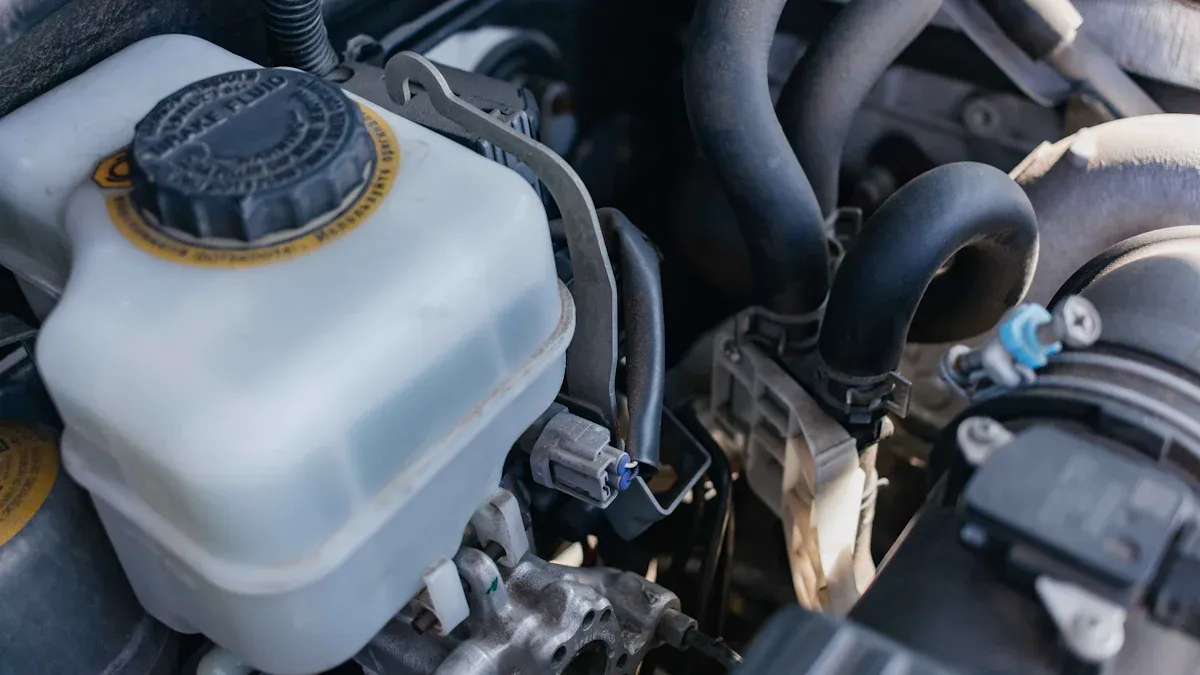
Before you add coolant to your car, preparation is key. You must ensure your engine is completely off and cool. This prevents severe burns from hot engine parts or pressurized coolant.
Essential Tools and Safety First
Gather your tools before you begin. You will need the correct type of coolant for your car. If you use concentrated antifreeze, have distilled water ready. A funnel helps prevent spills. Keep old rags or towels nearby for cleanup. Always wear safety glasses and gloves to protect yourself.
Safety Precautions for Handling Coolant:
Keep engine coolant in its original packaging. This helps with proper identification.
Retain the product’s safety information. This includes ingredients for medical emergencies.
Store coolant in a hard-to-reach place. The lid should be tightly secured. Use a child safety lock.
Pour coolant into the reservoir with extra care. Use a funnel to prevent spills.
Clean up any coolant leaks immediately. Use plenty of fresh water. This is especially important if you find leaks under your car.
Label all stored vehicle fluids clearly. Packaging can wear out over time.
Dispose of coolant packaging and waste fluid responsibly. They are toxic. Use hazardous waste bins or local mechanics.
Identifying Your Car’s Coolant Type
You need to know your car’s specific coolant type. Check your owner’s manual first. It tells you the exact coolant your car needs. You can also look at the existing coolant color. However, coolant color is not always a reliable indicator of its chemical makeup or compatibility. Modern coolants often use dyes for branding. The chemical composition, especially Organic Acid Technology (OAT), dictates compatibility more than color.
Coolant Types and Compatibility:
Color
Type
Key Characteristics
Green
IAT
Traditional, suitable for older vehicles.
Orange
OAT
Long-lasting, used in modern vehicles.
Pink
OAT/HOAT
Common in Asian and European vehicles.
Yellow
HOAT
Found in some Ford and Chrysler vehicles.
Blue
Phosphate-Free (OAT)
Designed for European vehicles with aluminum parts.
Purple
Phosphate-Free (OAT)
Advanced corrosion resistance for select engines.
Turquoise
HOAT
Hybrid blend with silicate protection.
Mixing incompatible coolants can cause problems:
Gelling or Sludging: Coolant can gel or form sludge. This blocks radiators and heater cores.
Reduced Corrosion Protection: Protective additives can become ineffective. This speeds up metal component deterioration.
Overheating: The coolant becomes less effective. This leads to engine overheating.
Always consult your car’s manual for the recommended coolant type. If you are unsure, use a premium universal coolant. Never choose antifreeze based only on color.
Pre-Mixed Versus Concentrated Coolant
You can buy coolant in two forms: pre-mixed or concentrated. Pre-mixed coolant is ready to use. It is already diluted with distilled water, usually at a 50/50 ratio. Concentrated antifreeze requires mixing. You must dilute it with distilled water before you add antifreeze to your car. The typical dilution ratio is 50/50.
Why use distilled water? Tap water contains minerals. These minerals can cause problems in your cooling system. They can build up on engine parts and radiator passages. Coolant manufacturers instruct you to use distilled water for dilution.
If you use concentrated engine coolant, you can achieve a 50/50 mix. First, determine your vehicle’s total coolant capacity. Then, add half of that capacity as straight, concentrated coolant. Fill the rest with distilled water.
How to Add Coolant Safely
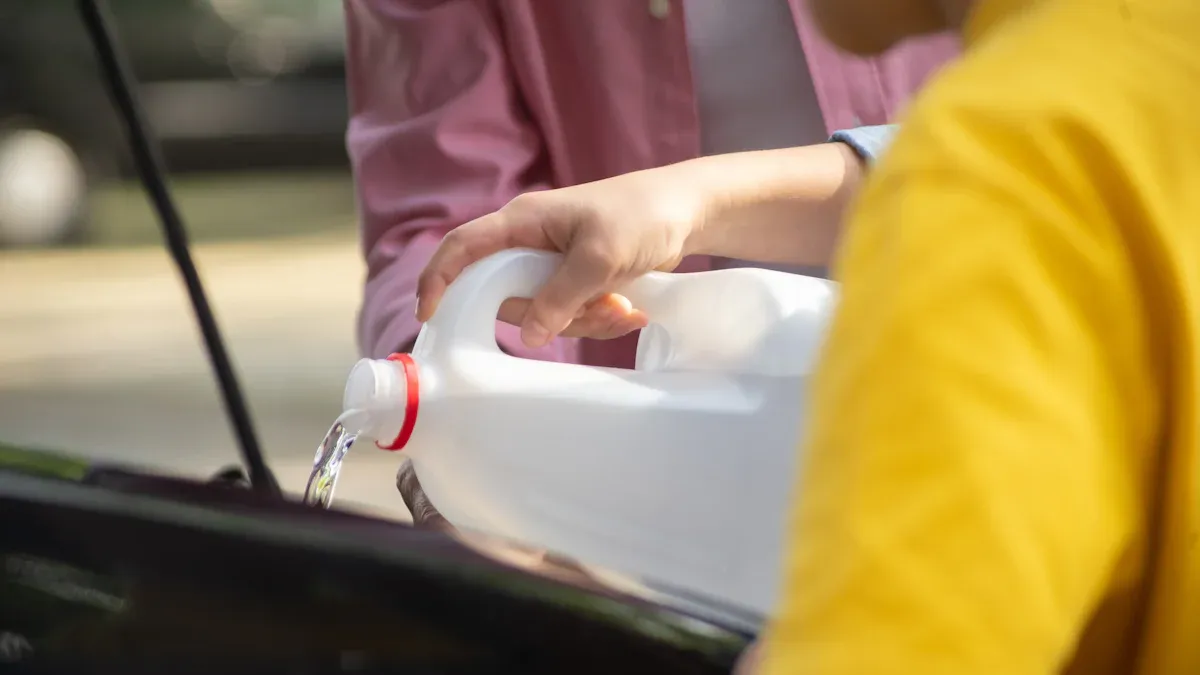
Adding coolant to your car requires careful steps. You must prioritize safety. Follow these instructions to add coolant correctly.
Locating Fill Points
First, you need to find the right places to add coolant. Look under your car’s hood. You will typically find the coolant reservoir tank in the engine bay. This tank is also known as the overflow tank. It is the primary fill point for most modern cars. Some cars also have a radiator cap. This cap is a secondary fill point. You might find multiple top-off locations depending on your car’s design.
Checking Current Levels
Now, check your current coolant level. Look at the coolant reservoir tank. It has specific markings. You will see a ‘cold fill’ line or a ‘max’ line. These markings show the optimal coolant level. The tank also has markings indicating the minimum fluid level. Your coolant level should be between these two lines when the engine is cool. If the coolant level is below the minimum mark, you need to add coolant.
Safely Opening the Cap
Opening the cap on your cooling system requires extreme caution. You must ensure the engine is completely cool. This is very important. There is no safe procedure for opening a hot radiator cap. Attempting to do so can cause severe injuries. High pressure and scalding hot coolant can rapidly spray out. This action also risks damaging your engine. It can cause a sudden drop in coolant level, leading to overheating. It can also affect other cooling system components. Always wait until the engine has completely cooled down before you try to open the radiator cap.
If the engine is cool, you can proceed.
Wait for the Engine to Cool: Allow at least 30 minutes to an hour after turning off the engine. You can confirm it is cool by carefully touching the cap with the back of your hand.
Use a Cloth or Towel: Cover the radiator cap with a thick cloth or towel. This absorbs any residual pressure. It also provides protection.
Open the Cap Slowly: Gently turn the cap counterclockwise. Turn it to the first stop. This allows pressure to escape gradually. Keep your face and body away from the opening.
Remove the Cap: Once all pressure has released, you can fully remove the cap.
Opening a pressurized cooling system cap on a hot engine can lead to severe injury. You can get burns. You can also lose a significant amount of coolant. Coolant is under pressure to raise its boiling point. It will rapidly expand and boil over when the pressure releases. Even safety caps with levers, designed to vent pressure, should not be fully trusted. They may not release all pressure. There is still a risk of severe burns. Always allow the system to cool down completely before you try to remove the cap.
Mixing and Pouring Coolant
You are ready to add antifreeze. If you have concentrated antifreeze, mix it with distilled water. Use a 50/50 ratio. If you have pre-mixed coolant, it is ready to use. Use a funnel to pour the coolant slowly into the reservoir. Fill it to the ‘cold fill’ or ‘max’ line. Do not overfill the tank. Overfilling can cause problems. You want to top up engine coolant to the correct level.
Securing the System
After you add coolant, replace the cap. Turn it clockwise until it is tightly fastened. This maintains proper system pressure. If you removed the radiator cap, replace it securely. Make sure both the reservoir cap and the radiator cap are tight.
Post-Addition Checks and Maintenance
After you add coolant, you need to perform a few checks. These steps ensure your engine cooling system works correctly. They also help prevent future problems.
Bleeding Air from the Cooling System
Air can get trapped in your engine cooling system. This happens when you add coolant. Trapped air causes problems. Your engine might overheat. Your temperature gauge can also fluctuate. You need to remove this air.
Here are ways to bleed air from the system:
Fill and Run: Fill the reservoir to the “max” line. Leave the cap off. Start your car. Let the engine run until it warms up. As the car heats, air escapes. You might need to add more coolant as the level drops.
Funnel Method: Insert a funnel into the radiator opening. Pour fresh coolant slowly until it reaches the top. Start the engine. Let it run for a few minutes. This circulates coolant. It allows trapped air to rise. If your car has a bleeder valve, open it slightly. Release air until a steady stream of coolant appears. Then, close it.
Inspecting for Leaks
After you add antifreeze and bleed the system, check for leaks. A coolant leak can quickly reduce your coolant levels. Look for any new leaks around the caps or hoses. You might see visible puddles of coolant under your car. Look for stains on the ground. Check for dampness or discoloration around hoses, connections, the radiator, or the water pump. A healthy engine coolant system maintains its original vibrant color. If you see discolored or sludgy coolant, it indicates a problem.
When to Seek Professional Help
Sometimes, you need a mechanic. You should consult a professional if you notice certain issues.
Persistent Low Levels: You frequently need to add coolant. This suggests an underlying issue.
Unexplained Leaks: You see a coolant leak, but cannot find the source.
Continued Overheating: Your car still overheats after you add coolant and bleed the system.
Air Bubbles in Coolant: You see constant air bubbles in the reservoir.
Sweet Smell Under the Hood: This often means a hidden coolant leak.
Discolored Coolant: Your coolant looks rusty or dark. This signals contamination.
Mechanics use special tools. They can find issues like blockages or faulty thermostats. This helps you avoid costly repairs.
Maintaining your car’s coolant level is a simple yet vital task. You should make routine coolant checks a regular part of your car maintenance. Proactive care prevents costly engine damage. Neglecting your coolant can lead to overheating, radiator corrosion, and even engine failure. Old coolant loses its ability to absorb heat, increasing the risk of expensive engine overhauls or complete engine replacement. Regular attention saves you money and keeps your car running smoothly.
FAQ
Can I mix different coolant colors?
🛑 Warning: Do not mix different coolant colors. Coolant color does not always show its type. Mixing incompatible coolants can cause gelling. This harms your cooling system. Always use the coolant type your car manual recommends.
What happens if I overfill the coolant reservoir?
Overfilling the coolant reservoir can cause problems. Excess coolant may spill out. This creates a mess. It can also put too much pressure on the system. Always fill to the ‘max’ or ‘cold fill’ line.
How often should I flush my coolant system?
You should flush your coolant system every 30,000 to 50,000 miles. Check your car’s owner’s manual for exact times. Regular flushing removes old coolant. It prevents corrosion. This keeps your engine running well.
Is it okay to drive with low coolant?
No, you should not drive with low coolant. Low coolant levels cause your engine to overheat. This can lead to serious engine damage. Add coolant right away. If you cannot, seek professional help.
Why does my coolant disappear quickly?
Coolant disappears quickly for several reasons. You might have a leak in your cooling system. The engine could also burn coolant. This often shows as white exhaust smoke. See a mechanic if you notice this.



