

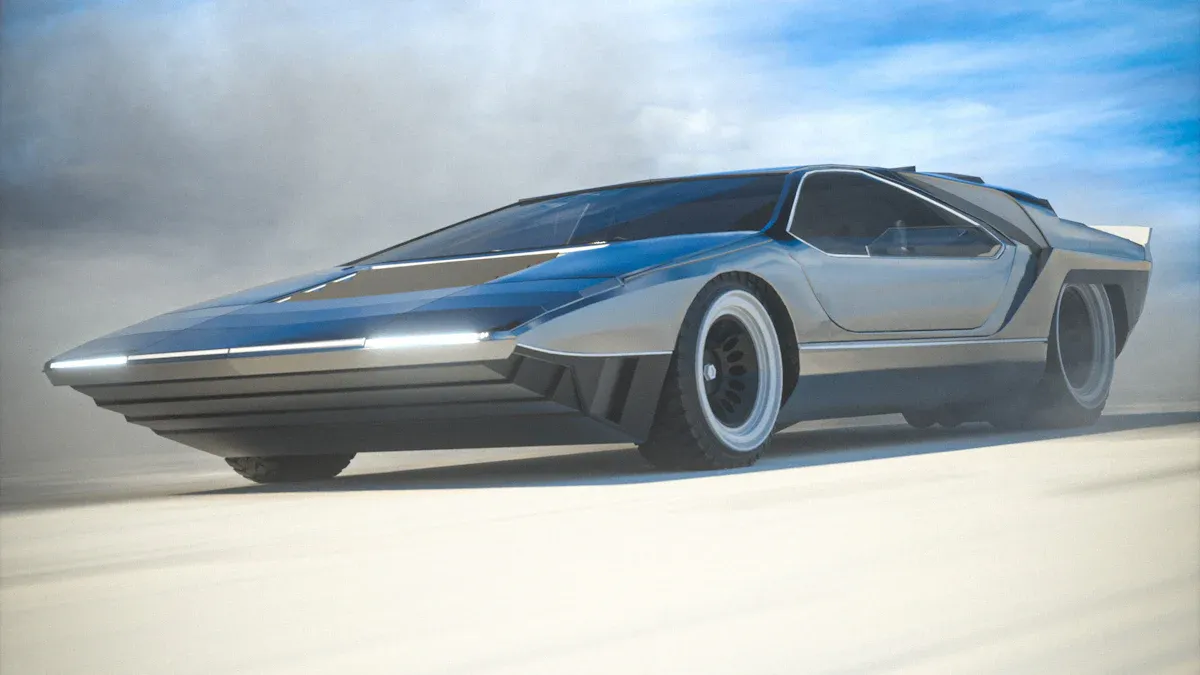
The Koenigsegg Jesko Absolut stands as the fastest car in the world for 2025. It boasts a projected top speed of 330 mph (531 km/h). The hypercar segment features intense competition and engineering marvels. The Bugatti Chiron Super Sport 300+ holds the officially tested production car speed record at 304.77 mph. Additionally, the Yangwang U9 Xtreme emerges as a significant fastest recorded production car. This pursuit of ultimate top-speed and technological innovation defines the high-performance automotive world. Every new model pushes the boundaries of speed and record-breaking performance.
Key Takeaways
The Koenigsegg Jesko Absolut is the fastest car for 2025. It aims for a top speed of 330 mph.
The Yangwang U9 Xtreme is the fastest electric car. It reached 308.4 mph.
Cars like the Bugatti Bolide focus on track speed. Others like the Gemera focus on quick acceleration.
Extreme speed needs special engineering. This includes strong engines, light materials, and good airflow.
The Fastest Car in the World: Koenigsegg Jesko Absolut
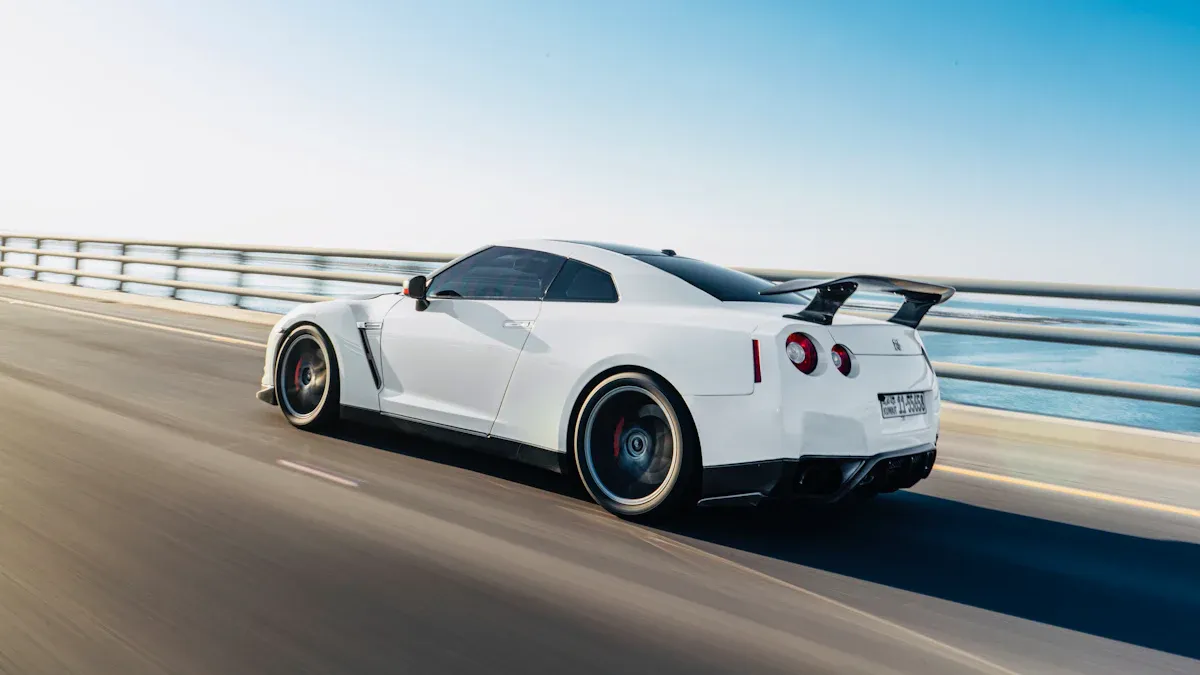
The Koenigsegg Jesko Absolut represents the pinnacle of automotive engineering. It aims to be the fastest car in the world. This hypercar combines extreme power with advanced aerodynamics. Every part of its design serves the goal of ultimate top-speed.
Record Top Speed Potential
The Koenigsegg Jesko Absolut targets an astonishing top speed of 330 mph (531 km/h). This makes it a leading contender for the title of the fastest car in the world. Achieving this top-speed requires immense power and minimal drag. Koenigsegg engineers designed the Absolut specifically for this top-speed run. They focused on every detail to push the boundaries of what a production vehicle can achieve. This pursuit of speed sets a new record for automotive performance.
Powertrain Details
The heart of the Jesko Absolut is a powerful 5.0-liter twin-turbo V8 engine. This engine delivers incredible performance. It produces different power outputs depending on the fuel type.
Fuel Type | Horsepower (hp) | Torque (lb-ft) |
|---|---|---|
E85 Biofuel | 1,600 (at 7,500 rpm) | 1,106 (at 5,100 rpm) |
Pump Gas | 1,280 | 738 (from 2,700 to 6,170 rpm) |
This chart visually compares the engine’s output:
The engine pairs with Koenigsegg’s innovative Light Speed Transmission (LST). This nine-speed transmission is a marvel of engineering. It allows for virtually instant gear changes. The LST uses Ultimate Power On Demand (UPOD) technology. This system predicts the best gear for maximum acceleration. It ensures the engine always delivers optimal performance. This advanced powertrain is essential for reaching the car’s projected top-speed.
Aerodynamics and Design
The Jesko Absolut’s design prioritizes minimal drag for extreme top-speed. Engineers removed the massive rear wing found on the track-focused Jesko. This change significantly reduces downforce from 1400kg to 150kg. Every surface on the Absolut is designed to be as slick as possible. Air glides effortlessly over, under, and through the body.
Key aerodynamic features include:
An elongated, tear-dropped tail for a more streamlined shape. This makes the Absolut 85 mm longer than the standard Jesko.
Smoother front splitter winglets and redesigned front louvers.
Aerodynamic, removable wheel covers.
A drag coefficient of 0.278 Cd, which surpasses the target of 0.28 Cd.
Koenigsegg invested over 3000 hours in fluid dynamics (CFD) analysis. This extensive work smoothed surfaces and optimized airflow. The result is a car built to cut through the air with incredible efficiency, crucial for its top-speed goal.
Construction and Materials
The Koenigsegg Jesko Absolut uses advanced materials for lightweight strength. Its chassis is a carbon fiber monocoque. This design provides exceptional rigidity and safety. It also keeps the weight to a minimum. The body panels are also made from lightweight carbon fiber. This choice enhances acceleration, top speed, and overall performance. The front and rear aprons receive reinforcement with Kevlar. This adds extra strength and durability. These materials are vital for a hypercar designed for record-breaking speeds. They ensure the car can handle the immense forces at its top-speed.
Other Fastest Cars in the World in 2025
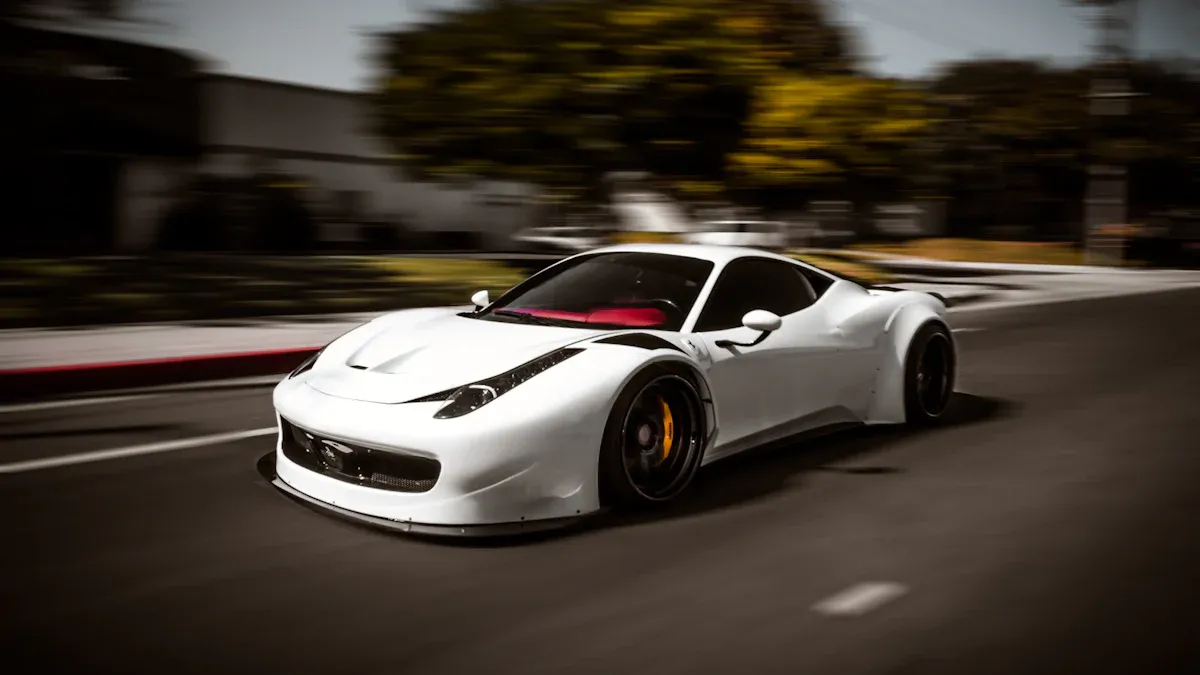
The pursuit of ultimate speed extends beyond a single vehicle. Many other contenders push the boundaries of automotive engineering. These fastest cars in the world in 2025 showcase diverse approaches to extreme performance. They include electric power, track-focused design, and traditional internal combustion engines.
Yangwang U9 Xtreme: Fastest Production Car
The Yangwang U9 Xtreme emerges as a significant contender among the fastest cars in the world. This electric hypercar demonstrates incredible capabilities. It has achieved a confirmed top speed of 308.4 mph. This makes it one of the fastest recorded production cars. While official 0-60 mph acceleration figures are not yet released, early estimates suggest it could achieve this sprint in under two seconds. The U9 Xtreme combines raw power with advanced electric vehicle technology. It sets a new benchmark for electric performance.
Bugatti Bolide: Track-Focused Top-Speed
The Bugatti Bolide represents a track-focused approach to extreme top-speed. This hypercar prioritizes circuit performance. The production Bugatti Bolide has a top speed of 380 km/h (236 mph) in a low-downforce configuration. This speed is still faster than the official all-time Formula 1 race record. The Bolide offers an incomparable feeling of relentless power. It accelerates out of corners with immense force. Bugatti’s chief test driver, Andy Wallace, noted its remarkable ease of driving at its limits.
The Bolide’s performance figures are impressive:
It accelerates from 0 to 100 km/h (62 mph) in 2.2 seconds.
It reaches 0 to 200 km/h (124 mph) in 5.4 seconds.
It achieves 0 to 300 km/h (186 mph) in 11.5 seconds.
Its top speed is electronically limited at 501 km/h (311 mph).
The Bolide generates over 2,630 kg (5,800 lb) of downforce at 320 km/h (200 mph). This includes 1,810 kg (4,000 lb) at the rear wing and 820 kg (1,800 lb) at the front wing. Its unique Brembo braking system provides stopping power comparable to Formula 1 machinery. Simulated track performance for the Bugatti Bolide includes a Nürburgring lap time of 5 minutes and 23.1 seconds. This is just four seconds slower than the Porsche 919 Hybrid Evo record holder.
Bugatti Chiron Super Sport 300+: A Speed Icon
The Bugatti Chiron Super Sport 300+ holds a significant place in automotive history. It is a true speed icon. On August 2, 2019, Bugatti test driver Andy Wallace achieved a record-breaking speed of 490.484 km/h (304.773 mph). He drove a pre-production Chiron Super Sport 300+ prototype. This made it the first series-production car to exceed 300 mph. This accomplishment set a new record for hyper sports cars. The final production version of the Chiron Super Sport 300+ has an electronically limited top speed of 440 km/h (273.4 mph). This car remains one of the fastest cars in the world in 2025.
Yangwang U9: Electric Speed Benchmark
The Yangwang U9 sets an electric speed benchmark. This electric hypercar showcases impressive acceleration. It achieves 0-100 km/h (62 mph) in just 2.36 seconds. Its quarter-mile (402 m) drag race time is 9.78 seconds. These figures highlight its exceptional performance. The U9 demonstrates the rapid advancements in electric vehicle technology. It offers a glimpse into the future of high-performance driving.
Acceleration Kings: Gemera, 21C VMax, Tourbillon
While some cars focus on ultimate top-speed, others excel in brutal acceleration. These “acceleration kings” deliver incredible performance off the line. They offer record-setting acceleration.
Car Model | 0-100 km/h (seconds) |
|---|---|
Koenigsegg Gemera | 1.9 |
Czinger 21C V Max | 1.9 |
Bugatti Tourbillon | 2.0 |
This chart visually compares the 0-100 km/h acceleration times of these hypercars:
The Koenigsegg Gemera, Czinger 21C VMax, and Bugatti Tourbillon all achieve astonishing acceleration. The Gemera and 21C VMax both reach 100 km/h in a blistering 1.9 seconds. The Bugatti Tourbillon follows closely with a 2.0-second sprint. These vehicles represent the pinnacle of immediate power delivery. They redefine what is possible for a production vehicle’s initial burst of speed. Their performance makes them some of the fastest cars in the world.
Engineering for Extreme Speed
Hypercars achieve their incredible top-speed through advanced engineering. These vehicles combine many specialized technologies. They push the limits of automotive design. This section explores the key principles that enable such extreme top-speed.
Power-to-Weight Ratios
The power-to-weight ratio is crucial for a car’s top-speed and overall performance. This ratio measures how much power each kilogram of a vehicle must move. A lighter car with strong power can outperform heavier rivals. Automakers work to increase power and reduce weight. This improves both acceleration and overall performance. The power-to-weight ratio is a better indicator of potential performance than horsepower alone. It accounts for the weight the engine must propel. This ratio is vital for high-performance cars. It influences straight-line speed, agility, and handling. A lighter car with high power accelerates faster. It also maneuvers more responsively. This provides a thrilling driving experience and enhances performance capabilities.
Advanced Aerodynamics
Aerodynamics plays a critical role in achieving high top-speed. Engineers design hypercars to cut through the air with minimal resistance. They also manage airflow to create downforce. Downforce keeps the car stable at extreme speeds. Many hypercars use active aerodynamic elements. These parts adjust automatically to changing conditions. This optimizes the car’s top-speed and handling.
Hypercar | Active Aerodynamic Element |
|---|---|
Porsche Panamera | Tri-folding wing |
Koenigsegg One:1 | Sophisticated active wing (acts as rudders, air brake, adjusts angle) |
Ford GT | Active rear wing (tucks away, deploys as air brake) |
Pagani Huayra | Sophisticated active aero |
Lamborghini Gallardo | Rear spoiler (raises at high speeds) |
These elements help manage airflow for maximum top-speed and stability.
High-Performance Tires
Specialized tires are essential for hypercars. They must withstand extreme forces at high top-speed. Tire manufacturers develop these tires with advanced compounds. This ensures optimal grip, stability, and durability. They undergo rigorous testing to handle extreme temperatures. These are bespoke solutions, developed with car manufacturers. They feature tailored tread patterns and structures. This meets specific hypercar needs.
Engineered using advanced compounds for optimal grip, stability, and durability.
Rigorous testing to withstand extreme temperatures and forces.
Bespoke solutions developed through collaboration between manufacturers and tire companies.
Tailored tread patterns and structures to meet specific hypercar needs.
The Michelin PAX tires for the Bugatti Veyron are a prime example. They withstand extreme top-speed. Their development involved hundreds of hours of high-speed testing. This ensures their performance.
Position | Size |
|---|---|
Front | 265/680-R500 99Y |
Rear | 365/710-R540 108Y |
These tires are crucial for safety and performance.
Braking Systems
Bringing a hypercar to a stop from its top-speed requires powerful braking systems. These systems must be reliable and efficient. Many hypercars use carbon brake discs. These discs are designed for racing. They need temperatures of at least 200°C for best performance. They can withstand over 1000°C during heavy braking.
Energy Recovery Systems (ERS) are crucial for hybrid hypercars. ERS converts kinetic energy into electricity during deceleration.
Advanced Hydraulic Control Units (HCU) are essential. They contain valves and pressure sensors. These detect driver intent and control output pressure to the wheels.
Brake-by-wire systems offer exceptional efficiency and precise control. They integrate with advanced vehicle dynamics.
These advanced braking technologies ensure safety and control. They allow drivers to manage the immense performance of these production vehicles.
The Koenigsegg Jesko Absolut is the projected fastest car in the world for 2025. The Yangwang U9 Xtreme is the fastest recorded car. These hypercar models highlight incredible innovation and engineering prowess. They push the limits of automotive performance. Each hypercar achieves its extreme top-speed through relentless development. They set new records for top speed. The pursuit of ultimate top-speed drives future hypercar development. This quest for top-speed promises even greater performance. We anticipate more record-breaking speeds and top-speed achievements beyond 2025. This fastest car segment always seeks new top-speed performance.
FAQ
What is the fastest car in the world for 2025?
The Koenigsegg Jesko Absolut is the projected fastest car in the world for 2025. It aims for a top-speed of 330 mph (531 km/h). The Yangwang U9 Xtreme is the fastest recorded production car. It achieved a confirmed top-speed of 308.4 mph.
What factors contribute to a car’s extreme top-speed?
Several factors contribute to extreme top-speed. These include a powerful engine, advanced aerodynamics for minimal drag, a lightweight construction, and specialized high-performance tires. These elements work together to push the limits of speed.
What is the fastest electric production car?
The Yangwang U9 Xtreme is the fastest recorded electric production car. It reached a confirmed top-speed of 308.4 mph. This car demonstrates the incredible capabilities of electric vehicle technology in achieving high performance.
What is the difference between top-speed and acceleration?
Top-speed refers to the maximum velocity a car can reach. Acceleration measures how quickly a car can increase its speed from a standstill. A car can have high acceleration but a lower top-speed, or vice-versa.



