Karl Benz invented the first true automobile, the Benz Patent-Motorwagen, in 1886. This invention marks when the first car made its debut. While earlier self-propelled vehicles existed, Benz’s creation stands as the first practical and marketable modern car. The Benz Patent-Motorwagen became the first automobile. This innovation profoundly shaped personal transportation. It marked a pivotal moment in the history of the automobile. Today, the automobile remains a dominant force. Globally, approximately 51% of commutes are made by car, a figure from Environment International. Benz’s pioneering work laid the foundation for modern travel. Benz truly revolutionized mobility with his car.
Key Takeaways
Karl Benz made the first real car in 1886. It was called the Benz Patent-Motorwagen.
Benz’s car was special because he designed the engine and the car together. It was light and used gasoline.
Bertha Benz, Karl’s wife, took the first long trip in the car. This showed people the car worked well.
The first car changed how people traveled. It also led to new roads and cities.
Karl Benz: The First Automobile
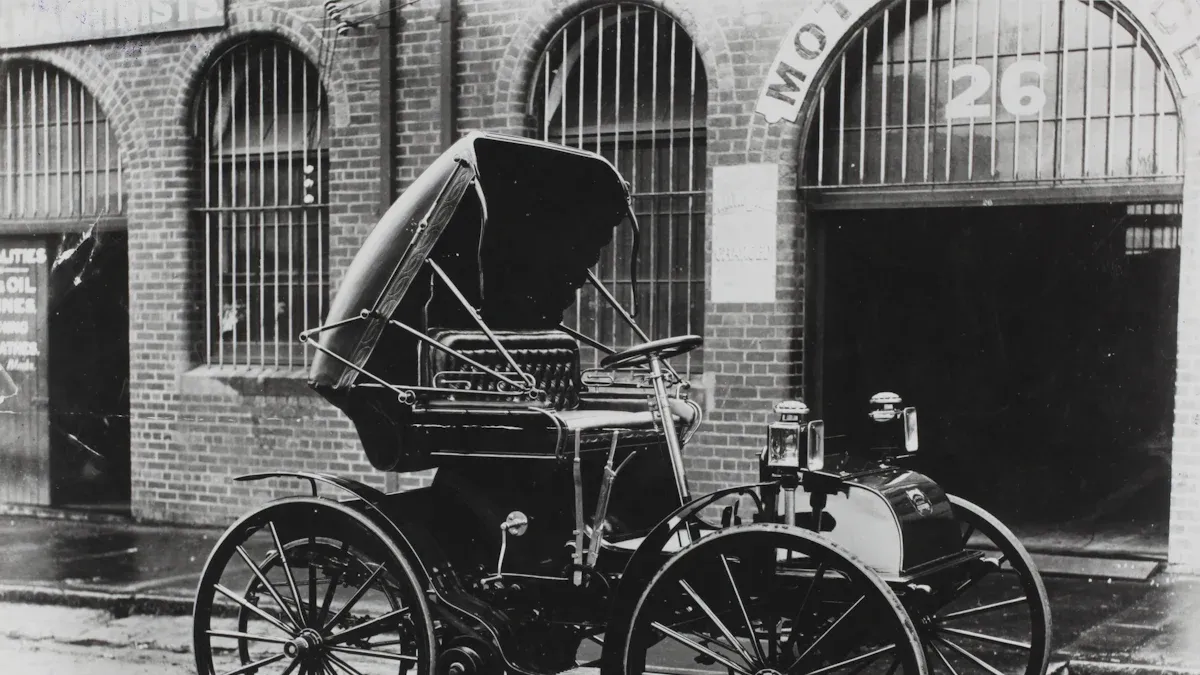
The 1886 Patent-Motorwagen
Karl Benz created the Benz Patent-Motorwagen, model no. 1, in 1885. He received a patent for this gas-fueled automobile, DRP 37435, in 1886. This patent covered the design of his three-wheeled vehicle. It became the world’s first practical automobile powered by an internal-combustion engine. The first car made its public debut with this invention.
The Benz Patent-Motorwagen had specific technical features. Its engine displacement was 954 cc. The initial engine produced 500 watts (2⁄3 hp) at 250 rpm. Later tests showed 670 W (0.9 hp) at 400 rpm. Later models, Model 2 and 3, had 1.1 kW (1.5 hp) and 1.5 kW (2 hp) respectively. This early automobile could reach a top speed of 16 km/h (10 mph).
Benz’s Key Innovations
Benz’s approach to building a car was unique. He saw the engine as a core part of the entire vehicle design. He did not just adapt an engine to an existing carriage. Benz designed his motor car as a complete, independent machine. It featured a horizontal cylinder and a large, horizontally mounted flywheel. He chose a three-wheeled design. This was because he was not happy with the steering systems of his time. This complete design made his engine perfect for automotive use.
Benz’s engine had several important innovations. It was a single-cylinder four-stroke engine. It used electrical ignition for reliable starting. Water cooling managed the engine’s temperature. This was important for a moving vehicle. The engine was also lightweight, weighing about 100 kgs (220 lbs). This was much lighter than other engines of that time. A horizontal flywheel helped improve steering and roadholding. Benz also developed a surface carburetor. This prepared the fuel and air mixture precisely. It also held the fuel. He even created his own spark plug and ignition system. These worked with low-output batteries.
Defining the First Car Made
Many people consider Benz’s invention the first car. Earlier self-propelled vehicles existed. However, they were often inefficient, unreliable, and expensive. The roads and cities were not ready for these new machines. This stopped them from becoming widely used. For example, some early vehicles were just toys. They were not for carrying people. Nicolas-Joseph Cugnot’s steam dray was very heavy, about 2.5 tons. It was also very slow, moving at only 2.25 mph. It needed frequent stops to make steam. Cugnot’s vehicle also had poor weight distribution. This led to accidents.
Benz’s car stood apart because it was practical and marketable. It was designed from the start as a usable personal transport. Benz faced many challenges during its development. His early business partners cared more about quick money. They did not support his experimental work. Benz left the company and lost his investment. An early test in 1885 showed control issues.
The vehicle hit a wall in his workshop. Benz and his wife were not hurt. The early 1888 Motorwagen also had only two gears. It could not climb hills without help. Bertha Benz, Karl’s wife, even invented brake pads during her long drive. The original brakes struggled on downhill slopes. Despite these difficulties, Benz’s dedication led to the first automobile that truly worked. This marked a new era in the history of the automobile.
Early Vehicles in the History of the Automobile
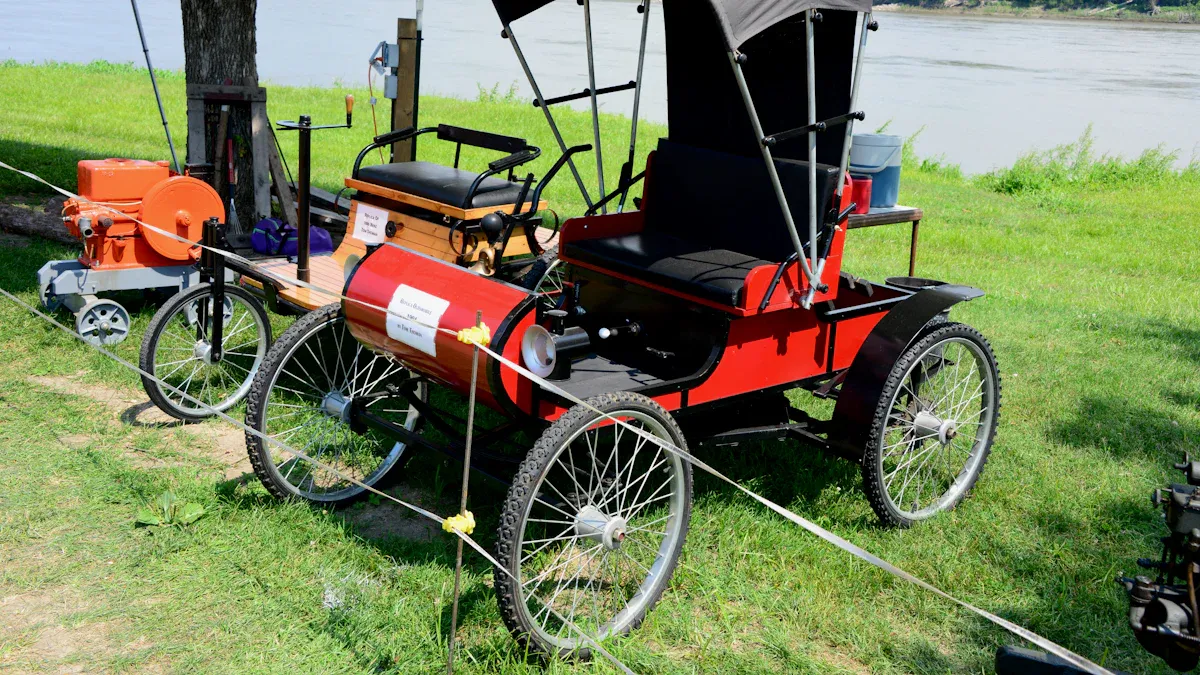
Steam-Powered Predecessors
Nicolas-Joseph Cugnot built the first steam-powered road vehicle in 1769. This ‘Fardier à vapeur’ was not a toy. It could transport 4 tonnes (3.9 tons) at up to 4 km/h (2.5 mph). This vehicle was unstable, however. It failed to meet military performance standards. Cugnot’s vehicle also had to stop every 10-15 minutes to build up steam power. Other early attempts included Ferdinand Verbiest’s steam carriage around 1679, though little concrete information exists.
William Symington also built a steam carriage in 1786. These early steam vehicles had many problems. They were slow to start. They used bulky coal for fuel, which produced dirty smoke. They also needed frequent water refills. Their metal wheels had poor traction. These vehicles were heavy. They had a low top speed of about 32 km/h (20 mph). Maintenance was often user-dependent.
Electric Vehicle Experiments
Before Benz, inventors also experimented with electric vehicles. These early electric cars showed potential. Battery technology remained very basic, however. This limited their range and power. They did not become practical for widespread use.
Why Benz’s Car Stood Apart
Benz’s invention truly stood out in the history of the automobile. Earlier steam vehicles had significant drawbacks. They had low thermal efficiency, about half that of gasoline engines. Their boilers made them heavy and bulky. They required frequent water replenishment or a condenser, adding weight and inconvenience. Starting them took several minutes from cold.
These issues made them impractical for personal use. Adverse legislation, like the UK Locomotive Acts from the 1860s, also hindered their development. The rapid growth of internal combustion engine technology further pushed steam cars aside. Steam vehicles also had high manufacturing costs. Historical safety concerns, such as boiler explosions, deterred many innovators. Benz’s internal combustion engine offered a lighter, more efficient, and more practical solution. His design for the first car made personal transportation a real possibility. This marked a new era for the automobile.
The Legacy of the First Car
Initial Reception and Use
Karl Benz’s invention of the automobile did not immediately change the world. Many people viewed the early car with skepticism. They saw it as a noisy, unreliable novelty. Early models were expensive. They also required skilled operators. Roads were not ready for motor vehicles. They were often unpaved and rough. Despite these challenges, the benz Patent-Motorwagen slowly gained attention. People began to see its potential for personal freedom and faster travel.
Bertha Benz’s Crucial Role
Bertha Benz played a crucial role in the automobile‘s early success. In August 1888, she undertook the first car long-distance journey. She drove a benz Patent-Motorwagen from Mannheim to Pforzheim. This trip covered about 106 km (66 mi) one-way.
Her journey proved the car‘s practicality. It challenged public doubt. Bertha’s trip generated global headlines. It showed motorized transport was safe and superior to horses. She acted as the benz company’s first marketing team. During the trip, she solved mechanical issues. She used a hat pin to clear a clogged fuel line. She also created the first brake linings with leather patches. Her feedback led to crucial improvements like brake pads. This historic road trip created vital publicity for the benz company. It established the automobile as a viable mode of transportation.
Shaping Modern Transportation
The invention of the automobile profoundly shaped modern transportation and society. It spurred the growth of the petroleum industry. This led to advancements in gasoline production. Cars also became a subject of popular culture. They inspired music and art. Early political figures, like William Jennings Bryan, even used cars for campaigning.
The automobile also changed urban planning. Cities moved from “walking cities” to “automobile cities” after 1920. This meant wider streets and the development of large parking areas. The need for cars led to massive infrastructure projects. These included highways, bridges, and tunnels. This decentralization of populations created suburbs. The automobile industry also grew rapidly. It created many jobs and new services like gas stations and repair shops. The car gave people more freedom. It allowed them to travel further and faster.
Karl Benz’s Benz Patent-Motorwagen holds a pivotal place in the history of the automobile. It represents the first car made. Benz successfully commercialized a gasoline-engined car. This makes January 29, 1886, the ‘birthday of the car.’
This invention, unlike steam-powered vehicles, offered practicality and marketability. The benz patent motor car established foundational principles for today’s automobile. Benz’s work sparked a technological revolution. This invention profoundly impacted society and transportation’s future. Benz truly laid the groundwork for modern automotive engineering.