


You want your car to shine, but choosing the right washing method can be tricky. While about 70% of car owners regularly use professional car wash services, many still prefer to clean their vehicles themselves. Two popular DIY options are using a foam cannon or a traditional hand wash. This post will compare the foam cannon vs hand wash methods. You will discover the best approach for your vehicle. Often, combining both methods offers optimal cleaning and paint protection.
Key Takeaways
A foam cannon pre-soak loosens dirt. It helps prevent scratches on your car’s paint.
A hand wash cleans your car very well. It lets you focus on small details.
Combining a foam cannon with a hand wash gives the best results. It cleans deeply and protects your car’s paint.
Always use the two-bucket method for hand washing. This stops dirt from scratching your car.
Use a foam cannon for light dust. Use both methods for heavy dirt.
The Foam Cannon Method
How it Works
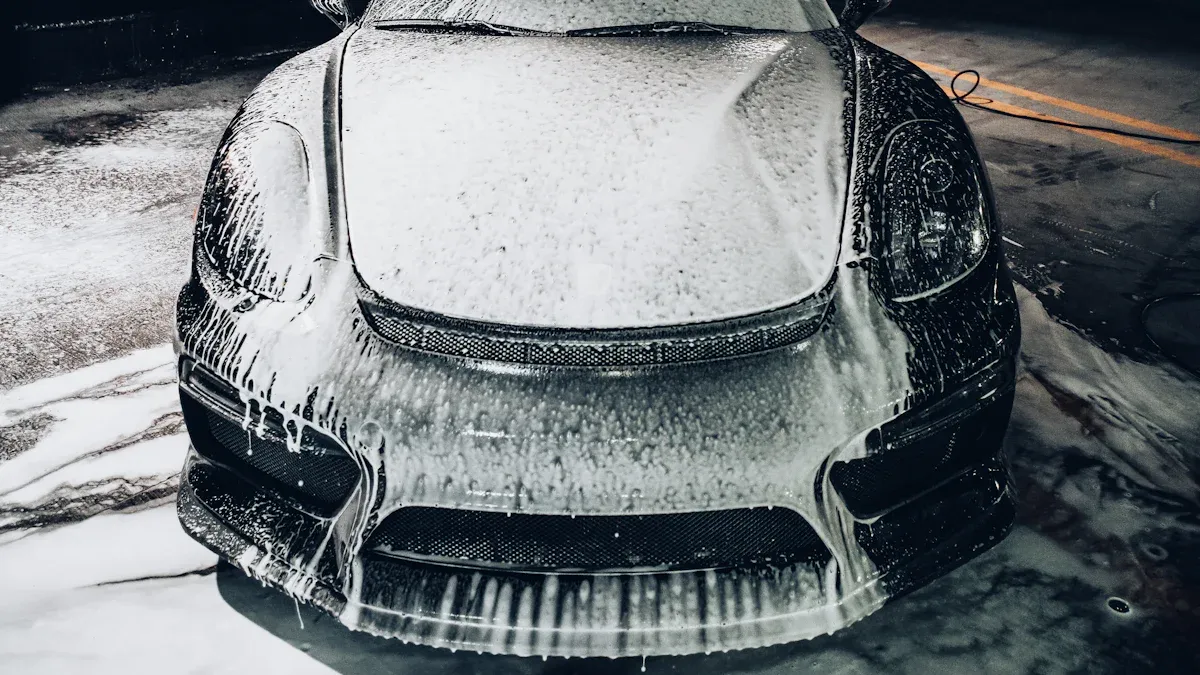
A foam cannon connects to your pressure washer. It mixes water, air, and car soap to create a thick, clinging foam. This foam covers your car. You start with a dry car. Apply the foam from the bottom up. The foam then sits on the car’s surface. It works to loosen and lift dirt and grime. This happens before you even touch the car. You let the soap dwell for a few minutes. Do not let the soap dry on the car. The right pressure is important for good foam. For example, an electric pressure washer often gives medium-thick foam at 1,800–2,000 PSI. Gas pressure washers can produce very thick foam at 2,500–3,000+ PSI. The sweet spot for most pressure washer foam cannons is 2,000–2,200 PSI. If the PSI is too low, the foam will be watery. It will not loosen dirt well. If the PSI is too high, the foam might be too forceful and less clingy.
Foam Cannon Pros
Using a foam cannon offers several advantages. It significantly reduces the risk of swirl marks. The thick foam lifts abrasive particles from the paint. This means less direct contact with dry dirt. It acts as an efficient pre-soak. This pre-soak adds extra lubrication to the car’s surface.
This helps protect your paint during the wash. You also reduce cross-contamination. The foam helps wash away loose debris. Applying foam is quick, usually taking only 5-10 minutes. A foam cannon pre-soak can cut your overall wash time in half. A traditional two-bucket wash might take 30–40 minutes. Adding a foam cannon pre-soak can reduce this to 15–20 minutes. The foam blankets the entire car in under a minute. It can also reach difficult areas easily.
Foam Cannon Cons
While effective, the foam cannon method has some drawbacks. It does not fully remove all dirt on its own. You still need to follow up with a hand wash for a deep clean. You also need extra equipment. A pressure washer is necessary for a foam cannon to work. This adds to your initial cost. There is also a potential for water waste if you do not use it efficiently. Pressure washers typically use 2 to 10 gallons per minute (GPM). This is less than an average garden hose, which uses about 8 GPM. However, a minimum of 1.8 GPM is desired for good foam. 2 GPM or higher is ideal. If you are not careful, you can use more water than needed.
The Hand Wash Method
Traditional Approach
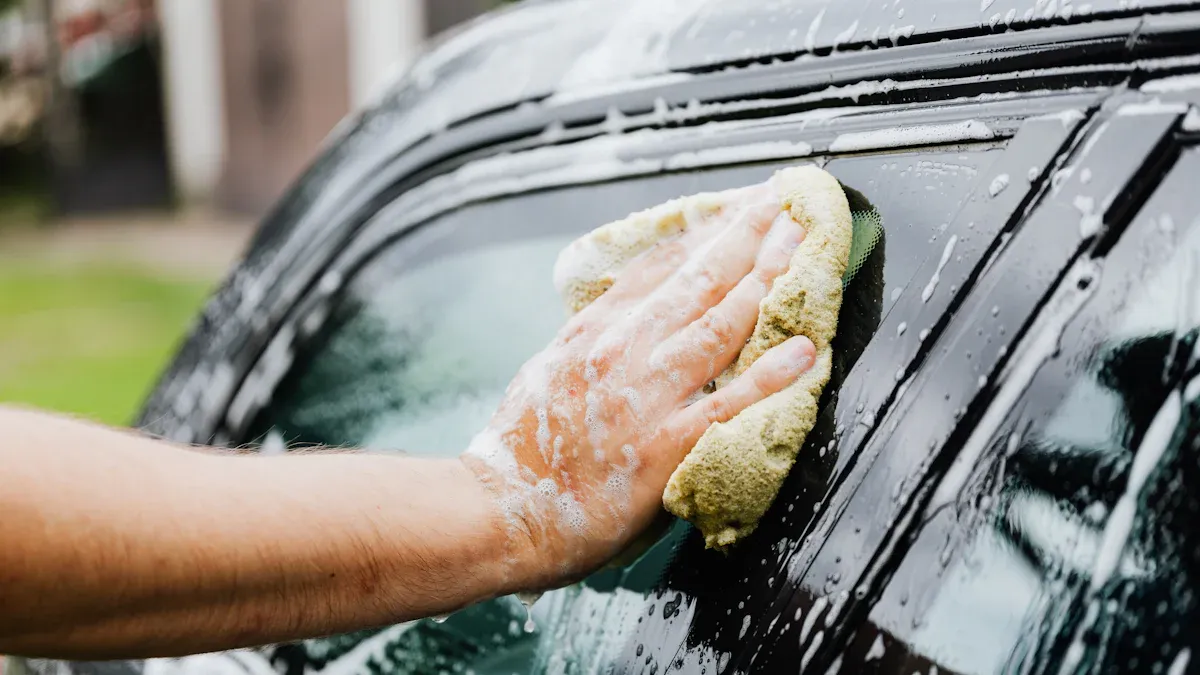
The traditional hand wash method involves direct contact with your car’s surface. You typically use the two-bucket method. One bucket holds soapy water. The other bucket holds clean rinse water. You dip your wash mitt into the soapy water. Then, you gently wash a section of your car. After washing a section, you rinse your mitt thoroughly in the clean water bucket.
This removes any dirt from the mitt. Then, you dip it back into the soapy water. This process prevents you from rubbing grime back onto your paint. When you perform a traditional hand wash, using a grit guard in your rinse bucket is crucial. This guard has a raised radial surface and a 4-quadrant structure. It pulls contaminants from your wash mitt and traps them at the bottom. This keeps clean water at the top. It prevents abrasive particles from scratching your paint.
Hand Wash Pros
A hand wash offers very thorough cleaning. You get direct feedback from your hands. This helps you find stubborn spots. You can give more attention to detail. You control the pressure you apply. This is especially good for delicate areas. You do not need specialized equipment like a pressure washer. This makes it accessible for everyone. You can achieve a very clean finish with careful technique.
Hand Wash Cons
The hand wash method has some drawbacks. It can cause swirl marks if you do it incorrectly. Using a dirty mitt or improper technique can scratch your paint. This method is also more time-consuming. A complete hand wash for a standard-sized sedan typically takes between 30 and 60 minutes. This includes pre-rinsing, soap application, rinsing, and drying. Larger vehicles or extra steps will take even longer. It is also more physically demanding than just spraying foam.
Foam Cannon vs Hand Wash: A Comparison
You want to understand the differences between these two car washing methods. This section breaks down how a foam cannon vs hand wash compares in key areas.
Cleaning Power
When you consider cleaning power, both methods have strengths. A foam cannon excels at loosening surface dirt and grime. It prepares your car for a deeper clean. The thick foam encapsulates particles. This makes them easier to rinse away. For vehicles covered in mud, road grime, or bug residue, a foam cannon pre-wash is highly effective. It offers a deep clean that traditional methods often struggle to match. The foam’s chemical action softens and lifts dirt particles. It encapsulates them for easy rinsing. This process removes most surface contamination without physical contact. This significantly reduces swirl marks and scratches. It also saves you considerable time during the subsequent hand-washing process. You minimize the need for scrubbing.
Specialized pre-wash products, especially those with elevated alkalinity, can make a significant difference. These stronger products cut through oily films and heavy traffic grime. This includes dried mud and bug residue. Mild shampoos or simple hand washing with a mitt cannot do this as effectively. You can spray these alkaline products, let them dwell, and pressure wash them off with good results. This works well on heavily soiled vehicles like grimy trucks. You do not need physical agitation from a wash mitt.
Here is how a foam cannon pre-soak compares to a hand wash for bug removal:
Feature | Foam Cannon Pre-Soak (The Super Soaper) | Hand Wash (Griot’s Bug & Smudge Remover) |
|---|---|---|
Application | Foam entire panel, dwell, rinse | Spray on, dwell, wipe/rinse |
Scratch Prevention | High—foam loosens contaminants with minimal contact | Moderate (often requires agitation) |
Versatility | Full vehicle wash, bugs, dirt, grime | Only for bugs/smudges |
Bug Removal Method | Uses lubrication and foam to suspend bug remains, allowing rinse-off | Chemically softens bug guts, often requiring follow-up wiping |
Safety | pH-balanced, safe for coatings, waxes, and trims | Safe on most surfaces, but may dry quickly in sun and leave residues |
Efficiency for Heavy Contamination | Lifts bugs and grime safely without scrubbing | Multiple applications and wiping may be needed for stubborn bug guts |
While a foam cannon is excellent for pre-cleaning, a thorough hand wash often cleans better. You get direct contact and attention to detail. This is especially true for neglected paint or stubborn spots.
Paint Safety
Paint safety is a major concern for car owners. The foam cannon method generally offers a safer initial cleaning.
Foam cannons act as a pre-wash stage. They safely soften and lift loose dirt, grit, and grime from the paint.
Rinsing off the initial foam layer significantly reduces the risk of scratching the paint during the subsequent contact wash.
The thick, clinging foam has a long dwell time. This allows it to break down, soften, and lift stubborn dirt and road grime.
This lubrication provided by the foam is crucial for a safer, scratch-free pre-wash.
The clinging foam pulls grime away from the paint before a wash mitt touches the surface. This prevents damage.
A hand wash carries a higher risk of swirl marks if you do not use proper technique. A dirty wash mitt or incorrect wiping can scratch your paint. The foam cannon reduces initial abrasion. This makes it a safer first step for your car’s finish.
Time and Effort
Consider the time and effort each method requires. A foam cannon speeds up the pre-wash process. You apply the foam quickly. This reduces the need for extensive scrubbing.
It eliminates the need for manual scrubbing in tight spots. This saves you time and effort.
It ensures thorough cleaning of hard-to-reach areas.
The ergonomic grip and lightweight construction minimize hand fatigue during extended cleaning sessions.
A lightweight, ergonomic handle with an easy-pull grip prevents hand fatigue during long cleaning sessions.
An easy-to-use trigger and flexible safety lock enhance efficient and safe operation.
It emits thicker soap. This reduces the need to scrub as hard to remove dirt and grime.
However, a hand wash still takes time. You must physically agitate the soap with a mitt. This can be more physically demanding. While a foam cannon makes the pre-wash faster, you still need to dedicate time to the contact wash for a complete clean.
Cost and Equipment
The cost and equipment needed differ between the two methods. For a foam cannon, you need a pressure washer. This is a significant initial investment. You also need the foam cannon attachment itself and specialized car soap. For a hand wash, you need less specialized equipment. You need buckets, wash mitts, and car soap. These items are generally less expensive.
Regarding consumables, the annual cost for a hand wash can vary. For example, in a hospital setting, the annual cost of paper towels was about $9,537 (n=30). The annual cost of soap was about $3,644 (n=34). These figures are per 100 beds and do not directly translate to personal car washing. However, they show that consumables add up. For your car, you will regularly buy car soap, wash mitts, and drying towels. These are ongoing expenses for both methods, though the initial setup for a foam cannon is higher.
Combining Methods for Best Results
The Hybrid Approach
You want the best for your car’s paint. Combining a foam cannon pre-wash with a careful two-bucket hand wash offers the ultimate solution. This hybrid approach balances effectiveness, safety, and efficiency. It gives your vehicle a superior clean. The foam cannon starts the cleaning process. It loosens the tough stuff. Then, your hand wash finishes the job with precision.
The foam cannon and hand wash process effectively tackles dirt and contaminants. It also handles grime. The foam emulsifies grime, making it easier to wipe away without harming your vehicle’s finish. It gently loosens dirt and grime without scratching the paint.
This combination ensures you remove all types of dirt without damaging your car’s surface. You get a deep clean and protect your paint.
Step-by-Step Process
Follow these steps for optimal cleaning when combining methods:
Strategic Pre-Rinse: Start at the roof of your car. Work your way down with a pressure washer or a strong hose spray. Focus on lower panels, wheel wells, and the front bumper. These areas often have the heaviest grime. Move methodically from top to bottom, panel by panel. Use horizontal sweeping motions.
Apply Foam Cannon Pre-Soak: Coat your entire vehicle with a thick layer of foam using your foam cannon.
Allow 3–5 minutes of dwell time for the foam. This lets it loosen road film and suspend grit.
Generally, 3–5 minutes is recommended for foam dwell.
Pre-soak the entire vehicle with foam and let it dwell for 3–5 minutes. The foam cannon soap needs to dwell long enough. This allows the chemical cleaner to dissolve dirt, road grime, and traffic film. You can then rinse it off without agitation. Let the soap dwell as long as possible, typically a minute or two. However, you must prevent the soap from drying on the car. This can lead to stubborn residue stains.
Rinse the Foam: Rinse the foam from your car. Start from the top and work down. This removes the loosened dirt and grime.
Contact Washing (Two-Bucket Hand Wash): Even after a foam cannon pre-wash, a hand wash using the two-bucket method becomes absolutely necessary. It is a foolproof way to prevent scratches and swirl marks.
Fill one bucket with car wash solution.
Fill a second bucket with clean water for rinsing your wash mitt. This ensures dirt does not go back onto your car. Work systematically, either front to back or top to bottom. Lightly pre-spray a section with rinseless solution. Wipe it with a microfiber towel. Then, immediately dry it with a second microfiber. Use broad, overlapping motions.
Wheels and Tires: Apply wheel cleaner to all four wheels at the same time. For regular maintenance, use a single high-quality wheel brush and a dedicated wheel microfiber towel. Focus on the wheel faces and the first few inches of the barrels. For tires, a quick wipe with cleaner and a tire brush is enough.
Efficient Drying: Use a hybrid drying approach. Dry horizontal surfaces first (roof, hood, trunk). This prevents water spots. Then, move to vertical panels. Use a blower for cracks and crevices. Use a drying aid with specialized drying towels for major panels. This minimizes passes.
When to Prioritize One
Sometimes, you might not need the full hybrid approach. You can decide when to use one method over the other.
A foam cannon alone is sufficient for car cleaning only when the car is dusty or very lightly dirty. It is not effective for heavier dirt or mud without mechanical washing.
If your car only has light dust, a quick foam cannon wash and rinse might be enough. This saves you time and effort. However, if your car has heavy grime, mud, or stubborn road film, the full hybrid method is best. The foam cannon pre-wash loosens the heavy dirt. The hand wash then ensures a thorough, scratch-free clean. This combination gives you the best results for maintaining your car’s appearance and paint protection.
You now understand the best car washing method often combines both a foam cannon and hand washing. A foam cannon pre-wash safely loosens dirt. A thorough hand wash ensures deep cleaning. This combination offers the most effective, safest, and efficient way to maintain your car’s appearance. It protects its paint. Adopt this hybrid approach for optimal car care. You will see excellent results.
FAQ
What is the main benefit of a foam cannon?
A foam cannon’s main benefit is its ability to pre-soak your car. It covers your vehicle with thick foam. This foam lifts and loosens dirt and grime. This reduces the risk of scratching your paint during the actual wash.
What is the two-bucket method?
The two-bucket method is a hand washing technique. You use one bucket for soapy water. You use another bucket for rinsing your wash mitt. This keeps dirt from going back onto your car’s paint. It helps prevent scratches.
What causes swirl marks on car paint?
Swirl marks often happen from improper washing. A dirty wash mitt can drag abrasive particles across your paint. Incorrect wiping techniques also cause them. Using a foam cannon first helps reduce these marks.
What is the ideal PSI for a foam cannon?
The ideal PSI for a foam cannon is usually between 2,000 and 2,200 PSI. This range creates thick, clingy foam. Too low PSI makes watery foam. Too high PSI can make the foam less effective.



