

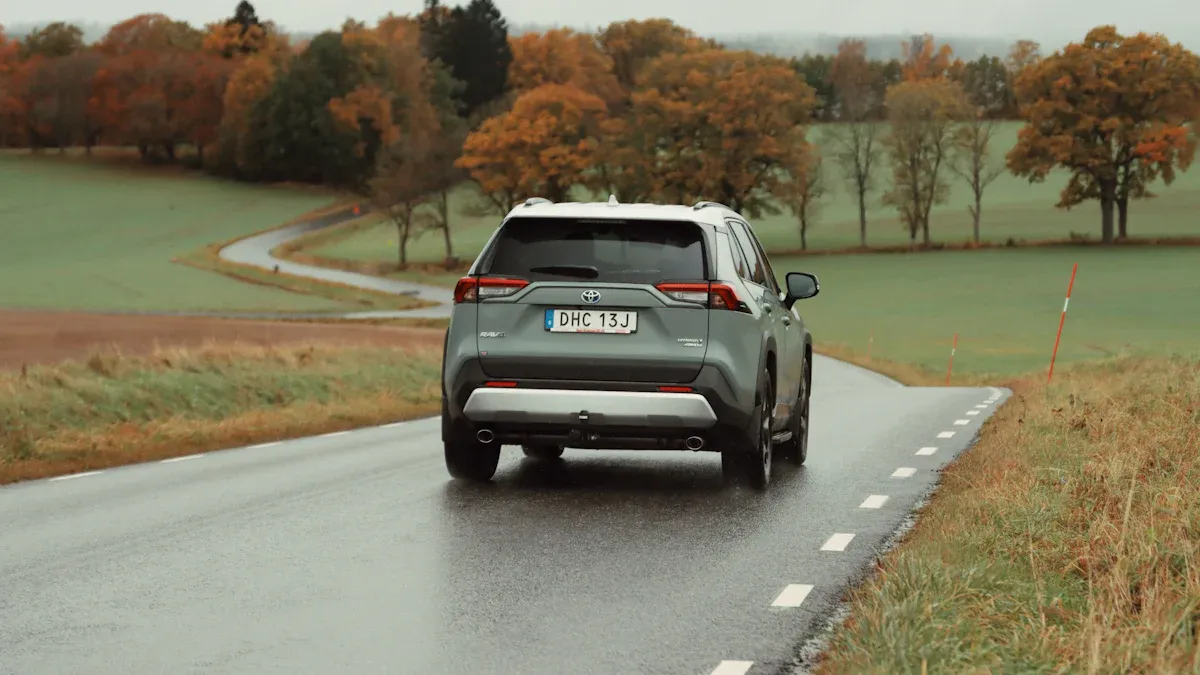
You want to find the most reliable and value-driven Toyota RAV4 model years. The Toyota RAV4 is famous for its dependability. However, certain years truly shine, representing the best years for Toyota RAV4. These models offer exceptional performance with fewer reported issues. For instance, the Toyota RAV4 has an estimated 10-year maintenance and repair cost of approximately $5,820. This is significantly less than the industry average for similar SUVs. Understanding generational differences and potential pitfalls will help you make an informed purchase.
Key Takeaways
The Toyota RAV4 is a dependable SUV. Some years are better than others for reliability and value.
The 2008-2012 and 2013-2018 models are very reliable. Newer models from 2020-2022 also look good.
You should be careful with 2006-2008, 2013, and 2019 RAV4 models. They have more reported problems.
A used RAV4 needs a mechanic’s check and a history report. This helps you avoid bad cars and unexpected repairs.
RAV4 Hybrid models offer better gas mileage and quicker driving. They can save you money on fuel.
Identifying the Best Years for Toyota RAV4
Top Picks: Reliability and Value
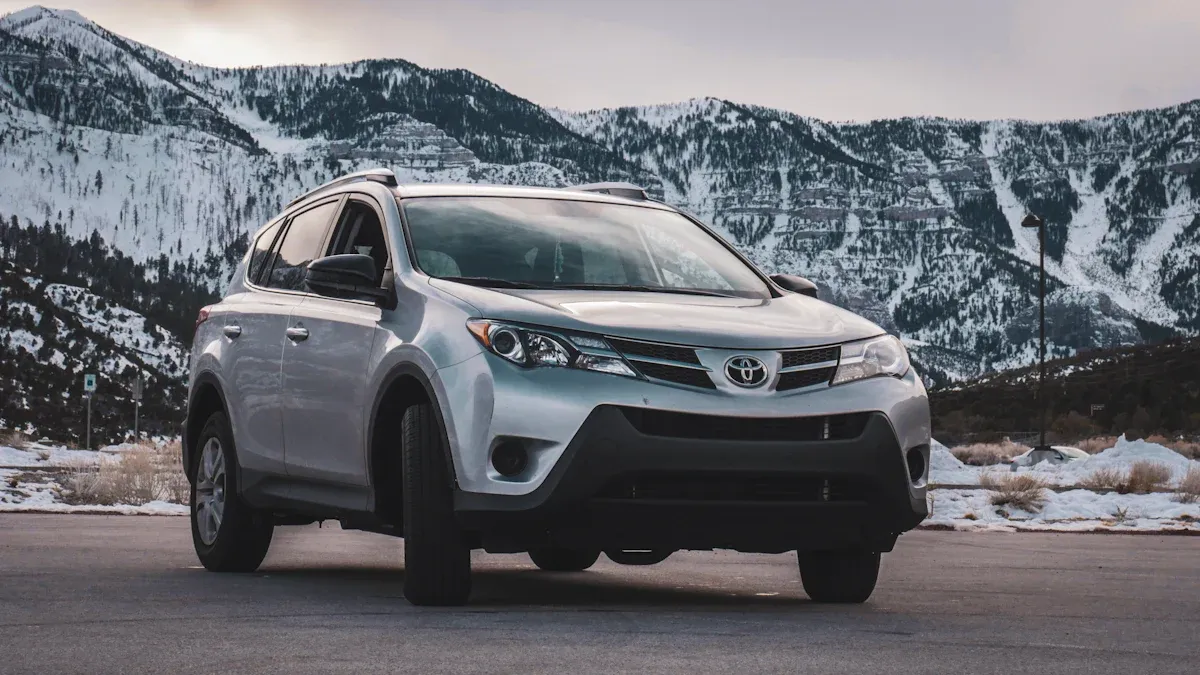
You want to know which Toyota RAV4 models stand out. These are the best years for Toyota RAV4. They offer a great mix of dependability and lasting value. When you look at the history of the Toyota RAV4, certain model years consistently earn high marks. These are the most reliable years.
Automotive experts often praise the first-generation Toyota RAV4 (1996-2000). It had fewer complex electronics. High-quality materials also made it very dependable. The third-generation models are also top choices. You will find the 2008, 2009, 2010, and 2011 Toyota RAV4s are highly dependable.
The fourth-generation RAV4 also performs well. All model years from 2013 to 2018 are recommended for their reliability. The 2013 model year, in particular, received very few consumer complaints. This shows its strong build quality. Even newer models show promise. The fifth-generation RAV4 (2020-present) looks very dependable. Long-term data is still coming in, but early signs are good.
Why These Years Excel
Why do these specific years stand out? They excel because of their strong engineering and careful manufacturing. These Toyota models often feature durable engines and robust transmissions. You will find fewer common issues reported by owners. This means you spend less time and money on repairs.
The design choices during these periods focused on longevity. Manufacturers used high-quality components. This commitment to quality makes these best years to buy. You get a vehicle that holds its value well. It also provides consistent performance for many years. These Toyota RAV4s offer a great balance. You get good features, solid performance, and low ownership costs. This makes them a smart choice for you.
Most Reliable Years: A Deep Dive
You want to understand which specific Toyota RAV4 models truly stand out for their dependability. This section details the most reliable years, helping you make an informed decision.
Third Generation Reliability (2008-2012)
You will find the third-generation Toyota RAV4 models, specifically from 2008 to 2012, offer impressive reliability. Owners consistently praise these years. They highlight several key aspects that make these RAV4s excellent choices:
Fuel Economy: The 4-cylinder models offer great fuel efficiency.
Dependability: These vehicles are truly reliable. You can count on them.
Comfortable Ride: You will enjoy a smooth and comfortable ride.
Car-like Handling: The RAV4 handles like a car, making it easy to drive.
Decent Cargo Space: You get good space for your belongings.
Plenty of Storage Areas: There are many spots to store small items.
Maneuverability: The RAV4 is easy to maneuver in tight spaces.
Comfortable Interior: The interior is comfortable. Controls are user-friendly. You also get good rear seat space.
Agile Driving Experience: You will find an agile driving experience with good visibility.
The 2.5L inline-4 engine, introduced in 2009, is fuel-efficient, reliable, and built to last. The V6 engine option also proves mostly trouble-free. These factors make the 2008-2012 Toyota RAV4 a very strong contender for a dependable used SUV.
Fourth Generation Highlights (2013-2018)
The fourth-generation Toyota RAV4, spanning from 2013 to 2018, brought significant advancements. You will find these models combine mechanical durability with modern features. This makes them highly desirable.
The 2016-2018 RAV4 models generally receive an average reliability score of 4.4/5.0. Owners report high satisfaction. The 2016 Toyota RAV4, for example, earns praise for its strong dependability and smooth driving. It has fewer complaints compared to many competitors. The 2017 RAV4 continues this trend. It offers consistent reliability and strong safety features. You get a comfortable interior, a smooth ride, and excellent fuel efficiency.
You will see many feature upgrades across different trims:
XLE Trim (2013-2018): This trim offers 17-inch alloy wheels, roof rails, a power sunroof, and fog lights. You also get heated side mirrors and sportier front seats. Dual-zone automatic climate control is standard. Later models (2014) added sun-visor extenders, chrome interior door handles, satellite, and HD radio. A power liftgate became optional from 2015. The 2016 models featured Entune Audio Plus with Scout GPS Link navigation. Siri Eyes Free was also included. For 2017, the XLE included the standard Toyota Safety Sense P suite.
SE Trim (2016-2018): This trim boasts racy exterior styling with aggressive fascias and LED headlights. You get sporty suspension settings and 18-inch alloy wheels. SofTex leatherette upholstery and paddle shifters are also included. Safety features like rear cross-traffic alert and blind-spot monitoring are present. The 2018 models added navigation, a higher ride height (Adventure trim), an upgraded backup camera, a power driver’s seat, and heated front seats.
Limited Trim (2013-2018): This top-tier trim provides 18-inch alloy wheels, a power liftgate, and a leather-trimmed steering wheel. You get SofTex leatherette upholstery and heated front seats. An eight-way electrically adjustable driver’s seat with memory, an auto-dimming rearview mirror, keyless entry, and push-button start are standard. The 2014 model offered an optional Technology Package. This package included auto high beams, blind-spot assist, and lane-departure warning. The 2016 facelift brought a larger 7-inch touchscreen, adaptive cruise control, smartphone app integration, and navigation. For 2017, Toyota Safety Sense P became standard. It incorporated the Technology Package features.
The powertrain also saw improvements. A new 2.5-liter direct-injection four-cylinder engine delivered 176 horsepower. It paired with a standard six-speed automatic transmission. This achieved an EPA-estimated 26 combined MPG (FWD) or 25 combined MPG (AWD). Toyota introduced the first RAV4 Hybrid for 2016. It offered an EPA-estimated 32 combined MPG and quicker acceleration.
You will find a quieter, more refined interior for 2016. Dual-zone automatic climate control, a power moonroof, and heated outside mirrors enhance comfort. SofTex-trimmed seats, including heated front seats on the Limited trim, add to the luxury. Infotainment systems included advanced touch-screen multimedia. These systems offered AM/FM/CD, iPod® connectivity, USB 2.0, satellite radio, and navigation options. Steering wheel controls for Bluetooth® hands-free phone and audio were also present.
Safety was a priority. Eight standard airbags were included. For 2016, Toyota Safety Sense P (TSS-P) was added to Limited and Platinum grades. It became standard on all grades for 2017. This suite includes a Pre-Collision System with Pedestrian Detection, Lane Departure Alert with Steering Assist, Automatic High Beams, and Dynamic Radar Cruise Control. Higher model grades also had standard Blind Spot Monitor with Rear Cross Traffic Alert.
Standout Early Models (1996-1997, 2004-2005)
You should also consider some earlier Toyota RAV4 models. The 1996-1997 models set the stage for the RAV4’s reputation. They offered a simple, yet robust design.
The 2004-2005 Toyota RAV4 models represent a significant improvement. You will find several key enhancements that make these years stand out:
Electronic Stability Control: Models older than 2004 lacked this crucial safety feature. Its inclusion in the 2004-2005 models was a major upgrade.
Improved Ride Quality and Noise Isolation: Consumer Reports highlighted these as positives. You will notice a smoother and quieter ride.
Upgraded Engine: The 2004 refresh included a 2.4-liter four-cylinder engine. It delivered 161 hp. Edmunds noted this as a significant upgrade.
Dependability: Consumer Reports gave the 2004-05 RAV4 a 4/5 rating in predicted dependability. The 2005 model had only five recalls. The 2004 model had only two recalls since their release.
Nimble Handling: Both new and senior drivers appreciated the RAV4’s handling. It offered a smooth ride with the added height of an SUV.
Remarkable Fuel Economy: For an SUV of its time, the 2004-2005 RAV4 offered an EPA-estimated 21 MPG in the city and 27 MPG on the highway for front-wheel-drive models.
Transmission Options: You had choices between a four-speed automatic or a five-speed manual transmission.
Available All-Wheel-Drive and Daytime Running Lights: Some models came with these additional features.
These improvements made the 2004-2005 Toyota RAV4 a very appealing choice for its time.
Recent Model Excellence (2020-2022)
You will find the most recent Toyota RAV4 models, from 2020 to 2022, continue the tradition of excellence. These fifth-generation models build on the strong foundation of their predecessors. They offer modern styling, advanced technology, and impressive fuel efficiency. While long-term data is still accumulating, early reports and owner satisfaction scores indicate high levels of dependability. You can expect these newer models to provide a comfortable and efficient driving experience for many years. The 2017 RAV4 Limited Hybrid, for example, demonstrates the longevity you can expect from a well-maintained Toyota SUV.
Best Years to Buy: Toyota RAV4 Recommendations
You want to make a smart purchase. This section helps you pick the best years to buy a Toyota RAV4. We focus on value, performance, and features.
Value-Driven Choices
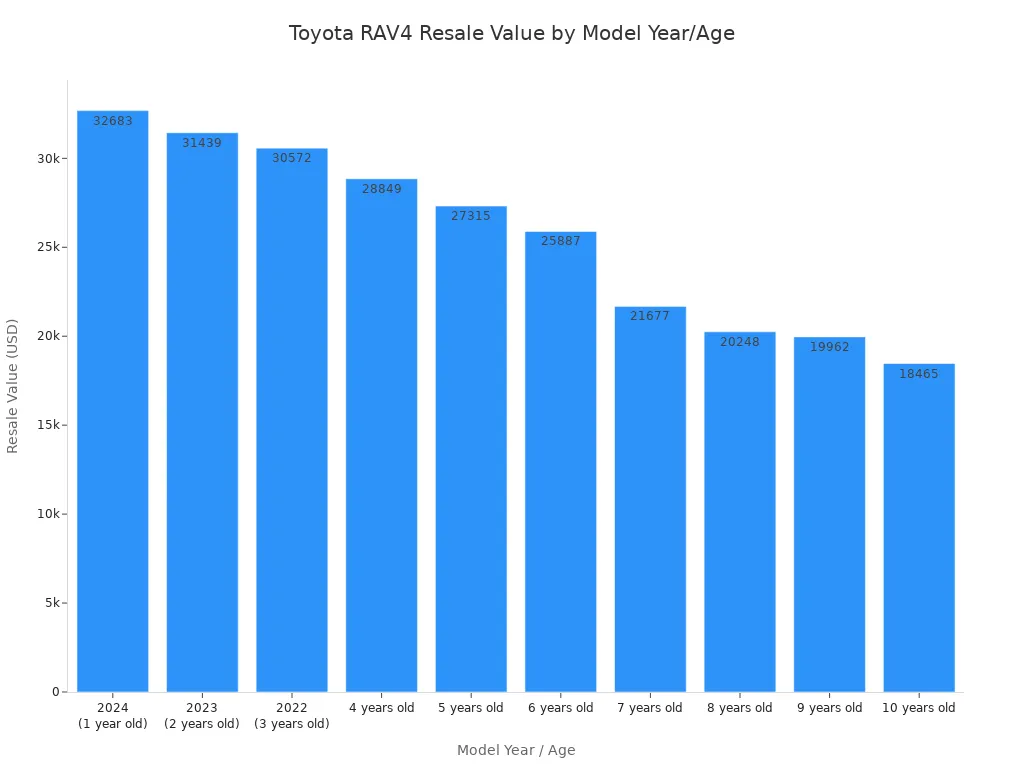
You can find great value in certain RAV4 models. The 2016-2018 models offer strong value. They often include Toyota Safety Sense and have better interior quality. These are great if you watch your budget. If you can spend a bit more, the 2019 redesign and newer models feature fresh styling, better infotainment, and improved fuel economy. Consider buying a 2-year-old Toyota RAV4. You can save about $6,543 compared to buying new. This gives you great value with proven Toyota reliability.
Here is how RAV4 resale values hold up:
Model Year / Age | Resale Value (Approximate) | Value-Driven Choice |
|---|---|---|
2024 (1 year old) | $32,683 | Top Pick: Best Model Year Value |
2023 (2 years old) | $31,439 | Attractive Year, Good Value |
2022 (3 years old) | $30,572 | Attractive Year, Good Value |
The 2018 Adventure model is an excellent choice. It offers a good mix of features and capability.
Performance and Features
You might want more power or advanced tech. The 5th Generation RAV4 (2019-Present) offers 203 hp from its 2.5-liter four-cylinder engine. The 2021 RAV4 Prime gives you a powerful 302 hp combined output. For towing, the 2010 Toyota RAV4 can tow up to 3,500 pounds. Newer models like the 2021 RAV4 LE and Limited can tow 1,500 pounds.
Modern Toyota RAV4 models also come with great features:
An available 10.5-inch multimedia display.
A Head-Up Display (HUD) shows driving info on your windshield.
A 12.3-inch customizable digital gauge cluster.
Toyota Safety Sense™ 4.0 (TSS 4.0) offers the latest safety features.
A 3D Multi-Terrain Monitor helps you see the ground when off-roading.
Hybrid Model Considerations
You should consider a RAV4 Hybrid. It offers many benefits over the gasoline model. Hybrids are more efficient, have a smoother powertrain, and accelerate quicker.
Factor | Toyota RAV4 Gas | Toyota RAV4 Hybrid |
|---|---|---|
MPG | 27-30 MPG | 39-40 MPG |
Horsepower | 203 hp | 219 hp |
Fuel Savings | Standard | Saves ~$500/year |
The hybrid model gives you 219 horsepower, more than the gas model’s 203 hp. This means quicker acceleration, especially in the city. You also get much better fuel efficiency, around 39-40 MPG combined. This saves you about $500 per year on gas. The hybrid also has enhanced safety due to a lower center of gravity. Its simpler braking system and smoother engine operation can mean lower maintenance needs over time.
Toyota RAV4 Years to Approach with Caution
You know the Toyota RAV4 is generally reliable. However, some years have more reported issues. You should approach these years with caution. These are the rav4 models to avoid if you want to minimize potential problems. Even a great brand like Toyota can have less stellar years.
Common Reported Issues
You will find specific Toyota RAV4 models have more complaints. The 2019, 2013, and 2006-2008 models are often mentioned for problems. For example, the 2019 RAV4 had transmission issues. The 2017 model had steering problems. Excessive oil consumption was an issue as far back as the 2005 model.
Here are some common issues you might encounter with certain RAV4 models:
Electrical System Problems: You might see infotainment glitches like freezing screens or dropped Bluetooth. Some owners report 12V battery drain. Power liftgate issues also occur, especially in hybrid trims. Dashboard warning lights can appear. Rodent damage to soy-based wiring is also a concern. Recent Toyota RAV4 models with electrical system problems include the 2016, 2017, 2018, 2019, and 2020 models.
Transmission Issues: You could experience hesitation or jerky shifting. Delayed acceleration and gear slipping are also reported. Some models, like the 2013-2014 RAV4, had complaints about transmission hesitation.
Engine Problems: Excessive oil consumption affected 2006-2008 models. Fuel pump and cooling system faults, like surging idle or overheating, were issues for 2019-2021 models.
Recalls and Other Concerns: You should know about recalls. Airbag failure to deploy was a recall for 2020, 2021, and 2022 RAV4 models. Hybrid RAV4 owners also reported corroded high-voltage wires.
Understanding Potential Pitfalls
You need to understand these potential pitfalls. The 2001-2003 Toyota RAV4 models had defective Engine Control Modules (ECMs). This led to transmission failures. The 2006-2008 models faced excessive oil consumption and steering issues. Rear suspension recalls affected 2009-2012 models. These issues can be costly. You should research specific years carefully. Knowing these common problems helps you make a smarter purchase. You can avoid unexpected repair bills.
Essential Checks for a Used RAV4 Purchase
You want to buy a used Toyota RAV4. You need to do some important checks. These steps help you find a reliable vehicle. They apply no matter which model year you choose.
Pre-Purchase Inspection
Always get a professional mechanic to inspect any used Toyota RAV4 you consider. This pre-purchase inspection is very important. A mechanic will check many critical areas. They look at the lighting systems, making sure all lights work correctly.
They inspect the steering system for normal feel and proper alignment. The mechanic also checks the transmission for smooth operation and leaks. They will examine the engine compartment for fluid leaks and abnormal noises. They also check the frame and underbody for damage. If you look at a hybrid RAV4, they will inspect its specific hybrid components. This thorough check helps you avoid unexpected repairs.
Vehicle History Report Importance
You must get a vehicle history report for any used Toyota RAV4. This report gives you vital information about the car’s past. It shows title information, including if the car was ever salvaged or junked. You will see if it has flood damage or total loss accident history. The report also lists odometer readings to check for fraud. It tells you the number of previous owners and any accident indicators, like airbag deployments. You can also find state emissions inspection results and service records. This report reveals potential hidden problems. It can show past accidents, flood damage, or title issues. This helps you understand the car’s true condition.
Test Drive Evaluation
You need to take the used RAV4 for a test drive. Pay close attention to how the car feels and sounds. Listen for any unusual noises or vibrations. A drive train vibration might mean issues with the drive unit. Warped brake rotors can cause vibrations when you brake. Listen for loud clicking noises when making tight turns at slow speeds; this could point to CV joint problems. Wheel bearings can also cause noise and vibration. Feel for any looseness in the steering or suspension. This test drive helps you find problems that might not be obvious otherwise.
You now understand the best years for Toyota RAV4. These models balance reliability, value, and features. Remember, a well-maintained Toyota RAV4 from almost any generation can be a good purchase. Consider current market conditions. A new Toyota might offer better value than a used RAV4, especially for specific features like a timing chain engine or advanced tech. You want a reliable vehicle. Always conduct thorough research. Get vehicle history checks and professional inspections before you decide. Share your own RAV4 experiences or ask questions below.
FAQ
Which Toyota RAV4 years are the most reliable?
You will find the 2008-2012 models very dependable. The 2013-2018 models also offer strong reliability. Newer models from 2020-2022 show excellent promise. Early models like 1996-1997 and 2004-2005 are also good choices.
Should I consider a Toyota RAV4 Hybrid?
Yes, you should consider a RAV4 Hybrid. They offer better fuel efficiency and quicker acceleration. You also get a smoother driving experience. Hybrids can save you money on gas each year.
Are there any Toyota RAV4 years I should be careful about?
You should approach the 2019, 2013, and 2006-2008 models with caution. These years have more reported issues. For example, some 2019 models had transmission problems.
Why do I need a pre-purchase inspection for a used RAV4?
You need a pre-purchase inspection to find hidden problems. A mechanic checks critical areas like the engine and transmission. This helps you avoid unexpected repair costs. It ensures you buy a reliable vehicle.



