

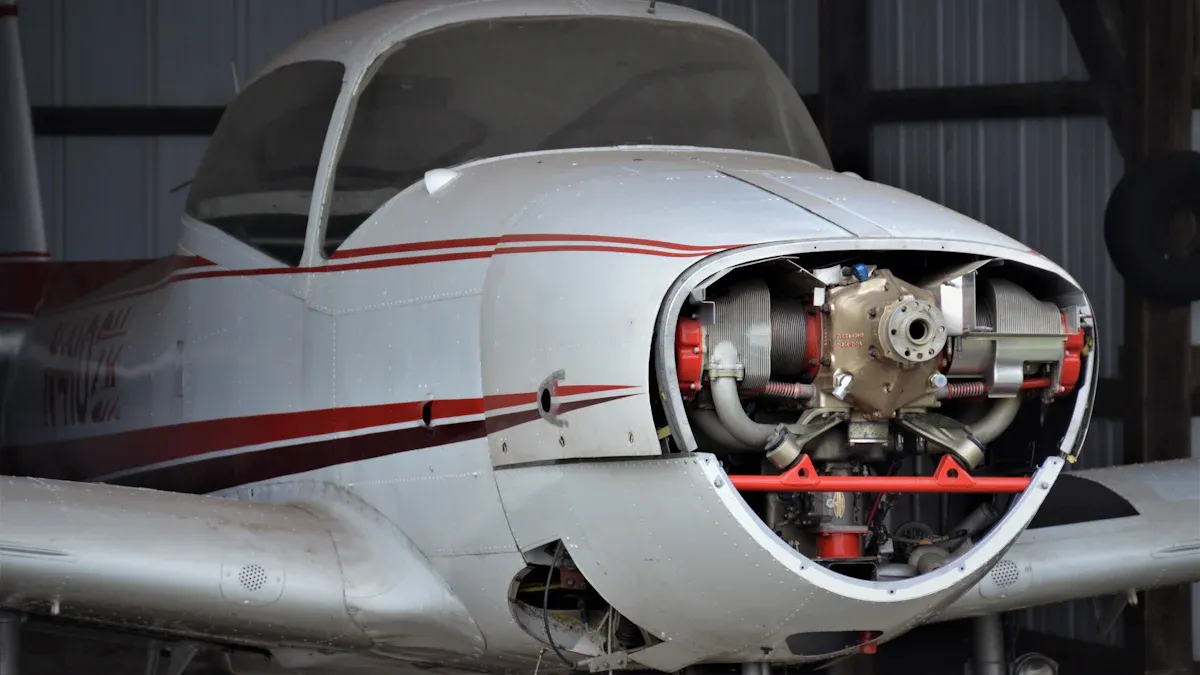
Aircraft maintenance is not just a rule; it is the foundation of aviation safety and keeps your aircraft valuable. You, as a general aviation owner, hold unique responsibilities for ensuring airworthiness. This differs from commercial operators. Mechanical failures cause many general aviation accidents; for instance, mechanical issues accounted for about 18% of all general aviation accidents in 2016. In 2021, maintenance issues caused 16% of engine failures. Good plane maintenance provides peace of mind and reliable operations. Understanding inspection, repair, and preservation is key to safe airworthiness. This blog will help you master general aviation maintenance.
Key Takeaways
You must keep your plane safe to fly. This means following FAA rules for maintenance.
You need to do regular checks on your plane. These checks find problems early and keep your plane safe.
You must keep good records of all work done on your plane. These records show your plane is safe to fly.
You can do some simple maintenance tasks yourself. For bigger jobs, you need a trained mechanic.
Always check your plane carefully before every flight. This helps you find any issues before you take off.
Regulatory Foundations for Aircraft Maintenance
You are responsible for your aircraft’s airworthiness. The Federal Aviation Administration (FAA) sets the rules for aircraft maintenance. These rules ensure your aircraft remains safe to fly. Aircraft mechanics must use only FAA-approved methods and techniques.
FAA Regulations Overview
The FAA outlines specific inspection requirements. You must ensure your aircraft meets all applicable airworthiness requirements during inspections. This applies to various operations. If you own a rotorcraft, specific systems need inspection. These include drive shafts, main rotor gearboxes, and auxiliary rotors. You must follow the manufacturer’s manual for these inspections.
Most general aviation aircraft need annual and 100-hour inspections. You must use a checklist for these. This checklist covers the scope and detail of items in Appendix D to Part 43. For piston-engine aircraft, a run-up test is necessary. This test checks power output, magnetos, fuel/oil pressure, and temperatures before you return the aircraft to service. Turbine-engine aircraft also need an engine run-up after annual, 100-hour, or progressive inspections. These are your basic inspection requirements.
Some aircraft use progressive inspections. This system begins with a complete aircraft inspection. Then, routine and detailed inspections follow a progressive schedule. Routine checks are visual. Detailed inspections require taking things apart. Overhauling a component counts as a detailed inspection.
Airworthiness Directives and Service Bulletins
You must also understand Airworthiness Directives (ADs) and Service Bulletins (SBs). These documents guide your plane’s continued airworthiness.
ADs are mandatory. The FAA issues them. They address unsafe conditions in a plane, engine, propeller, or appliance. You cannot operate your plane if it does not comply with applicable ADs. Non-compliance makes your plane unairworthy.
An AD includes several key pieces of information:
It describes the unsafe condition.
It identifies the product the AD applies to.
It lists required actions or operating limits.
It states the AD’s effective date.
It gives a compliance time.
It tells you where to find more details.
It provides information on alternative ways to comply.
You must follow a process to comply with ADs. First, determine if the AD applies to your plane. The AD’s subject line and applicability section list specific models or parts. Next, find all applicable ADs for your plane, engine, propeller, or other parts. Then, you must comply with these ADs. You cannot operate your plane otherwise. The AD specifies a compliance time. You must complete the actions by this time.
Service Bulletins (SBs) are different. Manufacturers issue SBs. They provide information or recommend maintenance actions. These actions can improve safety, reliability, or performance. SBs are usually voluntary. However, an AD can make an SB mandatory. An SB does not have the force of law on its own. An AD directly impacts your plane’s airworthiness. An SB does not automatically make your plane unairworthy if you do not comply.
Maintenance Records and Compliance
You must keep accurate maintenance records. These records are crucial for proving your aircraft’s airworthiness. Proper aircraft maintenance documentation is a legal requirement.
You cannot operate your aircraft after maintenance unless an authorized person approves it for return to service. This person must also make the required record entry. You must review logbooks after any maintenance. This confirms proper inspections, repairs, and Airworthiness Directive compliance. It also ensures a statement approves the aircraft for return to service.
You are legally responsible for keeping detailed records. These include:
Records of maintenance, preventive maintenance, alterations, and inspections. This covers the airframe, engine, propeller, rotor, and appliances.
These records must describe the work performed.
They must include the completion date.
They need the signature and certificate number of the person approving the aircraft for return to service.
Records containing specific information:
The total time in service for the airframe, each engine, each propeller, and each rotor.
The current status of life-limited parts.
The time since the last overhaul for items requiring it.
The current inspection status.
The current status of applicable ADs. This includes the method of compliance, AD number, revision date, and next action date for recurring items.
Copies of FAA Form 337 for major alterations.
The Aircraft Owners and Pilots Association (AOPA) highlights important items to check in logbooks. These include FAA Form 337, AD compliance, service bulletin status, serial numbers, and any gaps in inspection dates. You are responsible for ensuring proper entries in logbooks. This includes the scope of work, dates, and signatures.
Not keeping proper records has serious consequences. You could face financial penalties. Legal action is possible. Your operating certificates could be suspended or revoked. Incomplete records can also lead to operational inefficiencies and increased maintenance costs. For example, missing documentation for parts can disrupt supply chains. This adds to unplanned expenses.
You must ensure your aircraft is always airworthy. 14 CFR 91.7 prohibits operating an unairworthy aircraft. This ongoing commitment to maintenance and record-keeping protects you and your investment.
Aircraft Stressors and Wear
Your aircraft constantly faces forces that cause wear and tear. Understanding these stressors helps you prioritize effective aircraft maintenance.
Environmental Factors Impacting Aircraft
The environment significantly impacts your aircraft. Vibration, temperature, and humidity degrade many components. These factors reduce performance and reliability over time. For example, environmental changes cause issues like punctures and seam failure in aircraft inflatables. Temperature changes can also lead to internal component failure or software glitches in electronic equipment.
High temperature and humidity, especially in tropical areas, cause corrosion in aircraft structures. Aluminum 2024, a common material, suffers greatly. This corrosion reduces the material’s fatigue life. It can lead to fatigue failure. Coastal areas with salt-laden air worsen this marine atmospheric corrosion. This structural deterioration requires frequent maintenance downtime. Electronic components also degrade from temperature and humidity changes. Repeated temperature fluctuations cause thermal cycling fatigue. Moisture causes corrosion, affecting sensitive materials and solder joints.
Operational Stresses on Components
Every flight puts stress on your aircraft. Takeoffs, landings, and turbulence create forces that components must withstand. Engine operation generates heat and vibration. Control surfaces move constantly, flexing materials. These operational stresses contribute to the overall wear of the aircraft. Regular use means parts experience friction and impact. This constant use makes diligent maintenance essential.
Common Wear Patterns and Fatigue
You will see specific wear patterns on your aircraft. Fatigue, the weakening of material from repeated stress, is a major concern. Landing gear components show common wear. Shock struts often have seal degradation and fluid leaks. Wheels and tires wear from friction and impact; you often replace tires based on their condition. Brakes experience heat and friction, causing pad wear and hydraulic leaks. Bushings and bearings wear from movement and lack of lubrication. Hydraulic actuators can suffer internal corrosion and seal failure. Torque links might loosen or crack. Gear doors and linkages are vulnerable to misalignment and corrosion. Underinflated tires reduce braking performance and increase wear. Overinflated tires can reduce traction. Brake fluid absorbs moisture, leading to corrosion in the calipers. Proper maintenance addresses these issues.
Critical Aircraft Systems Maintenance
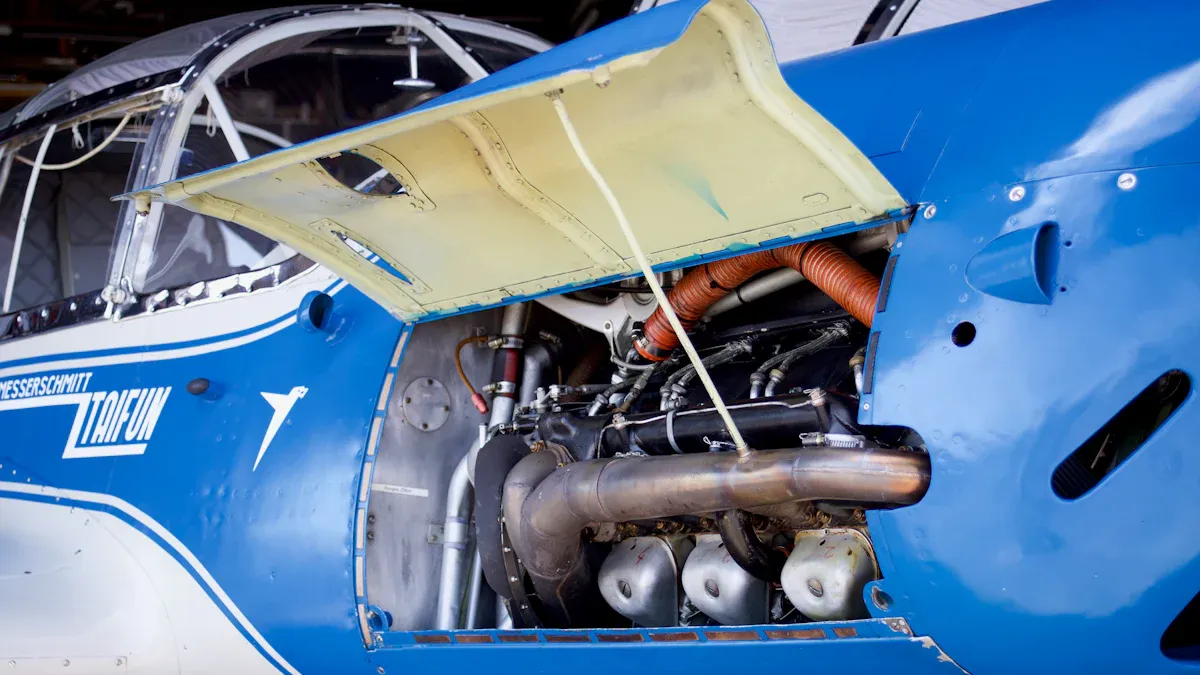
You must understand your aircraft‘s critical systems. Proper aircraft maintenance of these parts keeps you safe. It also ensures your aircraft performs well.
Powerplant Care: Engine and Propeller
Your engine needs regular care. You must change engine oil and filters often. Many older engines used fine metal mesh oil screens. These needed oil changes every 25 hours. Modern spin-on oil filters are now standard. They offer improved filtration. They allow oil changes up to 50 hours. Lycoming Service Bulletin No. 480 gives clear rules. For full-flow filtration, change oil and filter every 50 hours. For pressure-screen systems, change oil and clean the screen every 25 hours. Always change oil within four months, even if you fly less. Your propeller also needs careful inspection. Look for nicks or cracks.
Avionics and Electrical System Health
Your avionics and electrical systems are vital. They help you navigate and communicate. Over-relying on autopilot can reduce your manual flying skills. This becomes dangerous if automation fails. You might also become too complacent. This lowers your awareness. Pilots can struggle to fly manually during emergencies. Misinterpreting automation settings is also a risk. Overdependence on GPS navigation can also be dangerous. Improper programming is a frequent issue. Even with redundant systems, imperfect fault coverage can cause failures. You must check air vents for condition. Look at windshields, doors, and windows for cracks. Ensure instruments and lines function properly during your pre-flight inspection.
Flight Controls and Structural Integrity
Your flight controls connect you to the aircraft. They must work perfectly. You must inspect control cables and pulleys carefully. Check for fraying or wear. Rub a cloth along the cable to find broken wires. Replace cables if a single strand wears through 40%. Also replace them if a broken strand is in a critical area. This includes bends around pulleys or near swaged ends. Check cable tension at each inspection. Pulleys must turn freely. Fairleads should not show wear. Turnbuckles must be secure. They should not have more than three threads showing.
Landing Gear and Braking Systems
Your landing gear and brakes are crucial for safe ground operations. Proper brake bleeding is a key maintenance task. Air bubbles in the lines reduce braking power. Common brake issues include overheating and air in the lines. You might feel dragging. Brake shoe wear and fluid leaks are also common. Chattering can mean a warped disc. Overhauls involve disassembly, cleaning, and inspections. You replace seals and wear items. Then you reassemble and test the system. This ensures your plane maintenance keeps your brakes reliable.
Proactive and Reactive Maintenance
Preventive Maintenance Schedules
You must embrace proactive maintenance. This approach prevents small issues from becoming big problems. Regular checks save you time and money. You perform routine preventive maintenance to keep your aircraft in top condition. This type of preventive maintenance ensures reliability. It also extends your aircraft’s lifespan. Good plane maintenance is an investment.
Annual and 100-Hour Inspections
You conduct scheduled inspections regularly. These are critical for airworthiness. The annual inspection is a thorough check. An A&P mechanic with Inspection Authorization (IA) must perform it. You cannot fly your aircraft without a current annual inspection. A 100-hour inspection is similar in scope. However, an A&P mechanic can perform it. You need a 100-hour inspection if you use your aircraft for hire. For example, flight training or towing banners require it. These scheduled inspections ensure your aircraft meets safety standards.
During a 100-hour inspection, mechanics check many items. They perform an exterior inspection for damage. They inspect the engine for leaks and wear. Electrical systems are checked for malfunctions. They examine flight controls and landing gear for proper operation. They also review documentation and records. This ensures all required aircraft maintenance is complete. These aircraft inspections cover systems like:
Fabric and skin for deterioration.
Engine section for leaks.
Landing gear for wear and security.
Propeller assembly for cracks.
Radio and electronic equipment for proper mounting. These inspections are vital for your aircraft’s safety.
Addressing Unscheduled Repairs
Sometimes, unexpected issues arise. You must address unscheduled repairs promptly. Do not delay these repairs. Small problems can quickly worsen. Always ensure qualified personnel perform repairs. Document all repairs thoroughly. Proper documentation is vital for your aircraft’s history. It also ensures future maintenance is accurate. Timely repairs keep your aircraft safe. They also maintain its value. You must prioritize these repairs. Ignoring minor repairs can lead to more extensive repairs later. This increases costs and downtime.
Maintenance Professionals and Roles
You play a key role in your aircraft’s upkeep. However, you also rely on skilled professionals. Understanding who does what helps you keep your aircraft safe and airworthy.
Owner-Performed Maintenance: Limits and Responsibilities
You can perform some maintenance tasks on your aircraft. The FAA allows you to do preventive maintenance if you hold a pilot certificate under Part 61. This applies to aircraft you own or operate. The aircraft must not be used for commercial purposes like Parts 121, 127, 129, or 135 operations. You can perform these tasks without an A&P mechanic’s direct supervision. However, you must follow all federal aviation regulations. This includes using proper procedures and making correct logbook entries.
Preventive maintenance involves simple tasks. These are minor preservation operations. They also include replacing small standard parts. These tasks do not require complex assembly. A pilot holding a certificate under FAR 61 can do this work. This is true if they own or operate the aircraft. The aircraft cannot be used for air carrier or air taxi service. All other maintenance, repairs, rebuilding, or alterations need FAA-authorized personnel.
Here are some specific tasks you can perform:
Servicing landing gear and changing tires.
Maintaining the interior of your aircraft.
Changing oil and filters.
Applying corrosion proofing.
Maintaining lightning and electrical systems.
Replenishing hydraulic fluid in the reservoir.
Adding oil, air, or both to landing gear shock struts.
Lubricating items that do not need disassembly.
Replacing defective safety wire or cotter keys.
Cleaning and greasing landing gear wheel bearings.
Applying non-prohibited preventive or protective material to components. This is when no disassembly is required.
Replacing bulbs, reflectors, and lenses of position and landing lights.
Replacing any hose connection, but not hydraulic connections.
Replacing and servicing batteries.
You must document all maintenance, including your own tasks. This documentation goes into the aircraft’s logbooks. You must detail the inspection type and its extent. Include the date and the aircraft’s total time in service. You also need the signature, certificate number, and type of certificate held by the person approving or disapproving the return to service.
The Role of the Aviation Maintenance Technician
An Aviation Maintenance Technician (AMT) is a highly skilled professional. They ensure your aircraft is safe to fly. Becoming an aviation maintenance technician requires specific qualifications.
To become an AMT, you must meet several requirements:
You must be at least 18 years old.
You must read, write, speak, and understand English.
You need practical experience. This means 18 months for either an Airframe (A) or Powerplant (P) rating. You need 30 months for both ratings at the same time.
Alternatively, you can graduate from an FAA-approved Aviation Maintenance Technician School (AMTS). Military personnel can complete the Joint Service Aviation Maintenance Technician Certification Council (JSAMTCC) training course.
You must know Title 14 of the Code of Federal Regulations (14 CFR) part 65, subpart D, Mechanics. You also need to know content from AMT Handbooks.
The path to becoming a certified technician involves several steps:
You apply to the FAA using Form 8610-2. AMTS graduates do not need this form.
An FAA Aviation Safety Inspector (ASI) checks your practical experience. They sign Form 8610-2. This authorizes you to take the tests.
You get an FAA Tracking Number (FTN) if you do not have one.
You schedule and take the knowledge test(s) at an Airman Knowledge Testing Center. You must show the FAA-signed Form 8610-2 or your AMTS graduation certificate.
After passing knowledge tests, you schedule oral and practical tests with a Designated Mechanic Examiner (DME).
You can gain the necessary experience through academic training. This happens at an FAA-certificated Aviation Maintenance Technician School (AMTS). You can also get on-the-job training (OJT). This provides practical experience in building, maintaining, or altering airframes or powerplants. This method usually requires careful documentation of your activities in an AMT log.
Choosing Certified Repair Stations
You might need more complex maintenance or repairs. Then, choosing an FAA-certified repair station is a smart decision. These stations offer many benefits for your aircraft.
Certified repair stations employ expert technicians. These highly qualified and experienced individuals provide support. They deliver results that meet the highest level of excellence. They follow strict safety standards. This reduces accident risks and improves overall safety. They also ensure ongoing compliance with federal regulations. This confirms their facility and services meet FAA standards.
These stations implement strict quality control in all repairs and services. This guarantees a high level of quality. They also have streamlined processes. This minimizes aircraft downtime through efficient inspections and repairs. They show a track record of outstanding services. This is due to the FAA’s commitment to quality and safety.
Here are more advantages of using a certified repair station:
They offer capability and scope growth. This supports complex avionics, instrument/radio work, specialized inspections, and major alterations.
Many operators prefer or require 145 providers for fleet and contract maintenance. This ensures traceability and oversight.
They have a formal quality system. This includes required inspections, calibration programs, and internal audits. This reduces risk and rework.
Their ratings and capabilities are clearly defined. This is in a controlled Capabilities List for airframe, powerplant, propeller, radio, instrument, and accessories.
FAA surveillance and documentation standards build customer confidence. This ensures defensible maintenance records.
FAA repair stations must meet strict Federal Aviation Administration requirements. This includes intensive personnel training. They also have robust quality control and management systems. They use detailed manuals for responsibilities and procedures. Only FAA repair stations have the legal authority to approve an aircraft, component, or assembly for return to service after maintenance and repairs.
The FAA issues different types of repair station ratings. These include class ratings and limited ratings. Class ratings are broad. They cover all articles within a specific category. Limited ratings are for stations that maintain or alter only a particular type of airframe, powerplant, propeller, radio, instrument, or accessory. They can also be for a specific part of these items.
Here is a table showing some common class ratings and their scopes of work:
Rating Type | Class | Scope of Work |
|---|---|---|
Airframe | Class 1 | Composite construction of small aircraft |
Class 2 | Composite construction of large aircraft | |
Class 3 | All-metal construction of small aircraft | |
Class 4 | All-metal construction of large aircraft | |
Powerplant | Class 1 | Reciprocating engines of 400 horsepower or less |
Class 2 | Reciprocating engines of more than 400 horsepower | |
Class 3 | Turbine engines | |
Propeller | Class 1 | All fixed pitch and ground adjustable propellers of wood, metal, or composite construction |
Class 2 | All other propellers, by make | |
Radio | Class 1 (Communication) | Transmitting or receiving equipment for in-flight communications |
Class 2 (Navigational) | Radio systems for en route or approach navigation (excluding radar/pulsed radio) | |
Class 3 (Radar) | Electronic systems operating on radar or pulsed radio frequency principles | |
Instrument | Class 1 (Mechanical) | Diaphragm, bourdon tube, aneroid, optical, or mechanically driven instruments |
Class 2 (Electrical) | Self-synchronous and electrical indicating instruments and systems | |
Class 3 (Gyroscopic) | Instruments or systems using gyroscopic principles | |
Class 4 (Electronic) | Instruments whose operation depends on electron tubes, transistors, or similar devices | |
Accessory | Class 1 (Mechanical) | Accessories depending on friction, hydraulics, mechanical linkage, or pneumatic pressure |
Class 2 (Electrical) | Accessories depending on electrical energy for operation, and generators | |
Class 3 (Electronic) | Electronic accessories depending on electron tubes, transistors, or similar devices |
The FAA also issues limited ratings for 12 distinct categories. These include specific makes and models of airframes, engines, propellers, instruments, radio equipment, and accessories. Other categories include landing gear components, floats, nondestructive inspection, emergency equipment, rotor blades, and aircraft fabric work. The FAA can also approve other purposes if your request is appropriate.
Crafting Your Maintenance Strategy
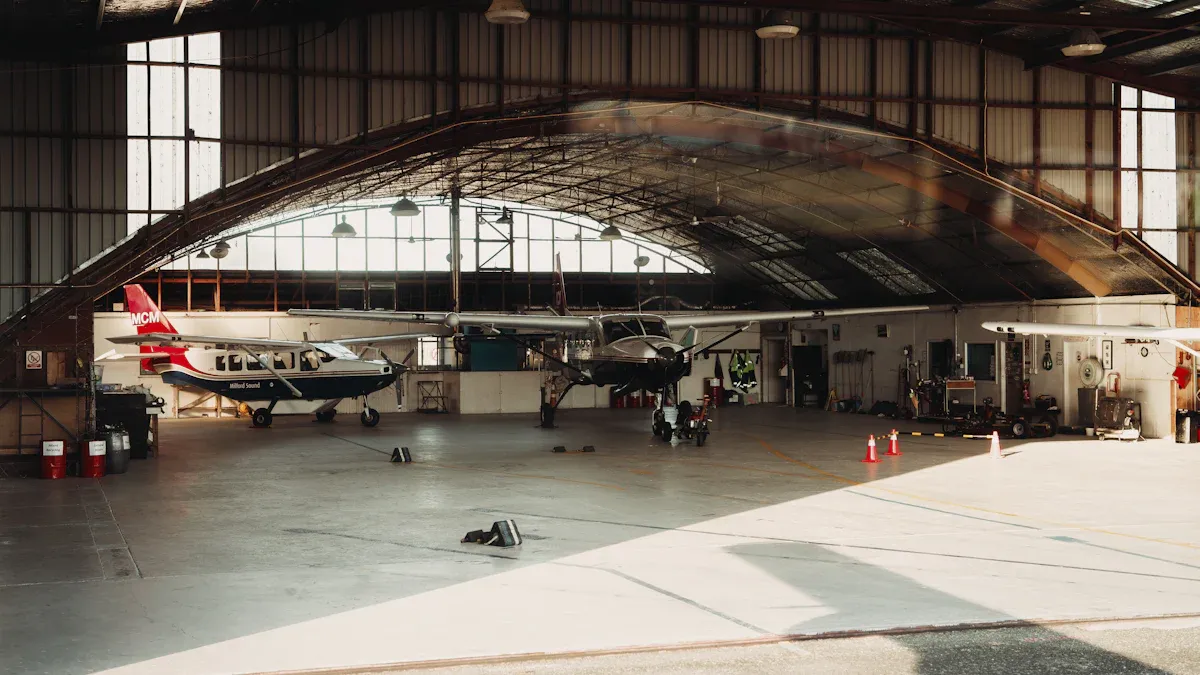
You need a clear plan for your aircraft’s upkeep. A good strategy ensures safety and protects your investment. This involves smart budgeting, strong relationships, and modern tools.
Budgeting for Aircraft Upkeep
You must budget for your aircraft’s upkeep. Think of plane maintenance as an investment. Regular costs include annual inspections and oil changes. Unexpected repairs also happen. Set aside funds for these. This prevents financial surprises. A well-maintained aircraft holds its value better.
Building a Mechanic Relationship
A strong relationship with your mechanic is vital. You need someone you trust. Look for a mechanic or shop with a good reputation. Specialization matters, especially for unique aircraft models. Their expertise can save you money long-term.
When you discuss work, get written quotes. Review the proposed work scope carefully. Clarify any ambiguities. Set clear limits on cost and time for projects. Formalize expectations in writing, even with informal mechanics. Maintain regular communication. Stay informed about progress and costs. Understand your responsibilities as an owner. This includes ensuring airworthiness and proper documentation. This fosters a collaborative relationship.
Leveraging Technology for Tracking
Technology can simplify your maintenance tasks. Digital tools revolutionize aircraft maintenance and compliance. They offer real-time insights and reporting. This provides immediate data for informed decisions.
Consider using an all-in-one platform. These integrate maintenance, inventory, and work order systems. They give you instant access to aircraft data. You get real-time fleet visibility. Many tools offer eLogbooks. These create compliant electronic logbooks. They reduce manual entry and errors. You can also find automated updates for Airworthiness Directives (ADs) and Service Bulletins (SBs). Some systems track inspections by total time or calendar. They use color-coded warnings. Green means over 25% remaining. Yellow means 25% or less. Red means expired. This helps you avoid missing critical maintenance.
Recognizing Maintenance Red Flags
You must know the warning signs your aircraft gives you. Catching problems early prevents bigger issues. This protects your safety and your investment.
Immediate Safety Concerns
Some issues demand your immediate attention. You must never ignore these. If you see smoke, smell burning, or hear loud, unusual noises, land your aircraft as soon as it is safe. These are critical safety concerns. They mean you need immediate maintenance.
Signs of System Malfunction
Your engine often gives clues before it fails. You should watch for these signs of malfunction.
You might notice decreased airflow. This can come from carburetor ice or a dirty air filter.
Magneto timing problems or component failures can occur.
Valve failures can happen. Valves might leak, break, or wear, affecting timing.
You could experience a loss of lubrication, oil, or oil pressure.
Listen for unusual noises. Knocking, whistling, or grinding sounds during start or taxi are red flags.
Engine roughness or excessive slowing on one magneto during run-up also indicates a problem.
High oil temperature with normal oil pressure needs more investigation.
An inadequate oil supply leads to high oil temperatures.
Improper mixture leaning can cause a loss of power from detonation or preignition.
Watch for irregular oil pressure and temperature fluctuations.
Excessive RPM drops during a magneto check are a concern.
Excessive cylinder head temperature is another warning.
Abnormal engine sounds always mean trouble.
Pre-Flight Inspection Importance
A thorough pre-flight inspection is your first line of defense. It is vital for your safety. You must always perform this check before every flight.
Focus on the task. Use your aircraft’s checklist strictly.
Avoid complacency. Do not skip steps, even if you do the same pre-flight often.
Vary your routine. Sometimes, complete the inspection in reverse order. This helps you stay alert.
Communicate with others. If another person helps, ensure both of you complete all checks.
Do not rush. Allow enough time for a complete inspection.
Be thorough, even for quick turns. Check for tire damage or unsecured fuel caps.
You should also review maintenance records. Look at logbooks and manuals. Perform a sensory inspection. Use your eyes, ears, and hands. Check for cracks, looseness, or strange smells. Discuss recent maintenance with your mechanic. Ask what they touched or repaired. This helps you know what to watch for during your first flight. Check fluid levels. Ensure all inspection panels are secure. This careful inspection helps ensure your aircraft is safe.
Effective plane maintenance is an ongoing commitment. It is not a one-time event. This commitment is vital for the joy and safety of general aviation. Proactive maintenance enhances safety. It ensures regulatory compliance and maintains airworthiness. Your aircraft lifespan extends. You also get better resale value. View this maintenance as a strategic investment. It protects your passion and your asset. Always strive for continuous learning. Engage with your maintenance professionals. They help ensure your aircraft’s airworthiness. FAA handbooks offer great resources for understanding airworthiness standards in aviation.
FAQ
What is your primary responsibility as an aircraft owner?
You are responsible for your aircraft’s airworthiness. You must ensure it meets all FAA regulations. This includes proper maintenance and record-keeping. Your diligence keeps your aircraft safe to fly.
What is the difference between an AD and an SB?
An Airworthiness Directive (AD) is mandatory. The FAA issues it to fix unsafe conditions. A Service Bulletin (SB) is voluntary. Manufacturers issue SBs to recommend maintenance. An AD can make an SB mandatory.
How often do you need an annual inspection?
You need an annual inspection every 12 calendar months. An A&P mechanic with Inspection Authorization (IA) must perform it. You cannot fly your aircraft without a current annual inspection. This ensures your aircraft meets safety standards.
Why is a strong mechanic relationship important?
You need a mechanic you trust. A good relationship ensures clear communication. It helps you understand maintenance needs. This partnership protects your investment. It also keeps your aircraft safe and airworthy.
What is the most important pre-flight check?
Your thorough pre-flight inspection is crucial. You must use your aircraft’s checklist strictly. Do not skip steps. This check helps you find potential issues before flight. It is your first line of defense for safety.



